- OVERVIEW
- SERVICES
- WHY CHOOSE US?
- MODELS
- TECHNOLOGIES
- OUR PROCESS
- FAQS
Trading Software Development Services at Saigon TechnologyÂ
Built for real market stress. Low-latency architecture, matching engines, and FIX 4.4/5.0 integration are design inputs from sprint one, stress-tested before go-live for peak volume.
Compliance built in from the start. ISO 27001 certified by BSI (UK), with delivery experience across SEC Reg SCI, FINRA CAT, MiFID II, and EMIR. Audit trails, best execution logging, and transaction reporting are part of the architecture, not retrofits.
Engineers who understand trading, not just code. Every engagement is led by senior engineers with shipped FIX, OMS, and order book systems in production, plus a named senior reviewer accountable for architecture and performance.
No hidden costs, proven at scale. Latency testing, market-data integrations, compliance tooling, and 24/7 SRE coverage are scoped upfront, at USD $22 to $46/hr, backed by 850+ delivery projects since 2012. Validate the team through a 2-week paid trial on your actual codebase, with Microsoft Gold Partner backing.
Who we build for
- Funded trading startups: Ship your trading platform roadmap with offshore engineers while you recruit, starting with a scoped MVP development engagement.
- Trading software companies, SaaS vendors & agencies: Take on more client projects without expanding your permanent payroll through a dedicated development team, with white-label delivery where needed.
- Enterprise teams: Modernize legacy trading systems and develop scalable financial platforms through your own Offshore Development Center (ODC) without disrupting existing operations.
- Mid-market brokers & trading firms: Fill specialized engineering gaps in FIX integration, trading APIs, and backend development through IT staff augmentation instead of local hires.
Custom Trading Software Solutions We Build
Stock and equities trading platforms
Forex and CFD trading software
Cryptocurrency exchanges and trading platforms
Algorithmic and automated trading systems
High-frequency trading infrastructure
Derivatives, options, and commodities trading
Trading risk management and compliance software
Trading portfolio and order management systems
Trading Software Projects We've Delivered
AI-Augmented Engineering for a Multi-Asset Capital Markets Platform
- Challenge: A financial technology provider needed to expand its capital markets platform to support multiple asset classes, partner integrations, and reliable financial services.
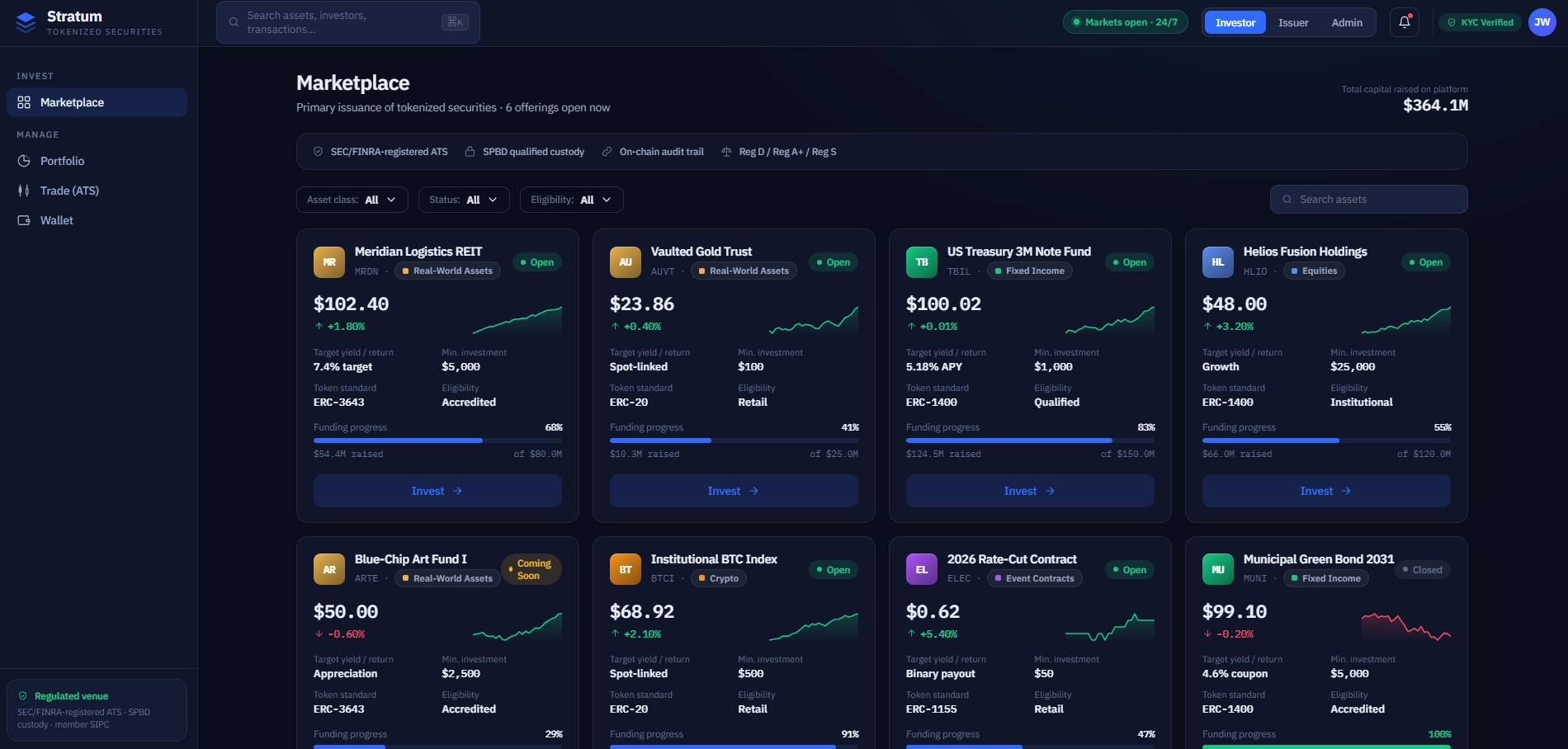
- Solution: AI-augmented engineering supported implementation, testing, and code reviews. The platform provides a unified foundation across 5 asset classes, including crypto, equities, event contracts, fixed income, and other assets, with 10+ integrations covering trading, custody, payments, and KYC/AML.
- Outcome: A multi-asset platform foundation supporting five asset classes and more than ten financial service integrations.Â
- Read the full case study →
Custom MT5 Indicator Development for Forex Trading
- Challenge: A forex client required a custom MetaTrader 5 indicator to retrieve and process market tick data and display trading information directly within the MT5 environment.
- Solution: Developed an MT5 indicator with cloud-based data processing and API connectivity, using AWS S3, AWS Glue, Amazon Aurora, and API Gateway to support data delivery and secure access.
- Outcome: Delivered a custom MT5 indicator integrated with cloud infrastructure for market data processing and visualization within MetaTrader 5.
- Read the full case study →
GTW Prop Trade Pty – FX Trading Platform Modernization
- Challenge: An Australian FX trading business needed to modernize its trading infrastructure to handle high-volume market data and improve trade processing performance.
- Solution: Modernized the platform using .NET Core, Angular, and AWS, integrating FIX, MT4, and MT5 trading technologies to support real-time FX pricing and trade processing.
- Outcome: Processes 2M+ market data events per day, achieves less than 100ms trade processing latency, and established an offshore development center within 1 week.
- Read the full case study →
Get a Trading Software Development Quote
Core Features of Our Trading Software Solutions
Every custom trading software development engagement from Saigon Technology includes these core capabilities, built in from day one rather than added later.
Real-Time Order Books and Advanced Char
Display market depth, bid-ask prices, and trading activity through interactive charts and order book interfaces.Â
Low-Latency Backend Architecture
Optimize order processing and system performance to handle high trading volumes with minimal latency.
Multi-Source Market Data Integration
Aggregate real-time pricing and market data from multiple exchanges, brokers, and data providers.
Trading API and OMS/EMS Integration
Connect with brokers, exchanges, and order management systems to streamline order routing and execution workflows.
Role-Based Access Control
Manage user permissions across traders, brokers, administrators, and operations teams, with activity logs for accountability.
Compliance, Audit Trails, and Reporting
Support transaction monitoring, audit logs, and configurable reporting workflows based on applicable regulatory requirements.
Portfolio and Risk Management
Track positions, monitor portfolio exposure, manage trading limits, and assess risk across accounts and assets.
Real-Time Trade Execution and Notifications
Process order updates, execution confirmations, and market events in real time to keep traders informed.
Trusted by Global Companies
Client Feedback and Testimonials
Why Choose Saigon Technology for Trading Software Development?
Choosing the right partner means finding a team that understands financial workflows, handles complex engineering challenges, and delivers long-term value. Here's what sets Saigon Technology apart as a trading software development company.
Financial Software Experience, Not Just General Development
With 14+ years of experience, 850+ projects, and 350+ clients, Saigon Technology brings proven engineering expertise in building custom trading platforms and financial technology solutions, including a US wealth management platform supported through 2+ years of ongoing development.
Engineering for Complex Trading Workflows
Certified Quality & Information Security
Reduce delivery and security risks with ISO 9001 and ISO 27001 certifications, backed by BSI and established quality management and information security processes.
Top 1% Shortlisted Engineering Talent
Access carefully selected engineers through a three-stage recruitment process, covering talent screening, technical evaluation, and cultural fit.
Validate Before You Commit
Evaluate our engineers through a 2-week risk-free trial on your actual codebase. Every engagement includes NDA protection and full IP transfer under agreed contractual terms.
Competitive Vietnam Engineering Rates
Access experienced engineering talent at $22–$46/hour, with flexible engagement models that help control development costs while scaling your trading technology team.
Saigon Technology helps trading businesses turn complex technical requirements into secure, scalable, and maintainable software platforms.
Trading Software Development Costs and Timelines
Estimated Costs by Project Type
Basic Trading Platform MVP: 3-4 months, $25K-$60K
Forex or Stock Trading Platform: 4-7 months, $50K-$120K
Multi-Asset Trading Platform: 6-9 months, $80K-$180K
Algorithmic Trading System: 4-8 months, $45K-$150K
Enterprise Brokerage Platform: 8-12+ months, $120K-$250K+
What Drives the Cost
Platform complexity: architecture and supported asset classes.
Trading features: charts, matching engines, algorithmic trading, and risk management.
AI and machine learning: model training and ongoing retraining.
Integrations: broker APIs, FIX protocols, and market data feeds.
Security and compliance: encryption, audit trails, and regulatory reporting.
Performance: low-latency processing and infrastructure optimization.
How to Optimize Development Costs
Start with an MVP and prioritize essential trading features.

Use existing broker APIs and market data providers instead of building custom integrations.
Introduce advanced analytics and AI features in phases, not all at once.
Define integration and compliance requirements early to avoid costly rework later.
Built for Trading Performance, Security & ComplianceÂ
Trading platforms require more than reliable code. They need specialized technology stacks, real-time data processing, seamless financial integrations, and security controls designed around market and regulatory requirements.Â
Saigon Technology combines financial software engineering experience with enterprise software development practices to help businesses build trading systems that are scalable, secure, and ready for complex financial workflows.Â
Technology Stack & Integrations
The right technology stack determines execution speed, data accuracy, and system scalability. Our engineering teams work across multiple technology layers:Â
- Core Execution: C++, Rust, Go, and Java for low-latency order processing; Python for trading strategies and machine learning.
- Protocols & Messaging: FIX 4.4/5.0, WebSocket, and Kafka for exchange connectivity, real-time messaging, and order routing.
- Market Data: Bloomberg B-PIPE, Refinitiv, and Polygon.io for real-time market feeds and historical pricing.
- OMS/EMS Integration: FlexTrade, Charles River, and Fidessa for order lifecycle management and broker connectivity.
- AI & Machine Learning: PyTorch, TensorFlow, and FinBERT for sentiment analysis, predictive modeling, and risk analytics.
- Cloud & Infrastructure: AWS, Azure, GCP, and on-premise environments for scalable deployment and high availability.
- Database & Storage: PostgreSQL, TimescaleDB, and Redis for time-series data, transaction records, and low-latency access.
- Frontend & Mobile: React, TypeScript, Swift, and Kotlin for trading dashboards, interactive charts, and mobile applications.Â
Regulatory Frameworks
Trading platforms must account for financial regulations across the markets they serve. Our engineering approach considers regulatory requirements during system architecture and implementation.
- United States: SEC Reg SCI, Reg NMS, and FINRA CAT requirements for trade reporting, market integrity, and audit trails.
- European Union: MiFID II / MiFIR and EMIR for best execution, transaction reporting, and derivatives transparency.
- United Kingdom: FCA rules and SM&CR for governance, accountability, and regulatory oversight.
- Global: ISO 20022, FATF/AML, and KYC/AML integrations for financial messaging, identity verification, and transaction monitoring.
Security & Data Protection
Security controls are integrated throughout the software development lifecycle to protect financial data, trading operations, and user access.
- ISO 27001: Information security management practices.
- AES-256 Encryption: Protects sensitive data at rest.
- TLS 1.3: Secures data transmission between systems.

- Role-Based Access Control (RBAC): Restricts access based on user roles and permissions.

- Audit Logging: Records user activities, transactions, and system events.
- Penetration Testing: Identifies security vulnerabilities before deployment.
- CI/CD Security: Integrates static and dynamic security testing into development pipelines.
Our Trading Software Development ProcessÂ
Discovery & Trading Architecture Workshop
We define business goals, asset classes, trading workflows, latency targets, and compliance requirements to establish the project scope and technical direction.Â
Deliverables: Requirements specification, system architecture, risk register, and project roadmap.Â
Prototype & Technical Validation
We validate critical components through backtesting, latency proof-of-concepts, broker connectivity, and market data integration.
Deliverables: Functional prototypes, POC results, integration assessments, and technical validation report.
Agile Development in 2-Week Sprints
We build trading modules, order management workflows, user interfaces, and third-party integrations through iterative sprints, with DevOps and security practices integrated throughout.
Deliverables: Working software increments, source code, API integrations, and sprint reports.
Trading-Grade QA, Load Testing & Regulatory UAT
We test order flows, system performance, security, fault recovery, trading venue interoperability, and applicable regulatory requirements.
Deliverables: Test reports, performance results, security findings, UAT documentation, and release approval.
Launch, Monitoring & 24/7 SRE Support
We deploy the platform and provide continuous monitoring, L1–L3 incident response, exchange connectivity monitoring, latency SLO dashboards, and infrastructure scaling and recovery.
Deliverables: Production deployment, monitoring dashboards, incident response procedures, and ongoing support documentation.
Our Insights
FAQs
What is trading software development?
Trading software development is the process of designing, building, and maintaining software that enables financial institutions and traders to manage orders, execute trades, and access real-time market data. It supports platforms used by stockbrokers, forex brokers, proprietary trading firms, cryptocurrency exchanges, hedge funds, and investment firms to trade and manage financial assets.Â
How long does it take to build custom trading software?
Timelines range from 3 to 4 months for a basic MVP to 8 to 12+ months for an enterprise brokerage platform. See the cost and timeline breakdown by project type above for specifics. Actual timeframes depend on asset classes, integration count, compliance scope, and whether you reuse legacy code or start greenfield.
How much does it cost to develop a trading platform develop
Costs range from $25,000 for a basic MVP to $250,000+ for an enterprise brokerage platform, depending on asset classes, features, and compliance scope. See the cost breakdown by project type above for specifics. Saigon Technology’s engineering rates run $22 to $46 per hour.
What programming language is best for trading software?
C++ and Rust are the standard choice for ultra-low-latency execution engines and high-frequency trading software. Java and Go dominate OMS and EMS layers where throughput matters more than microsecond latency. Python is the standard for strategy research, backtesting, machine learning, and glue code. Most modern trading platforms use a polyglot stack across these languages.
Should I build custom trading software or buy an off-the-shelf platform?
Build custom when your edge depends on proprietary execution logic, unusual asset classes, or integrations no vendor supports. Buy when standard features and faster launch outweigh customization. A third path, build on a vendor core and layer custom modules on top, is often the right compromise and the model we deliver most often.
How do you ensure regulatory compliance with SEC, FINRA, and MiFID II?
We consider applicable regulatory requirements during architecture design and development. Depending on the target market and business model, this may include support for SEC and FINRA-related requirements in the US, or MiFID II / MiFIR and EMIR requirements in the EU.
Technical capabilities may include audit trails, role-based access control, transaction reporting integrations, and data security controls. Regulatory scope is defined with the client and their compliance advisors to align the platform with applicable obligations.
How does risk-based prioritization improve trading software development?
Risk-based prioritization helps development teams address high-impact trading risks first, such as order execution failures, market data inconsistencies, broker connectivity issues, and latency bottlenecks. By prioritizing these areas during architecture design, prototyping, and testing, teams can validate critical workflows early, reduce integration risks, and avoid costly changes later.