









































































-
OVERVIEW
-
SERVICES
-
MODELS
-
WHY CHOOSE US ?
-
OUR PROCESS
-
TECHNOLOGIES
-
FAQS
How an Offshore Java Developer Works Inside Your Team
Hiring an offshore Java developer means adding a Java engineer based in another country to your team. They work in your repositories, sprint cadence, and code review, under a contract that covers IP, security, and replacement. You get Spring and JVM capacity without a local hiring cycle and keep control of the backlog.
Day to day, little about the work looks offshore. Your engineers join your Slack or Teams channels, take tickets from your board, and push to your Git repositories under your branch rules and coding standards. You keep the product decisions. All of them. We handle what sits around the engineer: screening, onboarding, a secure working environment, delivery management, and replacement.
Two things decide whether it works. Overlap is the first: our teams keep 10–12 hours of overlap with US East and West Coast working days, and for Australian teams they sit only 3–4 hours behind Sydney and Melbourne, so daily stand-ups fall inside your business hours. The second is review. Every Java team we place has a senior engineer who owns pull-request review, so quality never rests on your lead catching everything. When companies try to hire Java developers locally, the thing that usually runs out first is not headcount but review capacity, because every new engineer adds pull requests that someone senior still has to read. Neither factor is optional.
What Our Java Engineers Build
Spring Boot Back Ends and APIs
Microservices and Event-Driven Systems
Cloud-Native Java on AWS
Identity, Access, and Audit Trails
Modernizing Legacy Java Systems
Testing, Support, and Maintenance
Case Studies: Java Systems Our Engineers Built and Run
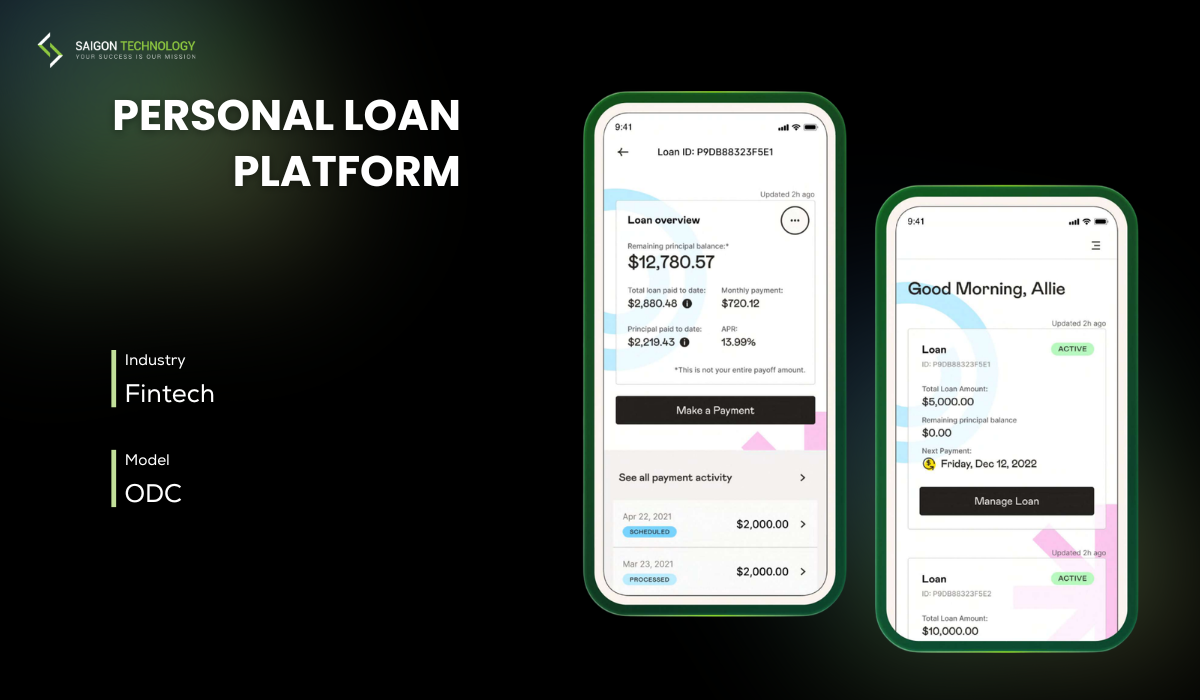
Personal Loans Application: A US Lending Platform on Spring Boot Microservices
- Challenge: The platform spanned many domains, from the application funnel and fraud detection to loan modification, payoff verification, and e-signing. Verification relied on third-party APIs (Plaid, GIACT, TALX) with different formats and occasional failures. The client needed a senior-only team fast, and one legacy module ran on Clojure.
- What we built: Spring Boot microservices organized by domain and run by several service teams. Verification flows normalize data across providers, fall back when a source fails, and retry in the background. The old system moved into the new architecture.
- Engagement / timeline: Offshore Development Center, 3+ years, US market. Service teams scheduled daily overlap across time zones.
- Outcome: Full audit trails across verification, underwriting, and loan servicing; OAuth 2.1 token authentication with secrets in AWS Parameter Store; data handling aligned with GDPR guidelines. Credit decisions run on the client's rules through a third-party decisioning platform.
- Stack: Java 18, Spring Boot, Spring Security, Spring Data JPA, Kafka, REST, GraphQL, gRPC, React, Next.js, AWS (ECS, ECR, CodePipeline, Cognito, DynamoDB, S3), Terraform, Redis.
- Learn more | Read the full case study (PDF) →
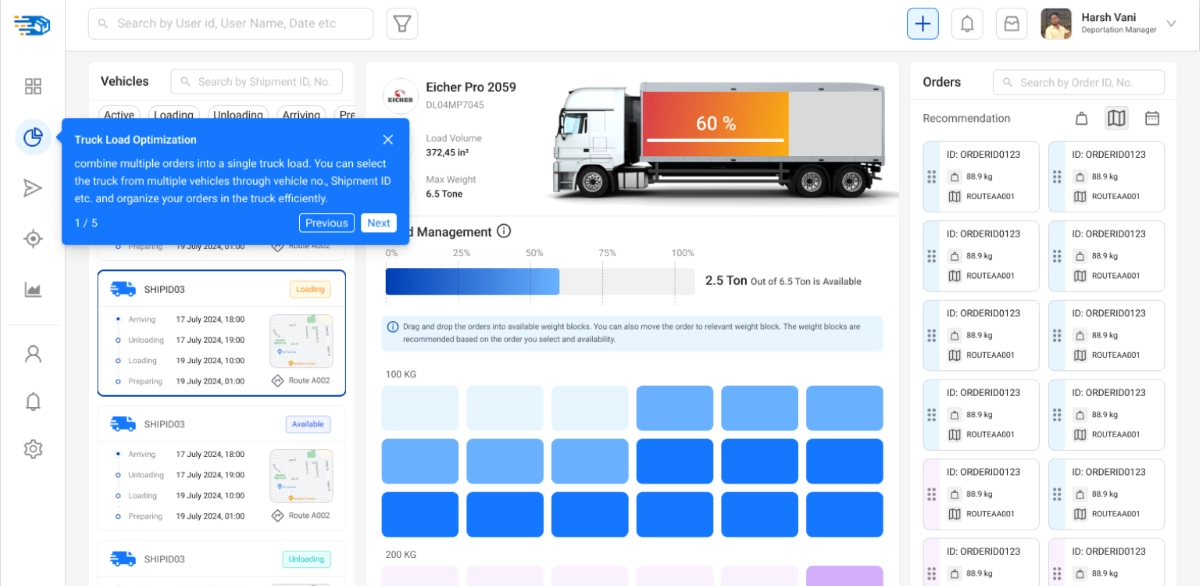
Fleet Management Platform: One Spring Boot Platform for Agencies, Fleet Operators, and Admins
- Challenge: A vehicle leasing and transport company in Australia and New Zealand ran a prototype on spreadsheets, email, and disconnected systems. Legacy tools could not keep up, and external integrations were unreliable.
- What we built: A B2B platform for three user types with role-based access, hotel and car booking, fleet, driver, and crew management, a rule-based alert engine, geozone routing, payroll and invoicing, and API key management with rate limits.
- Engagement / timeline: Hybrid model, 3 months, deployed on AWS.
- Outcome: Travel agencies, transport companies, and administrators work in one platform. Managers decide faster with full visibility into fleets and bookings, and standardized processes carry audit logs and GDPR-compliant consent workflows.
- Stack: Spring Boot, Spring Security, Spring Data JPA, Hibernate, Spring Batch, Spring WebSocket, MQTT, Kafka, Apache Camel, Keycloak, PostgreSQL, MongoDB, Redis, Docker, Kubernetes, React.
- Read the full case study →
Merit Logistics ODC: Rebuilding a Legacy ERP While Keeping It Running
- Challenge: The client's ERP for field, work-allocation, and timesheet management had been built by several vendors over many years. It was hard to change, and the business still depended on it.
- What we built: An ODC worked in three phases. It documented the old system's business rules, then maintained the live ERP while building a new one, using compare testing to confirm both produced the same results. Last came an Android app, written in Java and Kotlin, for check-in and check-out by PIN or face recognition, working with both systems.
- Engagement / timeline: Offshore Development Center under Agile Scrum, with a project manager owning client communication. Daily stand-ups ran at the start of the client's US working day, and weekly reports detailed effort by task and team member.
- Outcome: Work efficiency improved on the client's side, and systematic testing kept the rebuilt system stable under heavy data load.
- Stack: Java and Kotlin (Android), .NET Core, .NET Framework, React, AngularJS, Consul and Fabio for service discovery, a custom API gateway, Grafana.
- Read the full case study →
Send Your Java Brief. Get a Working Prototype in 48 Hours.
- Clickable prototype of your API, service, or admin workflow
- Workflow visualization mapping each request from client app through your services to the database
- Architecture direction covering service boundaries, event streaming, and scale
- Technical recommendation call with our engineering team
Four Ways to Add Java Engineers to Your Team
When you hire offshore Java developers, the contract should match how your Java work is organized. Flexible engagement models let you pick for today's team composition and switch later.
| Model | Best when | What you manage | Billing |
|---|---|---|---|
| Staff augmentation | You have a Java lead and need one to three more engineers | Daily work and priorities | Time and materials |
| Dedicated team | A product line needs its own Java team with a project manager | Priorities and acceptance | Monthly |
| Offshore development center (ODC) | A multi-year roadmap with several service teams | Roadmap and standards | Monthly |
| Fixed price | The scope is defined, such as an MVP or one migration slice | Acceptance criteria | Per milestone |
A Build-Operate-Transfer contract moves the team to you once it runs on its own. Need more than Java? See other stacks we staff.
Staff augmentation
Staff augmentation is the fastest start: you add engineers to your existing team and they report to your lead. Your lead sets the daily work and priorities.
Dedicated team
A dedicated team suits a product line that needs its own project manager. You set the priorities and accept the work.
ODC
An ODC fits Java work that spans years and domains. Two of our case studies ran this way, and you can see how we run a long-running development center.
Fixed Price
Fixed price suits defined scope, such as an MVP or one migration slice. You agree the acceptance criteria up front, and billing runs per milestone.
Build-Operate-Transfer
A Build-Operate-Transfer contract moves the team to you once it runs on its own.
Our Clients
What Our Clients Say
Industries We Serve
Why Choose Saigon Technology for Offshore Java Developers?
A good partner for offshore Java developers gives you senior engineers who already run Spring services in production, a screening process with a tech lead in it, overlap with your working day, and a contract that covers IP and replacement. Saigon Technology lets you interview candidates first and backs every hire with a two-week risk-free trial.
Senior Java Engineers Who Use AI in Their Workflow
Our listed rate is $22–$46/hr, with senior oversight on every team. The rate matters less than what it buys. Hours are the wrong unit. Senior Java engineers who use AI tooling for boilerplate, test scaffolding, and code search spend their hours on design and review, so the same scope needs a smaller team and fewer rebuilds.
That is cost per outcome, not cost per hour. Premium onshore rates tend to squeeze the work buyers can't see: hardening, versioning, test coverage. Teams that hire offshore Java developers from us also get 10–12 hours of overlap with US days.
Your Code, Data, and IP Protected Under NDA
Java back ends tend to hold payment, identity, and lending data. A careless contractor is a direct risk to your customers. Every engagement starts under an NDA from day one, and the code and intellectual property belong to you. Delivery runs on ISO 27001 controls with role-based access to repositories and environments. Where the workload needs it, we structure the engagement to meet PCI-DSS and HIPAA requirements. The identity and audit-trail work above is how those rules show up in shipped code.
Low Churn, and a Replacement When Someone Doesn't Fit
Java systems live for years. APIs that other systems call can't change every time a developer leaves, so continuity is a technical requirement, not a perk. Saigon Technology is ranked #10 in the Medium category of the Southeast Asia Best Workplaces™ in Technology 2026 by Great Place To Work, and named among the Fortune 100 Best Companies to Work For™ Southeast Asia 2025. If a developer isn't the right fit, we replace them. If someone leaves mid-project, you get an equivalent replacement at no extra cost, without disrupting the project.
A Tech Lead in Your Screening Loop
Candidates pass three rounds: Talent Acquisition, a Tech Lead, and HR. Then you run your own interviews, in whatever format your team already uses. A shortlist of matched profiles reaches you in 1–2 working days.
ISO 9001:2015 and ISO 27001, Certified by BSI
Both certifications are issued by BSI (UK) and audited externally, not self-declared. Quality and information security follow the same documented process on every Java team. We are also a Microsoft Solutions Partner.
14+ Years, 400+ Developers, 850+ Projects
14+ years · 400+ developers · 850+ projects · 350+ clients · 3 development centers.
Our offshore Java client engagements stay under NDA, so we show verifiable work on lending microservices, fleet platforms, and a legacy ERP rebuild instead of a client metric we can't publish.
Two Weeks to Decide, Risk-Free
Every hire starts with a two-week risk-free trial on real tickets. Real work, not a test project. Choose staff augmentation, a dedicated team, an ODC, or fixed price, and change models as the work changes.
Why US and Australian Teams Add Offshore Java Developers
Most US and Australian teams don't go offshore for cheaper code. Speed is the usual reason. Local hiring is slow, senior Java engineers are scarce, and the roadmap won't wait for either. Companies that hire offshore Java developers through a partner turn the global talent pool into a shortlist within days, and the partner carries the hiring risk.
Plenty of companies do both. They hire Java developers locally for a core lead role and add offshore engineers around that person.
Lower cost per delivered feature
Senior engineers with AI tooling need fewer people and fewer rebuilds for the same scope, which is where development costs grow.
Less recruitment overhead
No job ads, agency fees, or months of interviews for your internal recruitment team, and lower onboarding expenses.
Faster time to a team
A shortlist in 1–2 working days and a team in about 5 days.
Spring depth in one team
APIs, event streaming, identity, and cloud deployment from one group of offshore Java programmers.
Elastic capacity
Scale across 3 development centers, then scale back after a release, with less redundancy risk than permanent local headcount.
Working-day overlap
10–12 hours with US East and West Coast teams.
Close to Australian hours
Ho Chi Minh City runs 3–4 hours behind Sydney and Melbourne, so stand-ups and code review happen inside Australian business hours. The fleet platform in our case studies was built for an operator in Australia and New Zealand.
Lower hiring risk
Interviews first, then a two-week risk-free trial.
How to Hire Offshore Java Developers with Saigon Technology
Days, not months. You approve every step.
How fast does a new offshore Java developer become useful on a codebase they didn't write? Nhut Nguyen, Tech Lead (Java) at Saigon Technology, explains:
"On a large Spring codebase, I don't ask a new engineer to read everything first. They take one service, ship a reviewed change in week one, and learn the domain from the tests and the pull-request feedback." - Nhut Nguyen, Tech Lead (Java), Saigon Technology
Share a role brief
Java version and frameworks, seniority, overlap hours, and your preferred engagement model. A short discovery call fills in the gaps.
Receive a shortlist of matched profiles
In 1–2 working days, each with the engineer's past projects and stack.
Run your interviews and technical assessment
Including live coding sessions if you use them. Every candidate has already passed a Tech Lead round on our side.
Onboard the team
In about 5 days, with repository access, environments, project management software, and the NDA in place before the first ticket.
Start the two-week risk-free trial
On real work, with regular reports on progress.
Deliver in Agile sprints
With CI/CD pipelines and visible progress. If someone isn't the right fit, the replacement policy applies.
Our Insights
FAQs
How much does it cost to hire offshore Java developers?
Saigon Technology publishes a rate band of $22–$46 per hour, with senior oversight included. Where a role sits in that band depends on seniority and scope. Judge cost per delivered feature, not per hour: senior engineers using AI tooling need fewer people and fewer rebuilds for the same scope, and that is where the savings come from.
Compare rate with rate: salaries are not billing rates. A billing rate also covers benefits, equipment, management, recruiting, and margin. For reference, the US Bureau of Labor Statistics reported a median annual wage of $135,980 for software developers in May 2025.
How fast can an offshore Java developer start?
You get a shortlist of matched Java profiles within 1–2 working days of sending a role brief. After you interview and choose, a team stands up in about 5 days, with repository access, environments, and the NDA in place. The shortlist comes first; the start date follows your interviews.
Can I interview and test the developers before committing?
Yes. Every candidate passes three rounds on our side, with Talent Acquisition, a Tech Lead, and HR. You then run your own interviews or coding tests. The chosen engineer starts with a two-week risk-free trial on real tickets, so you judge technical proficiency and communication on your own work.
How do you protect our code, data, and IP?
Every engagement runs under an NDA, and the source code and intellectual property belong to you. Delivery follows ISO 27001 controls with role-based access to repositories and environments. Where your workload needs it, we structure the engagement to meet PCI-DSS or HIPAA requirements, including audit trails on sensitive data.
What happens if a developer leaves or isn't the right fit?
If a developer isn't the right fit, Saigon Technology replaces them. If someone leaves mid-project, you get an equivalent replacement at no extra cost, without disrupting the project. Mid-project departures are rare, because we agree key commitments with each developer at the start of the engagement.
Which Java frameworks and tools do your developers use?
When you hire offshore Java developers from us, they work across the Spring ecosystem and the cloud tooling around it, and adapt to the frameworks you already run. These are the tools we use most on Java projects.
| Area | What we work with |
|---|---|
| Frameworks and APIs | Java, Spring Boot, Spring Security, Spring Data JPA, Hibernate, Spring Batch, REST, GraphQL, gRPC |
| Messaging and integration | Apache Kafka, Apache Camel, WebSocket, MQTT |
| Identity | Keycloak, OAuth 2.1, OpenID Connect |
| Data | PostgreSQL, MongoDB, Redis, Amazon DynamoDB |
| Cloud and DevOps | AWS, Azure, Google Cloud, Docker, Kubernetes, Terraform, GitHub Actions, AWS CodePipeline |
| Testing | Unit, integration, and E2E tests in the CI pipeline, with peer code review |
How many working hours overlap with US and Australian teams?
Saigon Technology teams keep 10–12 hours of overlap with US East and West Coast working days. For Australian teams, Ho Chi Minh City runs only 3–4 hours behind Sydney and Melbourne. Either way there is room for daily stand-ups, same-day code review, and live debugging with your engineers, with stand-ups set at the start of your working day. For US teams, here is how the main offshore regions compare:
| Region | Working-hour overlap with US teams | What to check |
|---|---|---|
| Latin America | Shares or sits close to US time zones | Senior Spring availability for your stack |
| Eastern Europe | A few morning hours with the US East Coast | Overlap for West Coast teams |
| Philippines | Varies by shift arrangement | Senior back-end depth for your stack |
| Vietnam (Saigon Technology) | 10–12 hours with US East and West Coast teams | Our screening rounds and the two-week trial |
Should I hire offshore Java developers or build an in-house team?
Build in-house when Java is your core product and you can wait out a long local hiring cycle. Go offshore when you need senior engineers within weeks, need skills across APIs, integration, and cloud at once, or want team size to follow the roadmap. Read how to judge an offshore hire beyond the hourly rate.