-
OVERVIEW
-
SERVICES
-
MODELS
-
WHY CHOOSE US ?
-
OUR PROCESS
-
TECHNOLOGIES
-
FAQS
Software Developers for Hire: How Hiring Through a Partner Works
Hiring software developers through a partner means contracting vetted engineers who work inside your team, on your roadmap and in your tools, while the partner handles recruiting, employment, equipment and replacement. You direct the day-to-day work. The partner carries the hiring risk and supplies senior oversight behind each developer.
Most buyers weigh three routes. Each solves a distinct problem, and the right pick depends on how long the role lasts and who will manage it. Vetted talent networks sit between the first two columns: they screen individuals, yet accountability for delivery remains yours.
| Open freelance marketplace | In-house hire | Hiring through a partner (Saigon Technology) | |
|---|---|---|---|
| Time to first qualified candidate | Fast, but you do the filtering | Slow | 1–2 working days, matched shortlist |
| Who vets candidates | You, unless the platform screens | You | We screen; you interview |
| Senior oversight | None beyond the freelancer | Yours | A senior bench behind each developer |
| If someone leaves | You restart the search | You restart the search | An equivalent replacement at no extra cost |
| Employment, payroll, equipment | You, or nobody | You | Us |
| Risk before commitment | Varies by platform | Probation period | Two-week risk-free trial |
Saigon Technology is the third route. Companies that hire software developers this way keep control of priorities, code reviews and the product. We keep the employment, the payroll, the equipment and a bench of senior engineers who step in when a problem needs more than one pair of hands. Freelancers suit short, well-defined tasks. A partner suits roles that will outlast the first release.

Software Developers You Can Hire From Us
AI and Machine Learning Engineers
Back-End Developers
Front-End Developers
Software Architects
Full-Stack Developers
Web and Application Developers
Mobile App Developers
Data Engineers
DevOps and Cloud Engineers
Business Analysts
QC and Test Automation Engineers
Case Studies: How Hired Developers Grew Into Long-Term Teams
The three engagements below started small and lasted. Each traces a distinct path after the first hire: one engineer growing into a trio, two developers kept through three rebuilds, and a nine-person squad that moved from a fixed-price build to a long-term partnership after launch.
"The rate card is the smallest part of what a hire costs. The expensive part is ramp-up, rework, and starting over when someone leaves. Keep the same senior engineer on a product for a year, and most of that cost never shows up." - Phuc (Cris) Tran, Program Manager, Saigon Technology
Smart GIS: One Senior Engineer, Scaled to Three in Two Months
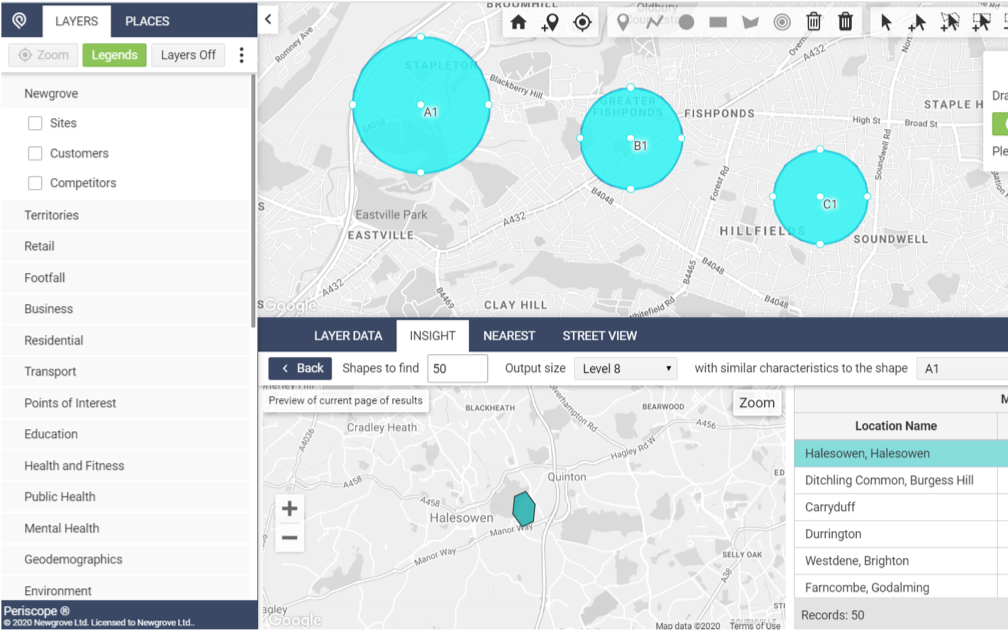
- Challenge: A location-intelligence product needed a senior full-stack engineer in .NET Core and Angular. Its map layers held more than a million records, and our team was new to the GIS domain.
- What we built: New product features and faster map rendering for heavy data layers. The engineers studied spatial databases and GIS vocabulary before writing production code.
- Engagement / timeline: One senior full-stack engineer at the start. After two months, the team grew by one back-end and one front-end developer. Daily status meetings ran with the client's UK team, and YouTrack handled planning and prioritization.
- Outcome: The team tripled inside the client's own planning cadence, with no new hiring cycle on the client side.
- Stack: Google Maps API, Azure Service Fabric, .NET Core, MSSQL spatial database, Angular 9+, Web Workers.
- Read the Smart GIS case study →
Triptomatic: Two Developers Who Stayed Through Three Rebuilds
- Challenge: A Brussels-based startup was building a booking platform for non-emergency medical transport. Requirements and technology choices changed so often that the system was rebuilt from scratch three times.
- What we built: A booking web app and a transporter mobile app covering transport, vehicle and invoice management, real-time chat between transporters, passengers and administrators, fillable PDFs, and APIs for other systems.
- Engagement / timeline: One web developer, one mobile developer and a project manager. Team size was unchanged after a year. Daily meetings, reviews every two weeks and a 12-month milestone plan reported each quarter.
- Outcome: The developers learned the business logic well enough to propose solutions instead of only building tickets, and work efficiency improved on the client's side.
- Stack: AWS, Node.js, React, React Native, MongoDB, Google Maps API, Twilio, Atlassian and Bitbucket, Jest.
- Read the Triptomatic case study →
Loan City: A Nine-Person Senior Team, From Fixed Price to Long-Term Partnership
- Challenge: A Singapore startup arrived with AI-generated requirements and no roadmap. It needed admin, lender and borrower portals within three months, handling sensitive financial data under Singapore's regulatory requirements.
- What we built: A two-week discovery that turned the requirements into an MVP scope and a work breakdown structure, followed by the three portals with Singpass MyInfo identity verification and a rule-based loan-matching engine.
- Engagement / timeline: A nine-member senior team: one project manager, one business analyst, six developers, one UI/UX designer and one QC engineer. Fixed price for the three-month initial build, then a long-term ODC (a team we staff and run for you) after go-live.
- Outcome: An on-time launch. The original developers and QA engineers stayed on afterward for continuous improvement, so their domain knowledge stayed with the product.
- Read the Loan City case study →
Send Your RFP. See Your First Sprint Mapped in 48 Hours.
- Clickable prototype of the first feature your new developers will build
- Workflow visualization mapping how hired developers plug into your sprint, code review and release chain
- Architecture direction covering stack fit, team composition, and scale
- Technical recommendation call with our engineering team
One Developer or a Whole Team: When to Hire a Software Development Team
One developer fits a known skill gap inside a group that already ships. A full team suits a product or workstream that has no owner yet. Picking wrongly burns weeks. Companies that hire developers one at a time for an unmanaged product watch progress stall, while a full team dropped into a healthy sprint duplicates roles you already fund.
| Model | Best when | Who manages day to day | How fast it starts |
|---|---|---|---|
| Staff augmentation | You have a known skill gap in your sprint | You | Shortlist in 1–2 working days |
| A managed product team | A product or workstream needs its own team | Our project manager and tech lead | About five days to stand up the team |
| Fixed-price project | Scope is defined and stable | Us | Per the agreed project plan |
Staff Augmentation
Our developers join your sprints, stand-ups and code reviews under your management. The staff augmentation model suits hourly hiring for a defined role duration, and it scales seat by seat. See how developers join your sprints under this model.
A Managed Product Team
When you need to hire a software development team rather than individuals, we assemble engineers, QA and a project manager around your roadmap and run the day-to-day work. Setup takes about five days. Learn how we build and manage a full product team.
Fixed-Price Projects
For stable, well-defined scope, we deliver against agreed acceptance criteria at a fixed price. Loan City, below, started this way and moved to a long-term team after launch.
Our Clients
Client Testimonials
Industries We Serve
Why Choose Saigon Technology to Hire Software Developers?
A good partner to hire software developers from does five things: it shortlists senior engineers matched to your stack quickly, lets you interview every candidate, publishes its rates, protects your code, and keeps the same people on your product long enough to learn it. Saigon Technology is built around those five tests.
Senior Engineers With AI in the Workflow
Our developers are senior engineers who build with AI inside the daily workflow. AI speeds up the routine work, and a senior engineer stays accountable for everything that ships. The payoff is the same scope with a smaller team and fewer rebuilds, so the total bill drops even when the hourly rate doesn't. Our published rate is $22–$46/hr, with senior oversight on every engagement.
The cheaper-looking alternative is a junior-heavy seat that bills less per hour and more in rework. With 10–12 hours of overlap with US East and West Coast teams, your reviews get answers the same day.
A Matched Shortlist in 1–2 Working Days, and You Interview
From your role brief, we send a shortlist of matched candidate profiles in 1–2 working days. Each candidate is screened for engineering depth, English proficiency, communication skills and problem-solving ability before you see a profile. Then you interview them yourself, before anyone joins your team. A fast match to the wrong person costs more than a slow one, so the final call stays with you. You see exactly who you are getting before the trial starts.
ISO 27001 Controls Around Your Code and Data
A hired developer holds standing access to your repositories, cloud accounts and sometimes production data. That access is the genuine security exposure in any hire. Our delivery runs under ISO 9001 and ISO 27001 certification issued by BSI (UK), with NDAs, role-based access and a secure development lifecycle on every engagement. Work with personal data follows GDPR and PDPA, and healthcare projects add HIPAA and HL7 controls when required. Ask how any vendor handles that access before anyone opens a pull request.
The Engineers Who Learn Your Product Stay on It
Developer churn breaks software you have already shipped. When a developer leaves, the knowledge of why your system works the way it does leaves too. Mid-project departures are rare here because key commitments are agreed upfront, and if one happens, we supply an equivalent replacement at no extra cost without halting delivery. Our Triptomatic and Loan City engagements both kept their original engineers after launch. Saigon Technology ranks #10 in the Medium category of the Southeast Asia Best Workplaces™ in Technology 2026 (Great Place To Work) and is one of the Fortune 100 Best Companies to Work For™ Southeast Asia 2025.
14+ Years · 400+ Developers · 850+ Projects · 350+ Clients · 4.8★
Three development centers and Microsoft Solutions Partner status sit behind every hire. Our case studies publish team shapes and timelines rather than outcome numbers we haven't cleared for publication, because we'd rather show verifiable work than invent a metric.
Advice on When Not to Hire
Sometimes the right answer is a fixed-price project, or no new hire at all. We say so on the first call, before any contract, because an unneeded seat is the costliest hire you can make.
Two-Week Risk-Free Trial, Then Choose the Model
Every placement starts with a two-week risk-free trial. After that, choose staff augmentation, a managed team, fixed price or a long-term ODC, and change models as your roadmap moves. For background, read our general guide to running a developer trial.
What You Get Beyond a Filled Seat
Filling a seat is the trivial part. Most companies hire software developers to close a gap, but the value of a hire shows up in months two through twelve, and that is where a partner earns its rate. When you hire software developer capacity through Saigon Technology, you get:
No recruiting, payroll or equipment costs
So your operational costs track delivered work.
Expansion without a new hiring cycle
Smart GIS went from one engineer to three in two months.
Knowledge that stays
The people who learn your domain remain on your product.
A senior bench behind each developer
A solution architect, tech leads and a project manager who step in on architecture, code quality and technical debt.
Working-hour overlap
Ten to twelve hours with US teams keeps stand-ups and reviews inside one calendar day.
Cost per outcome
Fewer rebuilds and less rework matter more than the hourly rate.
How Hiring Works: From Role Brief to First Sprint
Send a role brief
Include the job title, core responsibilities, required skills, experience level, technology stack, role duration, and whether the role is an individual contributor or a manager. A short discovery call fills any gaps.
Get a matched shortlist in 1–2 working days
With profiles showing past projects, stack depth and seniority.
Interview the candidates yourself
Your technical round, your questions, your verdict.
Start with a two-week risk-free trial
Working on real tickets in your own repository.
Onboard into your sprint planning
Communication channels, version control and code reviews, with a Saigon Technology project manager and tech lead behind the developer.
Scale up, scale down or change
The engagement model as the roadmap moves.
Our Insights
FAQs
How much does it cost to hire a software developer?
Saigon Technology publishes a senior-led rate of $22–$46 per hour. The wider offshore market band runs about $25–$70+ per hour (country-by-country rate benchmarks). For comparison, the median US software developer wage was $135,980 a year in May 2025 (BLS), before benefits and overhead. A salary is not a billing rate, so weigh the total cost before you hire software developers.
How quickly can I hire a software developer?
You get a shortlist of matched candidate profiles within 1–2 working days of sending your role brief. You interview the candidates, choose one, and start with a two-week risk-free trial. If you need a full team with QA and a project manager instead of one developer, setup takes about five days.
Where should I hire software developers: a freelance marketplace, in-house, or a partner?
Choose by how long the role lasts and who will manage it. Freelancers on marketplaces suit short, well-scoped tasks you can supervise. In-house hiring suits permanent core roles, at the cost of a long recruiting cycle. Software developers for hire through a partner suit long roles where you want vetting, continuity and senior oversight without the employment overhead.


How do you vet developers, and what if one isn't the right fit?
Every software developer for hire we put forward goes through a vetting process that screens engineering depth, English proficiency, communication skills and problem-solving ability, measured against the technology stack and seniority your role brief asks for. You still run your own technical interview. If a developer later proves a poor fit, we swap in an equivalent engineer free of charge.

How do your developers work inside my team?
Our developers work inside your team, not beside it. They join your sprint planning, stand-ups and code reviews, work in your tools, and follow the same engineering practices on every engagement, whichever stack your role brief names.

| Practice | What it looks like day to day |
|---|---|
| Agile delivery | Sprint planning, stand-ups, reviews and retrospectives on your cadence |
| Code review | Pull requests reviewed before merge, with a Saigon Technology tech lead behind each developer |
| Testing | Unit and integration tests written with the feature, regression suites in your CI/CD pipeline |
| Tools | Your repository, issue tracker and communication channels, not a separate system |
| Documentation | Code and API documentation kept current, so knowledge stays with the product |
The stack behind each role is listed in the roles section above. Browse our full technology stack or the pages for Python and React. Clients who hire software developers from us get engineers based in our three development centers in Ho Chi Minh City and Da Nang. See what hiring from our home market looks like.
How do you protect my code and data?
We work under NDAs, with role-based access to your repositories and cloud accounts. Our delivery follows ISO 9001 quality management and ISO 27001 information-security controls, both certified by BSI (UK), plus a secure development lifecycle. Projects that handle personal data follow GDPR and PDPA, and healthcare engagements add HIPAA and HL7 controls when required.
What time zones do your developers work in?
Our developers keep 10–12 hours of overlap with US East and West Coast teams, so stand-ups, code reviews and incident calls happen inside your working day. They also align hours with teams in Europe, Australia and Singapore, and record decisions in your communication channels so nothing hinges on a single meeting.
Can I start with one developer and grow into a team?
Yes. You can hire software developer capacity one seat at a time and grow with the roadmap. Smart GIS began with a single full-stack engineer and added a back-end and a front-end developer after two months. When the work outgrows individual hires, you can move to a managed team or a long-term ODC without restarting the hiring process.