




































































-
OVERVIEW
-
SERVICES
-
MODELS
-
WHY CHOOSE US ?
-
OUR PROCESS
-
TECHNOLOGIES
-
FAQS
What Is MCP Server Development?
MCP server development is the process of building a server that exposes a system's data and actions to AI models through the Model Context Protocol (MCP), an open standard introduced by Anthropic in November 2024. An MCP server wraps a database, API, or application and presents its capabilities as standardized tools, resources, and prompts that any MCP-compatible AI agent can discover and call. Custom MCP server development services tailor that server to a specific business system, with the authentication layers, permissions, and hosting a production deployment requires.
In practice, our MCP software development work covers the full server:
- We build in the Python and TypeScript MCP SDKs and speak clean JSON-RPC 2.0.
- We expose the three MCP primitives, tools (actions an agent can call), resources (data and real-time APIs the model can read), and prompts (reusable instructions).
- We ship servers remote or self-hosted, with the authentication and observability that keep them safe under load.
Can you build your own MCP server? Yes, and for a learning project you should. But a server that survives production, connects to sensitive data, and serves autonomous AI agents is an engineering job. That is what we do.
Our MCP Server Development Services
We map every engagement to a real Saigon Technology engineering capability, not a slide. Here is what we build. Note: our focus here is building and securing the server itself; for connecting agents across many existing systems, see our MCP Integration Services. When the models themselves are part of the build, pair a server with our AI Development Services and Generative AI Integration Services.
Our custom tool builders and senior engineers cover MCP server development & integration end to end, the depth thin agency pages and listicles simply do not have.
Custom MCP Server Design & Development
Remote & Self-Hosted MCP Server Deployment
MCP Server Security Engineering
Legacy & API Wrapping
MCP Server Testing, Maintenance & Versioning
Dedicated MCP Developers & Team Augmentation
Case Studies - The Secured Systems Behind Our MCP Server Development
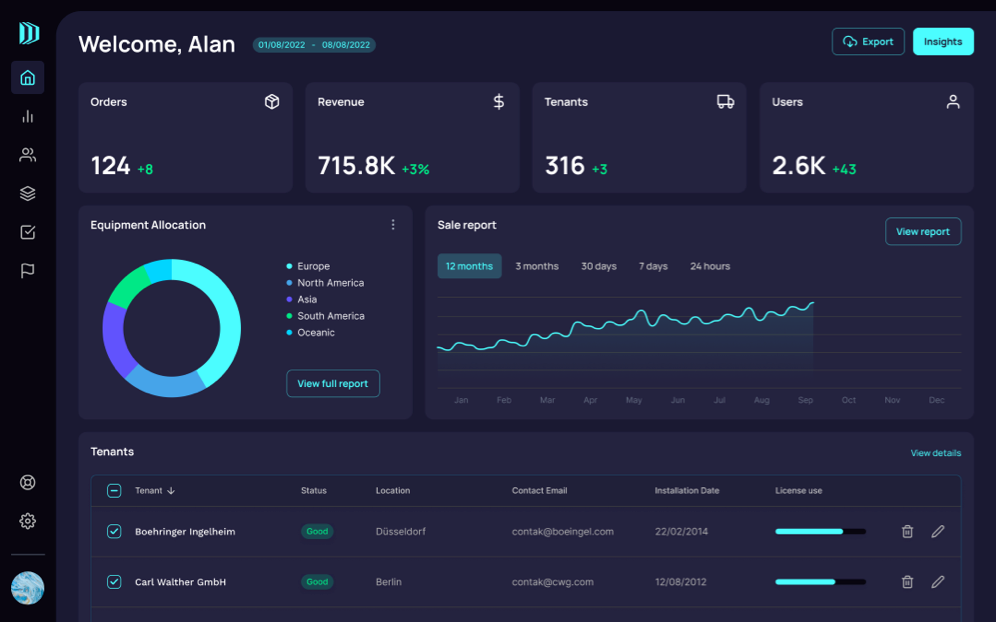
Visit DA - Multi-Tenant Equipment Monitoring
- Challenge: audit equipment health across many locations from one multi-tenant, fully cross-platform web app, a dashboard plus current-data, errors, downtimes, period, energy, and maintenance reports, where the reporting layer had to run complex computations over a pre-existing production database.
- What we built: tenant, user, role, and setting management plus a reporting layer, dashboard and six report types, over that existing database. That is the per-tenant access model and documented data surface an MCP server exposes as resources with per-user scoping, so an agent reads only its own tenant's data.
- Engagement: dedicated team on Agile, daily internal syncs, bi-weekly sprint reviews with the client.
- Outcome: one multi-tenant, cross-platform app serving the report dashboard and all six report types, with the charting library extended in code where it fell short of the reporting spec.
- Stack: .NET Core 3.1, Entity Framework, MSSQL, Bootstrap, jQuery, CanvasJS, multi-tenancy.
- Read the full case study →
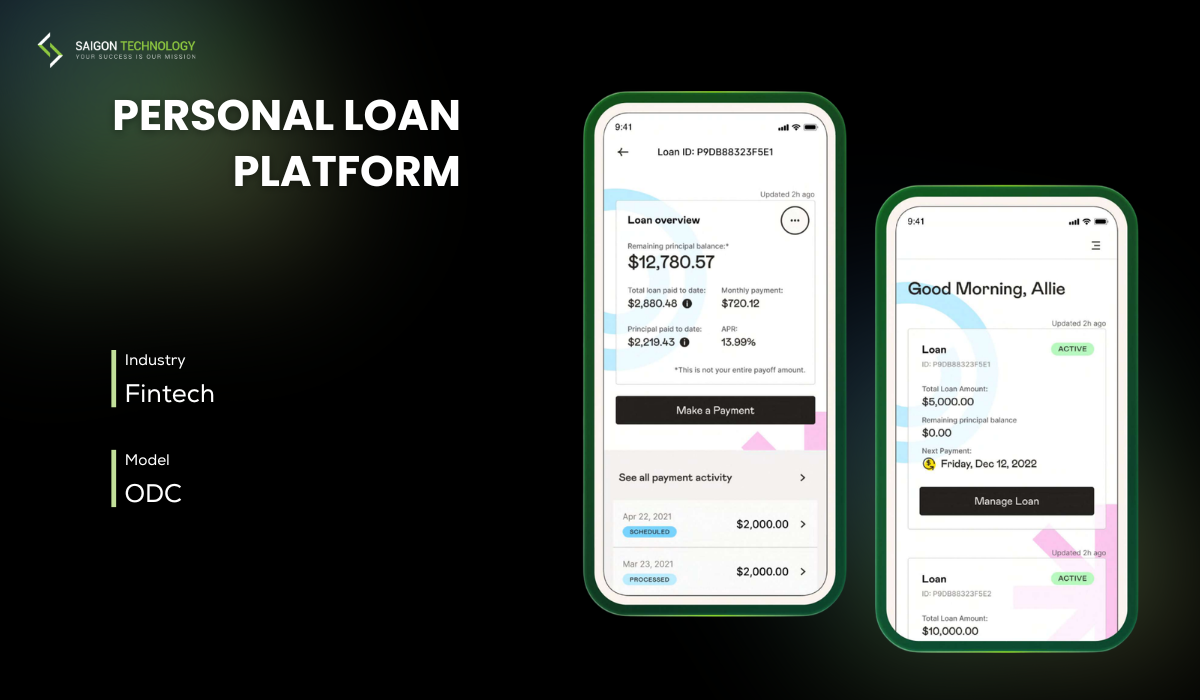
Personal Loan Platform - Fintech APIs at Scale
- Challenge: stand up an offshore team on a domain-driven microservices lending platform spanning ten domains, application funnel, A/B experimentation, fraud identity and fraud detection, transfer-based lending, loan modification, payoff verification, member portal, remittance reporting, credit-institution portal, and automatic e-signing, while ramping to 20 senior engineers in three months and migrating a legacy Clojure module and a bespoke React framework into the new architecture. (Personal Loan Platform case study)
- What we built: clean DDD service boundaries behind REST and GraphQL APIs with Kafka event flow, precisely the typed, least-privilege action surface an MCP server exposes as tools (check a fraud signal, verify a payoff, modify a loan) instead of handing an ai agent raw database access.
- Engagement: offshore dedicated team split into per-service teams, each with at least two hours of daily overlap.
- Outcome: 20 senior engineers onboarded within three months; all ten lending domains delivered on microservices; the legacy Clojure module and the KOA React front end migrated into the new architecture.
- Stack: Java Spring Boot, ReactJS, microservices, REST API, GraphQL, Kafka, DynamoDB, AWS, LaunchDarkly, Mixpanel, Fullstory, Clojure.
- Detail | Read the full case study (PDF) →
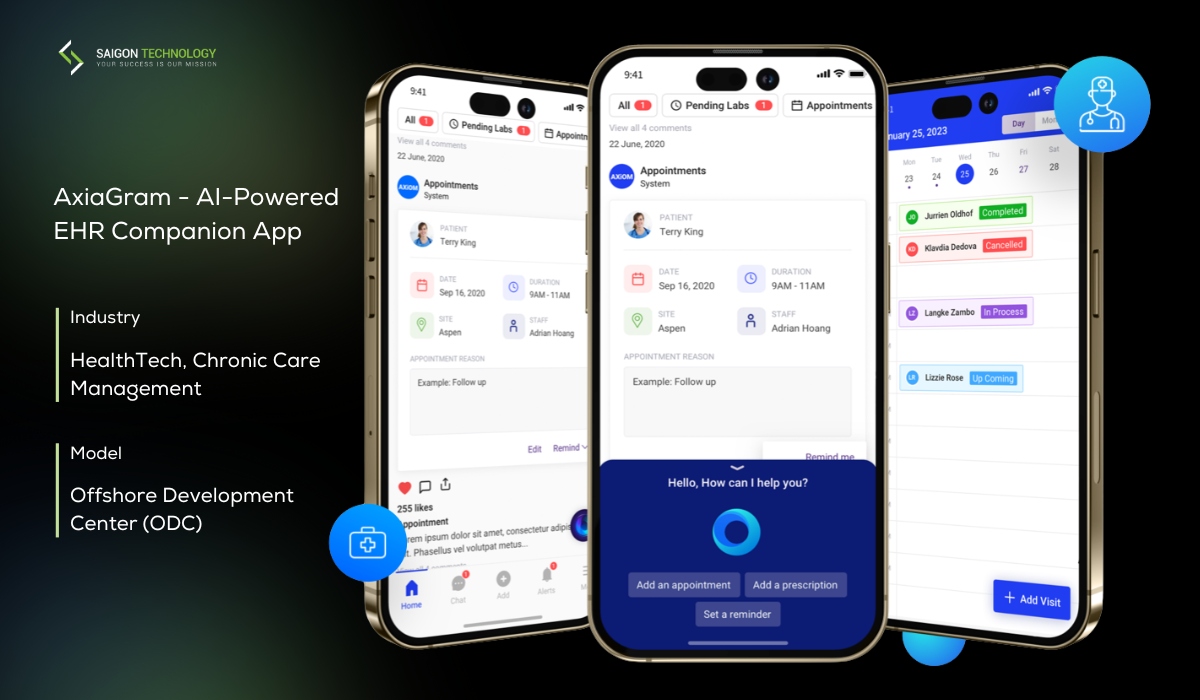
HealthTech - SaaS EHR with Real-Time Clinical Workflows
- Challenge: a multi-tenant SaaS EHR platform where physicians and patients share appointments, patient records, messaging, video and audio calls, reminders, and signed documents, usable by people with limited IT proficiency, and with API development to integrate otherwise disconnected systems. (HealthTech case study)
- What we built: multi-tenancy enforced at the database, server, and client layers; real-time messaging on SignalR; video and audio over Agora (WebRTC); e-signature; a natural-language assistant on LUIS AI; and Swagger-documented api integration across systems — the tenant-scoped permissions and documented API surface that has to exist before clinical data can be safely exposed to an agent.
- Engagement: dedicated SaaS team, daily internal reporting, bi-weekly client review sessions.
- Outcome: recognized for its user-friendly design, functionality, and service; interactive drag-and-drop scheduling, mobile-fillable interactive PDFs, and an NLP assistant shipped on one multi-tenant platform.
- Stack: ASP.NET 6.0, SQL Server 2019, SQLite, React Native, SignalR, Agora.io (WebRTC), LUIS AI, Swagger, multi-tenancy.
- Detail | Read the full case study (PDF) →
Send Your RFP. See Your MCP Server Mapped in 24 Hours.
- A working prototype of your highest-value tool call, end to end
- A tool, resource, and prompt map of the system you name
- Architecture direction: transport (stdio / SSE / Streamable HTTP), OAuth 2.1 scoping, and hosting
- A technical call with the engineers who would build it, including when not to build a server at all
Why Choose Saigon Technology as Your MCP Server Development Company
A good MCP server development company proves three things before it writes a line of code: certified security governance, engineers senior enough to design a permission model correctly, and a track record you can verify. Saigon Technology brings all three to our MCP server development services, ISO 9001 and ISO 27001 certification, 14+ years of delivery, and 850+ projects.
ISO 9001 and ISO 27001 certified (BSI), and a Microsoft Gold Partner
BSI-audited management systems, rare among providers ranking for MCP server work. When an agent can move money and update records, you want access control externally reviewed, not described on a sales call.
Senior engineers plus AI, at a rate onshore-only shops can't match
The most credible MCP-server option today is priced as premium, onshore-only engineering. That constrains scope: at those rates, security hardening and versioning are the first line items cut from an estimate.
We staff the same seniority differently. One senior engineer + AI = three juniors, so you pay for fewer people and absorb less rework, our published implementation rate is $22–$46/hour with senior oversight. Add 10–12 hours of daily overlap with US East and West Coast teams and engineers fluent in English, and the practical difference is scope: you can afford to build the server properly the first time.
Security-first, because an insecure server won't survive production
Most agency pages ranking for MCP work treat security as a closing bullet. We treat it as the build.
Every server we ship gets OAuth 2.1 authorization, least-privilege scoping per user and per agent, sandboxed execution, and audit logging enforced through an AI gateway. An agent inherits the permissions of the person it acts for, nothing more, and every call leaves a trail. Our secure SDLC aligns with GDPR and PDPA, and we work to HIPAA/HL7 for healthcare and PCI-DSS/SOC 2 for fintech when your vertical demands it.
14+ years, 850+ projects, 350+ clients, with case studies you can read
We'll be straight: MCP is new, and the three case studies above aren't MCP projects. They're the multi-tenant access models, secured fintech APIs, and compliance-bound clinical systems an MCP server exposes, verifiable adjacent work, not an invented metric.
A team that stays, your server is versioned software, not a one-off
An MCP server is never finished, schemas change, tools get added, and every version must ship without breaking the agents already calling it. That relationship fails when the team turns over. Saigon Technology was named to Fortune 100 Best Companies to Work For™ Southeast Asia 2025 and Southeast Asia's Best Workplaces™ in Technology 2026. We shortlist the top 1% of engineers, and you interview them before onboarding, so whoever designed your tool schemas is still here to change them.
Architecture advice from day one, including when not to build a server
Not every workflow needs MCP, sometimes a direct API is simpler, or your data isn't ready. You get that in discovery, not after paying. Research Labs de-risks mcp development with live demos at experiment.saigontechnology.vn.
A low-risk way to start
Interview the engineers, then run a two-week risk-free trial before committing. Then choose: hire MCP developers through staff augmentation, stand up a team of dedicated MCP developers, or scope a fixed-price build.
Trusted by Global Clients
What Our Clients Say
Industries We Serve
We build MCP-powered solutions across regulated and data-heavy sectors, financial services, healthcare operations, logistics, eCommerce, and real estate, each with the compliance and standards-compliant architecture the vertical requires.
Who We Build For
We build production-ready solutions for teams putting agents to work on real systems:
AI product & SaaS teams
Shipping agentic features that need an enterprise-grade MCP server behind them.
Enterprises
Exposing internal systems to agents safely, with governance and audit built in.
Financial services firms
Need auditable, least-privilege servers for AI-driven analysts working over market data and financial reports.
Healthcare operations
Hospitals and care providers needing HIPAA-compliant MCP infrastructure for medical document analysis, EHR searches, and clinical decision support.
Benefits of Custom MCP Server Development
A well-built server pays off across your whole AI roadmap. Where it fits, the server can also expose vector databases and memory layers as MCP resources, a supporting capability that serves the build rather than being the main event.
Build once, reuse everywhere
One server exposes a system to every MCP-compatible agent, not a new integration each time.
Agents act on live data
Reading real-time memory, user history, and current records reduces hallucinations.
Vendor-neutral
Swap large language models (LLMS) without rewiring your tools.
Centralized security & audit
One governed surface instead of ad-hoc scripts.
Faster time-to-value
Agentic features and workflow orchestration ship sooner, with cleaner context management.
Performance you can trust
MCP software development tuned for high availability, low latency, and high request throughput through deliberate performance optimization.
Our MCP Server Development Process
Discovery & Architecture Planning
Map your workflows and systems, decide which capabilities become tools, and choose remote vs. local. This discovery & architecture planning step defines your custom MCP architecture.
Server Design
Model the tools, resources, and prompts; design schemas and argument parsing.
Agile Development
Build the server in short, transparent sprints with working demos, run on our Agile delivery methodology.
Security & QA
Auth, least-privilege, sandboxing mechanisms, and MCP Inspector testing across context switching and error paths.
Deployment
Ship to your chosen hosting and transport, tuned for scaling and high availability.
Maintenance, Versioning & Support
Ongoing monitoring, upgrades, performance tuning, and MCP development services so the server evolves safely.
Our Insights
FAQs
What is MCP server development?
MCP server development is building a server that exposes a system's data and actions to AI models through the Model Context Protocol. The server presents your database, API, or app as standardized tools, resources, and prompts that any MCP-compatible agent can discover and call.
What does an MCP server development company do?
An MCP server development company designs, builds, secures, and maintains custom MCP servers on your behalf. That means architecture, tool and resource design, authentication and least-privilege access, hosting, testing, and versioning, so your AI agents can act on your systems reliably in production.
Should I build my own MCP server or hire a development company?
If you are learning or prototyping, build your own, see our upcoming guide on how to build an MCP server. If the server touches sensitive data, needs OAuth 2.1 and audit trails, or must run reliably for real users, hiring a company de-risks security, performance, and long-term maintenance.
MCP server vs. REST API, why not just expose an API?
A REST API is written for developers who code an integration. An MCP server translates the same capabilities into typed tools, descriptions, and scoped auth that an LLM needs to pick the right action and call it correctly the first time, without custom integration code per agent.
Which AI agents and clients can call our MCP server?
Any MCP-compatible client, including Claude and Claude Code, ChatGPT connectors, GitHub Copilot, and Cursor, plus agent runtimes built into common enterprise tools, because MCP is an open standard rather than a single-vendor feature.
How much does custom MCP server development cost?
Cost is project-based and depends on scope, systems, and compliance. Saigon Technology's published implementation rate is $26–$46/hour with senior oversight, senior-led and AI-augmented, so you get premium seniority without a premium onshore-only bill.
How long does it take to build an MCP server?
A focused proof of concept typically takes 2–4 weeks. A production-grade server with authentication, testing, and hosting usually runs 1–3 months, depending on how many systems it exposes and the compliance bar.
Which technologies, standards & compliance frameworks do we build with?
Technologies & tools: MCP Python SDK and TypeScript SDK · JSON-RPC 2.0 · stdio / SSE / Streamable HTTP · Python, Node.js, .NET · Docker, Kubernetes, Terraform, Cloudflare Workers · AWS / Azure / GCP · MCP Inspector for testing.
Standards & compliance: OAuth 2.1 · least-privilege / RBAC · secure SDLC aligned with GDPR & PDPA · HIPAA / HL7 for healthcare · PCI-DSS / SOC 2 for fintech.
Our protocol expertise keeps every build a standards-compliant architecture that fits the wider mcp ecosystem, MCP is an open standard now supported broadly across major AI clients (Claude and Claude Code, ChatGPT connectors, GitHub Copilot, Cursor, and enterprise agent runtimes).
Remote or local MCP server, which should we build?
Local (stdio) servers suit developer tools and single-machine workflows. Remote servers (SSE or Streamable HTTP) suit shared, multi-user, or cloud deployments. We recommend the right transport during discovery based on your users, data residency, and scaling needs.
How do you secure a custom MCP server?
We apply OAuth 2.1, least-privilege and per-agent scoping, authentication layers, sandboxing, and audit logging, enforced through an AI gateway. An agent inherits only the permissions of the user it acts for, nothing more, with a full trail for compliance.