-
OVERVIEW
-
SERVICES
-
MODELS
-
WHY CHOOSE US ?
-
OUR PROCESS
-
TECHNOLOGIES
-
FAQS
What Are Minimum Viable Product (MVP) Development Services?
MVP development services build the leanest functional version of a product, its core features only, so a company can launch fast, test the idea with real users, and validate product-market fit before investing in full-scale development.
A minimum viable product is the simplest version of your product that still delivers real value. That's the whole point: validate before you invest. Instead of spending a year and a large budget building every feature you imagine, you build the core, ship it to a targeted user group, and use real user feedback to decide what comes next.
Our MVP software development services cover the full path: discovery, prototyping, design, agile build, launch, and the iteration phase that follows. Every step is designed around lean startup principles: reduce risk, shorten time-to-market, and replace guesswork with behavioral data.
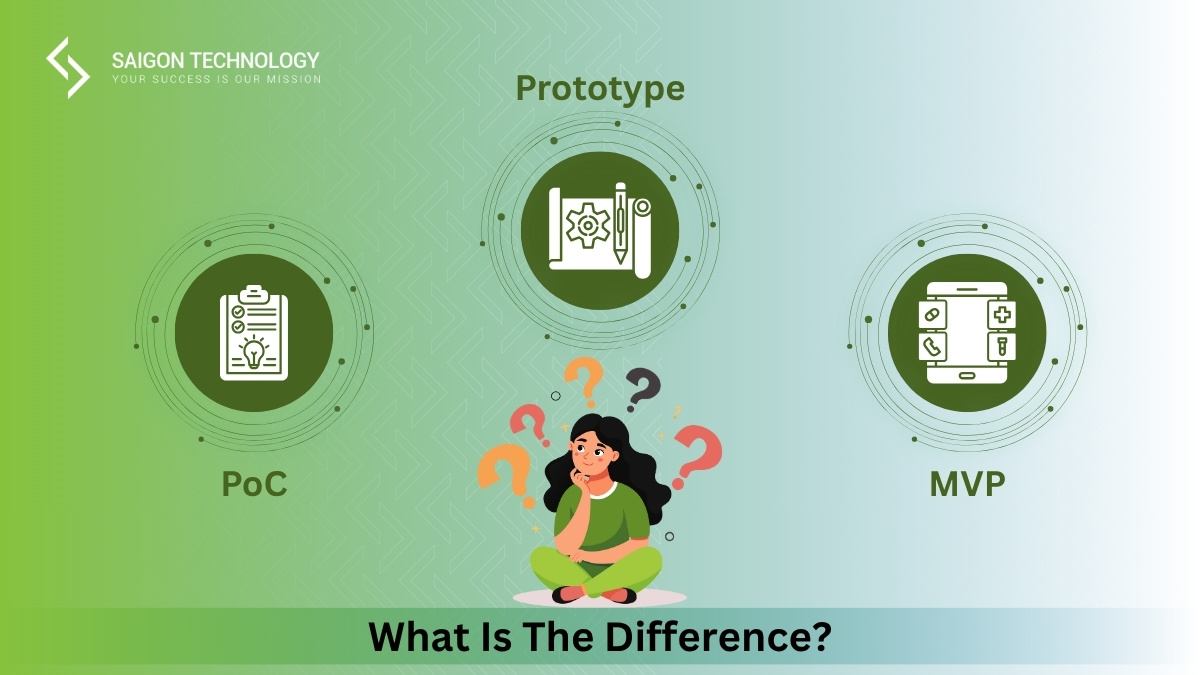
MVP vs. proof of concept: a proof of concept only tests whether an idea is technically possible; an MVP is a real, deployable product with just enough features for early users to prove demand. We build MVPs, not throwaway demos.
Saigon Technology has spent 14+ years and 850+ projects turning ideas into working software for 350+ clients worldwide. We are ISO 9001 and ISO 27001 certified, senior-led, and AI-augmented, so your MVP development moves fast without accumulating the technical debt that sinks the next release. The goal of an MVP isn't a throwaway demo. It's a validated foundation you can scale, and we build it as one from day one.

Our MVP Development Services
MVP Strategy & Discovery
Prototyping & UX/UI Design
Mobile App MVP
AI & Generative-AI MVP
Quality Assurance and Testing
Post-MVP Scale & Maintenance
Case Studies
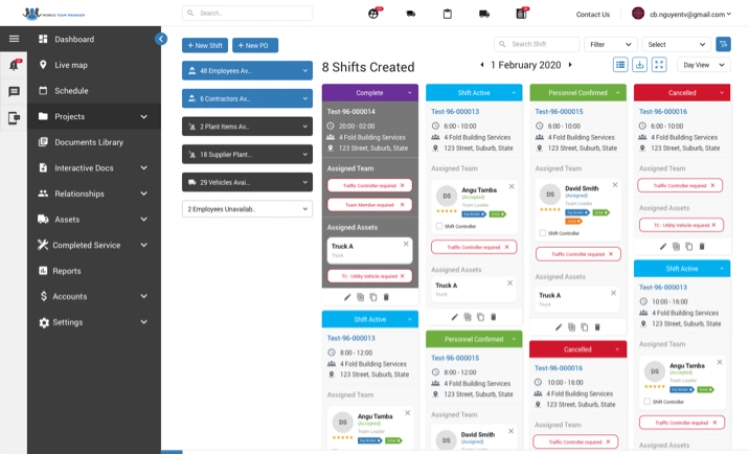
Mobile Team Manager (MVP → Global SaaS)
When Mobile Team Manager approached us, the client was unsure how to proceed with product development. We proposed an MVP-first, three-phase plan:
- Phase 1: MVP. Build only the essential features required for the product to function.
- Phase 2: Adoption. Add the features that improve the user experience and attract customers.
- Phase 3: Differentiation. Perfect the advanced features that set the product apart from competitors.
The result: we helped transform the client's business model into a Software-as-a-Service provider, and the Mobile Team Manager platform is now used by industries and businesses across the globe. The build spanned a real production stack: React Native, ASP.NET, Angular, SignalR, and a multi-tenant architecture with automated CI/CD via Jenkins.


Peptalk AI (MVP to Validate an AI Product)
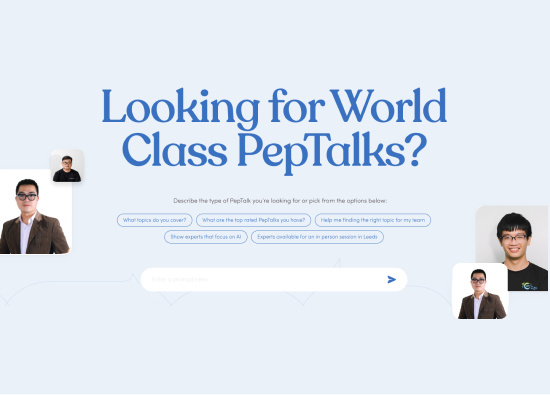
To validate the idea behind Peptalk AI, the client built its MVP first. The product: a smart chatbot that transforms how clients find and book experts for meetings and events.
- The chatbot collects a user's requirements as keywords, then uses text-embedding and semantic similarity to search a database and recommend the closest-matching experts.
- Users can view expert detail and submit a booking request in a single conversational flow.
- We worked to a fixed-price model with clear acceptance criteria agreed before development began, and balanced large and small OpenAI models to control cost without losing accuracy.
A senior team (1 project manager, 4 developers, 1 business analyst, 1 QC) delivered it on a stack of Python, LangChain, ChromaDB, FastAPI, OpenAI, and Angular.
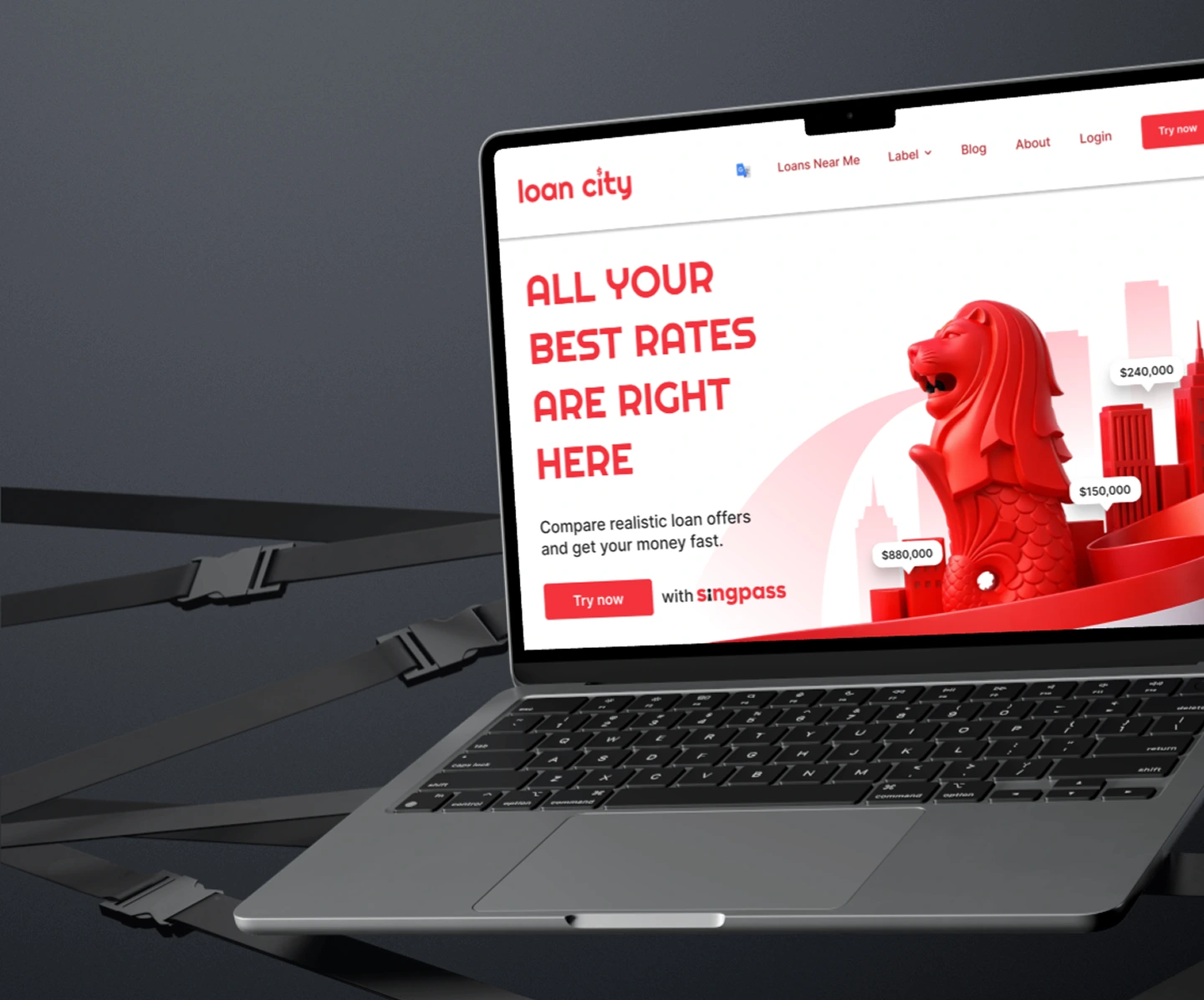
Loan City (Scoped MVP → Fintech Platform → ODC)
A Singapore-based fintech startup came to us with AI-generated requirements, but no roadmap and no clarity on the right technologies. We bridged the gap with a two-week discovery engagement:
- We restructured the requirements into functional modules and defined a realistic MVP scope for Phase 1.
- We recommended a stack balanced for scalability, security, and Singapore's financial-services regulations, then produced a work-breakdown structure and delivery plan.
From there, the team built a three-portal digital loan comparison platform: borrower, lender, and admin, in a strict three-month timeline, with a security-first approach (encryption, access control, audit trails). The engagement then matured from fixed price into an ODC partnership for continuous delivery.
Outcomes reported on the project: 50+ lenders and 2,000+ borrowers onboarded within three months, ~40% reduction in manual processing time, and under-three-second loan matching.
Send Your MVP Idea. See It Working in 24 Hours.
- Clickable prototype of your MVP's core value flow
- Scope map separating must-haves from later phases
- Architecture direction built to ship fast and scale later
- Launch-readiness call with our engineering team
Who We Build For
MVP development is commonly tied to startups, but it serves any team that needs to de-risk a build.
Startups & non-technical founders
Validate an idea on a limited runway and reach problem-solution fit before you raise or spend big. Many founders also get CTO-like guidance on stack and sequencing.
SaaS scale-ups
Add and test features against real retention and churn data instead of opinion.
Enterprises & new product lines
Prove an internal bet with an embedded product team, without pulling your core engineers off the roadmap.
Regulated products
In finance and fintech sectors and healthcare, we build compliant MVPs with robust security protocols and stringent compliance standards, including HIPAA compliance and HL7 where required.
Trusted by Global Clients
What Our Clients Say
Why Choose Saigon Technology as Your MVP Development Company?
Choosing the wrong partner is one of the most expensive mistakes an early-stage team can make. Here's what makes us a minimum viable product development company you can build a business on, and what separates a serious MVP software development company from a generic dev shop.


Senior engineers + AI
One senior engineer paired with AI delivers the output of three juniors, fewer people, more throughput, less rework. We don't pad teams with juniors.
ISO 9001 & ISO 27001 certified
Quality and information-security practices are built into how we work, not promised after the fact.
14+ years, 850+ projects, 350+ clients
Real delivery experience across healthcare, fintech, and logistics.
Vietnam cost-to-quality
Published rates of $22–$46/hour put strong engineering within a startup budget.
Fluent English + US time-zone overlap
10–12 hours of daily overlap with US East and West Coast teams means fast feedback loops and clear project progress.
Two-week risk-free trial
Interview candidates first and start a trial before any long-term commitment.
From-day-one architecture advice
We give you business-engineering alignment and solution architecture guidance from the start, not just task execution.
IP protection built in
Strict NDAs, legal safeguards, role-based access, and full ownership transfer through a clean handover process keep your IP protection absolute and your user privacy protected.
Benefits of MVP Development Services
A lean MVP changes the economics of building software. Here's what you gain:
Validate before you scale
Test with real users and confirm product-market fit before committing your full budget.
Faster time-to-market
Prioritize the core features and ship early, so learning starts now, not next year.
Lower cost, leaner spend
A focused build avoids paying for features no one uses. Pendo's Feature Adoption Report found that about 80% of software features are rarely or never used; feature prioritization keeps you out of that trap.
Investor-ready traction
A working product with real users is stronger proof than any pitch deck.
Data-driven roadmap
Product analytics, user interviews, and success metrics, retention, LTV, activation, drive every decision on the post-launch roadmap.
Built to grow
The best MVP development companies ship an MVP that scales; ours is built on a scalable architecture from the first commit, so v2 doesn't mean starting over.
Our MVP Development Process
Discovery & Consulting
Market research, stakeholder interviews, and user personas define the core hypotheses and the discovery phase deliverables, scope, roadmap, and architecture.
Feature Prioritization
MoSCoW and Kano frameworks separate essential from aspirational and set the MVP scope.
UX / Prototype Design
User journey mapping, wireframes, and a clickable prototype creation stage, validated by user testing.
Agile Build
Development in sprints with QA in-loop, backed by CI/CD pipelines and deployment pipelines for reliable releases.
Launch & Measure
Beta launches to a targeted user group, instrumented with analytics dashboards to capture real usage.
Iterate & Scale
Feedback loops and behavioral data shape the next sprint; scope control and disciplined risk management keep the build on budget and on time.
Our Insights
FAQs
What are minimum viable product (MVP) development services?
Minimum viable product development services build the smallest functional version of a product, its core features only, so you can launch quickly, gather real user feedback, and validate product-market fit before investing in full-scale development. The approach reduces cost and risk while shaping the product around real demand.
What does an MVP development company do?
An MVP development company guides you from idea to validated product: discovery and feature prioritization, prototyping and design, agile build with QA, launch, and the iteration phase that follows. A good partner also advises on scalable architecture so the MVP grows into a full product instead of a dead end.
How much do MVP development services cost?
Cost depends on scope, complexity, and platform. Saigon Technology's published engineering rates are $22–$46/hour, so a focused MVP fits a startup budget far better than in-house hiring. We scope the essential features first to control spend and prevent budget overruns.
How long does it take to build an MVP?
Most MVPs take about 3–6 months, depending on complexity. For example, we delivered Loan City's three-portal fintech platform in a strict three-month timeline through disciplined agile development and scope control.
Should I build my MVP in-house or outsource it?
Outsourcing to an experienced MVP software development company is usually faster and cheaper for early-stage products: you skip hiring, get a full senior team on day one, and keep in-house resources on your core work. MVP builds are short-term by nature, which makes an external partner a natural fit.
What's the difference between a PoC and an MVP?
A proof of concept tests whether something is technically possible. An MVP is a real, deployable product with just enough features for early users, built to test demand and gather feedback, not just to prove technical feasibility.
Will my MVP scale into a full product?
Yes, when it's built for it. We design on a scalable architecture from the start, so post-launch you can add feature rollouts, handle infrastructure scaling, and manage technical debt deliberately. Mobile Team Manager began as an MVP and grew into a global SaaS platform.
What technologies and compliance standards do we use for MVP development?
We choose the stack for technical feasibility and long-term scale, never for novelty. Core technologies
- Backend: .NET, Java, Node.js, Python
- Frontend: React, Angular, Vue.js, TypeScript
- Mobile: iOS, Android, React Native, Flutter
- AI/ML: Python, TensorFlow, PyTorch, LLMs
- Cloud & DevOps: AWS, Azure, Google Cloud, Docker, Kubernetes, Terraform
MVP architecture & cloud engineering. We favor a cloud-native architecture with API integrations and, where scale demands it, microservices architecture, so infrastructure scaling, cloud deployment, and future AI integration are straightforward rather than a rebuild. Standards & compliance. ISO 9001 and ISO 27001 practices; NDAs, role-based access, and a secure SDLC aligned with GDPR and PDPA; HIPAA compliance and HL7 for healthcare products when required.