





























































-
OVERVIEW
-
SERVICES
-
MODELS
-
WHY CHOOSE US ?
-
OUR PROCESS
-
TECHNOLOGIES
-
FAQS
What Are Software Integration Services?
Software integration services connect separate applications, data sources, and systems so they exchange information and work as one. They use methods such as APIs, middleware, ETL data pipelines, and event-driven messaging to eliminate data silos, enable cross-system interoperability, and automate workflows across your organization.
In practice, system integration services turn a patchwork of tools: ERP, CRM, HRM, cloud platforms, and homegrown apps, into a single digital ecosystem. Saigon Technology delivers software integration solutions that keep your data consistent, your processes automated, and your systems ready to scale. We start with your business objectives, map every integration requirement, and design the right approach before a single line of code is written.
Our Software Integration Services
API Integration & Development
Enterprise Application Integration (EAI)
Data Integration & Migration
Cloud Integration
Legacy System Integration
Generative AI Integration Services
Middleware & iPaaS Integration
Real-Time & Event-Driven Integration
Software Integration Case Studies
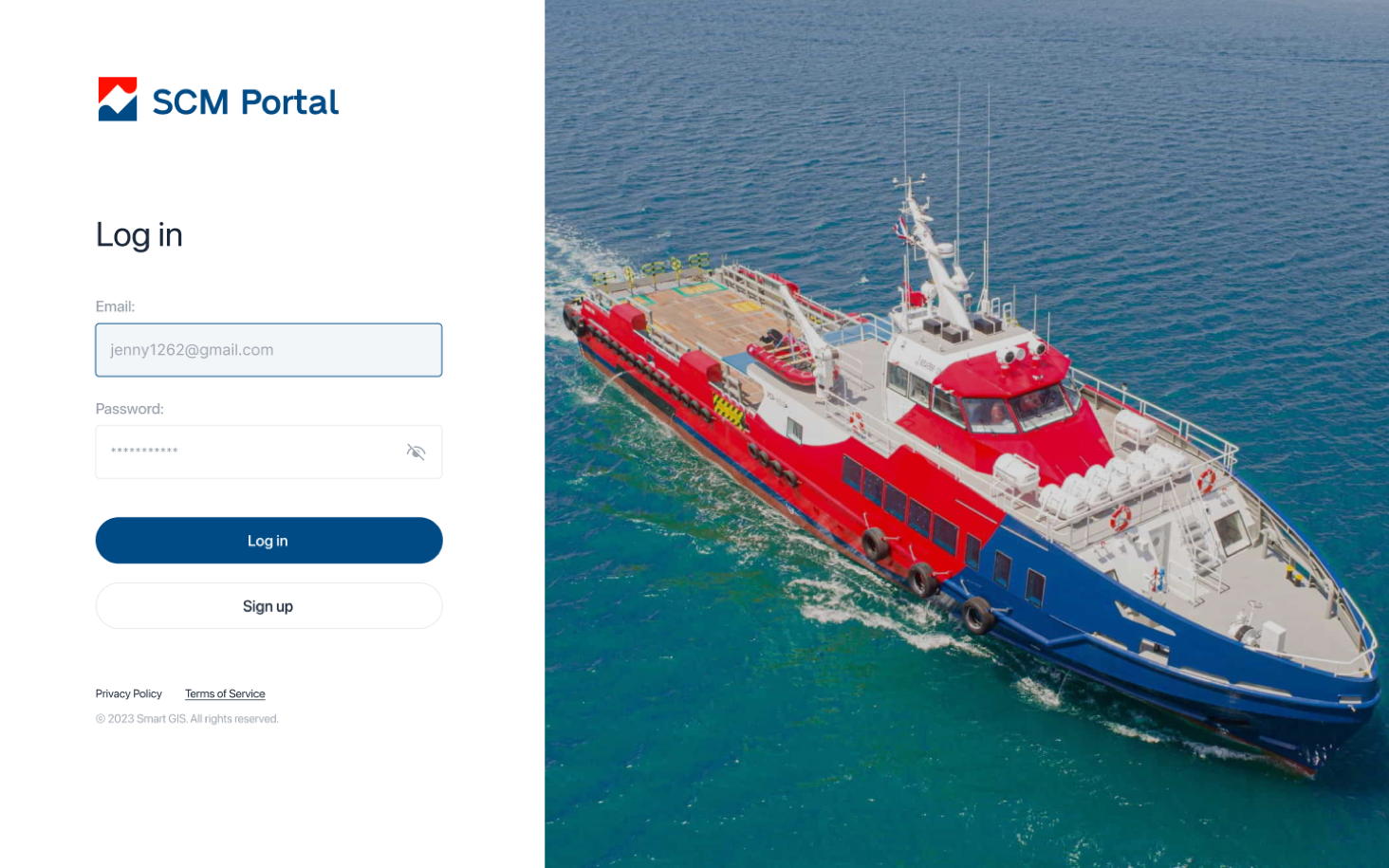
SCM Portal (SAP/ERP Integration for Supply Chain)
- Challenge. The client needed an internal portal that could seamlessly integrate with their SAP and ERP systems to manage the full PR/PO/RFQ workflow for vessel assembly and service demand, while coordinating with external vendor and vessel teams.Â
- Solution. Saigon Technology built a centralized web portal with role-based user management and end-to-end requisition workflows. We implemented SAP integration to record quotations, generate PO numbers, and update status in real time, plus SharePoint document handling and vessel-team integration for goods receipt/issue verification. We took ownership of the database layer to reduce cross-team dependencies.Â
- Stack. ASP.NET / .NET Core, MSSQL & MySQL, ADO.NET, SAP integration, SharePoint.
- Read the full case study →
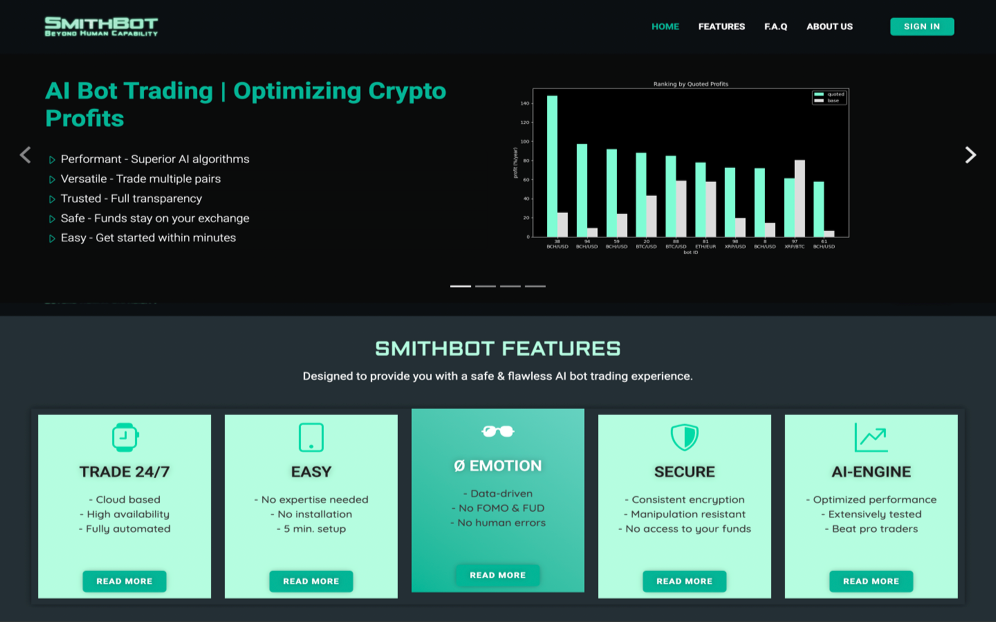
SmithBot (Third-Party API Integration Bridge)
- Challenge. The client needed a web application to act as a bridge between their automated crypto-trading bot server and multiple cryptocurrency exchanges, many of which had inconsistent or incomplete APIs, while serving end users who subscribe to the bots.
- Solution. We integrated the existing bot server via REST API and connected numerous exchange APIs, processing each user's trade signals in parallel and placing orders reliably. We cached exchange data to reduce API calls, engineered around IP-ban and rate-limit risks, and streamed logs to a searchable interface so support staff could track subscriptions and activity.
- Stack. React, Node.js, AWS (Lambda, API Gateway, Cognito, S3, ElasticSearch, Postgres).
- Read the full case study →
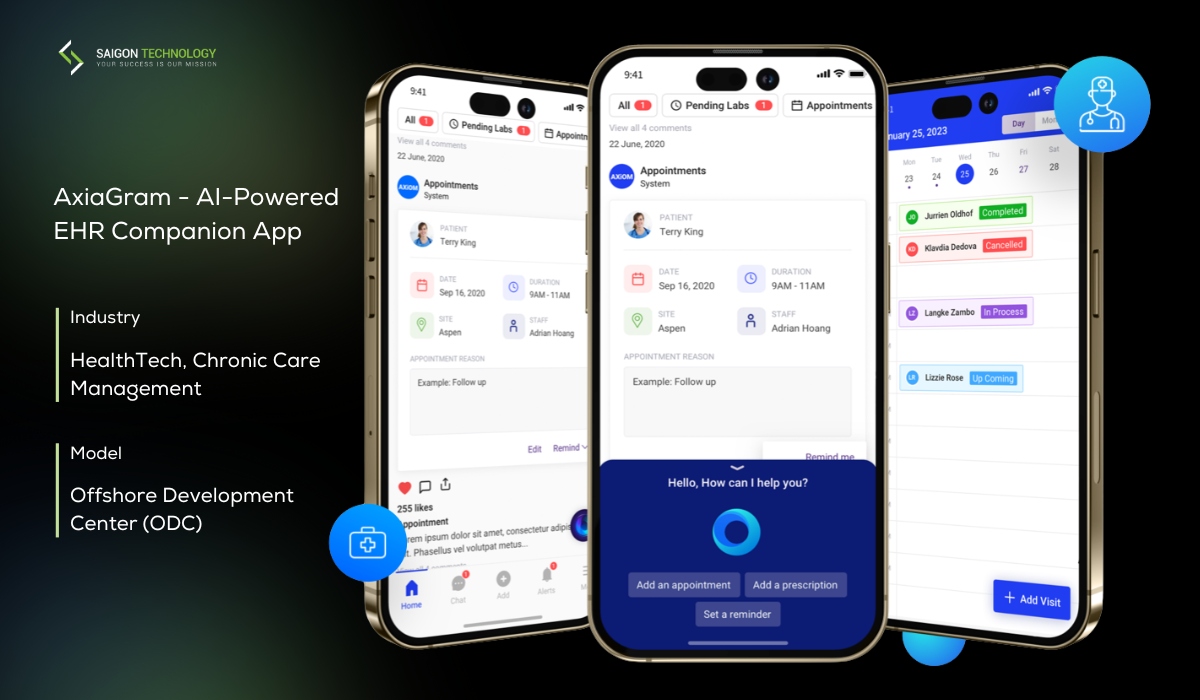
AxiaGram (HL7-EHR Integration for US Telemedicine)
- Challenge. A US telemedicine provider needed a HIPAA-compliant companion app that integrated directly with hospital EHR systems to streamline remote consultations, chronic-care workflows, and clinical documentation.
- Solution. Saigon Technology delivered an AI-powered EHR companion app with HL7 integration into US hospital systems, voice-driven note-taking, secure messaging, and real-time video (Agora + Wowza). The integration kept clinical data synchronized and workflows unified across care teams.
- Reported outcomes: 40% reduction in development time and 6M+ medical records handled with security and precision.
- Stack. .NET Core, Angular, Azure, HL7 integration, Voice AI, Agora, Wowza.
- Detail | Read the full case study (PDF) →
Send Your Systems. See Them Connected in 24 Hours.
- Working prototype linking two of your core systems
- Integration map of data flows, APIs, and triggers
- Architecture direction covering reliability, security, and scale
- Technical recommendation call with our engineering team
Why Choose Saigon Technology as Your Software Integration Company?
Choosing the right software integration company comes down to engineering depth, trust, and the ability to advise, not just execute. Here is what sets us apart:Â
Senior engineers + AI
Senior-led teams augmented by AI deliver more output with less rework, fewer people, cleaner custom software integration services.Â
ISO 9001 & ISO 27001 certified
Quality and information-security management verified by BSI (UK); a certified AWS partner approach to secure, cloud-native solutions.
14+ years, 850+ projects, 350+ clients
A track record across healthcare, fintech, and logistics that proves we ship complex integrations.
Industry-specific experts
Our integration engineers and industry-specific experts understand the data models and regulations of your domain.
Vietnam cost-to-quality
Published rates of $26–$46/hour with strong engineering throughput.
Fluent English + US time-zone overlap
10–12 hours of daily overlap for US teams, with documented decisions and clean handoffs.
Two-week risk-free trial
Interview candidates and evaluate the team before any long-term commitment.
Architecture advice from day one
We design system integration approaches that protect data integrity and enable long-term scalability, plus recognition including VINASA Top 10 ICT and Fortune 100 Best Companies to Work Forâ„¢ Southeast Asia 2025.
Our Clients
What Our Clients Say
Who We Build For
We tailor every integration to the compliance and data realities of your industry. Whatever your sector, our custom-integrated solution experts align each integration with your business objectives and long-term scalability goals.Â
Healthcare
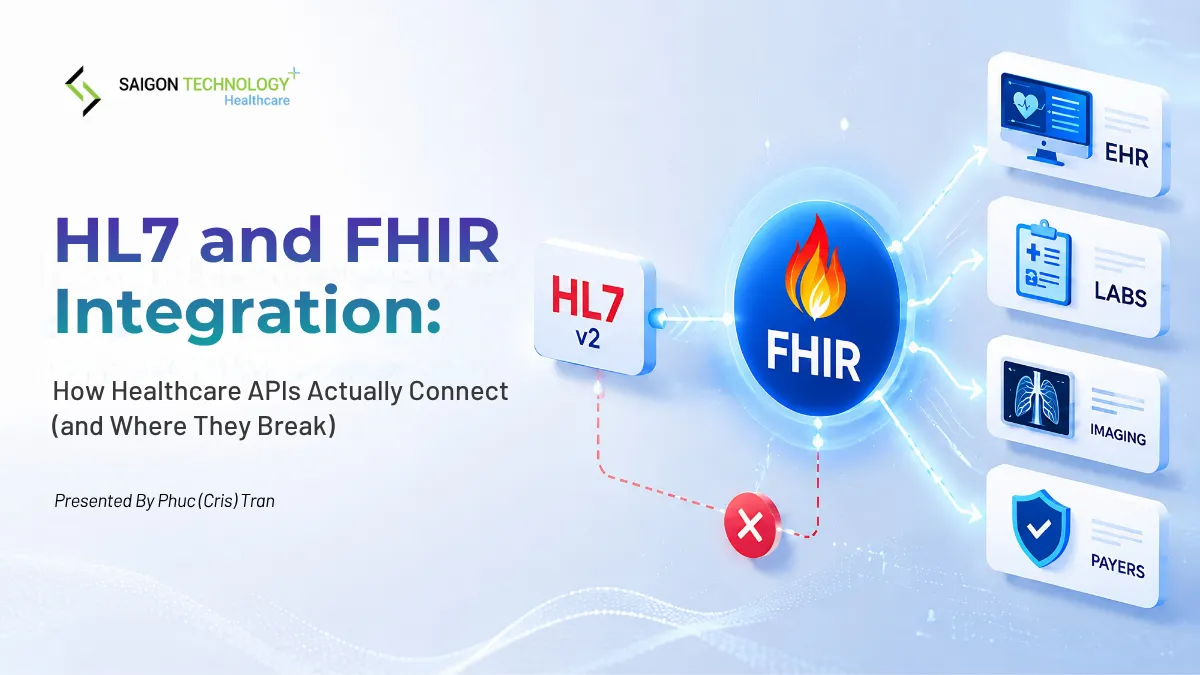
EHR/EMR connectivity with HL7/FHIR; HIPAA-aligned data handling.
Fintech
Payment gateways, KYC/AML data providers, and PCI-DSS-conscious integrations.
Logistics
SCM and ERP connectivity for supply-chain and shipment visibility.
EdTech & education
LMS–CRM synchronization and consolidated learning analytics.
SaaS & startups
Third-party API ecosystems and platform integration services that scale with your SaaS product.
Benefits of Software Integration Services
Well-designed integration is not a cost center, it is a growth lever that delivers cross-system interoperability, making your business faster, leaner, and easier to scale. Here is how our software integration solutions turn a connected stack into measurable business value.Â
Eliminate data silos and build a unified data foundation every team can trust
Software integration eliminates data silos by connecting applications so they share a single, consistent source of truth. When ERP, CRM, and homegrown apps exchange data automatically, every team works from the same numbers, removing the re-keying and mismatched reports that fragmented systems create.Â
Automate manual handovers to boost workflow and operational efficiency
Integration automates the handovers between systems, so data moves from one application to the next without manual copy-paste. This raises workflow efficiency and operational efficiency, cuts human error, and frees staff from repetitive data entry for higher-value work.
Accelerate delivery across previously disconnected apps
Integrated system communication speeds up delivery by letting previously disconnected apps trigger and complete processes end to end. Orders, tickets, and records flow between systems instantly, removing the lag that manual coordination between tools introduces.
Improve analytics accuracy through seamless data flow
Connected systems feed analytics with clean, aligned data in real time instead of stale manual exports. Seamless data flow and automated data alignment give your BI tools one accurate dataset, so dashboards and reports reflect what is actually happening across the business.
Reduce operational costs by removing duplicate work
Software integration lowers operational costs by eliminating duplicate data entry and simplifying the systems teams must maintain. Fewer manual touchpoints and less brittle custom glue code mean lower labor overhead and reduced long-term maintenance spend.
Increase profitability by shortening cycle times
Faster, connected workflows increase profitability by shortening cycle times and improving collaboration and decision-making. When teams act on shared, up-to-date information, they close work faster and make better decisions, turning operational efficiency into revenue impact.
Strengthen security with consistent controls across systems
Integration strengthens security by applying modern security practices: encryption, SSO, and role-based access, consistently across every connected system. A unified integration layer replaces ad-hoc point-to-point connections, reducing the exposure that inconsistent one-off integrations create.
Our Software Integration Process
Discovery & Integration Audit
We identify key stakeholders, review current systems, and run application integration feasibility checks to confirm scope and technical fit.
Integration Architecture & Design
We define the integration architecture & design, choose the right method (API, middleware, ETL, event-driven), map data flows, and produce an integration roadmap with clear milestones and timelines.
Agile Development
Our engineers implement the chosen integration process, building APIs, configuring integration tools, and writing custom code for application integration logic.
Implementation & Testing
We run unit, integration, and end-to-end testing to confirm every system communicates correctly and data flows as intended.
Rollout & Optimization
We launch, gather feedback, and refine configurations during rollout & optimization.
Continuous Support
We provide continuous support, monitoring, updates, and fixes, to keep your integrations reliable and future-ready.
Our Insights
FAQs
What is software integration?
Software integration is the process of connecting separate applications and systems so they share data and work together. It uses methods such as APIs, middleware, ETL pipelines, and event-driven messaging to remove data silos and automate workflows across a business.
What does a software integration company do?
A software integration company connects your applications, data sources, and platforms into one system. It designs the integration architecture, builds APIs and middleware, migrates and synchronizes data, tests interoperability, and provides ongoing support so your tools communicate reliably.
How much do software integration services cost?
Cost depends on the number of systems, integration methods, and data complexity. Saigon Technology's published engineering rates range from $26–$46/hour, and we scope every project against your requirements so you can forecast budget accurately before work begins.
How long does a software integration project take?
A simple point-to-point or API integration can take a few weeks, while enterprise application integration across ERP, CRM, and legacy systems may take several months. We define milestones and timelines during the discovery and design phase.
Should we build integrations in-house or outsource them?
Outsource when you need senior integration engineers, faster delivery, and specialized domain or compliance expertise without long-term hiring overhead. Saigon Technology offers a two-week risk-free trial so you can validate the team before committing.
What technologies, standards, and compliance do we use for software integration?
Core technologies. .NET, Java, Node.js, and Python on the back end; React, Angular, and Vue.js on the front end; AWS, Azure, and Google Cloud with Docker, Kubernetes, and Terraform for cloud integration.
Integration technologies. REST, GraphQL, and gRPC APIs; SOAP; middleware and iPaaS (MuleSoft, Dell Boomi, Zapier, Workato); Apache Kafka and message queues for event-driven integration; ETL processes and data warehouses for data integration strategy; DBMS design with data synchronization and database replication.
Standards & compliance. HL7/FHIR and EDI for healthcare and B2B data exchange; OAuth 2.1, SSO, and role-based access; HIPAA (healthcare), PCI-DSS (fintech), and GDPR/PDPA, backed by ISO 27001-aligned secure engineering.
How do you handle HIPAA, HL7, and PCI-DSS compliance during integration?
We apply compliance from the architecture stage: HL7/FHIR for clinical data exchange, PCI-DSS-conscious handling for payments, and encryption, SSO, and role-based access throughout. Our ISO 27001-aligned practices govern every integration in regulated industries.
What integration methods do you use?
We use API integration, middleware and ESB/iPaaS, ETL/ELT data integration, point-to-point integration, and event-driven integration. We select the method that best fits your systems, data volume, and real-time requirements rather than forcing one approach.