• OVERVIEW
  • SERVICES
  • MODELS
  • WHY CHOOSE US ?
  • OUR PROCESS
  • TECHNOLOGIES
  • FAQS

What Are Custom API Development Services?

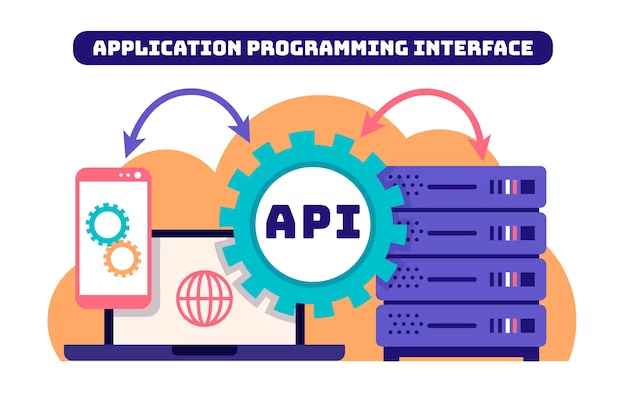
Custom API development services design, build, secure and document an application programming interface made for one company's data and workflows, instead of adapting a generic connector. The work covers the API contract, endpoints and business logic, authentication, testing, documentation, and the versioning that keeps every consuming app working as the API changes.

Our API development services cover the whole build, from the first spec to long-term support:

  • Discovery and contract-first design: we name every consumer and agree the spec they build against.
  • Endpoints in the right style: REST, GraphQL or gRPC, chosen per consumer.
  • Gateways and access control: one secured entry point with keys, limits and roles.
  • Testing and support: contract, load and failure tests, then monitoring and versioned releases.

The API contract comes first, because in custom API development the contract is what other teams build against. Senior engineers working with AI tooling write the specs, code and tests.

Typical projects open platform data to partners, put a gateway in front of an older system, or join several outside providers into one product.

REST vs GraphQL vs gRPC: Choosing the Right API Style

Most API projects mix styles. We pick one per consumer: who calls the API, how often, and how much data each call needs.

API style Best fit Trade-off to plan for Where we used it
REST Public and partner APIs, resource-based operations, anything a third party calls with standard HTTP tools Clients may over-fetch or need several calls for one screen, so versioning and pagination rules must be set early Fleet Management Platform (partner access to vehicles, events, geozones and routes, specified in OpenAPI) and Personal Loans Application
GraphQL Front ends with many views that each need a different slice of the same data Caching and query-cost limits need deliberate design, and per-request rate limiting is harder Personal Loans Application
gRPC Internal service-to-service calls where speed and strict contracts matter Browsers need a proxy, and every team must share the same schema files Personal Loans Application (calls between services)

Some flows don't fit a request and a reply at all. Vehicle location updates, for example, are a stream of events, so we carry them with event streaming over Apache Kafka, as on the Fleet Management Platform and the Personal Loans Application.

When a Custom API Is Worth Building

Custom API development services earn their cost when the data or workflow is yours and nobody sells an endpoint for it. Partners need controlled access to your platform, several apps need the same records, or an older system holds data that newer products can't reach. If you only need to connect one application to a few SaaS tools that already publish APIs, configuration usually beats code, and our software and app-level integration team handles that with ready-made connectors. We'll tell you which side of that line your project sits on during the first call.


Talk to Our API Development Leads
Quy Truong - Senior Solution Architect
Meet Quy Truong
Senior Solution Architect with 14+ years building AI-powered, scalable enterprise platforms
Book an Appointment More Details
Tai Vo - .NET Tech Lead
Meet Tai Vo
Backend Tech Lead with 12+ years architecting .NET systems and leading Agile delivery teams
Book an Appointment
over 400 software developers
400+
Software Developers
Over 14 years of experience
14+
Years in Business
Over 850 Projects Successfully Delivered
850+
Projects Successfully Delivered
rating on Clutch
4.8
Star Rating on Clutch

Our API Development Services

Our API development services span six areas: API strategy and contract-first design, REST, GraphQL and gRPC development, custom API integration with outside providers, gateways and microservices, security and access control, and documentation, testing and lifecycle support. Most areas below name the project where we delivered them.
software development services - icon 7

API Strategy, Design and Contract-First Specs

Every API has consumers: your own apps, other internal teams, partners. Our custom API development services design for them before any code is written.

  • Consumers first: we list every app, team and partner that will call the API.
  • Spec before code: resources, endpoints, the error format and the versioning rules go into an OpenAPI specification.
  • Early start: consumers review the spec and build against mocks while we build the real endpoints.

This avoids the costliest rework there is, which is changing an endpoint after other apps depend on it. On the Fleet Management Platform the specification was OpenAPI, and on the Personal Loans Application the API was documented in Swagger and Postman.

chevron-up.svg
software development services - icon 10

REST, GraphQL and gRPC API Development

We build endpoints and the business logic behind them in Java and Spring Boot or .NET Core, and choose the style per consumer with the comparison above:

  • REST: public and partner APIs, the core of our REST API development services.
  • GraphQL: front ends that need flexible queries.
  • gRPC: fast, strictly typed calls between services.
  • Kafka: workflows that run as a stream of events.

If your API sits inside a larger platform build, our back-end development team works from the same plan. We also take on smaller web API development services for a single product or internal tool.

chevron-up.svg
software development services - icon 8

Custom API Integration Services

Your API rarely works alone. It calls identity checks, credit bureaus, messaging and map providers, and each one returns its own format and fails in its own way. Our custom API integration services wrap those providers behind your API:

  • Normalized data: responses arrive in one format before your systems use them.
  • Source failures: a failed source switches to an alternative or retries with corrected input.
  • Background retries: stalled calls retry in the background.

On the Personal Loans Application that meant Plaid, GIACT, TALX, Equifax, Oscilar and LoanPro. On the Fleet Management Platform it meant Twilio, SendGrid, Google Maps and OpenStreetMap.

Teams comparing API development and integration services for payments can start with our guide to payment APIs, and our system integration team leads projects connecting ERP, CRM and legacy systems.

chevron-up.svg

Case Studies: APIs Carrying Real Production Load

The three projects below are larger platforms, and none was scoped as a standalone API contract. In each one, the API layer did the work that decided the outcome: controlled partner access to fleet data, a gateway in front of an aging ERP, and one lending flow joined to several outside providers.
Case study: fleet management platform banner

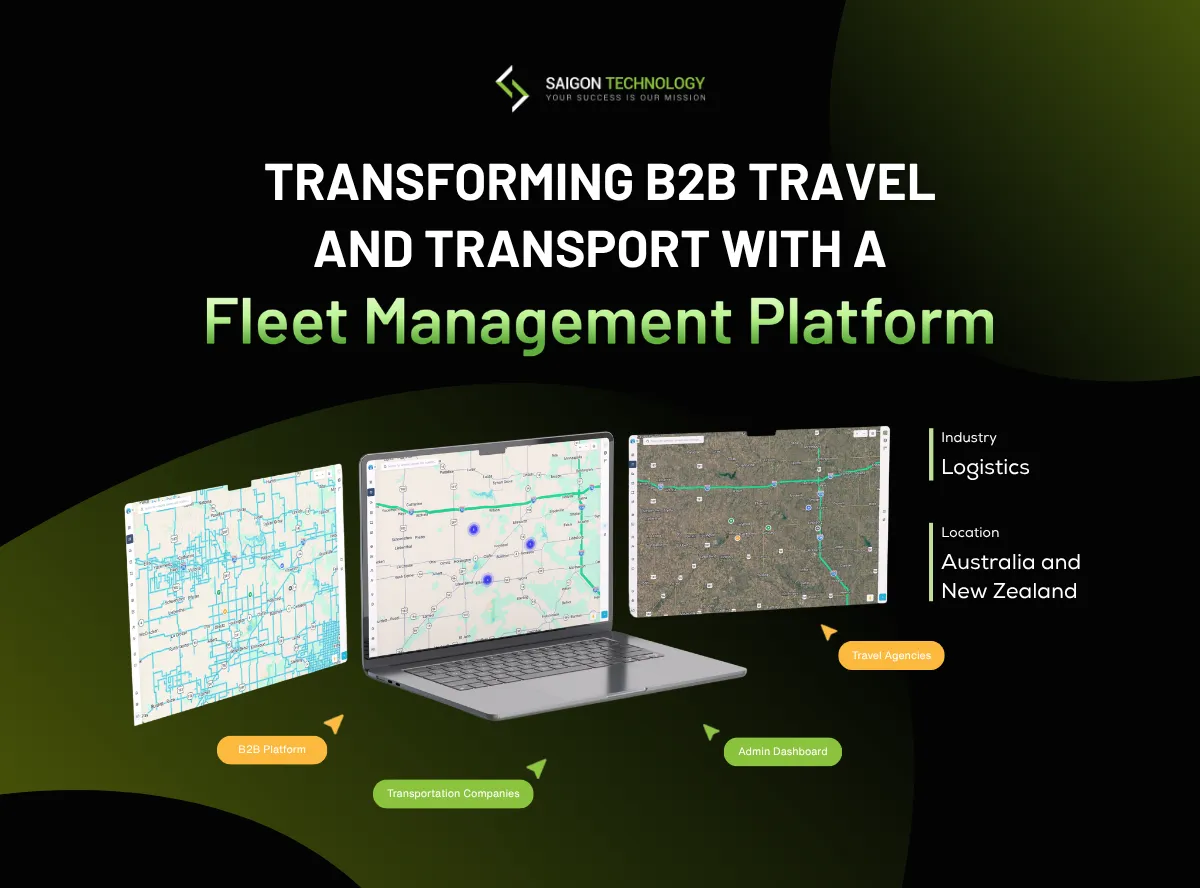
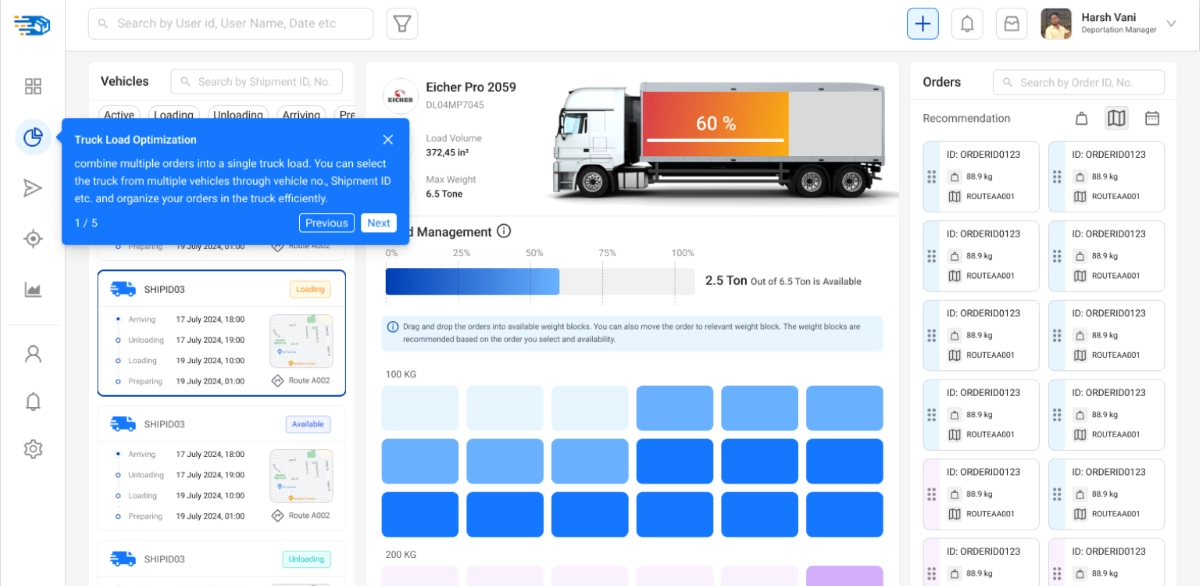
Fleet Management Platform: Controlled API Access for Fleet Data

  • Challenge: A vehicle leasing and transport company in Australia and New Zealand ran on a prototype with manual steps and disconnected systems. Its legacy systems could not keep up with demand, links to external systems were unreliable, and travel agencies, transport companies and administrators each needed different access. 
  • What we built: An API layer where keys are managed per consumer, rate limits apply, and endpoints for vehicles, events, geozones and routes are secured separately. A Super-Admin switches modules on or off for each stakeholder. Behind it sit microservices on an Apache Camel enterprise service bus, OpenAPI specifications, vehicle registrations synced and imported through APIs, Keycloak with role-based access, and an audit trail of user actions. 
  • Engagement / timeline: Hybrid engagement model, three months, deployed on AWS. 
  • Outcome: Travel agencies, transport companies and administrators now work on one platform. Booking, payment and communication follow the same process for every provider, which gives managers clearer oversight as the business grows. 
  • Stack: Spring Boot and Spring Security, Apache Kafka, Apache Camel, PostgreSQL, MongoDB, Keycloak, Docker, Kubernetes, CI/CD pipelines, Redis. Full Fleet Management Platform case study. 
Merit Logistics: a legacy ERP rebuilt under an ODC

Merit Logistics: A Custom API Gateway for a Legacy ERP

  • Challenge: Merit Logistics ran a cumbersome, out-of-date ERP whose source code had passed through several vendors. The old system had to stay maintained while a new one was built, covering field management, work allocation and timesheets.
  • What we built: An API gateway that started on Ocelot and was then rebuilt by our team from scratch, with Consul and Fabio for service discovery and load balancing and Grafana monitoring the servers. The new .NET Core back end was checked against the old system through compare testing, and an Android check-in app (PIN or face) works with both systems.
  • Engagement / timeline: Offshore development center (ODC) under Agile Scrum, in three phases: document the legacy ERP's business rules, maintain it while building the replacement, then ship the Android app. Daily stand-ups ran at 11 PM Vietnam time (9 AM in the US), with weekly effort reports per task and team member.
  • Outcome: Work efficiency on the client's side improved, and systematic testing kept the upgraded system running smoothly under heavy data load.
  • Stack: .NET Core, Ocelot and a custom-built gateway, Consul, Fabio, Grafana, React and Angular, with Java and Kotlin for the Android app. Full Merit Logistics case study.
Personal Loans Application

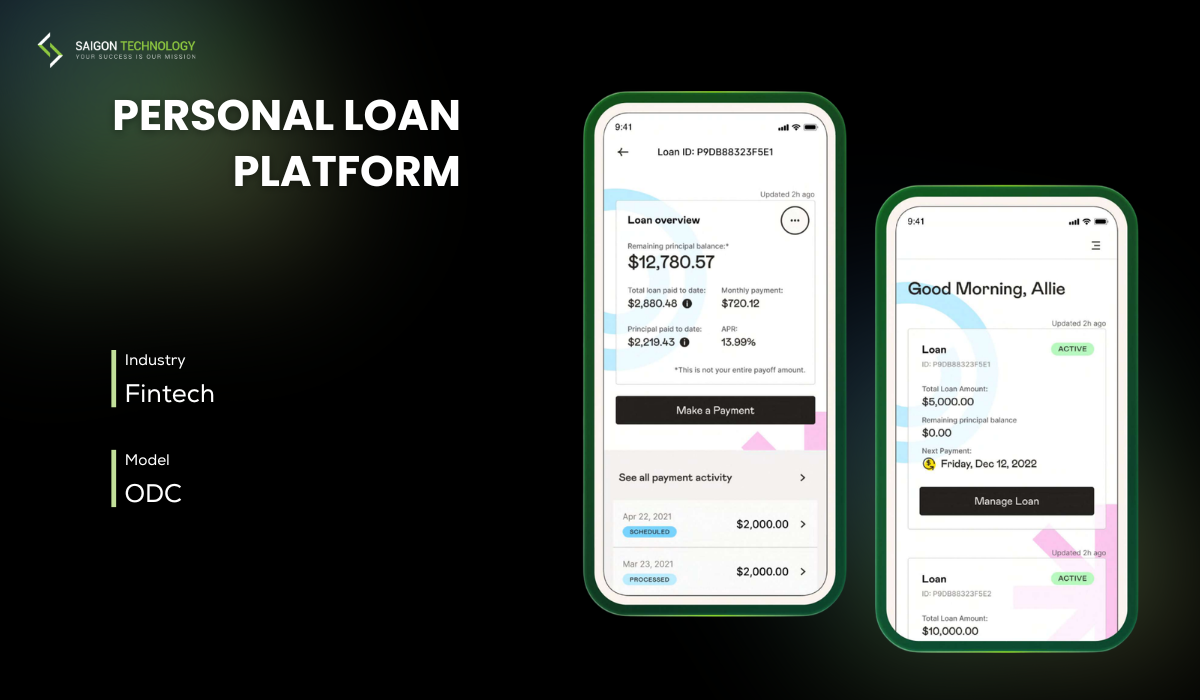
Personal Loans Application: REST, GraphQL and gRPC Behind One Lending Flow

  • Challenge: A US fintech company needed identity, employment, income and bank-account checks from several providers before each lending decision. Formats differed by provider, some third-party APIs were slow or failed, data drifted between sources, and personal data had to stay private.
  • What we built: RESTful APIs, GraphQL and gRPC working side by side, with Kafka as the message broker. Behind them sit Plaid, GIACT and TALX for verification, Equifax for risk data, Oscilar as the decisioning platform, and LoanPro for loan servicing, connected to the core systems through its API. Data is normalized before it moves on, a failed source triggers a fallback or a retry with corrected input, and stalled verifications retry in the background. The APIs are documented in Swagger and Postman and secured with OAuth 2.1 (OpenID Connect), JWT-based cookies and custom claims.
  • Engagement / timeline: Offshore development center (ODC), 3+ years, with 20 senior engineers onboarded in the first three months.
  • Outcome: The full loan lifecycle, from verification and underwriting to servicing, runs on the connected providers with complete audit trails, following GDPR guidelines.
  • Stack: Java 18, Spring Boot, Spring Security and JPA, React and Next.js, Apache Kafka, AWS (ECS, ECR, CodeBuild, CodePipeline, Parameter Store, Cognito), Terraform, GitHub Actions, DynamoDB, Redis, S3. Detail | Full Personal Loans case study (PDF) →.

Send Your API Brief. See a Working Prototype in 48 Hours.

Tell us who will call the API, what data it should expose and which outside services it depends on. Our AI-accelerated workflow turns that brief into a working prototype and a first API design, reviewed by Quy Truong, Senior Solution Architect, not a sales team.
  • Clickable prototype of the app, partner portal, or integration flow your API will serve
  • Workflow visualization mapping every consumer, endpoint, and outside data source
  • Architecture direction covering API style, authentication and versioning, and scale
  • Technical recommendation call with our engineering team
free demo

Why Teams Choose Saigon Technology as Their API Development Company

A good custom API development company treats the API as a contract other teams depend on. It agrees the spec first, secures every endpoint and keeps the same engineers on the API as it versions. Saigon Technology delivers custom API development services that way for US companies and global clients, at a published senior-led rate. 

Senior engineers lead every API build and use AI tooling for the repetitive work: boilerplate endpoints, test scaffolding, first-draft docs. A smaller team carries the same scope with fewer rebuilds. Our rate is published at $22-$46/hr, US teams get 10-12 hours of daily overlap, and Vietnam-based developers work your US business hours on request. Price pressure lands on the unglamorous parts of custom API development.

At premium onshore rates, hardening, versioning rules and documentation are usually the first items cut, and those are what keep consumers working a year later. We keep them in scope. 

Every endpoint is a door into your data, so one weak authentication rule can leak records to every consumer that calls it. We design access into the first spec: OAuth 2.1 and OpenID Connect, API keys with rate limits, role-based access, encryption and an audit trail for user actions. GDPR and PDPA requirements are followed, and HIPAA and PCI-DSS requirements are met where the workload needs them.

These controls run inside our ISO 27001 certified management system, and an outside body, BSI, audits that system.

An API outlives its first release. Consumers keep calling v1 while v2 ships, and the engineers who wrote the original contract know which changes are safe. Keeping them is a technical decision, and we treat it as one.

Saigon Technology ranked #10 in the Medium category of the Southeast Asia Best Workplaces™ in Technology 2026 list from Great Place To Work, and was named one of the Fortune 100 Best Companies to Work For™ in Southeast Asia 2025. On the Personal Loans Application, an engagement of 3+ years, 20 senior engineers were onboarded in the first three months.

Sometimes you don't need us. An existing connector or a vendor's own API already does the job. We'll say so on the first call, so you only pay to build the endpoints nobody sells.

Delivered from three development centers in Ho Chi Minh City and Da Nang. The case studies above are larger platforms in which the API layer did the heavy lifting. We'd rather show verifiable adjacent work than invent an API metric.

BSI audits both standards, which gives your security review an outside report to check instead of our word. That matters most when your API carries customer or financial data.

Start with a two-week risk-free trial and judge the work on your own API. After that, choose staff augmentation, a dedicated team, fixed price or an offshore development center, once you have interviewed each proposed engineer.

Why choose Saigon Technology 2026

Trusted by Global Clients

Partner-logo2 Partner-logo3 Partner-logo4 Partner-logo6 Partner-logo1 Partner-logo5 Partner-logo9 Partner logo

What Our Clients Say

Saigon Technology provided the expert advice and technical development needed for our platform. I truly appreciate their professionalism and ongoing support.
Jason Soo
CEO of Loan City, Singapore
star.svg star.svg star.svg star.svg star.svg
During our collaboration, Mr. Thanh and his company, Saigon Technology, have consistently demonstrated world-class leadership and execution in complex fintech projects. His ability to scale and lead high-performing engineering teams, while maintaining cost-efficiency and product quality, has been critical to our technology operations. His strategic insights and leadership enabled us to significantly improve system stability and deployment velocity.
Abe Jarrett
Senior Vice President of Software Engineering at Origence, USA
star.svg star.svg star.svg star.svg star.svg
Saigon Technology has been a reliable and committed partner in our telehealth project. They consistently delivered on time, provided responsive 24/7 support, and were always available on WhatsApp, even after working hours, whenever we needed urgent assistance. What stood out most was their continuous attention to security and speed, which are essential for a healthcare platform. Their strong ownership and responsiveness made a real difference to the success of the project.
Eric Chiam
CEO of Minmed, Telehealth, Singapore
star.svg star.svg star.svg star.svg star.svg
We value Saigon Technology’s strong support in managing the engagement from an internal delivery perspective. They were able to maintain team performance across a relatively large team, provide additional resources when required, and work collaboratively with us on matters such as gap time, discount proposals, and improvements to the working process. Their flexibility and consistent management support contributed positively to the overall partnership.
Sri Vijayasarathy
CTO of Axiagram, USA
star.svg star.svg star.svg star.svg star.svg
I would recommend companies to work with Saigon Technology for their Software development or service needs. The project team is very responsible for their work and would recommend solutions in the interest of the client. The team also responds very quickly to requests, bugs, and questions. One exceptional quality of Saigon Technology was their patience with clients. There were several times when we were slow to respond or test our apps, but the project team was still very accommodating towards us.
Jeremy Heng
Development Manager - Rehau Group PTE
star.svg star.svg star.svg star.svg star.svg

Who We Build For

Custom APIs fit companies in any industry. What differs is the starting point, and most clients come to us from one of these three. When the API is one part of a larger product, our custom software development team works on the same plan. 

eCommerce, education, manufacturing and real estate teams use the same API discipline. See all the industries we serve. 

Software Companies & SaaS Vendors

Ship a public API your customers can build on, with OpenAPI docs, a sandbox and versioning that lets you release without breaking integrations already in production. We build it alongside your SaaS application development roadmap. 

chevron-up.svg

Mid-Market Companies

Give partners your platform's data through one controlled API instead of a custom export per partner. API keys, rate limits and per-resource endpoints keep every partner to its own data, as on the Fleet Management Platform. A dedicated team can run the API after launch.

chevron-up.svg

Enterprise Teams

Let new apps reach an older system without rewriting it: put an API layer and gateway in front, as we did for the Merit Logistics ERP. When replacement comes, our legacy application modernization team plans it. HIPAA and PCI-DSS requirements are met where the workload needs them.

chevron-up.svg

What a Purpose-Built API Changes for Your Business

Custom API development services pay off in daily operations more than on an architecture diagram. Partners connect faster. Internal teams reuse the same data, and outages at outside providers stop reaching your customers. Clients notice it fast. 

Benefit Proof on a live project
Controlled partner access to platform data Fleet Management Platform: API keys, rate limits and secured endpoints per resource
One gateway in front of an older system Merit Logistics: Ocelot first, then a custom-built gateway
Provider failures handled before they reach users Personal Loans Application: fallback routes and background retries
One audit trail across connected providers Personal Loans Application: verification, underwriting and servicing

One documented API and a sandbox replace one-off exports and file drops, so adding a partner becomes configuration work. 

Keys, rate limits and role-based access decide who reads what, which improves interoperability without loosening security.

Web, mobile and partner apps call one API, so business rules live in one place and productivity rises with each new app.

Fallback routes and background retries keep requests moving when a third-party API slows or fails, which protects customer satisfaction.

Versioning and a published deprecation schedule give each team time to move, and microservice-based architectures let one service scale or change without the others.

Audit trails and API analytics show usage, errors and system performance per consumer, which supports compliance reviews and capacity planning.

How We Build Custom APIs

We deliver custom API development services in six stages. Each stage ends with an exit criterion you sign off, so problems surface while they are still cheap to fix.
Software Development Process

Consumer and Data Discovery

Requirements gathering starts with who will call the API: your apps, internal teams and partners. We list the data each consumer needs, the access each one gets and the compliance scope, then agree project scope, priorities and expectations in writing. Exit criterion: every consumer and data owner named. 

Software Development Process

Contract-First Design

We write the OpenAPI spec, the error format and the versioning rule, and choose the API style for each consumer.

"On API projects, most expensive rework traces back to the contract. We agree the OpenAPI spec, error format and versioning rule with every consuming team before we build, because changing an endpoint after other apps depend on it costs more than getting it right." Quy Truong, Senior Solution Architect, Saigon Technology

Exit criterion: contract reviewed by every consuming team.

Software Development Process

Build Against the Spec

Engineers code endpoints in two-week sprints against the agreed spec. Nobody waits for us. Consumers start early using mock servers generated from it. Exit criterion: endpoints passing contract tests.

Software Development Process

Security and Load Testing

We test authentication, rate limits and permission boundaries, run load and stress tests at expected peak traffic, and simulate slow or failing providers. Our software QA and testing team owns this stage. Exit criterion: auth, rate-limit and failure cases tested.

Software Development Process

Documented Release

Swagger or Postman docs, a sandbox for partners and a versioned release go live together, so the first outside developer can start without a support call. Docs ship with the code. Exit criterion: docs and sandbox ready before go-live.

Software Development Process

Monitor, Version and Evolve

API monitoring, alerting and performance tracking run from day one, inside the pipelines our DevOps services team sets up. Every breaking change gets a new version and a retirement date for the old one. Exit criterion: deprecation schedule published for every breaking change.

Technologies, Standards & Compliance

Our Insights

FAQs

The cost of custom API development services depends on the number of endpoints and consumers, how many outside providers the API calls, the security and compliance scope, and whether partners need docs and a sandbox. Scope drives price. Our published senior-led rate is $22-$46 per hour, and projects start from $10,000. Fixed price suits a well-defined spec, while staff augmentation, dedicated teams and ODCs suit work that keeps evolving. 

A timeline for custom API development services depends on the number of consumers and providers, the compliance scope and how settled the requirements are. An underdeveloped project specification or ongoing changes in project requirements stretch any plan, which is why we fix the contract first. You see a working prototype from 48 hours. The Fleet Management Platform in our case studies took three months, a reference point for scale rather than a quote.

Both paths work. Keep it in-house when the API is your core product and your team already handles versioning, security and on-call support. Outsource when you need that experience quickly, or when API work would pull engineers off your roadmap. Outsourced custom API development services also suit fixed-scope builds. If you only need to connect existing SaaS tools, you may not need a custom API at all.

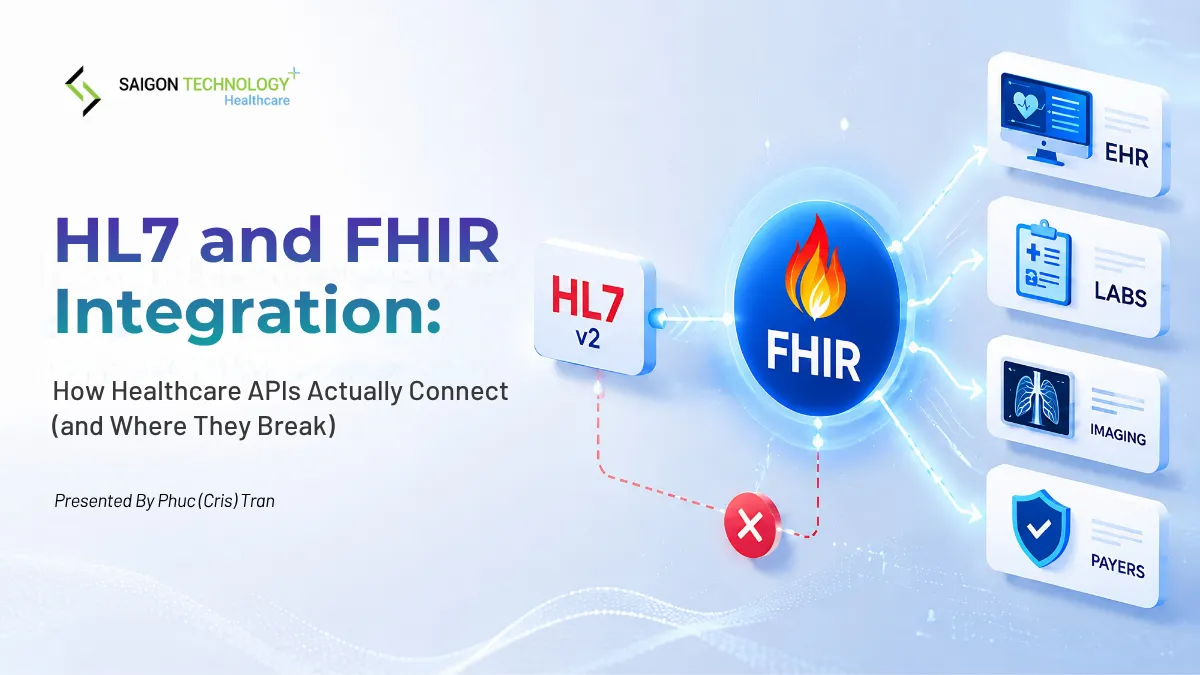
Security is part of the spec from the start. That means OAuth 2.1 with OpenID Connect, JWT, API keys with rate limits, and role-based access. Data is encrypted, user actions write to an audit trail, and secrets live in a managed store. GDPR and PDPA requirements are followed, HIPAA and PCI-DSS requirements are met where the workload needs them, and clinical data gets HL7 and FHIR interoperability support, all under our ISO 27001 certified management system.


Choose by consumer. REST suits public and partner APIs that third parties call with standard tools. GraphQL suits front ends with many screens that need different slices of the same data. gRPC suits fast, strictly typed calls between your own services. Many systems use two or all three, as the Personal Loans Application does, and the comparison table above sets out the trade-offs.

An API development company designs, builds and runs the interfaces that let software systems share data and functions. The work covers consumer discovery, API design and specification, endpoint development, security, testing, documentation, deployment, and the versioning and monitoring that keep an API usable after launch. Many also work as an API integration company, connecting the API to the outside providers it depends on.

Each API development service we run uses tools matched to the stack you already have. These are the areas we work across most often.

Area What we work with
API styles and specs REST, GraphQL, gRPC, OpenAPI / Swagger, Postman
Back end .NET Core, Java and Spring Boot, Python
Gateways and messaging Ocelot, custom-built gateways, Consul, Fabio, Apache Kafka, Apache Camel
Identity and access OAuth 2.1, OpenID Connect, JWT, Keycloak, AWS Cognito
Data PostgreSQL, MongoDB, Microsoft SQL Server, DynamoDB, Redis
Cloud and DevOps AWS, Docker, Kubernetes, Terraform, GitHub Actions, Grafana

Yes. You can hire API development specialists through staff augmentation, a dedicated team or an offshore development center, full-time or part-time. We send a shortlist of matched profiles within 1-2 working days of your role brief, you interview each engineer, and a two-week risk-free trial lets you check the fit on your own codebase.

Give Your Products and Partners an API They Can Rely On

From the first contract to endpoints running in production, our AI-augmented senior engineers deliver custom API development services that stay secure, documented and versioned as your products grow. Start with a 48-hour prototype and a technical call with an architect.

    Contact Message Box

    Schedule a Demo with Our Industry Experts

    Book a free 30-minute call

    • See case studies aligned with your requirements
    • Validate our industry experience
    • Confirm technical fit for your project
    Schedule a Demo

      Your RFP, reviewed by experts in 48 hours

      AI-accelerated path from brief to working prototype. Engineers, not sales.
      • Clickable prototype of your core user flow
      • Workflow visualization mapping the full system
      • Architecture direction covering stack, integrations, and scale
      • Technical recommendation call with our engineering team
      Free Demo Campaign