

























































- OVERVIEW
- SERVICES
- WHY CHOOSE US?
- MODELS
- TECHNOLOGIES
- OUR PROCESS
- FAQS
What Is Manufacturing Software Development?
- Manufacturing software development is the design and build of custom applications that run production operations: production scheduling, inventory and materials, quality control, equipment maintenance, and order management, either as standalone systems or as extensions to an existing ERP or MES. It covers the full lifecycle: requirements, architecture, development, integration with the systems already in the plant, and post-launch support.
- The distinction that matters is fit. Two manufacturers with identical output will route a rush order differently, count scrap differently, and close a shift differently. Packaged platforms encode one set of assumptions, and every plant whose process falls outside them pays in re-keying, workarounds, and a shadow spreadsheet that becomes the real system of record.
- Custom manufacturing software development starts from your actual process. We map where data stops moving, where an operator abandons the terminal, and where margin leaks, then build only what earns its place. Sometimes that means legacy replacement. More often it means seamless integration with existing systems, extending what you own into one digital ecosystem rather than starting over.
Our Manufacturing Software Development Services
RP, MES & Systems Integration
Most manufacturing data problems are integration problems. We connect ERP systems, MES, CRM systems, and shop-floor equipment into one ecosystem through software integration services built on published third-party APIs or documented file exchange. Seamless third-party integrations mean a work order raised in the office reaches the line, and a scan on the line reaches enterprise resource planning without anyone re-typing it.
Where a system exposes no API, we build a documented integration layer instead of a brittle script, which is what protects data continuity through the next version upgrade on either side.
Legacy Plant System Modernization
The application holding your plant together is often the one nobody wants to touch. Our legacy application modernization team re-platforms and re-engineers rather than demolishes: modernization in phases, each reaching production before the next begins. Cloud computing moves the workload onto a cloud platform where it can scale, with cloud applications, desktop applications, and web development delivered against one data model instead of three.
Manufacturing Data, Analytics & AI
Consolidated production data is what makes everything else possible. Our data modernization and AI development practices build analytics and reporting tools, real-time data visualization, and cloud business intelligence dashboards on top of it. Predictive analytics supports demand forecasting and capacity planning; machine learning (ML) and artificial intelligence (AI) surface the patterns a weekly report hides.
The result is business process optimization you can point at, not assert, and business process automation wherever a workflow is repetitive enough to justify building it out.
Inventory, Warehouse & Traceability
Stock accuracy decides whether planning is arithmetic or guesswork. We build inventory management solutions with material and inventory tracking across raw materials, work in process, and finished goods, using RFID tags and barcodes for capture at the point of movement. Warehouse management system development covers receiving, put-away, cycle counts, and transfers; manufacturing logistics software development extends the same data into supply chain optimization and supplier collaboration, so a shortage is visible before it stops a line.
Production Planning & Scheduling Software
Production planning and scheduling software built around how your plant actually sequences work. Material requirements planning, capacity and resource allocation, bill-of-materials management, and shop-floor control, with production milestones visible as they happen rather than at the end of the week. Workflow streamlining across order entry, release, and dispatch shortens the gap between a customer commitment and a machine starting.
Quality Assurance & Compliance Systems
Quality assurance and compliance systems that make quality provable, not anecdotal. We build an automated quality control system with inspection plans, non-conformance and corrective-action workflows, and quality metrics tracked across the production lifecycle. Quality assurance measures are enforced in the workflow rather than in a binder, giving you output quality you can demonstrate, regulatory compliance you can produce on request, and data integrity backed by an audit trail. Supported by our QA and testing practice.
Shop-Floor Mobile & Scanning Apps
The software an operator touches decides whether the whole system works. We build mobile applications for scan guns, tablets, and phones, real-time data capture at the machine, work-order completion, label printing, and cycle counts. Manufacturing app development here is unforgiving: gloves, glare, noise, and dead zones between racking.
That is why we design user-friendly interfaces with responsive design and intuitive design for seamless workflows, and why workforce management software for scheduling and attendance shares the same data model as the line.
Predictive Maintenance & Equipment Monitoring
Unplanned downtime is the most expensive line item nobody budgets for. Internet of Things (IoT) sensors and other IoT-enabled devices and sensors stream equipment health and performance data into a remote equipment monitoring platform, where real-time process monitoring and threshold alerts turn reactive repair into proactive maintenance.
Predictive maintenance models trained on that history forecast failures before they happen, and asset tracking and predictive maintenance across multiple sites gives you remote asset management without a plant visit. IoT-enabled solutions for manufacturing extend the same interconnected sensors and devices to production environment safety, temperature, air quality, and unsafe conditions, where that matters to you.
Case Studies - Manufacturing and Industrial Operations
These three projects were delivered for manufacturing and industrial-operations clients and are published in full on our own site. Where a client cannot be named, we say so rather than substitute a logo.
We have delivered software for manufacturers whose non-disclosure agreements prevent us naming them here. Detailed references are available under NDA on request.
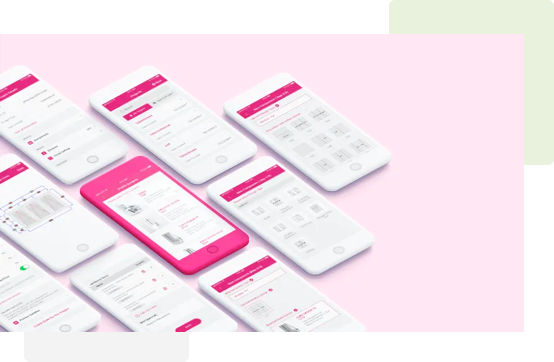
Cost Module - a dealer configurator and order platform for a window and door manufacturer
- Challenge: Dealers needed to configure made-to-order windows and doors, price them with fees, margin, and promotions, and place orders — while the manufacturer managed dealers, customers, and projects across multiple languages. The client was non-technical, so requirements had to be translated rather than transcribed.Â
- What we built: An interactive, image-processing-based design tool that builds a window or door digitally, with automatic width and height adjustment; a pricing engine covering fees, margin, and promotions; order, dealer, customer, and project management; multi-language support; and mobile apps letting dealers adjust size, colour, and options in the field.Â
- Outcome: Managers can template a window, calculate baseline costs, and negotiate terms with the manufacturer from one system.
- Stack: Java/Android, Objective-C/iOS, .NET Core, SQL Server 2012, Angular.Â
Why it reads across: configure-price-quote against a real product catalogue is the hardest part of build-to-order manufacturing, and it is where a generic ERP module usually gives up. Source: /case-studies/cost-module/Â
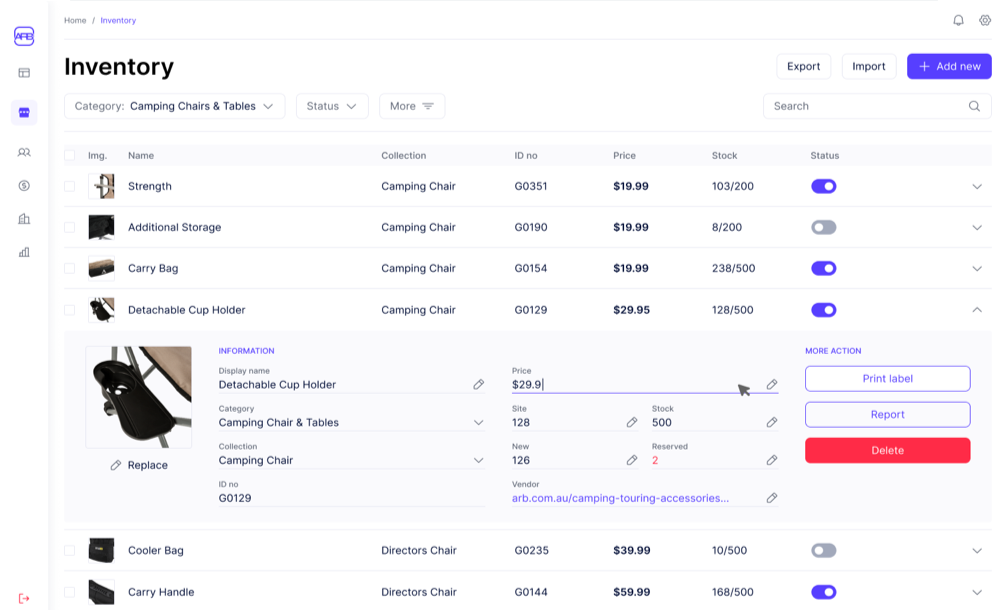
ARB Australia - replacing an unmaintained warehouse app and opening a cloud migration path
- Challenge: An existing Ionic warehouse application had gone unmaintained, with performance problems on a framework losing market adoption and users reporting difficult experiences. A move from Azure DevOps toward Oracle Cloud was planned but unmapped, and the budget was constrained enough to rule out a full rebuild team.
- What we built: Migration to React Native on a single codebase serving both mobile and web; QR scanning with automatic data import from the scan gun and automatic progression between workflow steps; cycle count and transfer flows; warehouse receipt export with direct label printing; an automated CI/CD pipeline; and complete API documentation.
- Engagement / timeline: Staff augmentation - a part-time DevOps engineer and a React Native developer on hourly terms.
- Stack: React Native, REST API, Azure DevOps, Oracle Cloud, CI/CD.
Why it reads across: this is the integration-first case in miniature, an unmaintained system modernized in place, on a constrained budget, with a migration path opened rather than forced. Source: /case-studies/arb-australia/
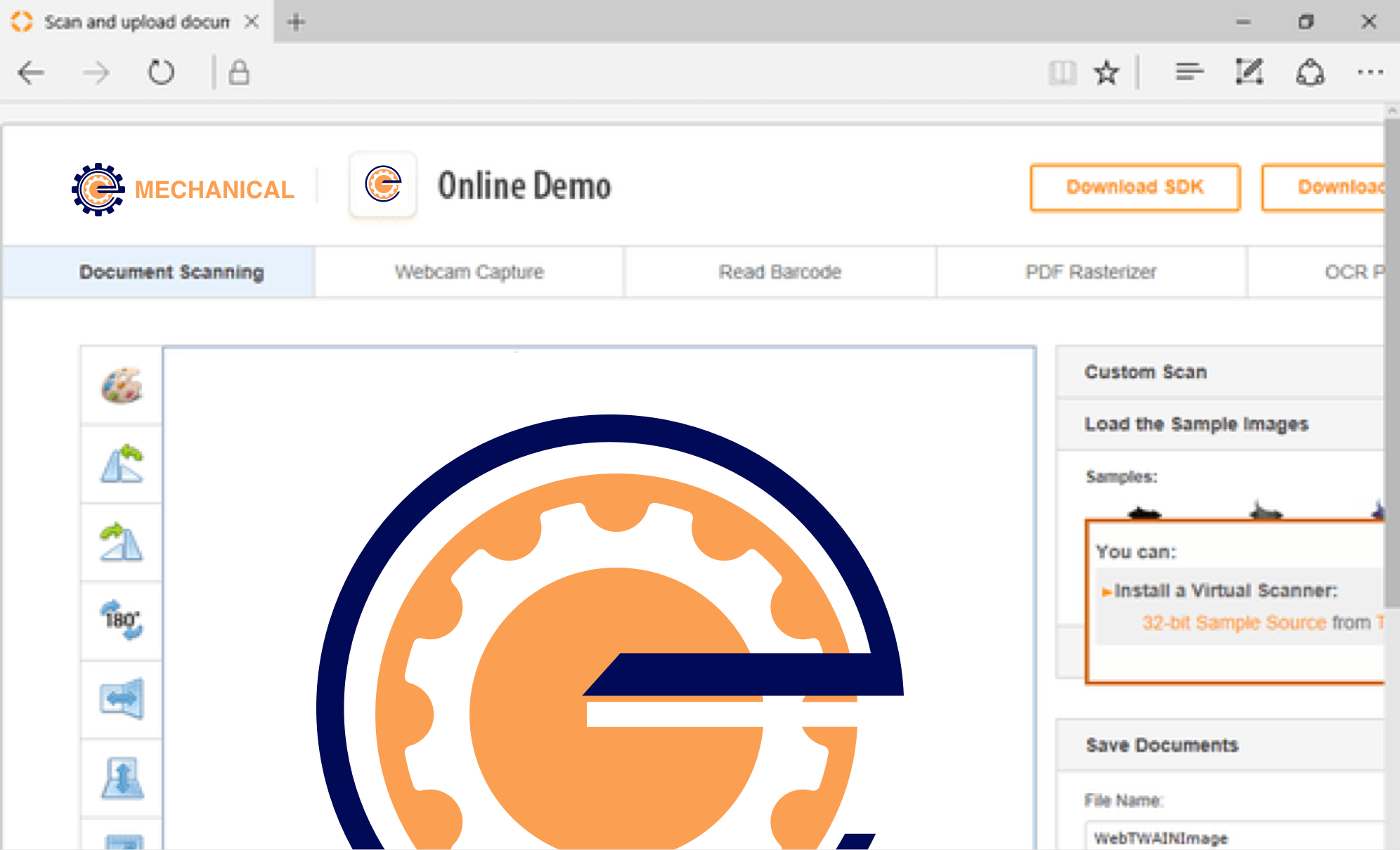
KNOWLEDGEONE CORP - embedded document-capture engineering through an offshore development centre
- Challenge: The client needed senior .NET and Swift engineers embedded alongside their chief programmer on WebTWAINSDK, a toolkit letting any developer add scanner capture to a browser application, used by organizations across manufacturing, distribution, utilities, and government.
- What we built: Ongoing development across the toolkit's desktop, web, visible, and hidden operating modes, with engineers working daily in English directly with the client's team.
- Engagement / timeline: Offshore development centre (ODC), long-running.
- Stack: C#, .NET Framework and .NET Core, JavaScript, jQuery, React/Angular/Vue/Blazor, Swift/Xcode, SQL Server.
Why it reads across: paperwork is still where manufacturing data goes to die. Capture engineering, and the ODC model that staffed it, is how plants retire clipboards without retiring the process. Source: /case-studies/knowledgeone-corp/Â
Send Us Your Plant's Hardest Workflow. See It Built in 24 Hours.
- Clickable prototype of your production, inventory, or work-order flow
- Workflow visualization mapping the full order-to-shop-floor chain
- Architecture direction covering ERP/MES integrations, offline shop-floor sync, and scale
- Technical recommendation call with our engineering team
Who We Build For
Discrete and build-to-order manufacturers
Configurable products, dealer and distributor networks, quote-to-order accuracy.Â
Industrial and equipment manufacturers
Asset-heavy operations, service histories, and long-horizon maintenance planning.
Food, beverage and consumer goods producers
Lot traceability, shelf-life logic, and audit-ready quality records.
Distribution-heavy manufacturers
Where the plant and the warehouse are one continuous process, sharing engineering with our logistics software development practice.
Industrial software product companies (ISVs)
White-label and multi-tenant SaaS builds of industrial software development platforms.
Trusted by Manufacturers and Global Enterprises
In Our Clients' Words
Why Choose Saigon Technology as Your Manufacturing Software Development Company?
A good manufacturing software development company can prove three things: that it has shipped software touching production systems, that it can integrate with the ERP or MES you already run instead of demanding a replacement, and that it secures the boundary between office IT and the plant floor.Â
We build around the ERP and MES you already run
Rip-and-replace is the most expensive answer to a problem most manufacturers do not have. Your ERP holds a decade of costing history and every customer record; your MES is the reason the line stops when a spec is missed. We treat both as fixed points and build to them, mapping the data you can actually get out, agreeing what stays authoritative where, and integrating over documented interfaces.
The failure mode we are avoiding is specific: replacement programs stall at cutover, and the plant runs two systems for a year while paying for both. Extending what you own ships value in weeks and leaves the migration decision open.
Security at the boundary between office IT and the plant floor
Manufacturing software is different from office software the moment it can influence a machine. We build to that boundary: role-based access control separating operator, supervisor, and engineer; encryption in transit and at rest; access controls and facility access control integration where the plant requires it; segmented network paths so a reporting dashboard cannot reach a controller.
Data loss prevention, security audits, and data security and confidentiality obligations are handled under a secure SDLC aligned with GDPR and PDPA. Manufacturing software security treated as an afterthought is how a quality dashboard becomes an attack path into production.
Senior engineers plus AI, at a published rate
Our listed rate for implementation work is $22–$46 per hour with senior personnel overseeing delivery, 10–12 hours of daily overlap with US East and West Coast teams, and developers holding CEFR or IELTS-certified English. One senior engineer working with AI tooling replaces roughly three juniors, fewer people, less rework.
Why that matters on a manufacturing build: at premium onshore rates, the first line items cut are integration testing, error handling on the scanner path, and device hardening. Those are exactly the parts that decide whether the floor trusts the system by week three. Discover Our Talent →
ISO 9001 and ISO 27001 certified, and a Microsoft Gold Partner
Both certifications are issued and audited by BSI (UK), not self-declared. In an audited production environment, that means your process data, quality records, and customer information are handled under a documented information-security regime rather than a promise.
14+ years · 400+ developers · 850+ projects · 350+ clients · 3 development centers
On proof, plainly: the projects above are published on our own site and you can read them in full, but none carries a quantified metric. We would rather show you verifiable work you can check than invent a manufacturing number.
Architecture advice from day one - including when not to build
Sometimes the answer is an ERP module you already license. If a platform covers your workflow, we say so on the first call rather than bill you to rebuild it. Where custom is right, you get architecture direction before any code is written.
A two-week risk-free trial, and engagement models that fit the phase
Interview the engineers yourself, then run a two-week risk-free trial before any long-term commitment. Staff augmentation, dedicated team, fixed-price, or ODC, teams scale up for a rollout and back down for steady-state support.
Learn more: Our engagement models
Why Custom Manufacturing Software Beats an Off-the-Shelf Platform
It fits the process that wins you orders
Your routing, your cost codes, your approval chain - no workarounds to fit someone else's data model.
Operators actually use it
Adoption on the floor is the single biggest predictor of whether software development for manufacturing returns anything at all.
One source of truth
Floor data reaches finance without re-keying, which is where most day-to-day workflow acceleration actually comes from.
Downtime becomes visible before it becomes expensive
Equipment condition, not the calendar, drives the maintenance schedule.
Quality is provable
Output quality and production efficiency move together when inspection data and process data live in one system.
Lower total cost of ownership
No per-seat escalation across a seasonal headcount, and no annual increase on a module you barely use.
You own the IP and the roadmap
No vendor deprecating the one feature your process depends on.
Our Manufacturing Software Development Process
In-depth industry analysis
We walk the process: production, supply chain, and quality control, with the people who run it, and audit what your current systems can actually expose. Delivered through our software consulting practice.
Requirements mapping and solution design
Business analysis turns findings into scope, then architecture: integration map, data ownership, and a phased plan so you can see what ships when.
UI/UX design
Our UX/UI designers prototype with operators and supervisors, not only the people signing the contract. Software architecture and UX/UI design are agreed before build.
Agile software development
Two-week sprints, CI/CD, and a working build at every review. These advanced methodologies keep scope honest; where an AI component is in scope, our Research Labs can de-risk it before you fund the full build.
Quality assurance and testing
Functional, integration, performance, and real-device testing procedures run against live systems, not a clean staging copy that hides the integration problems.
Implementation and phased rollout
One line or one site first, then the plant. User training and support for operators and supervisors is scoped as work, because adoption risk in manufacturing is human, not technical.
Support and maintenance
Monitoring, support services, and continuous improvement as your process, product mix, and volumes change.
Our Insights
FAQs
What is manufacturing software development?
Manufacturing software development is the design and build of custom applications that run production operations, production scheduling, inventory and materials, quality control, maintenance, and order management. It covers requirements, architecture, development, integration with an existing ERP or MES, and post-launch support.Â
What does a manufacturing software development company do?
A manufacturing software development company designs, builds, integrates, and maintains software for manufacturers. That spans discovery and solution design, web and mobile development, integration with ERP and MES systems, quality assurance, deployment, operator training, and ongoing support after launch. It differs from a manufacturing software company selling a packaged product: the product is fixed and you adapt to it, whereas a development partner builds to the process you already run.
How much does custom manufacturing software development cost?
Cost depends on scope, integration complexity, and team seniority. Saigon Technology's published rate for implementation work is $22–$46 per hour with senior oversight. A single shop-floor app costs materially less than a multi-module platform, and most clients scope an MVP first to establish a real number before committing.
How long does a manufacturing software development project take?
Projects run in phases, each reaching production before the next begins. A focused scanning or inspection app is materially faster than a platform spanning planning, inventory, and quality with live ERP integration. Integration testing against production systems is the step most often underestimated.
Should we replace our ERP or build around it?
Build around it in most cases. Replacement programs stall at cutover and force you to run two systems while paying for both. Extending the ERP you own, new interfaces, floor-level capture, integration layers, ships value sooner and keeps the migration decision open for later.
What technologies, integrations, and compliance standards do we use?
Backend: .NET, Java, Node.js, Python Frontend: React, Angular, Vue.js, TypeScript Mobile: iOS, Android, React Native, Flutter AI/ML: Python, TensorFlow, PyTorch, scikit-learn, OpenCV, LLMs Cloud & DevOps: AWS, Azure, Google Cloud, Docker, Kubernetes, Terraform, Jenkins
Integrations. Industry 4.0 technologies only pay off when they reach the systems you already run. Integration is scoped per platform against its published API or file-based exchange. Common targets include ERP systems, MES, CRM systems, warehouse and quality systems, CAD/CAM outputs, barcode and RFID hardware, label printers, and IoT gateways. Where a system exposes no API, we build a documented integration layer rather than a one-off script.
Standards and compliance. ISO 9001 (quality) and ISO 27001 (information security), both BSI-certified; secure SDLC aligned with GDPR and PDPA; NDAs and role-based access as standard.
Can custom manufacturing software integrate with our existing ERP, MES, and shop-floor equipment?
Yes. Integration is scoped per system against its published API or file-based exchange, covering ERP, MES, CRM, warehouse and quality systems, barcode and RFID hardware, and IoT gateways. Where a system exposes no API, we build a documented integration layer so the connection survives version changes on either side.
How do you handle security when software connects to production systems?
Software that can influence a machine is treated differently from office software. We apply role-based access control, encryption in transit and at rest, network segmentation between reporting and control layers, and full audit trails, under ISO 27001-certified practices and a secure SDLC aligned with GDPR and PDPA.