-
OVERVIEW
-
SERVICES
-
MODELS
-
WHY CHOOSE US ?
-
OUR PROCESS
-
TECHNOLOGIES
-
FAQS
Custom SaaS Development Challenges We Solve
Tenant data stays separated: We choose shared schema, schema per tenant or database per tenant from your compliance needs and customer size, then enforce isolation in the data layer. HealthTech is a multi-tenant SaaS EHR platform we built.
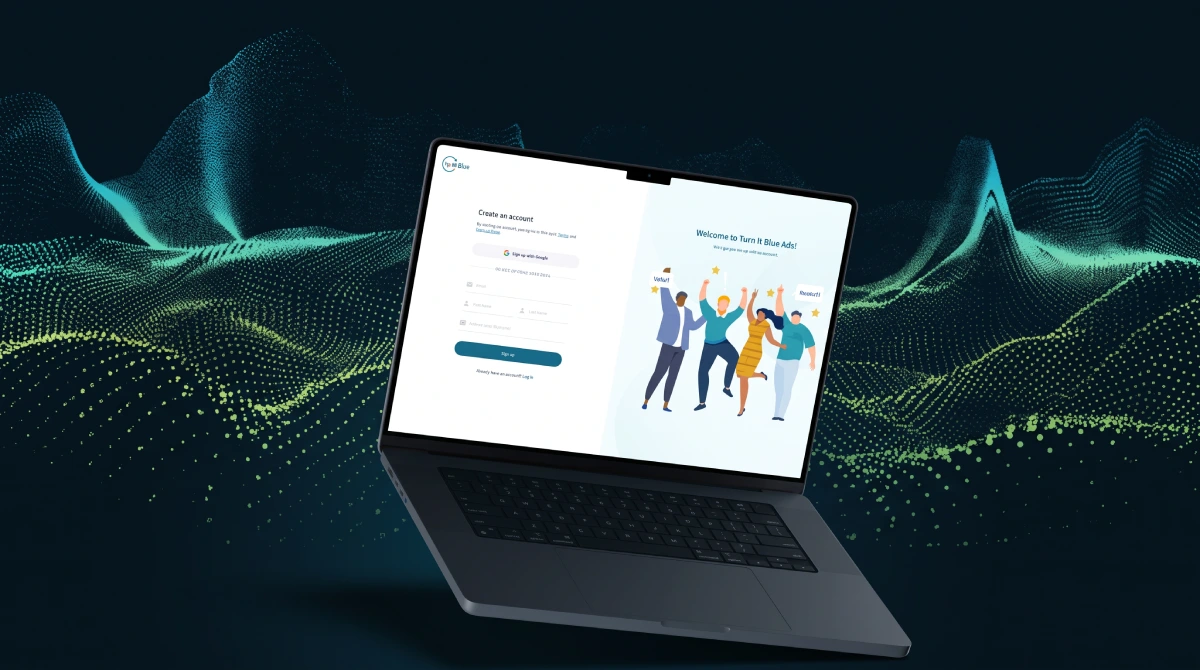
An MVP that scales without a rewrite: The engineers who build your first release stay to run and extend it, so later phases build on known design decisions. On Turn It Blue Ads, a US programmatic advertising platform, one team moved from the fixed-price build to maintenance, enhancement and a dedicated team.
Partner failures stay contained: A partner-agnostic integration layer with per-partner feature flags lets operators switch a degraded external partner with a configuration change. On Turn It Blue Ads, partner reconfiguration takes under a minute.
Installed software moves to SaaS in stages: Migration runs in phases, starting with cloud reporting that reads existing data before terminals, licenses and invoices move. Idealpos Cloud moved point-of-sale management from local systems to Microsoft Azure.
Security and IP covered from day one: Delivery runs under ISO 27001 certified by BSI (UK), with an NDA signed before requirements are shared and code and IP assigned to you as work is delivered.
Who we build for
- Funded startups: Launch a subscription MVP on an agreed scope and budget with a fixed price engagement.
- Mid-market companies: Turn an internal tool into a product customers pay for with a dedicated team.
- Software companies & SaaS vendors: Ship tenant, billing and integration features faster through staff augmentation.
- Enterprise teams: Move installed or on-premise products to a multi-tenant SaaS model without stranding existing customers.
Our SaaS Development Services
SaaS Architecture and Multi-Tenancy Consulting
SaaS architecture consulting settles the tenancy model, data partitioning, SSO and identity, and a modular or microservices structure before the first sprint. Your team avoids redesigning the database after paying customers arrive. Your buyers' security reviewers get a clear isolation story. Linh Pham, Senior Solution Architect, explains how the choice is made:
"Choose the tenancy model before the first customer signs. Shared databases cost less; a database per tenant is easier to defend in a security review. We filter by tenant in the data layer, so one missed UI check does not expose another customer's records." Quy Truong, Senior Solution Architect, Saigon Technology
SaaS Product Development Services: MVP to Production
Subscription Billing and Third-Party Integrations
Migrating Installed Software to SaaS
SaaS Scaling, Maintenance and Takeover
Case Studies: SaaS Platforms We Built and Run
Turn It Blue Ads: One SaaS Platform, Several Branded Products
- Challenge: A US political advertising technology company needed a self-service programmatic ad platform that could absorb partner changes and serve politically distinct segments.Â
- What we built: The campaign builder, account and billing layer and analytics, then a partner-agnostic backend with per-partner feature flags and branded instances patched from one core on AWS.Â
- Engagement / timeline: Five years of continuous partnership, since 2022, moving from fixed price to maintenance, enhancement and a dedicated team.Â
- Outcome: More than 130 maintenance and support items closed, more than 60 delivery items in the 2024 partner program, and partner reconfiguration in under a minute.Â
- Stack: .NET Core, React, PostgreSQL, AWS, Hangfire, Bitbucket, ClickUp.Â
- Read the full case study
Idealpos Cloud: Point-of-Sale Management Moved to Azure
- Challenge: An Australian point-of-sale company wanted terminal data, customer information, licenses and invoices managed in Microsoft Azure instead of on local machines.
- What we built: Cloud reporting first, then terminal-to-cloud data sync, license and invoice management, payment gateways, Shopify and UberEats integrations, and APIs for other systems.
- Engagement / timeline: A long-term team under Agile Scrum, deploying through Azure DevOps to development, staging and production environments.
- Stack: .NET, Angular, Microsoft Azure, Azure DevOps.
- Read the full case study
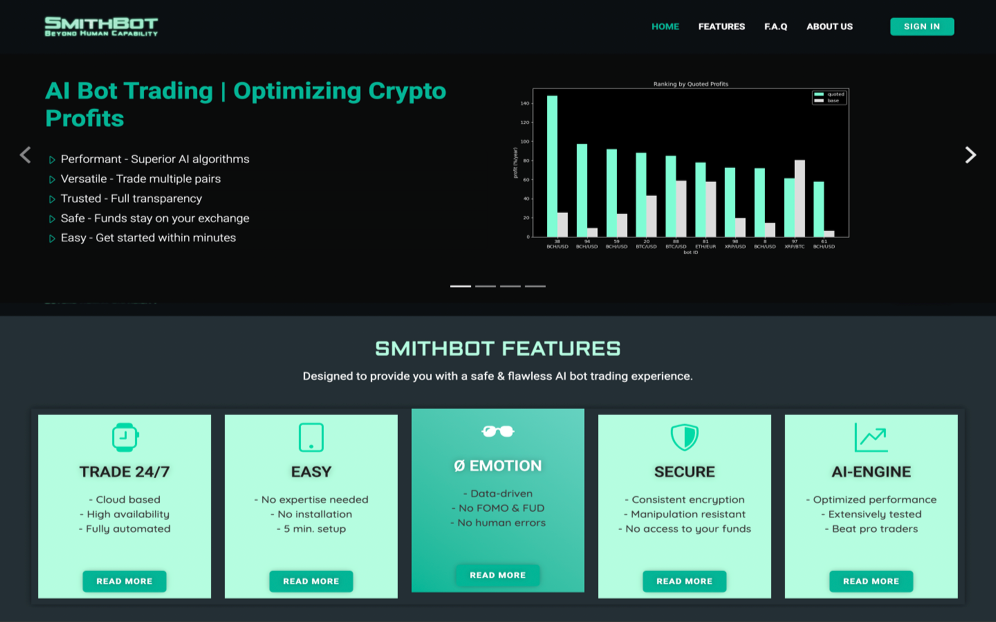
SmithBot: Subscription Web Platform for Trading-Bot Users
- Challenge: The client ran automated cryptocurrency trading bots on its own server and needed a web application where end users subscribe to those bots.
- What we built: A web application connecting the bot server, exchanges and subscribers that places trades for each subscriber and caches exchange data to avoid IP blocks and key bans.
- Engagement / timeline: Delivered in sprints, with a review with the client every other week.
- Stack: React, Node.js, AWS Lambda, AWS API Gateway, AWS Cognito, Elasticsearch, PostgreSQL.
- Read the full case study
A Clickable Prototype of Your SaaS Workflow in 48+ Hours
How Multi-Tenant SaaS Architecture Works
Multi-tenant SaaS architecture runs one codebase and one infrastructure for many customer organizations, called tenants, while keeping each tenant's data, configuration and usage separate. The tenancy model sets how strongly data is isolated, what each customer costs to host and how security reviews and per-customer backups work.
| Tenancy model | Data isolation | Cost and operations | Best fit |
|---|---|---|---|
| Shared database, shared schema | Tenant ID on every row, row-level security | Lowest cost; one schema to migrate | Many small customers on self-serve plans |
| Schema per tenant | Separate tables per tenant in one database | Moderate cost; one migration run per schema | Mid-sized accounts that want more separation |
| Database per tenant | Own database, per-customer backup and restore | Highest cost; each database can sit in the customer's data residency region | Regulated or enterprise buyers |
| Hybrid by plan tier | Shared for lower tiers, dedicated databases for top tiers | Cost follows plan revenue; two provisioning paths | Products selling self-serve and enterprise plans |
Core SaaS Capabilities and Architecture Patterns:
Tenant onboarding and identity
Self-serve tenant onboarding, SSO through SAML or OpenID Connect, role-based access and multi-factor authentication.Â
Billing
Plans with entitlements and usage metering.
Tenant controls
Per-tenant configuration, white-label branding, audit logs and data export.
Operations
Monitoring tagged by tenant and throttling against noisy neighbors.
Architecture patterns
Most products start as a modular monolith, then split billing, identity or reporting into microservices as teams grow.
Spiky workloads
Serverless functions on AWS Lambda or Azure Functions, or event-driven designs.
Trusted by Global Clients
What Our Clients Say
Expertise Across Industries
Why Choose Saigon Technology as Your SaaS Development Company?
A good SaaS application development company designs tenancy and billing before the first sprint, stays to run the platform after launch, and can show both. Saigon Technology backs these points with published case studies, named architects and certifications.Â
One Team From First Release to Year Five
Every fix turns into reverse engineering when the people who designed a SaaS platform leave. Turn It Blue Ads has kept the same team for five years of continuous partnership, since 2022. We rank in Southeast Asia Best Workplacesâ„¢ in Technology 2026, #10 in the Medium category (Great Place To Work).Â
Tenant Isolation Built for Enterprise Security Reviews
Before they sign, enterprise buyers ask how one tenant's data is kept from another, who can reach it through SSO and role-based access, and which region stores it. Our teams enforce tenant filters in the data layer, and delivery runs under ISO 9001 and ISO 27001 certified by BSI (UK).
Senior Engineers and Applied AI at $22-$46/hr
A SaaS platform rebuilt after launch costs its owner a second budget and a frozen roadmap. Senior-led SaaS teams use AI tooling in delivery and work at USD $22-$46/hr, and the saving shows up as a smaller team and fewer rebuilds.
Architecture Advice That Includes When Not to Build
Every sprint spent rebuilding what a proven service already does is a sprint your core product does not get. Our Solution Architects review build-versus-buy choices at discovery, and Saigon Technology Research Labs (experiment.saigontechnology.vn) shows working demos before you commit.
Azure Delivery as a Microsoft Solutions Partner
Moving a product onto Azure means decisions about licensing, deployment pipelines and data sync across environments. Saigon Technology is a Microsoft Solutions Partner, and on Idealpos Cloud the team built on .NET, Angular and Azure DevOps across development, staging and production.
14+ Years of Software Delivery
Saigon Technology brings 14+ years, 400+ developers, 850+ projects, 350+ clients and 3 development centers. Where a SaaS case has no published figure, as with SmithBot and Idealpos Cloud, we describe what we built rather than invent a metric.

Start With a Two-Week Risk-Free Trial
A SaaS partner is hard to judge before their code runs in your repository. Engineers can start with a two-week risk-free trial, and the work then continues as fixed-price, staff augmentation, a dedicated team, ODC or BOT.
Our SaaS Development Process
Discovery & Consulting
A Solution Architect and Business Analyst set MVP scope, the tenancy model and billing rules with you. Exit criterion: a signed-off scope and architecture.Â
UX/Product Design
We prototype onboarding, tenant administration and core workflows for user testing. Exit criterion: a clickable prototype approved by your product owner.
Agile Development
We build in sprints behind feature flags, with CI/CD deploying each merge to staging. Exit criterion: each sprint's features demoed on staging.
QA & Testing
Manual and automated tests cover functions, integrations, tenant isolation, cross-tenant impact of each release, and tenant load and throttling. Exit criterion: no open critical defects before release.
Launch
A staged release moves tenants to production with monitoring and error tracking in place. Exit criterion: production stable through the stabilization window.
Maintenance & Support
We handle security patches, scaling and billing reconciliation, or hand over to your team. Exit criterion: a named owner for every service.
Our Insights
FAQs
What budget should we plan for SaaS application development services?
Saigon Technology prices SaaS work at USD $22-$46/hr for senior-led teams, and projects start from $10,000. The total depends on the tenancy model, billing and plan logic, third-party integrations and compliance scope. Our breakdown of SaaS development costs covers features, team size and the other factors in detail.Â
How long does it take to build a SaaS MVP?
A SaaS MVP timeline depends on scope: how many user roles, which billing model and how many integrations the first release needs. We agree that scope in discovery, build in sprints with a demo at each review, and release once accounts, billing and monitoring work in production.
Should we build in-house or use SaaS development outsourcing?
SaaS development outsourcing suits teams that need multi-tenant and billing experience faster than they can hire it, or engineers without new headcount. In-house fits when core product knowledge must sit with employees long term. A mixed setup also works: your product owner sets priorities while our engineers work in your repository and sprints.

When does a custom SaaS platform make sense?
A custom SaaS platform makes sense when the software is the product you sell, or when its workflow sets your business apart. Most products build that core and connect payments, identity and email through APIs. When demand is unproven, a clickable prototype or off-the-shelf tool tests the idea first. Our build vs buy software guide covers the trade-offs.
Can you take over an existing SaaS codebase?
Saigon Technology takes over SaaS codebases that another team built, starting with a code audit under read-only repository access. The audit reviews architecture, tenancy, tests and risks, and ends in a work breakdown. Production stabilization comes first, then new features are planned on top of the code that already works.
Can you move our installed software to a SaaS model?
Saigon Technology moves installed and on-premise software to SaaS in phases. The work covers re-architecting for multi-tenancy, moving licensing to the cloud and syncing data while some customers still run the installed version. Expect a period when installed and cloud customers run side by side, so support, releases and licensing have to cover both versions.
Who owns the code, and how do we avoid vendor lock-in?
Clients own the code of every SaaS product we build: code and IP are assigned to you as work is delivered. You get Jira and code repository access and work with a named Project Manager and the developers directly. Check for both terms in the contract of any SaaS app development company you shortlist.
How do you handle GDPR, HIPAA and other compliance requirements?
Saigon Technology works under ISO 27001 certified by BSI (UK) for clients in the US, Australia, Singapore and Europe. GDPR is applied as standard when an engagement handles EU personal data, HIPAA and PCI-DSS requirements are met where the workload needs them, and Singapore projects follow PDPA. Encryption at rest and in transit, role-based access control, audit logs and the data residency region are planned at the architecture stage.
Can you add AI features to our SaaS product without exposing tenant data?
Saigon Technology adds AI features to SaaS products by keeping them inside each tenant's data boundary and each plan's usage allowance. Tenant-scoped retrieval (RAG) indexes documents per tenant and checks permissions before any text reaches the model. Per-plan AI quotas cap usage, token cost is tracked per tenant, and customer data stays out of model training.
Saigon Technology brings 50+ AI projects across healthcare, fintech, logistics and business software, plus Phong Le, AI Tech Lead. Our AI integration page covers AI in your other systems.
Which technology stack do you use to build SaaS applications?
Saigon Technology builds SaaS back ends on .NET Core, ASP.NET and Node.js, front ends on React and Angular, and mobile apps with React Native. Data runs on PostgreSQL and SQL Server, hosting on AWS (Lambda, API Gateway, Cognito) and Microsoft Azure, with CI/CD on Azure DevOps and Bitbucket. Our DevOps team runs the pipelines.