

































































-
OVERVIEW
-
SERVICES
-
MODELS
-
WHY CHOOSE US ?
-
OUR PROCESS
-
TECHNOLOGIES
-
FAQS
What AI Engineers Do, and What to Hire Them For
An AI engineer builds production software around machine learning models rather than researching new ones. The role covers integrating large language models through provider APIs, building retrieval pipelines over your own data, designing agent workflows that call tools and take actions, and running all of it reliably under real traffic and real cost limits. It sits between software engineering and applied machine learning, closer to the software side.
That distinction matters when you hire AI engineers. A research-heavy profile will train you a model you may not need. A generalist backend developer will wire up an API call and stop before evaluation, cost control and failure handling, which is where most AI features actually break.
AI Engineers You Can Hire
These are the roles clients hire AI engineers for most often. Every one of them comes from our AI development and generative AI integration practice, with a solution architect and AI tech lead behind the team rather than a lone contractor.
Related: AI Development Services · Generative AI Integration Services · Offshore AI Developers
Hire Generative AI Engineers
Hire AI Agent Engineers
Machine Learning and Data Engineers
Hire AI Security Engineers
An Embedded AI Engineering Team
Case Studies: What Our AI Engineers Have Shipped
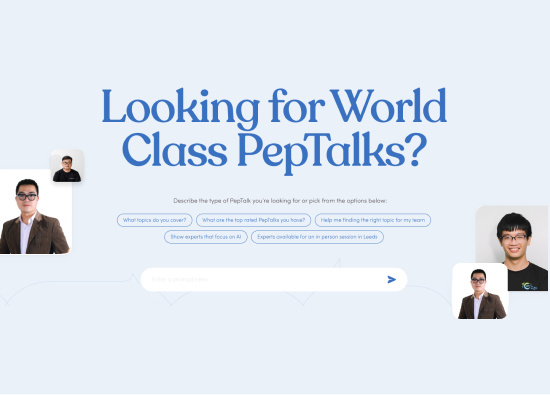
PepTalk: An Expert-Matching Chatbot Taken From Idea to Validated MVP
- Challenge: PepTalk needed to know whether a conversational interface could replace manual expert search and booking before funding a full build. Three constraints shaped the work. The gap between AI expertise and the client's domain knowledge made acceptance criteria hard to define, the third-party service's ranking logic was opaque, and model cost had to be traded against answer quality.Â
- What we built: a chatbot that collects requirement keywords across topic, purpose, budget, location, duration, industry and format, runs text-embedding semantic search across an expert database, surfaces near matches by semantic similarity rather than keyword overlap, rewrites expert biographies into natural language, and completes the booking handoff.Â
- Engagement and timeline: MVP-first validation build on the fixed-price model. Senior-level team of 1 project manager, 4 developers, 1 business analyst and 1 quality control engineer.Â
- Stack: Python, LangChain, ChromaDB, FastAPI, Celery, PostgreSQL, Redis, OpenAI, WebSocket, Docker, Angular.Â
Large and small models were used together deliberately, the larger one where reasoning quality mattered and the smaller one where it did not, which is how the running cost stayed inside what an MVP could justify. Read the full case study →
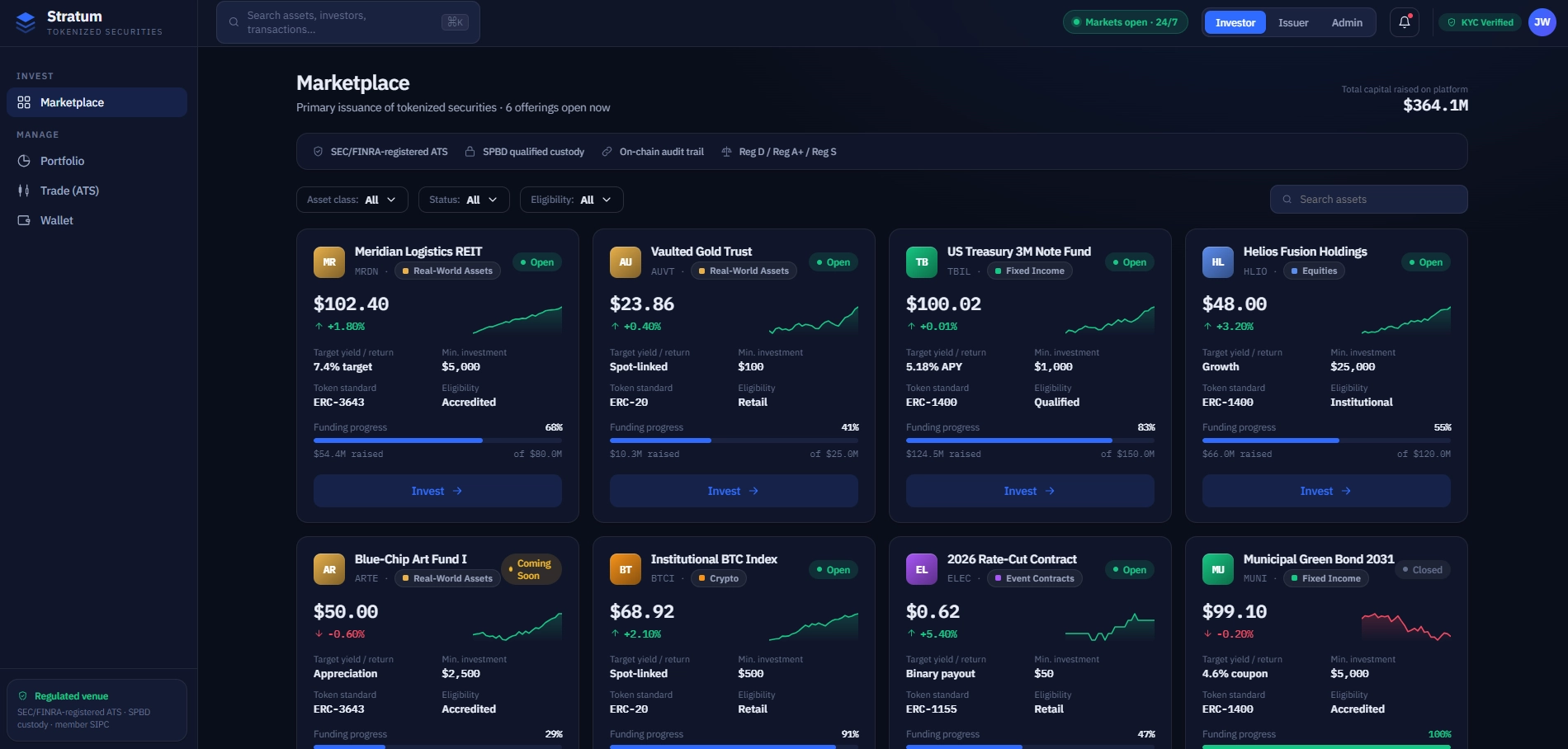
A Licensed Multi-Asset Trading Platform: AI-Augmented Engineers Inside a Regulated System
- Challenge: a licensed broker-dealer and ATS operator needed to compress delivery timelines across a complex multi-service platform without loosening the correctness guarantees that regulated financial software requires, while widening its partner API surface and supporting live production systems.
- What we built: new API endpoints, service-layer logic and database migrations on the Kotlin/Ktor primary issuance backend, partner-facing REST APIs documented against agreed contracts, production support on live financial systems, and TypeScript services with a Next.js admin experience and a React Native app for the unified multi-asset build.
- Stack: Kotlin/Ktor, TypeScript, Next.js, React Native, Google Cloud Pub/Sub and BigQuery, Kubernetes, HashiCorp Vault, RS256 JWT, GitLab CI/CD, distributed tracing.
Our engineers use AI coding assistants here the way they use a linter, applied to implementation, test generation and review turnaround. Money movement sets the standard, so financial-safety discipline governs every change regardless of how it was drafted. Read the full case study →
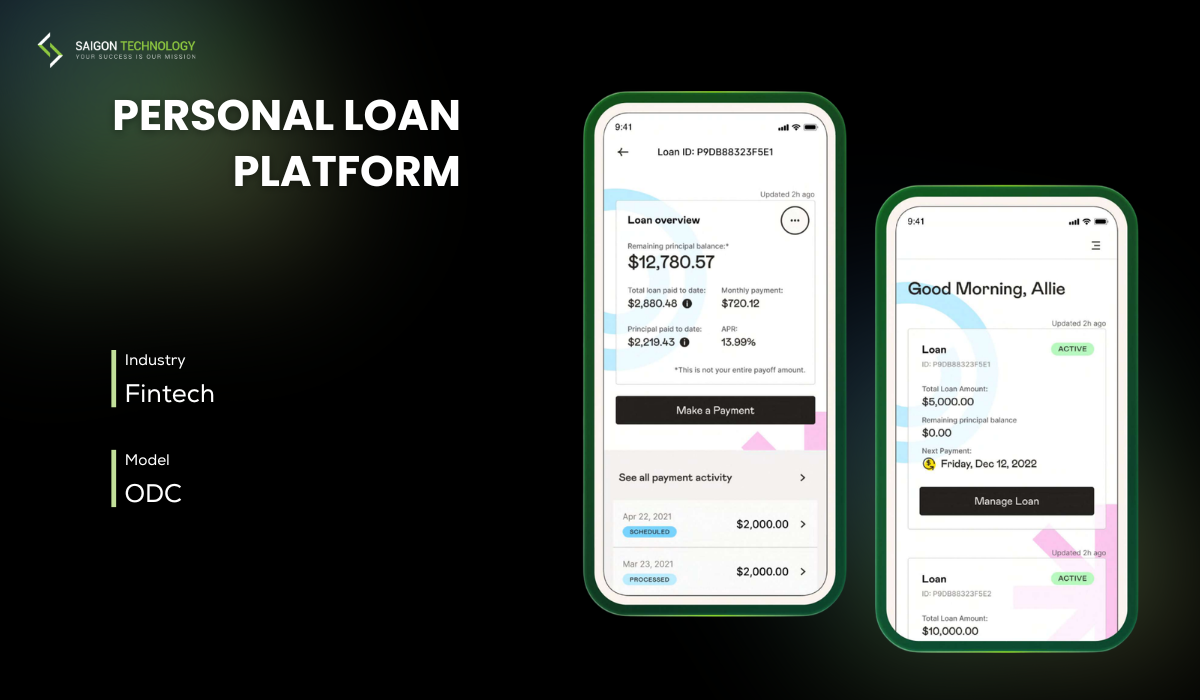
A US Personal-Lending Platform: AI Decisioning Integrated, Traced and Explainable
- Challenge: decision logic that varied by region, mismatched data across verification providers, third-party APIs that were slow or unavailable, and machine-learning decisions that business teams could not explain to anyone who asked.Â
- What we built: identity, employment, income and bank-account verification across Plaid, GIACT, TALX and Equifax, a normalization layer that standardized incoming formats before scoring, fallback and background retry when a source failed, decision-log tracing so underwriting outcomes could be explained and audited, internal rules combined with third-party risk scores, and LoanPro lifecycle integration. Full audit trails, GDPR alignment and OAuth 2.1 throughout.Â
- Engagement and timeline: 3+ years, dedicated development centre model, US market.Â
- Stack: Java 18, Spring Boot, React and Next.js, Python with Airflow, Kafka, gRPC, GraphQL, AWS ECS, DynamoDB, S3 and Cognito, Terraform.Â
One clarification worth making, because it is the part buyers should interrogate: the risk model itself is Oscilar's, a third-party decisioning platform. Our engineers built the integration, the scoring pipeline, the data-quality layer and the explainability tracing around it. Underwriting decisions remained with the client's rules and their compliance team. Read the full case study →
Send Your RFP. See Your AI Build Scoped in 48 Hours.
- Clickable prototype of your model, data pipeline, or agent flow
- Workflow visualization mapping the full data-to-inference chain
- Architecture direction covering model selection, inference cost, and scale
- Â Technical recommendation call with our engineering team
Why Choose Saigon Technology to Hire AI Engineers
A good partner to hire AI engineers from proves three things before you sign: that the engineers are senior and screened, that you will own the models and training data you pay for, and that you can test the team on real work first. Saigon Technology publishes all three.Â
Senior Engineers Paired With Applied AI, at $26-$46/hr
Our published rate for senior-led implementation runs $26 to $46 per hour, oversight included. Set that against the $140 to $280 band the market charges for senior and lead AI profiles. The gap comes from a cost base outside the US and Europe, and senior engineers working with AI assistance rather than juniors working in volume. Fewer people deliver the same scope with less rework.
It matters on AI work because at premium rates, evaluation harnesses, guardrails and cost instrumentation are the first line items cut, and those decide whether a feature still runs a year later.Â
You Own the Models, the Weights and the Training Data
Contracts assign you the source code, the fine-tuned model weights, the embeddings and the training data, and they state what happens to all of it when the engagement ends. This is the question worth putting to every provider you shortlist, because it is rarely answered on a website.
"Most teams ask who owns the code. The question that matters later is who owns the fine-tuned weights and the training data, because that is what you cannot rebuild from a repository." - Phong Le, AI Tech Lead, Saigon Technology
Three Independent Screening Rounds Before You See a CV
Every engineer clears three separate assessments: Talent Acquisition, a Tech Lead, and HR. They test engineering depth, English proficiency, logical reasoning and teamwork. We publish the mechanism rather than a pass rate, because a percentage is easy to assert and impossible for you to verify.
That matters more than usual on AI hiring, where the field rewards people who can describe a model architecture over people who have kept one running. You then interview the shortlist yourself, the check that actually counts.
See the AI Working Before You Commit
Working demos are open for inspection at experiment.saigontechnology.vn: fracture detection, semantic search, OCR and object detection. They are running systems, not slides, so you can judge the engineering before you buy.
ISO 9001 and ISO 27001, Certified by BSI
Both are third-party audited by BSI in the UK rather than self-declared, covering the information-security controls your own auditors will ask about. We are also a Microsoft Gold Partner.
The Track Record Behind the Team
14+ years · 400+ developers · 850+ projects · 350+ clients · 3 development centres · 30+ AI engineers · 100+ AI projects · 4 dedicated AI teams, and #10 in the Medium category of Southeast Asia Best Workplaces™ in Technology 2026 (Great Place To Work).
On the case studies above we published the engagement, architecture and stack, and left the outcome figures pending. We would rather show work you can verify than a number we cannot source.
A Shortlist in 1–2 Working Days, Then a Two-Week Trial
Send the role and get matched profiles inside two working days. Interview them, then run a two-week risk-free trial before any longer commitment. Engagement models cover dedicated team, project-based, fixed-price, dedicated development centre and build-operate-transfer.
Trusted by Global Clients
What Our Clients Say
Industries We Serve
Who We Build For
AI-first startups
That need production engineering behind a working idea, and need it before the runway argument gets uncomfortable.
Product teams
Adding an AI feature to software that already has users, where the integration has to respect an existing architecture and an existing on-call rota.
Regulated enterprises in fintech and healthcare
Where explainability, audit trails and data residency decide the design before anyone writes code.
Teams replacing a stalled engagement
Usually after a freelance or marketplace hire produced a demo that could not be deployed. Clients hiring AI engineers in the USA and Europe come to us most often at this point.
What You Get When You Hire AI Engineers Through an Engineering Partner
Most AI projects do not fail at the model. They fail at everything around it, and that is what an engineering partner is for. The AI engineers for hire through one should own that surrounding work, not just the model call.Â
Evaluation you can trust
An eval harness scores model output against cases you define, so a prompt change or a provider upgrade produces evidence instead of an argument. Without one, quality is a matter of opinion and regressions ship silently.Â
Drift caught before your users find it
Model behaviour moves as providers update and as your data changes. Monitoring output quality on a schedule turns model drift from an incident into a maintenance task.
Inference cost you can forecast
Token spend scales with usage in ways that surprise finance teams. Routing simple calls to smaller models, caching aggressively and instrumenting spend per feature keeps unit economics intact as volume grows.
Guardrails that hold under pressure
Injection defence, output validation, PII filtering and human checkpoints on consequential actions. These get retrofitted after an incident far more often than they get designed in.
Senior architecture from the first conversation
Including an honest answer when a simpler system beats a model, or when the data is not ready to support what you are asking for. Not every problem is an AI problem, and saying so early is cheaper for everyone.
How Hiring AI Engineers With Us Works
Discovery
A senior engineer and a solution architect work through your use case, data, constraints and success criteria. You get an architecture direction and an honest read on feasibility.Â
Role definition and screening
We define the profile and run the three assessment rounds against it.
Shortlist in 1-2 working days
Matched candidate profiles reach you inside two working days of an agreed brief.
You interview
Technical fit and team fit are yours to judge, before anyone is onboarded.
Two-week risk-free trial
Real work, your repositories, your process. Continue only if it is working.
Delivery with senior oversight
A tech lead and solution architect stay on the engagement, with transparent progress through your own tools and CI pipelines.
Scale or transfer
Grow the team, hold it steady, or transfer engineers in-house under a build-operate-transfer arrangement. We have completed that transfer before, including a six-year engagement that scaled from 2 to roughly 50 engineers and handed over completely.
Our Insights
FAQs
What AI stack, standards, and compliance do you use?
- Languages and frameworks: Python, TypeScript, Java, .NET and Node.js, with PyTorch, TensorFlow, scikit-learn and OpenCV for model work.
- Model providers and orchestration: OpenAI, Anthropic and Google APIs, open-weight models where data residency requires them, LangChain and comparable orchestration frameworks, function calling and agent tooling.
- Retrieval and data: ChromaDB, Pinecone and pgvector, embedding and chunking strategy, Kafka streaming, Airflow pipelines, PostgreSQL and DynamoDB.
- Cloud and operations: AWS, Azure and Google Cloud, Docker and Kubernetes, Terraform, GitLab and GitHub CI/CD, distributed tracing and structured logging.
- Standards and compliance: ISO 9001 and ISO 27001 certified by BSI in the UK. Secure development practices aligned to GDPR and PDPA, with HIPAA and HL7 support for healthcare engagements and SOC 2 aligned controls where a client's auditors require them. NDAs, role-based access and full audit trails as standard.
How much does it cost to hire AI engineers?
Saigon Technology's published rate for senior-led AI implementation is $26 to $46 per hour, with architect and tech-lead oversight included. The wider market charges roughly $60 to $90 per hour at junior level and $140 to $280 for senior and lead profiles. Monthly cost per full-time engineer typically lands between $3,200 and $10,500 depending on seniority and specialization.Â
How fast can we have AI engineers working on our project?
You receive a shortlist of matched candidate profiles within 1 to 2 working days of an agreed brief. After that the pace is set by your interviews. Most clients complete interviews and begin a two-week risk-free trial inside the first fortnight, with full delivery starting once the trial confirms the fit.
Should we hire AI engineers in-house or through an engineering partner?
Hire in-house when AI is your core product and you can absorb a three to six month search plus ongoing salary. Use a partner when you need production capability this quarter, when the work is a defined build rather than a permanent function, which is the case most teams outsourcing AI development are in, or when you want to prove the business case before creating headcount. Many clients do both, then transfer engineers in-house later.
Who owns the models, fine-tuned weights and training data we pay for?
You do. Contracts assign the source code, fine-tuned weights, embeddings and training data to you, and specify what happens to each at the end of the engagement. Put the same question to every provider you shortlist, specifically about weights and training data rather than code alone.
How do we evaluate an AI engineer's work before committing?
Three ways, in order of usefulness. Inspect our working demos at experiment.saigontechnology.vn. Interview the shortlisted engineers directly on your own technical questions. Then run the two-week risk-free trial on real work in your own repositories, which tells you more than any assessment we could run on your behalf.
What AI skills should we screen for?
For applied work, prioritize production engineering over research credentials: model integration and provider abstraction, retrieval design, evaluation methodology, prompt engineering, inference cost control, and guardrails against injection and unsafe output. Deep learning and natural language processing fundamentals matter, but a candidate who has never shipped an AI feature to real users is a research hire rather than an engineering one.
What engagement models are available?
Five. A dedicated team working only on your project, project-based delivery for a defined scope, fixed price for well-specified builds, a dedicated development centre for long-term capacity, and build-operate-transfer where the team ultimately becomes yours. All start with the same two-week risk-free trial. If you need to extend an existing in-house team rather than stand up a new one, that is staff augmentation, which has its own page.