




































-
OVERVIEW
-
SERVICES
-
MODELS
-
WHY CHOOSE US ?
-
OUR PROCESS
-
TECHNOLOGIES
-
FAQS
What Are CRM Development Services?
Customer relationship management (CRM) development services cover the design, build, and long-term support of software shaped around one company’s sales and service process. The work spans lead and opportunity tracking, quoting, client records, reporting, and connections to email and finance systems, delivered as a new platform or as modules inside existing software.
Our CRM software development covers the whole commercial cycle, from first inquiry to signed quote and service history:
- New CRM platforms: systems built around your pipeline stages, approval rules, and the way your teams hand work to each other.
- Modules inside your product: client records, quoting, and reporting added to software your customers or staff already use.
- Automated data capture: email and activity filed against the right lead, client, or opportunity without anyone retyping it.
- Migration and support: data moved from spreadsheets or an older CRM, then ongoing fixes and enhancements after launch.
We build operational CRM for sales force automation, analytical CRM for reporting on customer behavior, and mobile or industry-specific CRM where field teams and regulated sectors need it.
Senior engineers own the data model and business logic, while AI tooling speeds up field mapping and tests. When a CRM sits inside a wider platform, our custom software development and web application development teams build the rest of it.
Our CRM Development Services
Custom CRM Development
We build a CRM around the stages your deals actually move through, from lead to delivery.
- Lead and opportunity management: capture, qualify, and track every inquiry through pipeline stages you define.
- Quotes and proposals: version-controlled quotations with approval routing, proposal generation, and e-signature support.
- Client history: one profile per client with communications, quotes, orders, and service history.
Our custom CRM software development follows the pattern of FlowCRM, which our engineers built in-house to run lead-to-delivery in one system.
CRM Consulting and Platform Customization
Before anyone writes code, we decide what to build, what to buy, and what to extend.
- Process mapping: document how leads, quotes, approvals, and handoffs move between your teams.
- Solution design: turn the business requirements and your operational structure into a data model and a phased plan.
- Platform customization: configure and extend Salesforce, HubSpot, or Microsoft Dynamics 365 CRM when an existing platform fits.
Our CRM consulting services include Power Platform apps on Microsoft Dataverse for Dynamics 365 clients. When a standard platform covers most of your process, we customize it and say so.
AI-Assisted Data Capture and Workflow Automation
We design the data model so records build themselves from the email and activity your teams already produce.
- Email capture: sender, subject, content, and attachments extracted from Outlook or Exchange through Microsoft Graph.
- Classification: AI-assisted tagging that files each email against the right lead, client, or opportunity.
- Workflow automation: approvals, reminders, and status changes triggered by rules you set.
FlowCRM applies this model end to end. Broader AI features go to our AI development services team.
Sales Dashboards and KPI Reporting
We give sales, operations, and management the same live view of the pipeline.
- Configurable KPIs: targets per rep and team, with goal tracking against each.
- Embedded analytics: Power BI dashboards and scheduled reports inside the CRM, for data-driven decisions without exports.
FlowCRM runs configurable KPIs for individuals and teams, and the Wealth Management Application embeds Power BI for client portfolio and fund metrics.
Client Onboarding and Compliance Modules
For regulated sectors, the CRM has to control who sees what and record every change.
- Digital onboarding: client intake with KYC and AML checks automated inside the workflow.
- Role-based visibility: field-level permissions that show, hide, or lock data per user role.
- Audit history: every action recorded, so compliance teams can trace who changed which record.
The Wealth Management Application and ITS both run on these controls. See our fintech software development work for more.
Connectors for Email, Finance, and Government Systems
A CRM earns its place when nobody has to update it by hand.
- Communication tools: Outlook and Exchange mailboxes, Microsoft Teams, and IP telephony connected to client records.
- Finance and operations: ERP systems, accounting, billing software, and procurement systems synced with quotes and orders.
- External services: e-signature providers and government APIs, such as tax filing and official exchange rates.
ITS files tax returns with the government and pulls official currency rates. For enterprise-wide connection work, see our system integration services.
CRM Migration, Support, and Enhancement
We move your data across without losing history, then keep the CRM growing with your process.
- Data migration: cleanse, deduplicate, and map records from spreadsheets or an older CRM, with data quality checks.
- Parallel runs: old and new systems produce the same outputs side by side before cutover.
- Ongoing support: performance monitoring, technical support, and new features driven by user feedback.
After launch, our software maintenance and support team keeps the system current as your sales strategy changes.
Case Studies: CRM and Client Platforms We've Built
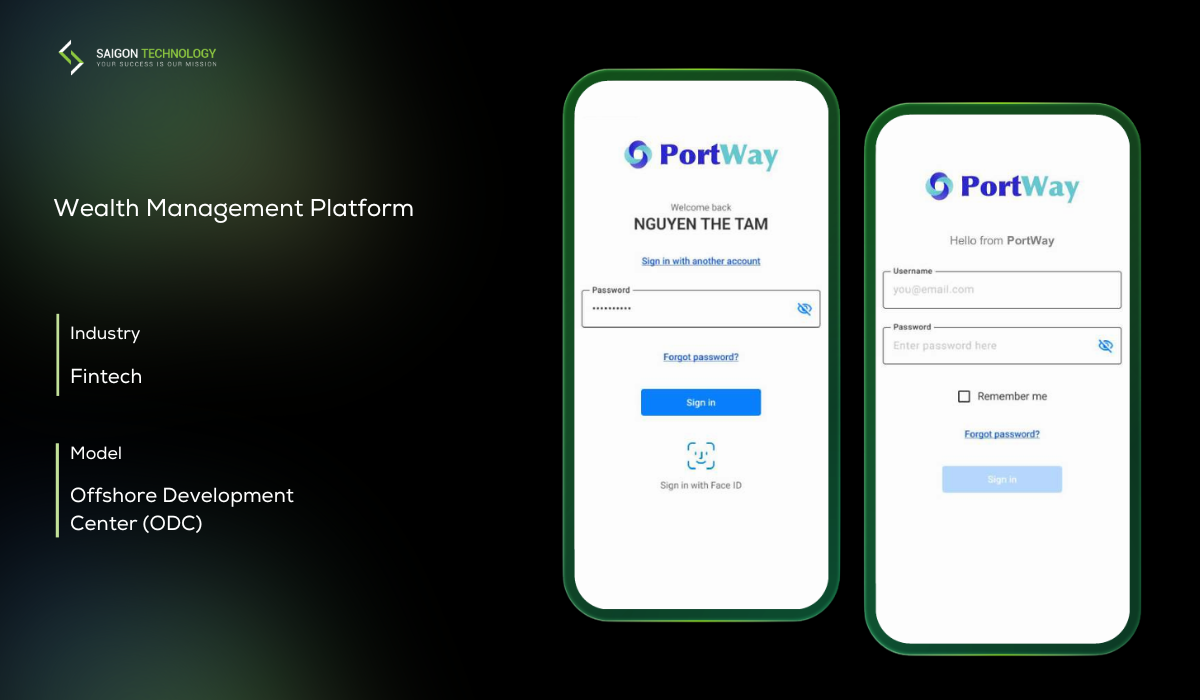
Wealth Management Application: Client Onboarding with a Full Audit Trail
- Challenge: a US platform for wealth managers, brokers, and custodians had to onboard clients securely and keep every portfolio, trade, and fund record auditable.
- What we built: digital onboarding with KYC/AML automation, personalized client reporting, broker and custodian services, and an event-driven system that records every action.
- Engagement: an offshore development center (ODC).
- Outcome: client and transaction data consolidated through event sourcing, with end-to-end auditability.
- Stack: ASP.NET Core, Azure (AKS, Functions, Service Bus), Apache Kafka, RabbitMQ, SignalR, React, TypeScript, Blazor, Power BI Embedded, Azure SQL, PostgreSQL, Cosmos DB, Redis, Elasticsearch, IdentityServer4.
- Read the full case study (PDF)
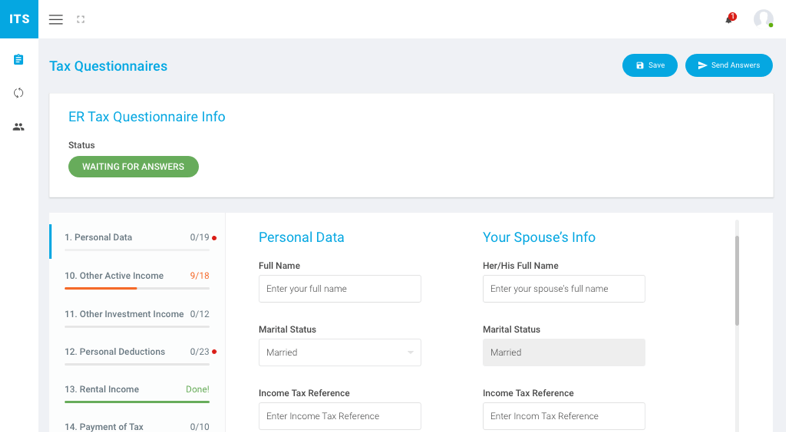
ITS - Individual Tax System: Role-Based Tax Records Linked to CRM
- Challenge: a client in Singapore needed tax computation that covers every case to the exact amount, across multiple currencies and business lines.
- What we built: the ITS tax system with CRM integration, role-based field permissions, configurable tax formulas, IRAS filing for IR21 and Form B1, and official exchange rates, all checked through comparison testing.
- Engagement: fixed price.
- Stack: .NET Core 2, Entity Framework Core 2, jQuery DataTables, AutoMapper, FluentValidation, Hangfire, Swagger.
- Read the full case study
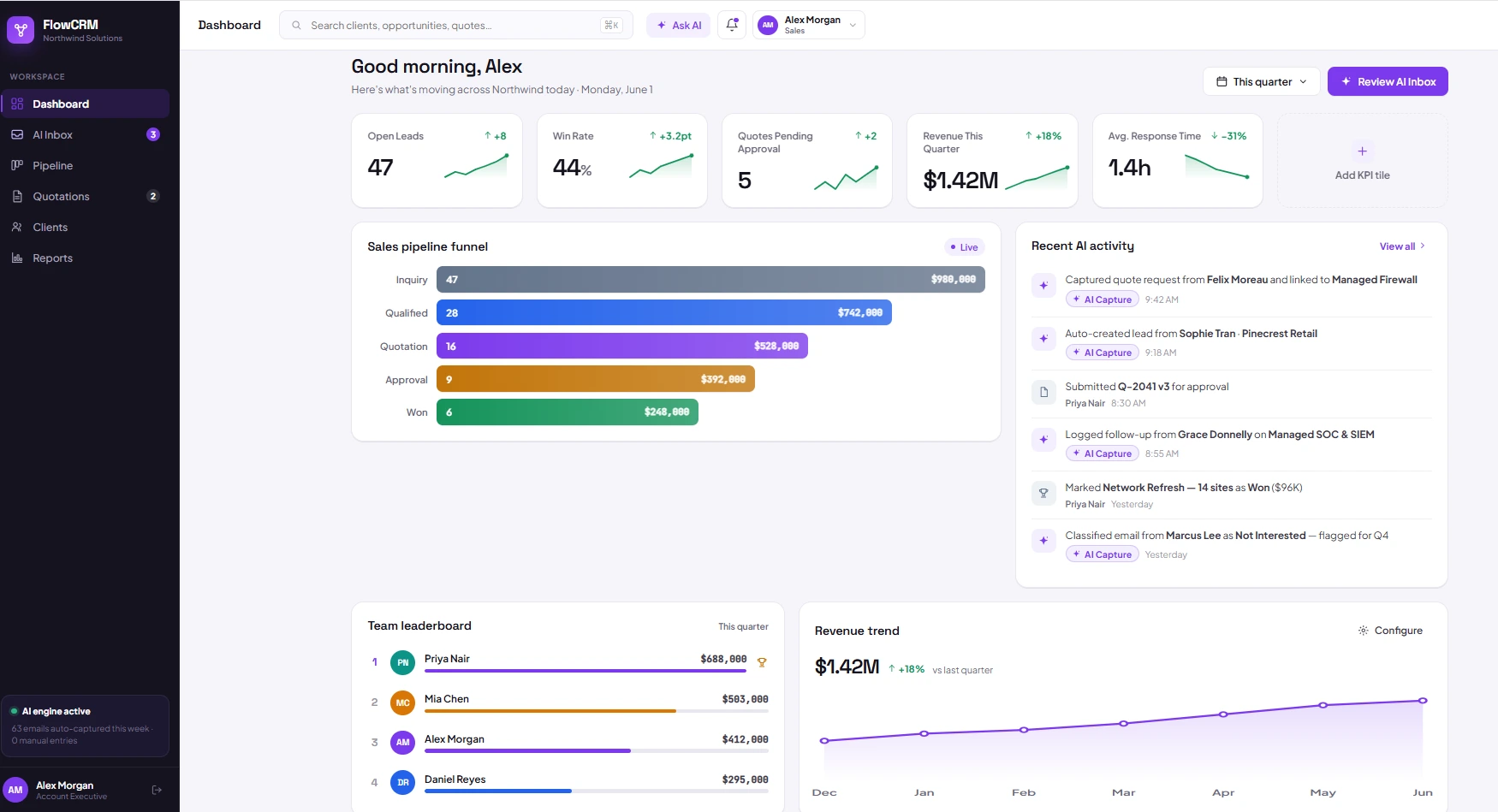
FlowCRM: One Record from Lead to Delivery
- Challenge: show how one system can replace the inboxes and spreadsheets where leads, quotations, and project status usually scatter.
- What we built: FlowCRM combines lead and opportunity management, quotations with approvals, Outlook and Exchange capture, AI-assisted email filing, configurable KPIs, and audit logs.
- Engagement: an in-house build by Saigon Technology engineers.
- Outcome: a working system that keeps one source of truth from lead to delivery, files email without manual entry, and gives sales, operations, and management a shared live view.
- Stack: web application, Microsoft Graph, role-based access control, audit logging, integration-ready architecture for finance and accounting.
- Read the full case study
Send Your CRM Brief. Click Through It in 48 Hours.
- Clickable prototype of your lead, quotation, or client record flow
- Workflow visualization mapping the full lead-to-delivery chain
- Architecture direction covering data migration, email and ERP connections, and scale
- Technical recommendation call with our engineering team
Why Choose Saigon Technology as Your CRM Development Company?
A strong CRM software development company maps how you sell before it picks a platform, designs permissions and audit trails into the data model, and stays with the system as your process changes. Saigon Technology delivers CRM development services on those terms, with senior engineers, published rates, and ISO-certified security controls.
Senior Engineers and AI Tooling at $22-$46/hr
Our published rate is $22-$46/hr, with senior engineers leading each workstream and AI tooling handling field mapping, test generation, and documentation. That matters in CRM work, because permission models and audit history are the first items cut when a project runs on premium onshore rates.
A CRM without them still works on launch day. The gap shows later, when a rep sees pricing meant for managers or nobody can say who changed a quote. Our teams overlap 10-12 hours with US time zones, so those questions get answered inside your working day.
Client Data Governed From Day One
A CRM holds personal data, pricing, and deal history in one place, which makes it a target. We design role-based access, field permissions, and audit logs into the data model before the first screen is built. Adding them after launch means rewriting queries, reports, and every screen that shows a record.
The ITS tax system hides or locks fields per role, and the Wealth Management Application records every action through event sourcing. Engagements are structured to meet GDPR and PDPA requirements, with PCI-DSS requirements met where the workload needs them.
A Team That Stays While Your CRM Keeps Changing
A CRM is never finished. Pipeline stages, pricing rules, and approval chains change every time your sales strategy does, and each change touches business logic someone has to understand.
When the engineers who built that logic leave, the next change breaks something that already worked. Saigon Technology ranked #10 in the Southeast Asia Best Workplaces™ in Technology 2026 (Medium category, Great Place To Work), and low churn keeps that knowledge on your project.
You Own the Code and the Customer Data
Full IP and source-code transfer is a standard contract term, so the CRM and every customer record in it belong to you. Changing vendors later never costs you your client history.
When an Off-the-Shelf CRM Is the Better Buy
If your process matches a standard pipeline, a custom build costs more than it returns. We'll tell you that in the first workshop, then customize Salesforce, HubSpot, or Dynamics 365 instead.
ISO 9001 & ISO 27001 Certified, Microsoft Solutions Partner
Certified by BSI (UK) for quality and information security management, which covers how we handle your customer data. As a Microsoft Solutions Partner, we work daily with Outlook, Exchange, Azure, and Dynamics 365.
14+ Years · 400+ Developers · 850+ Projects · 350+ Clients · 3 Development Centers
Our CRM client engagements stay under NDA, so we show verifiable work on client platforms instead of a CRM metric we can't publish.
Two-Week Risk-Free Trial
Start with a two-week risk-free trial on a real CRM workstream, such as one module or one migration. If the team fits, continue through staff augmentation, a dedicated team, fixed-price delivery, or an ODC.
Trusted by Global Clients
What Our Clients Say
Industries We Serve
Who We Build For
A custom CRM fits any industry where the sales process doesn't match a standard pipeline. What differs is where you start, and most clients reach us from one of these positions.
Healthcare, logistics, education, real estate: the same CRM work applies. See all the industries we serve.
Mid-market companies
Retire the spreadsheets and inboxes your team uses to track leads and quotes. We build one system for the whole commercial cycle, then keep a dedicated team on it for the next workflow.
Funded startups
Launch a CRM product for your niche on a fixed scope and budget, starting with an MVP and keeping the same engineers once customers sign up.
Enterprise teams
Move client onboarding, approvals, and audit trails into one governed CRM, built and run by your own ODC in Vietnam, with PCI-DSS requirements met where the workload needs them.
Benefits of Custom CRM Development
A CRM built for your process pays back in fewer workarounds and better data, while a generic tool asks your teams to bend around it. Custom CRM development makes sense when your pipeline, pricing, or compliance rules are specific enough that per-seat licence fees buy features nobody uses. Our CRM development services start with the modules where that mismatch costs the most.
Fits the way you sell
Pipeline stages, approval rules, and pricing logic match how your team already works.
One shared record
Sales, operations, and management see the same client and deal data in real time.
Less manual entry
Email capture and workflow automation remove most retyping, so reps spend time on customer engagement.
Ownership of code and data
No licence renewals, and no vendor deciding which fields you can add.
Permissions you define
Field-level access and audit history follow your compliance rules.
Connected tools
ERP, accounting, billing, and communication systems share data with the CRM.
Growth in phases
Start with the modules that pay back first and add more as ROI shows.
Our CRM Development Process
Sales process mapping
We interview the people who sell, approve, and report, then document every stage, rule, and handoff. Exit criterion: an approved process map and a build, buy, or customize decision per module.
"Most CRM rebuilds we're asked to quote start with a team that customized an off-the-shelf tool until nobody could upgrade it. So we map the sales process first, then decide what to build, what to buy, and what to integrate." Phuc (Cris) Tran, Program Manager, Saigon Technology
Data model and prototype
We turn the map into technical specifications, a data model, and a clickable prototype of the main flows. Exit criterion: key users approve the prototype.
Agile development
Senior engineers build in short sprints, with a working demo at the end of each. Exit criterion: phase-one modules complete on staging.
QA and data migration
We test every role and permission, migrate historical records, and run user acceptance testing with your team. Exit criterion: migrated data matches the source on agreed checks.
Deployment and adoption
We go live in stages, run role-based user training, and support change management with your managers. Exit criterion: teams work in the CRM instead of spreadsheets.
Optimization and support
We monitor performance, collect user feedback, and ship enhancements as your process changes.
Our Insights
FAQs
How much do CRM development services cost?
Cost depends on the number of modules, user roles, connected systems, and the volume of data to migrate. Saigon Technology's published rate is $22-$46/hr, and projects start from $10,000. A short discovery phase turns your process map into a phased estimate, so the first release covers the modules that pay back fastest.
How long does it take to build a custom CRM?
The time to build a custom CRM depends on how many stages, roles, and connected systems the first release needs. Most clients launch a focused first phase covering leads, quotes, and client records, then add automation, reporting, and connectors in later phases. Discovery gives you a timeline per phase before development starts.
Should we build a custom CRM or customize an off-the-shelf one?
Customize an off-the-shelf platform when your process matches a standard pipeline, and build when pricing, approvals, or compliance rules don't fit one. Saigon Technology does both: we build custom CRMs and customize Salesforce, HubSpot, and Microsoft Dynamics 365. See our custom software vs off-the-shelf guide.
Should we build our CRM in-house or outsource CRM development?
Keep process ownership in-house and outsource CRM development when you need senior engineers faster than you can hire them. Your managers own the rules, while our engineers build and maintain the system through staff augmentation, a dedicated team, fixed-price delivery, or an ODC, with full IP transfer.
How do you protect client data inside a CRM?
We apply role-based access and field-level permissions, encrypt data in transit and at rest, and log every change to a record. Engagements are structured to meet GDPR and PDPA requirements, with PCI-DSS requirements met where the workload needs them, under ISO 27001-certified information security management.
Can a new CRM work with Outlook, our ERP, and accounting tools?
Yes. We connect CRMs to Outlook and Exchange, Microsoft Teams, ERP systems, accounting and billing software, e-signature providers, IP telephony, and procurement systems, so data moves without retyping. For connection work across your whole landscape, our enterprise integration engineers take it from there.
What technologies do you use for CRM development?
We choose the stack per project, and most CRM builds draw on these layers:
| Area | What we work with |
|---|---|
| Back end | .NET, ASP.NET Core, Hangfire, SignalR |
| Front end | React, TypeScript, Blazor |
| CRM platforms | Microsoft Dynamics 365, Power Platform, Microsoft Dataverse, Salesforce, HubSpot |
| Messaging and events | Apache Kafka, RabbitMQ |
| Data and search | SQL Server, Azure SQL, PostgreSQL, Cosmos DB, Redis, Elasticsearch |
| Cloud and reporting | Azure, Microsoft Graph, Power BI |
Saigon Technology is a Microsoft Solutions Partner.
What does a CRM development company do?
A CRM development company designs, builds, and supports software that manages customer relationships. That includes mapping the sales process, building lead, quote, and client modules, customizing platforms such as Dynamics 365, connecting email and finance systems, migrating data, and training users, so every team works from the same customer record.