



































































-
OVERVIEW
-
SERVICES
-
MODELS
-
WHY CHOOSE US ?
-
OUR PROCESS
-
TECHNOLOGIES
-
FAQS
What Are MCP Integration Services?
MCP integration services connect AI models and agents to external systems: databases, SaaS apps, APIs, and legacy software, through the Model Context Protocol (MCP), an open standard introduced by Anthropic in November 2024. Instead of hard-coding a separate integration for every tool, an MCP server exposes a system's data and actions in a standardized way that any MCP-compatible AI can discover and call. Often described as "USB-C for AI tools," MCP lets an AI agent securely retrieve live data and take real actions across your business.
Under the hood, MCP uses a simple client–server architecture:
- The MCP host is the AI application (a chat assistant, an IDE, or your own agent).
- The MCP client lives inside the host and translates the model's requests into structured tool calls.
- The MCP server connects to a specific system and exposes its data and function calling capabilities, for example, a database_query tool or an email_sender tool.
Our MCP integration services cover both sides of that architecture. We build MCP servers that expose your systems as tools, and we handle MCP client integration so your existing apps and agents can call remote or in-house servers. The result is a clean integration layer between your AI and everything it needs to be useful, with human-in-the-loop capabilities where approvals matter.
Our MCP Integration Services
We map every engagement to a real engineering capability, not a slide. Here is what we build.
Note: platforms such as Merge Agent Handler, SnapLogic pipelines, and their tooling (Connector Studio, Evaluation Suite, MCP Client Snap Pack) are part of the wider MCP ecosystem. We integrate with the tools you already use rather than locking you into any single vendor.
Custom MCP Server Design & Development
MCP Client Integration
AI Agent & Generative AI Integration
Legacy & API System Connection
MCP Security & Governance
MCP Consulting & Architecture
Integration Engineering in Action
Multi-System Data Monitoring (Visit DA)
This isn't an MCP project. It's the integration and AI-delivery engineering that our MCP integration services are built on.
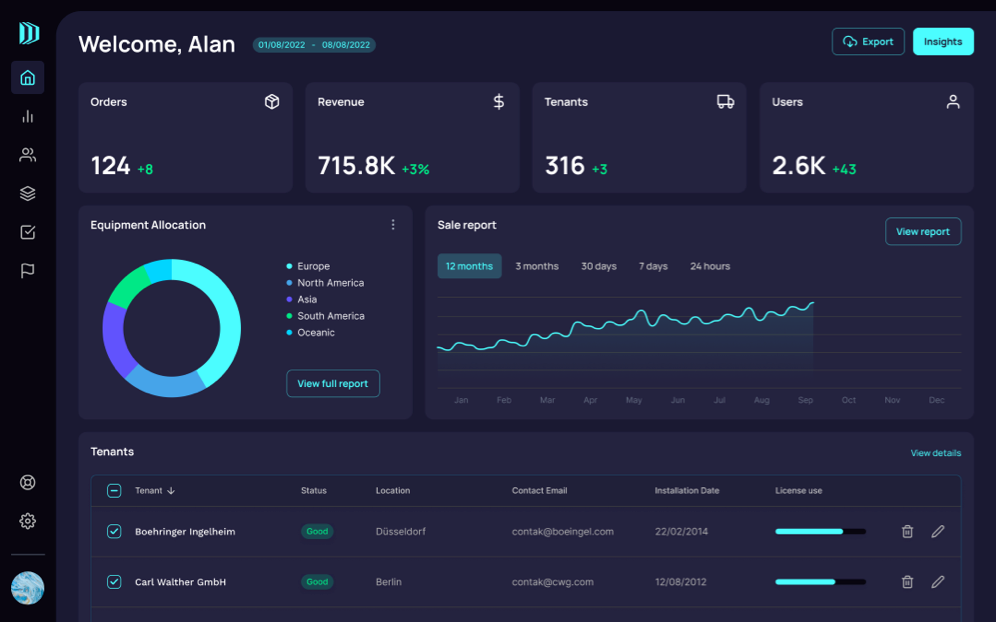
For Visit DA, we connected equipment and data sources across multiple locations and platforms into a single, real-time view:
- Challenge: fragmented equipment data spread across sites and systems, with no unified monitoring.
- Solution: a cross-platform integration layer feeding real-time equipment health monitoring into intuitive dashboards and reports.
- Why it matters for MCP: this is the same multi-system, real-time data plumbing an MCP server exposes to an AI agent, reliable connectivity to legacy systems and proprietary databases under one roof.
- Read the full case study →
Secure, Compliant Integration for Healthcare (AxiaGram)
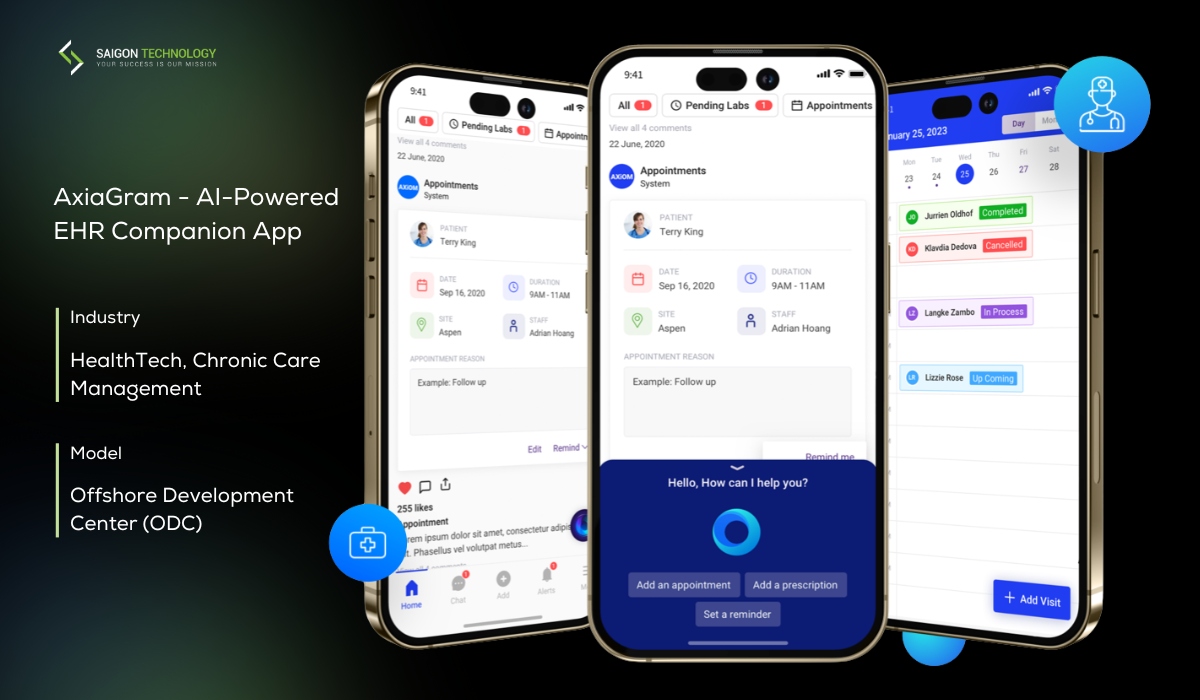
This isn't an MCP project. It's the compliance-bound integration engineering our MCP work depends on. For AxiaGram, a HIPAA-compliant telemedicine platform serving US physicians, our dedicated team delivered EHR-integrated workflows:
- Outcome: a 40% reduction in development time and streamlined, EHR-connected clinical workflows.
- Why it matters for MCP: connecting an AI layer to regulated clinical systems demands exactly the governance MCP integration requires, least-privilege access, user-based access control, and compliance and security auditing.
- Read the full case study →
Connecting AI to Fintech Systems (Loan Management Solution)
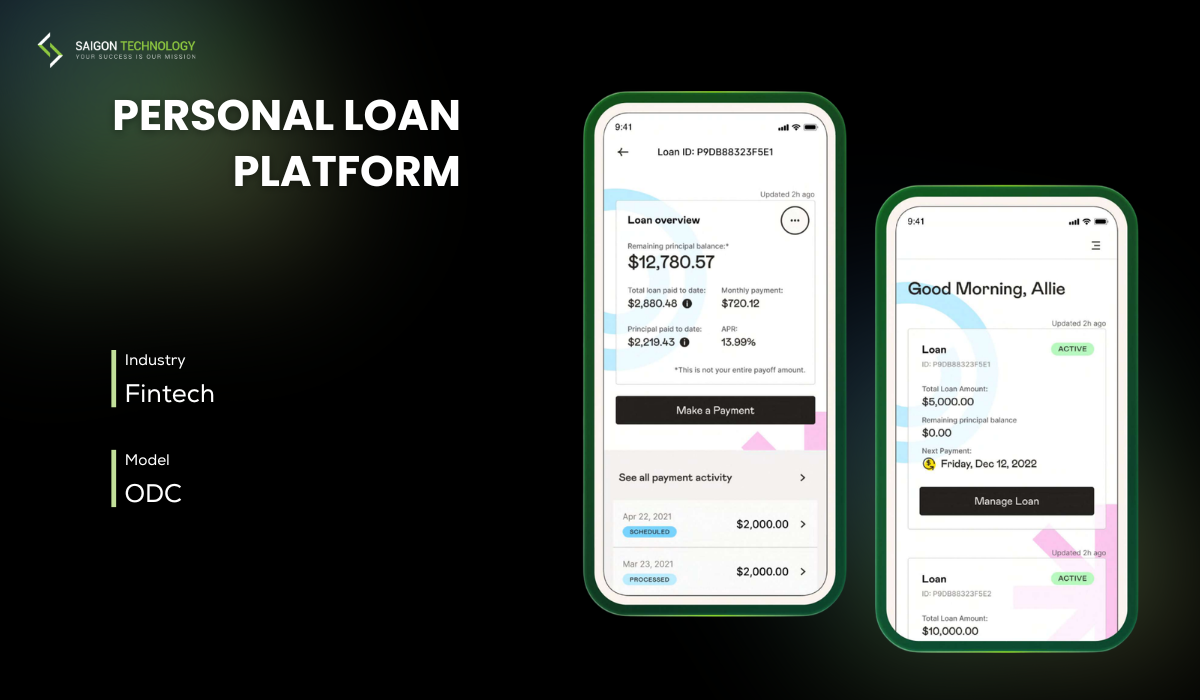
This isn't an MCP project. It's the fintech integration engineering our MCP services build on. For a Loan Management Solution covering the full lending lifecycle: onboarding, fraud checks, and collections, we scaled a senior team via staff augmentation:
- Outcome: senior engineers onboarded and productive within 3 months, delivering the complete loan lifecycle.
- Why it matters for MCP: this is what loan origination automation looks like when an agent must act inside fintech systems with a full audit trail, the foundation for agent-driven document intake through secure tool calls.
- Detail | Read the full case study (PDF) →
Send Your RFP. See It Built in 24 Hours.
- Clickable prototype of one real tool call, your agent reading or acting on live data in your systems
- Tool-call map of the MCP servers and clients we'd build across your ERP, CRM, and APIs
- Architecture direction covering server topology (remote/local/self-hosted), OAuth 2.1 auth, and least-privilege governance
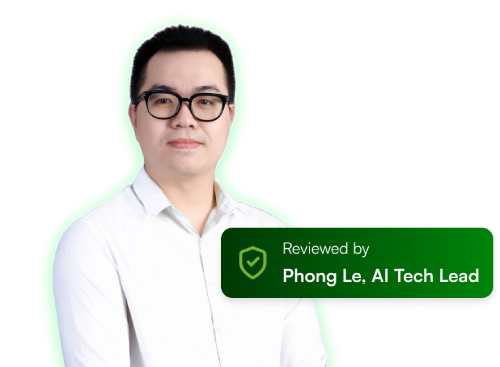
- Technical recommendation call with Phong, including when not to use MCP
Why Choose Saigon Technology for MCP Integration
Choosing an MCP integration company early in a new protocol's life is a bet on engineering judgment. Here is why clients trust ours.
Senior engineers + AI
Our model - "one senior engineer + AI = three juniors", means fewer people, more output, and less rework. You are not paying juniors to learn MCP on your budget.
ISO 9001 & ISO 27001 certified
Certified by BSI (UK), plus Microsoft Gold Partner status, real governance behind AI that can take real actions.
14+ years, 850+ projects, 350+ clients
Deep integration and AI delivery experience, applied to MCP.
Vietnam cost-to-quality
Listed rates range from $22–$46/hour for implementation services, with oversight by senior personnel.
Fluent English + US time-zone overlap
10–12 hours of daily overlap with US East and West Coast teams.
Two-week risk-free trial
Interview candidates and start a trial before any long-term commitment.
Day-one architecture advice
We advise on the whole solution, including when not to use MCP.
Research Labs validation
Live AI demos at experiment.saigontechnology.vn let us de-risk approaches before a full build.
Trusted by Global Clients
What Our Clients Say
Who We Build For
AI product & SaaS teams
Embedding agentic features for your own customers, with MCP server integration that scales across tenants.
Enterprises with legacy + cloud sprawl
Giving agents a safe way to act across systems that were never designed to talk to each other.
Regulated fintech
Auditable, least-privilege agent access aligned with PCI-DSS and SOC 2 expectations.
Benefits of MCP Integration
Done well, MCP implementation services turn a promising demo into an agent that earns its keep:
One standard replaces N×M connectors
Instead of custom code for every model-to-tool pairing, you build once. That lowers build and maintenance cost and reduces the sprawl of point-to-point integrations.
Agents act on live data
Real-time tool calls mean fewer hallucinations and genuinely useful answers, the status of a purchase order, a time-off balance, today's sales total.
Vendor-neutral and future-proof
Swap or add models without re-wiring your tools. Open source MCP components and pre-built connectors keep you flexible.
Centralized governance
Centralized governance, access controls, and auditable trails through an AI gateway give security and compliance teams control instead of surprises.
Faster time-to-value
A MCP server registry and public marketplaces, such as Smithery, OpenTools, and Mintlify's MCPT, improve server discoverability, so your agents adopt new capabilities on demand.
Our MCP Integration Process
Discovery & Consulting
We map your systems, use cases, and constraints, and provide honest mcp consulting services on MCP versus API versus RAG.
Architecture
Server topology (remote, local, or self-hosted), multi-agent orchestration, and the permissions model.
Agile Development
Iterative builds of your MCP servers and MCP client integrations, with transparent progress.
Security & QA
Auth, least-privilege scoping, and testing of every tool and connector before release.
Launch
Deployment to your chosen execution environment, with load balancing and observability.
Maintenance & Support
Versioning and updates so tools evolve without breaking your agents.
Our Insights
FAQs
What is an MCP integration?
An MCP integration connects an AI model or agent to an external system using the Model Context Protocol. An MCP server exposes that system's data and actions as standardized tools, and the AI's MCP client discovers and calls them, so the agent can fetch live data or take actions instead of relying only on training data.
What does an MCP integration services provider do?
A provider designs, builds, secures, and maintains the servers and clients that link your AI agents to your systems. That includes custom MCP server design, MCP client integration, authentication and governance, and architecture guidance on where MCP fits. It answers the real question behind "who offers the best integration services with MCP": who can build it and secure it.
How much do MCP integration services cost?
Cost depends on the number of systems, security requirements, and how many tools each server exposes. Saigon Technology's senior-led rates run $22–$46/hour, and most engagements are scoped as fixed-price or dedicated-team projects. Send an RFP and we return an architecture direction and estimate.
How long does an MCP integration project take?
A focused proof-of-concept, one server, a handful of tools, often takes two to four weeks. Production MCP implementation services across multiple systems, with full auth and governance, typically run one to three months depending on scope and compliance needs.
MCP vs API - when should I use MCP instead of a direct API integration?
Use MCP when an AI agent needs to decide, on the fly, which action to take with current data. Use a direct API or bi-directional sync for static, repeatable workflows where AI decision-making adds risk without benefit. MCP is not "just tool calling", it standardizes discovery, execution, and governance across many tools.
How is MCP different from RAG?
RAG retrieves relevant text to inform an answer. MCP is broader: it lets an agent both fetch data and take actions through standardized tools. RAG is passive retrieval; MCP is active interaction. Many production systems use both, RAG for knowledge, MCP for action.
What technologies, standards, and compliance do we use for MCP integration?
Technologies we use
- Models & protocol: Claude, ChatGPT, LLaMA; Model Context Protocol over stdio, SSE, and Streamable HTTP transports.
- Languages: Python, Node.js, .NET.
- Cloud & DevOps: AWS, Azure, Google Cloud; Docker, Kubernetes, Terraform. We deploy remote MCP servers and self-hosted servers across container orchestration platforms and serverless server-hosting solutions, from Google Kubernetes Engine to Cloud Run and Cloudflare, with on-premise deployment where data residency requires it.
- Infrastructure & tooling: MCP infrastructure, MCP gateways, and server generation tools to reduce boilerplate.
Standards & compliance
- Auth & access: OAuth 2.1 authorization, built-in auth, client authentication, trusted agent identity, and token propagation so agents carry the right user context, the same model modern api gateways apply to traffic.
- Governance: least-privilege, policy controls, enterprise policies, end-to-end logging, and compliance and security auditing.
- Regulatory: secure SDLC aligned with GDPR and PDPA; HIPAA/HL7 for healthcare; PCI-DSS and SOC 2 context for fintech.
Cross-engine note: files like llms.txt can aid discoverability in some AI assistants, but they are not a Google ranking factor. We treat them as an optional experiment, not a core lever.
How do you secure MCP integrations?
We apply secure integration patterns: OAuth 2.1, least-privilege scoping, and user-based access control so an agent inherits its user's permissions. A security gateway or AI gateway enforces policy controls, removes sensitive data where needed, requires human approval for high-risk actions, and logs every call for compliance and security auditing.