



































































-
OVERVIEW
-
SERVICES
-
MODELS
-
WHY CHOOSE US ?
-
OUR PROCESS
-
TECHNOLOGIES
-
FAQS
What Is PoC Development?
A proof of concept (PoC) is a focused, time-boxed build that answers one question, "can this actually be built?", by testing the riskiest technical and business assumptions before full development begins. Unlike a prototype (which shows what something looks like) or an MVP (which proves people will use it), a PoC proves technical feasibility and produces a defensible go/no-go decision.
Proof of concept development services exist to replace opinion with measurement. Before a PoC, the case for a project rests on belief, an architect believes the integration will hold, a founder believes the data is good enough, a vendor believes the platform will take the load. A well-scoped PoC tests each belief at a cost small enough that a negative answer is affordable. Saigon Technology designs that test, builds the part that carries the risks, and hands you the evidence to commit confidently or walk away cheaply.
Our PoC Development Services
Technical feasibility PoC
AI & data feasibility PoC
Integration & architecture spikes
Performance & load baselines
Clickable validation prototypes
Compliance & data-handling proofs
Case Studies
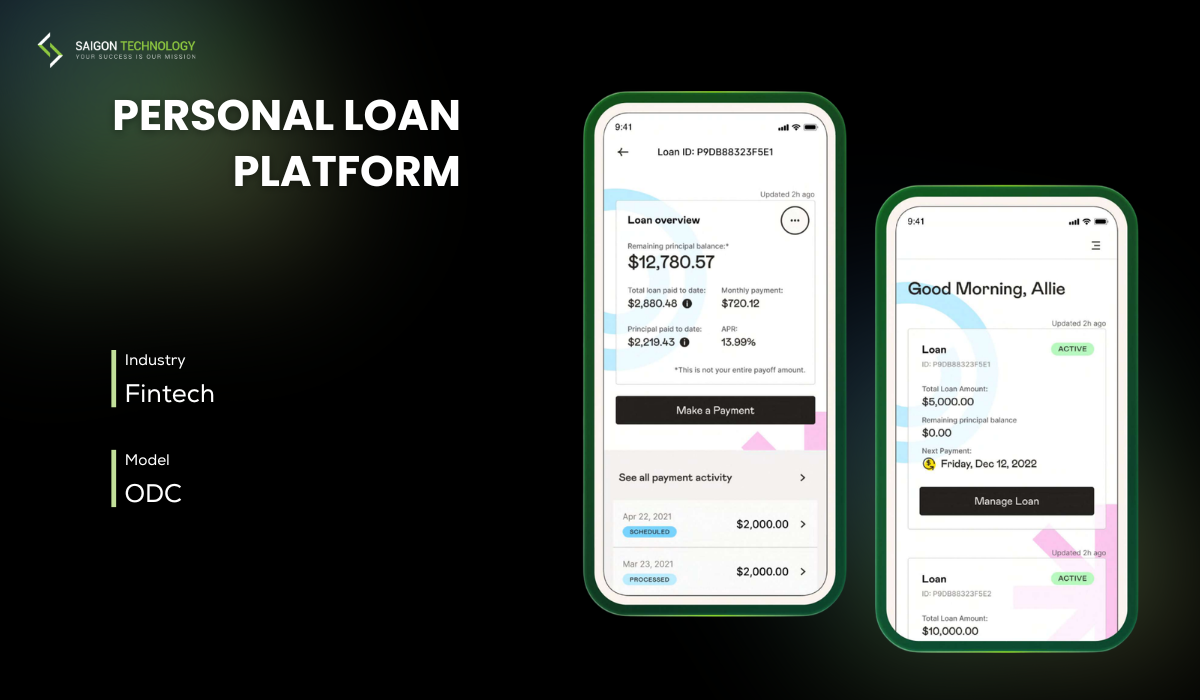
Personal Loan Platform (Fintech Feasibility at Scale)
- A US lending client needed to prove that a complex fintech platform could be delivered on a microservices and Domain-Driven Design architecture, across fraud detection, transfer-based lending, loan modification, payoff verification, and automatic e-signing, before scaling to a 20-engineer senior team.Â
- What we validated: architecture feasibility and integration feasibility across multiple domains and third-party partners, plus migration of a legacy system into a new microservices architecture and a bespoke React framework (KOA).Â
- How: feasibility analysis and proof of concept as a deliberate step in our technology-selection process, followed by an optimized recruiting and onboarding plan and delivery cadence with overlapping collaboration hours across teams.Â
- Stack: Java Spring Boot, ReactJS, Microservices, REST API, Kafka, AWS, GraphQL, DynamoDB.Â
- Outcome:Â The feasibility step validated the microservices/DDD architecture and technology selection across fraud detection, transfer-based lending, loan modification, payoff verification, and e-signing, clearing the path to scale the engagement into a senior delivery team and to migrate the legacy system (including the Clojure-based module) into the new architecture and bespoke React framework (KOA) with the risks named up front.
- Detail | Read the full case study (PDF) →
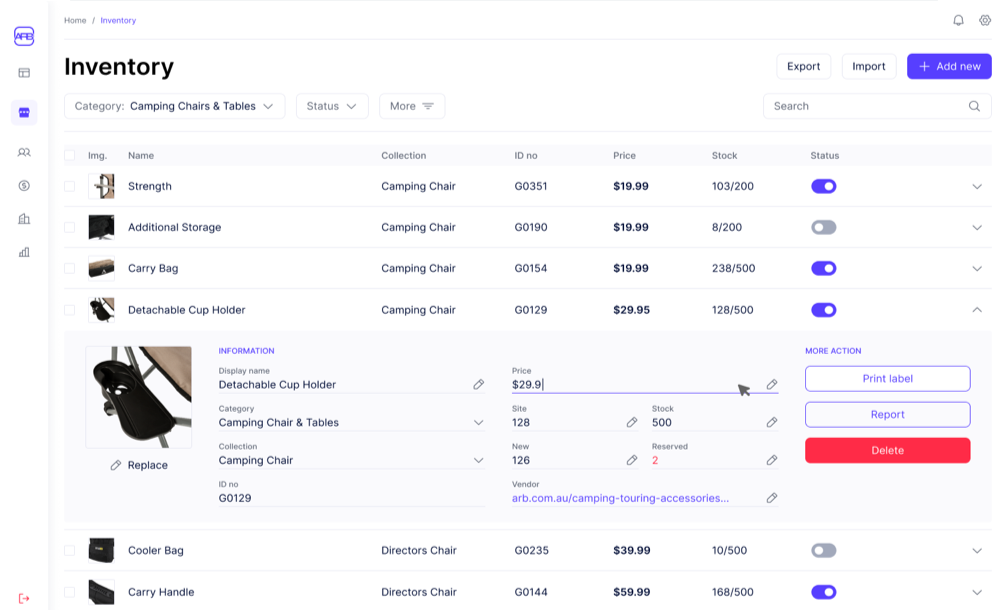
ARB Australia (Warehouse App Feasibility & Framework Migration)
- ARB Australia needed browser-based, scan-gun-compatible warehouse software, and faced a declining legacy Ionic codebase plus a planned move to Oracle Cloud on a restricted budget.
- What we validated: the feasibility of migrating from Ionic to React Native and transitioning CI/CD from Azure DevOps to Oracle Cloud, explicitly run through feasibility analysis and a Proof of Concept step before commitment, alongside risk mitigation and cost considerations.
- How: a flexible, hosted engagement (part-time DevOps + React Native developer), single-source-code strategy for web and mobile parity, and pipeline research on Oracle Cloud.
- Stack: React Native, REST API, Azure DevOps, Oracle Cloud, CI/CD.
- Outcome: The proof of concept confirmed the migration path was viable on a restricted budget, React Native delivering single-source-code parity across web and mobile to replace the declining Ionic stack, with a validated CI/CD direction for the move from Azure DevOps to Oracle Cloud, giving the client an evidence-backed go decision before committing the full build.
- Read the full case study →
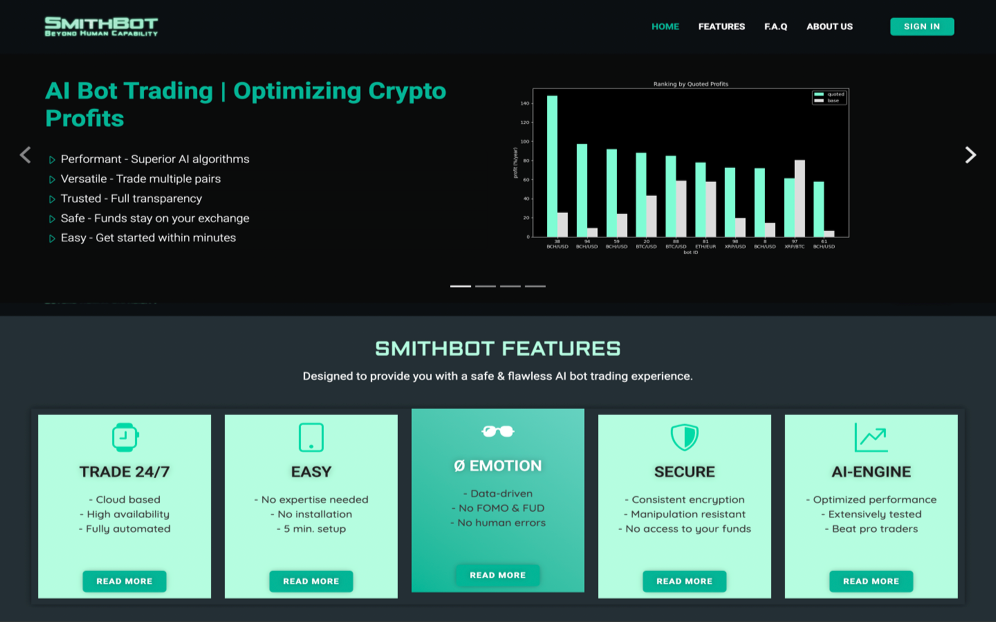
SmithBot (Crypto Trading-Bot Integration Feasibility)
- SmithBot is a web application bridging a client's automated cryptocurrency-trading agents with crypto exchanges and end-user subscribers, a build dominated by high-risk third-party integration.
- What we validated: the riskiest assumptions around crypto-exchange APIs, avoiding IP blocking and key bans, placing parallel trades for many users at once, and handling non-standard exchange APIs, before full build, with careful attention to security considerations and multi-tenancy.
- How: integration feasibility spikes, a multi-tenant data/server/client structure, caching of exchange data, an nginx fallback gateway, and log streaming to ElasticSearch for customer-readable monitoring.
- Stack: ReactJS, NodeJS, AWS Lambda (serverless), API Gateway, Cognito, ElasticSearch, Postgres.
- Outcome: The integration feasibility spikes proved the highest-risk part of the build was workable: non-standard crypto-exchange APIs handled, parallel trade placement across many users, exchange access protected against IP blocking and key bans, and customer-readable monitoring via streamed logs, de-risking the third-party integration that dominated the project before full development.
- Read the full case study →
Send Your Hypothesis. See a Proof of Concept in 24 Hours.
- Working proof of concept for your riskiest assumption
- Feasibility map of technical risks and unknowns
- Architecture direction covering stack, integrations, and scale
- Feasibility review call with our engineering team
Why Choose Saigon Technology for PoC Development?
Most proof of concept development services offer either thin, generic demos or methodology with no proof behind it. We bring both depth and evidence.Â
Senior engineers + AI
One senior engineer plus AI does the work of three juniors, fewer people, more output, less rework. Judgement is the product: many teams can assemble a demo, far fewer can tell you what the results mean. Learn more: Our talent
ISO 9001 & ISO 27001 certified
Quality and information-security practices (issued by BSI, UK), with NDAs and role-based access from day one, so security considerations and compliance are built into the test, not bolted on.
14+ years, 850+ projects, 350+ clients
Real measurable outcomes and in-house R&D expertise across healthcare, fintech, and logistics back every recommendation.
Vietnam cost-to-quality
Published rates of $28-$46/hour make cost-efficient development and an affordable no-go genuinely possible.
Fluent English + US time-zone overlap
10-12 hours of daily overlap for US East and West Coast teams, with documented decisions and clean handoffs.
Two-week risk-free trial
Interview candidates first and start a trial before any long-term commitment.
From-day-one architecture advice
Technical recommendations and architecture and design documentation from the first session, not just task execution.
Research Labs validation
Live AI demos (fracture detection, semantic search, OCR, object detection) de-risk AI PoC development services before a full build.
Trusted by Global Clients
What Our Clients Say
Who We Build For
Our PoC design & development work fits any team that needs proof before committing budget:
Startups & founders
Turn a pitch into API proof points and a working demo that builds stakeholder confidence and earns buy-in from investors.Â
Enterprise innovation teams
De-risk before a budget cycle by testing technical and business risks against pre-agreed success criteria.
Fintech & healthcare leaders
Validate compliance-gated feasibility (PCI-DSS, SOC 2, HIPAA, HL7) before a regulated build.
CTOs & product leaders
Settle build-vs-buy and architecture options with evidence-based testing and QA, not vendor benchmarks.
Benefits of PoC Development
A disciplined proof of concept is cheap insurance against an expensive wrong build. Done right, PoC development delivers:
De-risk before big spend
Surface technical and business risks early, when a negative result is affordable. The cost of the PoC buys the avoidance of a far larger build that the evidence says would have struggled.
A real go/no-go decision
Every engagement ends with a defensible go/no-go decision: Go (feasibility proven, residual known risks named and priced), Pivot (the goal survives, the approach changes), or Stop (the project should not proceed as conceived).
Stakeholder & investor buy-in
Tangible proof earns stakeholder buy-in, funding, and stakeholder confidence far better than a slide deck.
A faster, cheaper path to MVP
Validated architecture patterns and integration contracts become the baseline for your product launch, minimizing rework.
Evidence-based architecture
Architecture spikes and performance baselines replace guesswork in PoC in software development with observed numbers.
No PoC that "can't fail"
We design the smallest honest test, so a demo on the happy path can't mask a project's real risks. Hypotheses and acceptance criteria are fixed before the first line of code.
Our PoC Development Process
Discovery & framing workshop
Idea discovery & validation: turn your idea into written hypotheses, success criteria, and an explicit list of what the PoC will not test. We capture business objectives, constraints, requirements, and tech limitations, and confirm integration readiness.Â
Solution & architecture design
Wireframes, a technical architecture and design documentation sketch, and the technology stack the validation build must respect; we map dependency mapping and architecture options.
Build the riskiest path
Engineering effort goes only where the uncertainty lives. The path under test is built for real; the periphery is simulated with mock services. Clickable prototypes validate end-users where behaviour is part of the question.
Test & measure
Evidence-based testing and qa against pre-agreed acceptance tests and acceptance criteria, with a mid-point checkpoint that cuts weak hypotheses and gives the strongest the remaining time.
Decision pack
A risk register of open threats with costed mitigations, measurable outcomes, effort estimates by phase, and a clear go/no-go decision that stands on its own in front of a board or investment committee.
PoC → MVP handover
Validated architecture, integration contracts, user stories, and technical recommendations flow into the next stage with a proposed delivery cadence, and, where useful, a limited pilot to confirm adoption.
Our Insights
FAQs
What is PoC development?
PoC development is the process of building a small, time-boxed proof of concept to test whether an idea is technically feasible before full development. It answers "can this be built?" by validating the riskiest assumptions, integrations, performance, data, or compliance, and produces a clear go/no-go decision backed by evidence.
What does a PoC development company do?
A PoC development company frames your idea into testable hypotheses and success criteria, builds the riskiest part for real (simulating the rest), measures the results against pre-agreed acceptance criteria, and delivers a decision pack with a risk register, technical recommendations, and effort estimates for the next phase.
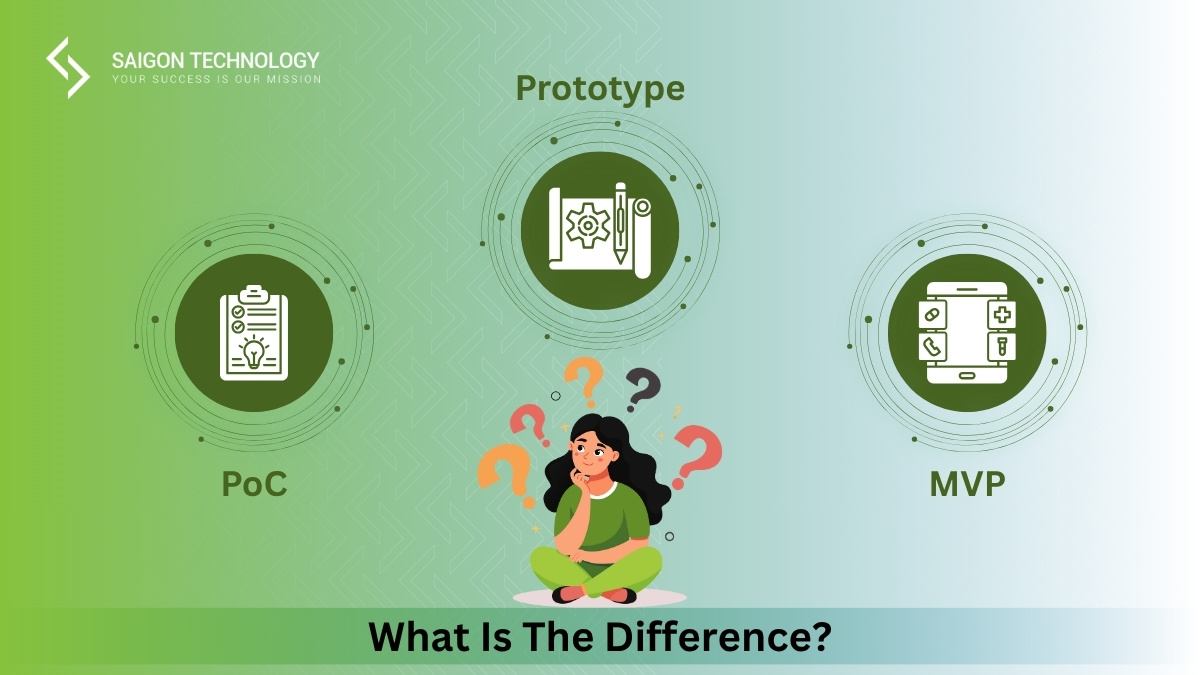
What is the difference between a PoC, a prototype, and an MVP?
A PoC proves technical feasibility ("can it work?"). A prototype proves experience ("what will it look and feel like?"). An MVP proves market demand ("will people use it?"). Many teams run a short PoC, validate UX with a prototype, then ship an MVP to learn from the market.
Which security standards and compliance frameworks do you meet?
Standards & compliance: ISO 9001 (quality) and ISO 27001 (information security); HIPAA and HL7 for healthcare; PCI-DSS and SOC 2 for fintech; GDPR and PDPA for data handling, with NDAs and role-based access on every engagement. We bake security considerations, scalability and integration, and end-to-end development workflows into the PoC so the findings carry into a secure, scalable build.