


Overview
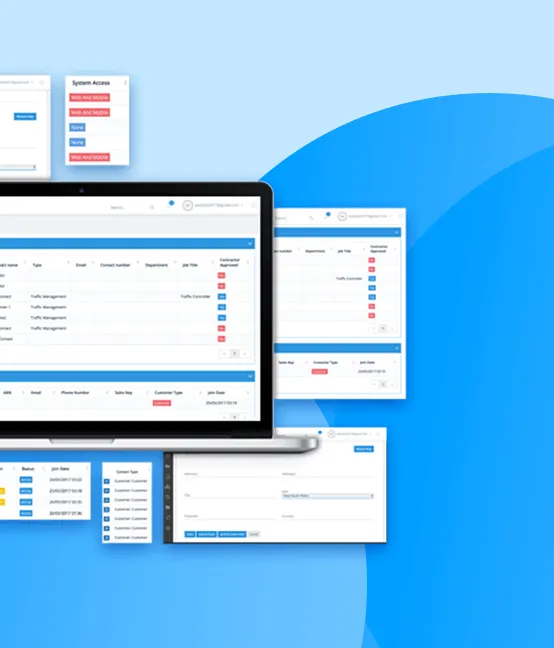
Loan City Is A Digital Loan Comparison Platform. Consisting Of Three Dedicated Portals For Admins, Lenders, And Borrowers, Plus A Public-Facing Landing Page.
The platform centralizes and automates the Entire Loan Application Process - from borrower application to lender disbursement - improving transparency, reducing manual workload, and accelerating decision-making.
PROJECT DEVELOPMENT & RESULTS
Development Execution
The development phase began immediately after consulting, with a strict 3-month timeline to complete all major modules:
Given the ambitious schedule, the team operated continuously without idle periods, maintaining a security-first mindset. Compliance with financial and data protection regulations was prioritized through encrypted communication, access control, and secure data storage.
Key Features by Portal & Functionality
- Role-based sign-in/sign-out (Admin / Lender / Borrower)
- Independent login URLs per portal
- Forgot Password & Change Password workflows
- Automatic session timeout after inactivity
- No sign-up on Admin and Lender portals (controlled access)
- Singpass-based identity verification for Borrowers
- Loan Application Form (Manual & Singpass)
- Auto-fill personal & financial data from Singpass MyInfo
- Upload and preview supporting documents
- Real-time loan application tracking
- Auto email confirmation & application ID generation
- Dashboard for all active borrower applications
- Full application view with borrower info and attached documents
- Download / Preview features
- Offer creation and approval workflow
- Real-time borrower-lender communication trail
- Comprehensive user management
- Compliance and audit management
- Centralized monitoring
- Automated email notifications
Phase
BIDDING & CONSULTING
In The Bidding Stage,
Our Client - A Singapore-Based Startup - Approached Saigon Technology With A Visionary Idea For A Multi-Phase Loan Comparison Platform.
However, the client initially relied on AI-generated requirements, lacking a clear roadmap and understanding of which technologies best fit their goals.
To bridge this gap, Saigon Technology proposed a
two-week consulting and discovery engagement aimed at refining the
concept into a structured, buildable solution.
Requirement Consolidation
The team analysed AI-generated requirements, restructured them into functional modules, and defined a realistic MVP scope for Phase 1.
Technology Advisory
After evaluating multiple tech stacks, Saigon Technology recommended:
- Backend
- Frontend
- Cloud
- Database
- Authentication & Security
- Communication Services
This combination balanced scalability, security, and long-term maintainability, aligning with Singapore's regulatory requirements for financial systems.
WBS & Delivery plan
A Work Breakdown Structure was prepared, outlining all modules, dependencies, and effort estimates for the first Go-Live version. The plan defined milestones for requirement validation, design, implementation, and UAT.
Delivery Model
A hybrid waterfall-agile model was chosen: waterfall for initial requirement finalization and agile for sprint-based execution and feedback.
FINAL
outcome
Clear MVP scope and roadmap for Phase 1.
WBS completed and approved for development kickoff.
Technology stacks and architecture are validated.
A detailed backlog prepared with effort allocation for BA, Design, Development, and QC.
Team Structure &
Collaboration
To meet the aggressive timeline and manage complexity, Saigon Technology assembled a 9-member cross-functional team consisting entirely of senior-level professionals.
This structure supported parallel development, enabling BA and Design to prepare the next sprint while developers and QC worked on the current one. Weekly client meetings ensured requirement alignment and immediate sign-off of deliverables.
1 Project Manager
Oversaw project planning, communication, and delivery milestones.
1 Business Analyst
Defined and validated business rules, wrote detailed functional documents, and aligned requirements across three portals.
6 Developers
Specialised in backend and frontend to work in parallel across Admin, Lender, and Borrower modules.
1 UI/UX Designer
Created seamless, role-specific user interfaces and ensured design consistency across portals.
1 Quality Control (QC)
Conducted UI, functional, integration, and regression testing.
Technology & Implementation
Defined business logic, scoring model, and matching rules per lender type.
Built the rule-based matching service, scoring algorithm, and asynchronous processing.
Designed intuitive dashboards for match visualization and lender actions.
Performed functional and regression tests with mock datasets.
Oversaw iteration alignment, ensured match logic met business KPIs.
Delivery Flow
Business Analysis Documentation
Oversaw project planning, communication, and delivery milestones.
UI/UX Design Validation
Defined and validated business rules, wrote detailed functional documents, and aligned requirements across three portals.
Agile Implementation
Specialised in backend and frontend to work in parallel across Admin, Lender, and Borrower modules.
Quality Control Verification
Created seamless, role-specific user interfaces and ensured design consistency across portals.
Loan Matching Engine
The Loan Matching Engine serves as the intelligence core of Loan City, automatically connecting borrowers with the most suitable lenders based on predefined criteria.
Challenges & Solutions
Challenges
-
Tight Timeline: Three months for full delivery of four major modules.
-
Complex Multi-Role Logic: Synchronizing Admin→Lender→Borrower interactions and automated loan status transitions.
-
Data Security & Compliance: Handling sensitive financial data under Singapore's regulatory requirements.
-
Parallel Workstreams: Coordinating multiple roles working on dependent modules concurrently.
Solutions
-
Sprint-Based Micro-Planning: Weekly sprints with micro-deliverables and daily internal syncs.
-
Detailed Workflow Mapping: Early prototyping helped capture business logic and automate transitions between borrower, lender, and admin actions.
-
Security-First Development: Applied authentication, encryption, and audit trails in line with Singapore's standards.
-
Continuous Client Engagement: Weekly demo sessions kept the client updated and engaged, allowing real-time feedback.
-
Cross-Functional Collaboration: BA, Design, Development, and QC worked in overlapping cycles to maintain speed without compromising quality.
ODC Transition Benefits
-
1
Dedicated Team Members: Original developers and QA engineers retained to preserve domain knowledge.
-
2
Continuous Improvement: Regular updates, performance optimization, and new feature development.
-
3
Flexible Scalability: Adjustable resources aligned with evolving business needs.
-
4
Strategic Partnership: Shifted from a project-based vendor to a long-term innovation partner.
How We Impacted
The Business
Onboarded In 3 Months
Faster Loan Approvals
40% Reduction
In Manual Processing Time
Enhanced Transparency Through
Borrower - Lender - Admin
Interaction Logs
Established Technical Foundation
Continuous Innovation Market Expansion
Sustainable & Future-proof
“Through a blend of strong project management, agile delivery, and technical excellence, Saigon Technology helped Loan City evolve from a conceptual startup idea into a fully operational digital loan comparison platform within only three months.
“The successful transition to an ODC model further solidified the collaboration as a strategic technology partnership, driving ongoing product innovation and business growth.“
”
Design Process
In the bidding stage, our client - a Singapore-based startup - approached Saigon Technology with a visionary concept for a multi-phase digital loan comparison platform.
However, their initial requirements were AI-generated and lacked clarity, a product roadmap, and alignment with the right technologies.
To bridge this gap, Saigon Technology proposed a two-week consulting and discovery phase to transform the idea into a structured, buildable solution.
This became the foundation of our UX/UI design process, allowing us to define user stories, validate assumptions, and translate the client’s vision into a clear experience strategy before moving into design and development.
Mood board
Wireframes
Low-fidelity wireframes are essential tools for visualizing layout and functionality, enabling teams to iterate on design concepts efficiently.
right here.