-
OVERVIEW
-
SERVICES
-
MODELS
-
WHY CHOOSE US ?
-
OUR PROCESS
-
TECHNOLOGIES
-
FAQS
What Are System Integration Services?
System integration services connect separate business systems, such as ERP, CRM, legacy platforms and outside data providers, so they share data and trigger each other's processes without manual re-entry. The work covers architecture, middleware, interfaces, testing and the support that keeps those connections running as each system changes.
What separates this from wiring up a single app is scale and ownership. An enterprise program touches systems run by different departments, each with its own system of record, release calendar and data rules. Our enterprise integration services treat those rules as design inputs: which system owns a customer, a price or a stock count, and which systems only read it. Get that wrong and the symptoms are familiar: inventory errors, payment reconciliation errors, and two reports that disagree about the same quarter.
The Four Common Types of System Integration
Most enterprise estates mix all four. The useful question is not which one is best but where each one breaks.
| Type | How it works | Where it fits | Where it breaks |
|---|---|---|---|
| Vertical (silo) integration | Systems are linked within one department or function, layer by layer | A self-contained process, such as payroll or a single warehouse, that rarely shares data | Each new cross-department need creates another silo, and data stays locked inside it |
| Point-to-point (star) integration | Each system connects directly to every system it needs | Two or three systems with stable interfaces | Links multiply faster than systems, so one change ripples through many connections |
| Horizontal integration (service bus, hub-and-spoke) | A central bus routes and transforms messages between all systems | Many systems, frequent change, mixed data formats | The bus becomes core infrastructure and needs a clear owner. We ran Apache Camel this way on the Fleet Management Platform |
| Common data format (canonical model) | Every system maps to one shared data model instead of to each other | Several systems describing the same customers, products or orders | The shared model needs governance, or each team bends it to suit its own needs |
An iPaaS such as MuleSoft or Dell Boomi is one way to run horizontal integration as a managed service. It pays off when ready-made connectors exist for your systems and the data transformation is standard.
Where System Integration Ends and App-Level Integration Begins
System integration deals with the core of the business: ERP, CRM, finance, supply chain and the legacy platforms behind them, plus the departments that own each one. Work usually runs as a program, with data migration, cutover planning and several teams signing off. Connecting one application to a handful of SaaS tools or partner APIs is a smaller, faster job, and our software and app-level integration team handles it to the same engineering standards. Many clients start there and widen the scope once the number of connected systems grows.

What Our System Integration Services Cover
System Integration Consulting and Architecture
Enterprise Application Integration and Middleware
ERP and CRM Integration Services
Legacy System Integration
Partner and Data-Provider Connections
Identity and Access Across Systems
Case Studies: Enterprise Systems Connected in Production
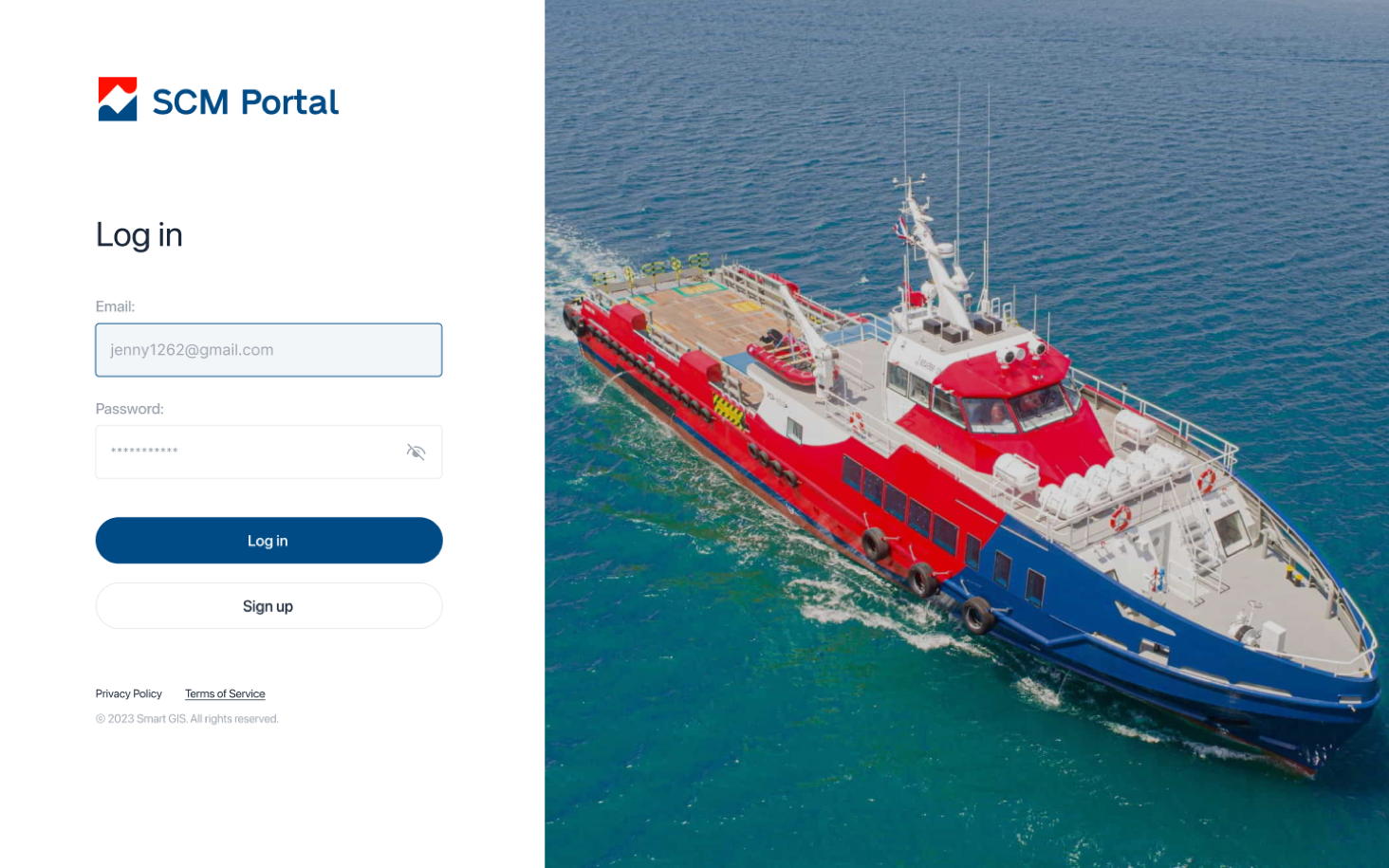
SCM Portal: Procurement Workflows Recorded Back in SAP
- Challenge: A logistics client handled vessel requisitions through purchase requisitions, RFQs and purchase orders, with most of the coordination happening over email between groups. Any new system had to work with SAP, the client's ERP and an external vessel team, and its database depended on other systems' databases that changed often.
- What we built: One portal for the whole chain, from requisition to delivery. Vendors submit quotes and re-quotes inside the portal, and every quotation, PO number and status update is recorded in SAP. The vessel team confirms goods receipts and goods issues and follows each delivery live. SharePoint holds the documents, and role-based permissions log every user action for audits.
- Outcome: Requisitions that used to bounce between inboxes now move through one tracked workflow. Two decisions kept the project on course: owning the database layer, so schema changes stopped waiting on other groups, and building synthetic test data for flows whose upstream systems were not ready yet.
- Stack: SAP integration, ASP.NET and .NET Core, ADO.NET and Visual Basic, MSSQL and MySQL, SharePoint. Full SCM Portal case study.
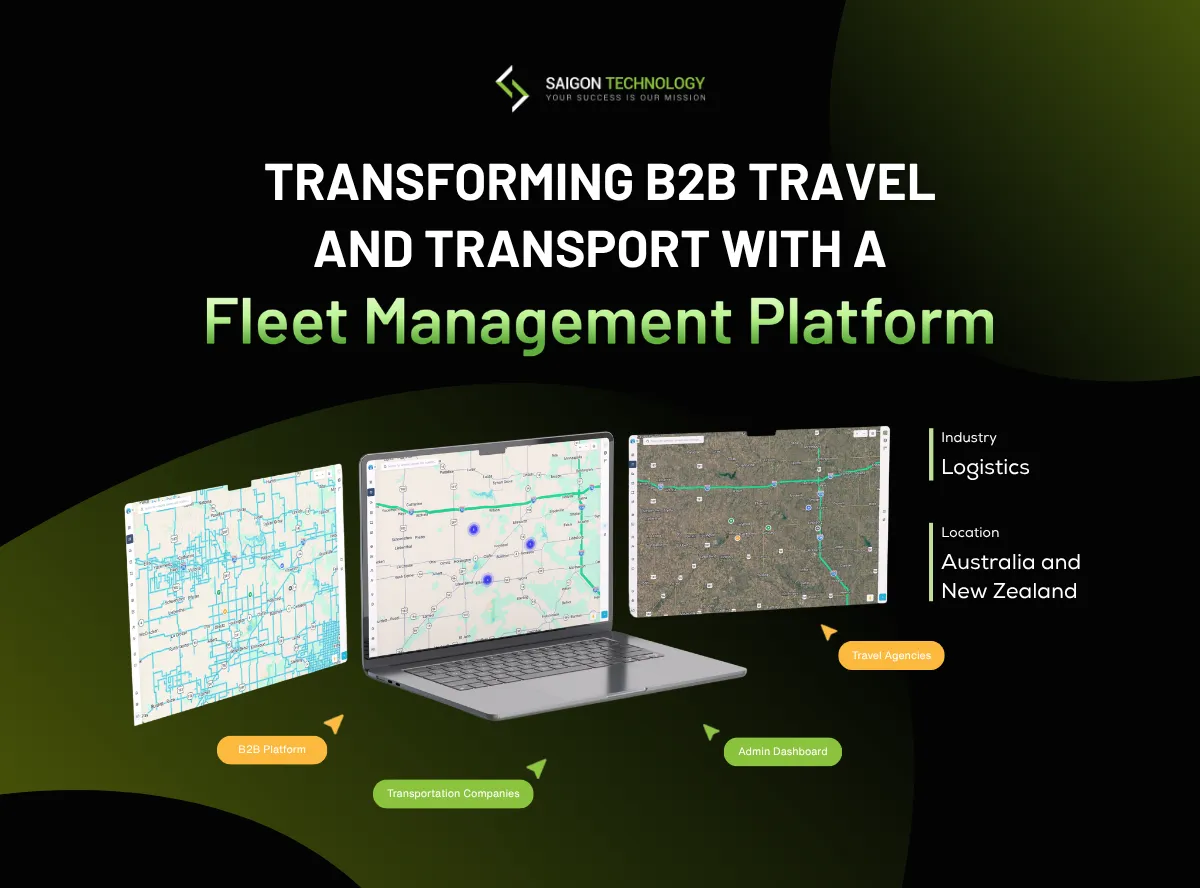
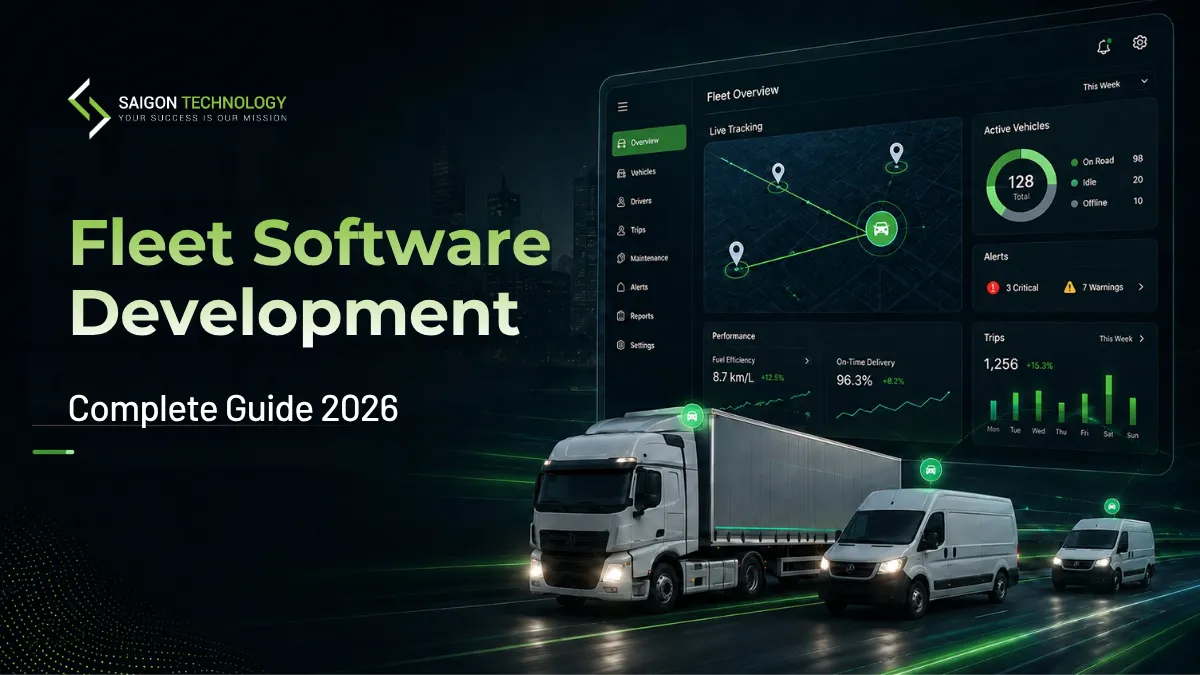
Fleet Management Platform: A Service Bus Linking Bookings, Tracking and Outside Services
- Challenge: A vehicle leasing and transport company in Australia and New Zealand had a prototype that still relied on manual work and disconnected systems. Its legacy systems could not keep up with growing demand, and connections to outside services were unreliable.
- What we built: A B2B platform for travel agencies, transport companies and administrators, built on microservices with Apache Camel as the enterprise service bus. Kafka carries vehicle location events from an IoT hub with real-time GPS tracking. Payment gateways reconcile transactions automatically and keep detailed logs, Twilio and SendGrid send SMS and email alerts, and vehicle registrations sync and import through APIs. Keycloak manages identity and roles, while API keys, rate limits and secured endpoints control outside access.
- Engagement / timeline: Hybrid engagement model, a three-month timeline, deployed on AWS.
- Outcome: One platform now serves three user types, with standardized booking, payment and communication processes across every provider and agency.
- Stack: Spring Boot, Spring Security and Spring Batch, Apache Kafka, Apache Camel, PostgreSQL, MongoDB and MSSQL, Keycloak, Docker, Kubernetes, Redis, MinIO. Full Fleet Management Platform case study.
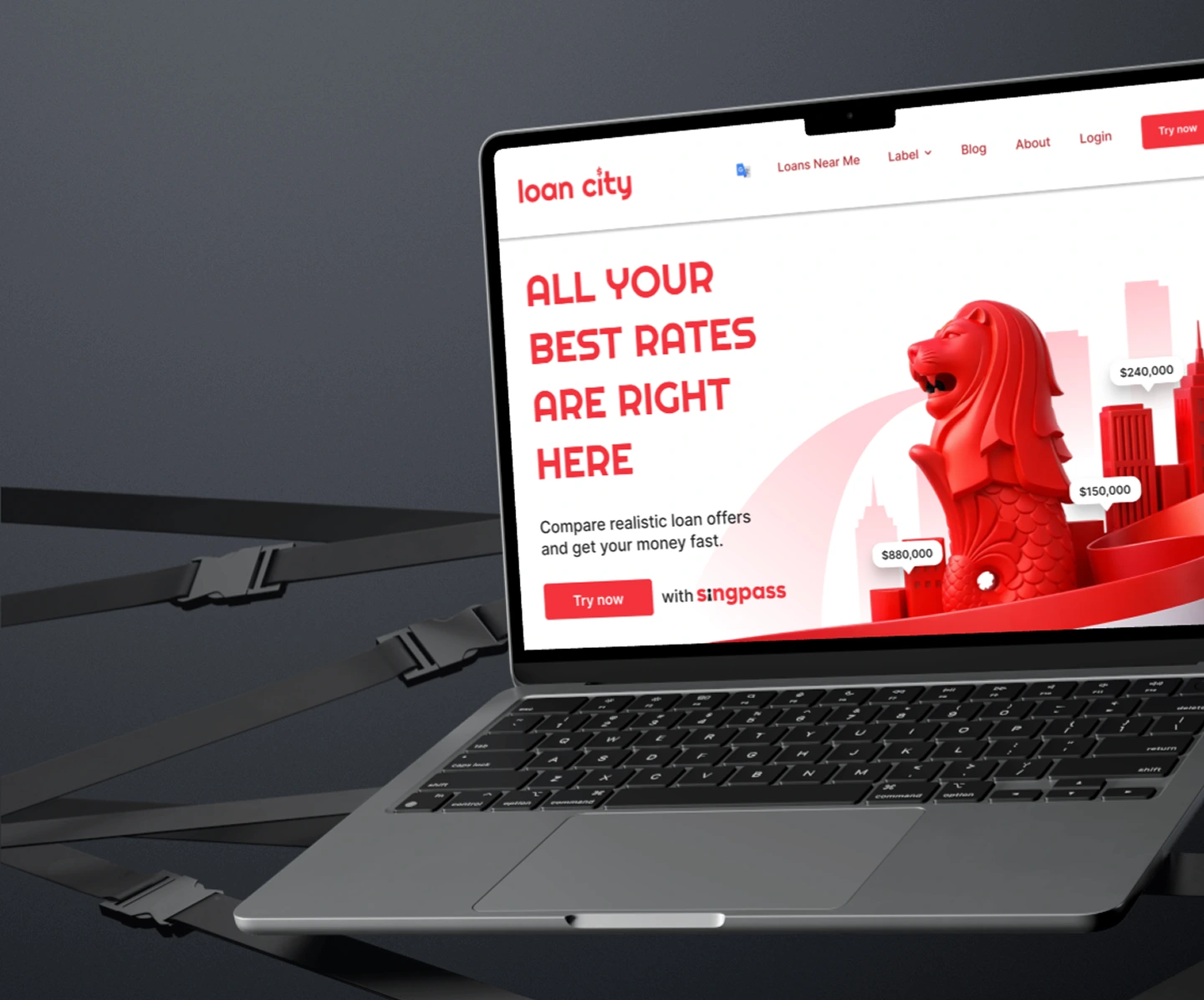
Personal Loans Application: Many Outside Providers, One Lending Flow
- Challenge: A US fintech company needed to verify identity, employment, income and bank accounts across several providers before a lending decision, then service each loan through its full lifecycle. Each provider returned data in its own format, some APIs were slow or failed outright, and loan data had to stay in sync across systems.
- What we built: Integrations with Plaid, GIACT and TALX for verification, Equifax for risk data, Oscilar as the decisioning platform, and LoanPro for loan management, connected to the core systems through its API. Kafka moves events between services. Responses are normalized before use, a failed source falls back to an alternative or retries with corrected input, and stalled verifications retry in the background. Every verification, underwriting and servicing step leaves an audit trail.
- Engagement / timeline: An offshore development center (ODC) engagement of 3+ years, with 20 senior engineers onboarded in the first three months.
- Outcome: The full lending lifecycle, from onboarding and verification to repayment and collections, runs on connected providers with complete audit trails, in line with GDPR guidelines.
- Stack: Java 18 and Spring Boot, React and Next.js, Python (Airflow), Apache Kafka, REST, GraphQL and gRPC, AWS (ECS, Cognito, Parameter Store), Terraform, DynamoDB and Redis, OAuth 2.1 with OpenID Connect. Full Personal Loans case study.
Send Your RFP. Get Your Systems Blueprint in 48 Hours.
- Clickable prototype of your order, approval, or ERP posting flow
- Workflow visualization mapping every system, data owner, and hand-off in your estate
- Architecture direction covering middleware choice, system-of-record ownership, and scale
- Technical recommendation call with our engineering team
What to Expect From Saigon Technology as a System Integration Company
A good system integration company plans for the teams and systems it does not control: change windows, shared databases, providers that go down. Saigon Technology delivers system integration services that way, with senior engineers, published rates and security built into every connection. As a Vietnam system integrator, our engineers can also work US business hours on request.
Senior-Led Integration Work at a Published Rate
Each integration program is led by senior engineers who use AI tooling for the repetitive parts, so a smaller team delivers the same scope with less rework. Our rate is published at $22–$46/hr, and US teams get 10–12 hours of daily overlap. That matters on enterprise integration, where much of the effort goes into waiting on other teams and reconciling records between systems. At premium onshore rates, that hardening work (fallback routes, reconciliation runs, audit trails) is usually the first thing cut. We keep it in scope. A smaller senior team with fewer rebuilds is what keeps the total down, not a cheaper hour.
Security and Compliance at Every System Boundary
Integration moves regulated data, such as personal, financial and health records, across systems that were secured separately. Every boundary is a place where access rules can slip. Each connection gets role-based access, encryption and its own audit trail, with OAuth 2.1 and single sign-on between services and GDPR and PDPA requirements followed throughout. For healthcare and payment workloads, HIPAA and PCI-DSS requirements are met where the workload needs them, and clinical systems get HL7 interoperability support. These controls sit inside our ISO 27001 certified management system, so they follow an audited process rather than one engineer's habits.
Stable Teams for Integrations That Run for Years
An enterprise integration is never finished. SAP gets upgraded, a provider changes its API, a new business unit joins. The engineers who designed the mappings should still be around when that happens. Saigon Technology ranked #10 in the Medium category of the Southeast Asia Best Workplaces™ in Technology 2026 list from Great Place To Work, and was named one of the Fortune 100 Best Companies to Work For™ in Southeast Asia 2025. On the Personal Loans Application, an engagement of more than three years, 20 senior engineers were onboarded in the first three months.
Day-One Architecture Advice, Including When Not to Integrate
Sometimes your ERP's built-in module or an off-the-shelf connector does the job, and we will say so. The free stack assessment runs through to a WBS, so you only build what needs building.
14+ Years · 400+ Developers · 850+ Projects · 350+ Clients · 4.8★
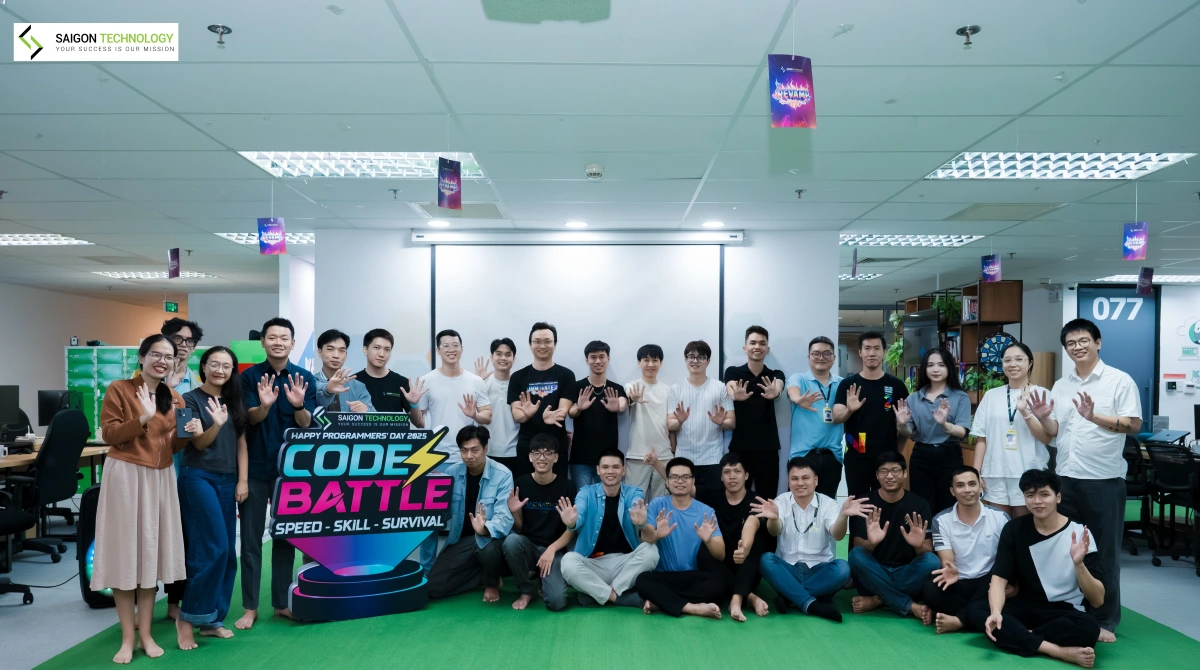
Work spans logistics, fintech, healthcare and enterprise software, run from three development centers across Ho Chi Minh City and Da Nang. Most of our enterprise integration work stays under NDA, so the case studies above show the projects we can publish rather than a client list we can't.
ISO 9001 and ISO 27001 (BSI, UK), Microsoft Solutions Partner
BSI audits both certifications, so change control and access management are checked by an outside body rather than self-declared. That counts most when your integrations touch finance and customer data.
Two-Week Risk-Free Trial and Flexible Engagement
Test the team for two weeks at no risk before you commit. Engagements run as a dedicated team, staff augmentation, fixed price or an offshore development center, and you interview each proposed engineer first.
Trusted by Global Clients
What Our Clients Say
Industries We Serve
Who We Build For
We connect enterprise systems for companies in any industry. The core systems and the rules on their data change from sector to sector, but most engagements start from one of four situations. Where the systems themselves need building, our enterprise software development team works on the same plan.
Logistics, fintech, healthcare, manufacturing, eCommerce, education: the systems differ, the integration discipline does not. See all the industries we serve.
Operations Spread Across Disconnected Systems
Procurement portals, ERP, fleet tracking, plant, inventory and finance systems kept in step on one record of stock and orders, as on SCM Portal and the Fleet Management Platform. For plant-floor builds, see our manufacturing software work.
Multi-Provider Transaction Flows
Verification, decisioning and loan-servicing providers joined into one lending flow, as on the Personal Loans Application. PCI-DSS requirements are met where the workload needs them.
Regulated Records and Data
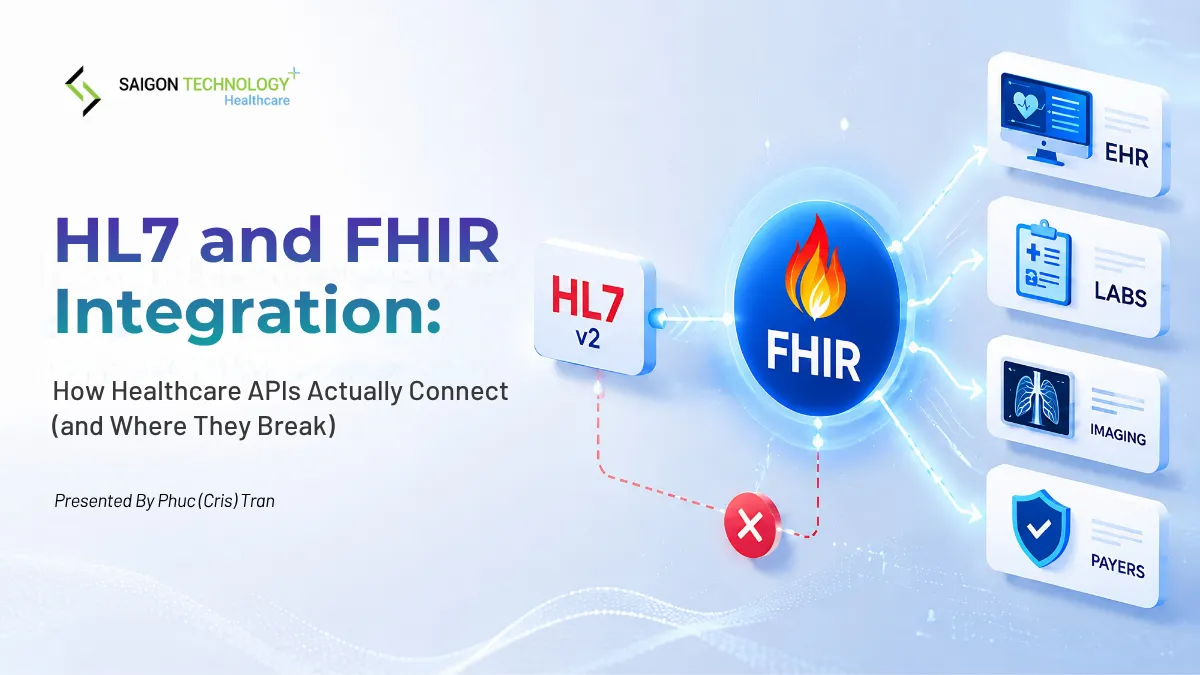
Clinical and administrative systems connected with HL7 interoperability support where the workload needs it, with the same access control and audit trail applied to any data a regulator can ask about. Our guide to HL7 and FHIR integration covers the protocol side.
Growing Companies Outgrowing Point-to-Point Links
Teams whose one-off connections have multiplied into a web nobody can change safely, moved onto a shared integration layer before the next system goes in.
What Changes When Your Core Systems Share One Source of Truth
Done well, system integration services change how a business runs day to day, not only how its IT is wired. People stop acting as the link between systems, and figures match across departments. These are the changes clients tend to notice first.
| Change | Where we have delivered it |
|---|---|
| One tracked workflow instead of email threads | SCM Portal (SAP-connected procurement) |
| New outside services added through one bus | Fleet Management Platform (Apache Camel service bus) |
| Provider failures handled without stopping applicants | Personal Loans Application (fallback and background retries) |
| One audit trail from verification to servicing | Personal Loans Application |
One owner per record
Every customer, price and stock figure has a single home, so delays in data updates and conflicting versions stop reaching reports.
Fewer hand-offs between teams
Approvals, quotes and orders move through one tracked workflow instead of email threads.
Fewer month-end fixes
Inventory errors and payment reconciliation gaps are caught by automated checks as data moves, not by finance weeks later.
New partners without rewiring
Adding a provider or business unit means one new connection to the bus, not a dozen direct links.
One audit trail
Access and changes are logged across systems, which gives auditors a single place to look.
Outages that stay contained
When a provider goes down, fallback routes and queued retries keep the rest of the process moving.
How We Deliver Systems Integration Services
Systems Audit
We run a current platform analysis and a workflow evaluation: every system, its owner, its change windows, the data it holds and the compliance rules on that data. Delays usually come from dependencies between teams rather than from code, so we map those first.
"On enterprise integrations, the code is rarely the slow part. The wait is for other teams: an SAP change window, a shared database schema, a test environment someone else owns. We map those dependencies during discovery and work around them with synthetic test data." - Quy Truong, Senior Solution Architect, Saigon Technology
Exit criterion: dependency map signed off by every system owner.
Target Architecture
We choose a pattern for each data flow (point-to-point, service bus or event-driven), define data mapping and data transformation rules, and agree how integration errors are raised and who receives them. Exit criterion: integration pattern and data contract agreed for every flow.
Build and Sandbox Wiring
Engineers build connectors and middleware in two-week sprints against sandbox and staging environments. Where another team's environment is not ready, test data management with synthetic records keeps the work moving. Exit criterion: every interface passing against sandbox or synthetic data.
End-to-End and Reconciliation Testing
Integration testing runs across all systems at production-like volumes, including load handling, and department users test their own workflows. Records are compared between source and target. Our software QA and testing team owns this stage. Exit criterion: a reconciliation run with no unexplained record gaps.


Phased Cutover
Integration deployment happens flow by flow, with data migration, a backup and a rollback rehearsed for each critical path. Exit criterion: rollback rehearsed before each cutover.

Run and Evolve
System monitoring, alerting and issue resolution continue after launch, along with updates whenever a connected platform is upgraded. This runs under our maintenance and support service. Exit criterion: alerts routed to a named owner for every connection.
Our Insights
FAQs
How much do system integration services cost?
IT system integration services are priced on four things: the number of systems, whether older platforms expose usable interfaces, data volume and speed, and compliance scope. Our published senior-led rate is $22–$46 per hour, with a $10,000 minimum project size. A free stack assessment, carried through to a work breakdown structure, puts a budget on the program before any build starts.

How long does a system integration project take?
It depends on the number of systems and on how quickly other teams can open change windows and test environments, which often matters more than build effort. You get a systems blueprint and working prototype from 48 hours. The Fleet Management Platform in our case studies took three months, an example rather than a quote. Our ERP implementation timeline guide covers the ERP side.

Should we hire a system integrator or build integrations in-house?
Build in-house when integration is core to your product and you have engineers who will own it for years. Hire a system integrator when you need senior experience across ERP, middleware and security quickly, or when the program spans several departments. Outsourced systems integration services also add capacity without long hiring cycles. Our guide to choosing an outsourcing partner lists what to check, and you can test the fit during a two-week risk-free trial.
How do you keep data secure when connecting enterprise systems?
We secure each system boundary on its own terms: role-based access on both sides, encryption in transit and at rest, OAuth 2.1 between services and an audit trail for every call. GDPR and PDPA requirements are followed. HIPAA and PCI-DSS requirements are met where the workload needs them, and clinical systems get HL7 interoperability support, all under our ISO 27001 certified management system.
Point-to-Point or a Service Bus: Which Integration Architecture Fits Us?
Point-to-point fits two or three systems with stable interfaces. A service bus fits many systems, frequent change and mixed data formats. A managed integration platform such as MuleSoft or Dell Boomi fits when connectors already exist and the logic is standard. Many estates combine them, and we will tell you when a built-in ERP module makes custom work unnecessary.
What does a system integration company do?
A system integration company connects the core systems a business runs, such as ERP, CRM, finance and legacy platforms, so they share data and processes. The work covers platform analysis, integration architecture, middleware and interfaces, data migration, integration testing, cutover, and support and maintenance after go-live so the connections keep working as each system changes.
What systems and technologies do you integrate?
Tools are chosen per program, because no single platform fits every connection. These are the areas we work across most often.
| Area | What we work with |
|---|---|
| ERP and business systems | SAP, SharePoint, custom ERP and CRM platforms |
| Middleware and messaging | Apache Camel (service bus), Apache Kafka, MuleSoft, Dell Boomi |
| Partner and data providers | Plaid, GIACT, TALX, Equifax, Oscilar, LoanPro, Twilio, SendGrid |
| Interfaces | REST, GraphQL, gRPC, OpenAPI |
| Identity and access | Keycloak, OAuth 2.1, OpenID Connect, AWS Cognito, single sign-on |
| Data stores | Microsoft SQL Server, MySQL, PostgreSQL, MongoDB, DynamoDB, Redis |
| Back end | .NET, Java and Spring Boot, Python |
| Cloud and DevOps | AWS, Microsoft Azure, Docker, Kubernetes, Terraform |
| Standards and compliance | GDPR, PDPA, HIPAA, PCI-DSS, HL7, ISO 27001 |
Can you integrate legacy systems without replacing them?
Yes. Legacy system integration wraps older platforms with interfaces, adapters or a service bus, so they keep running while newer systems read and write their records. If the older system is the real bottleneck, we plan its replacement as a separate track and keep old and new connected during the transition, so day-to-day operations never depend on a single cutover weekend.