




















































• OVERVIEW
  • SERVICES
  • WHY CHOOSE US?
  • MODELS
  • TECHNOLOGIES
  • OUR PROCESS
  • FAQS

What Is Supply Chain Software Development?

What Is Supply Chain Software Development?

Supply chain software development is the end-to-end custom engineering of platforms that run supply chain operations. It includes consulting, architecture, custom development, integration, modernization, testing and post-launch support for systems that manage planning, procurement, inventory, order management, warehouse operations, transportation, supplier collaboration and analytics.

In practice, most organizations do not start from nothing. They start with an ERP that works, a warehouse system that mostly works, and a set of spreadsheets holding the two together. Custom supply chain management software development is usually about closing that gap: building the layer that connects systems of record to the people who actually run the operation.

Who We Build For

Our supply chain solutions are built for organizations whose operations have outgrown off-the-shelf platforms.

  • Enterprise supply chain leaders. Enterprises using SAP, Oracle or Microsoft Dynamics that need custom supplier portals, control towers, AI-driven forecasting, or legacy modernization without replacing their ERP.
  • Mid-market operations teams. Fast-growing manufacturers, distributors, retailers and eCommerce businesses replacing spreadsheets and disconnected tools with scalable, purpose-built software.
  • Industry-specific ISVs and product companies. SaaS and technology companies building specialized supply chain products that need experienced engineers or dedicated development teams.
  • Regulated-industry distributors. Businesses requiring traceability, compliance and custom workflows that standard supply chain platforms cannot fully support.
Contributors
Huy Bui - Project Manager at Saigon Technology
Meet Huy (Harvey) Bui
Project Manager
Book an Appointment More Details
Trung Le - Business Analyst
Meet Trung Le
Business Analyst
Book an Appointment
over 400 software developers
400+
Software Developers
Over 14 years of experience
14+
Years in Business
Over 850 Projects Successfully Delivered
850+
Projects Successfully Delivered
rating on Clutch
4.8
Star Rating on Clutch

Supply Chain Software Solutions We Build

tablet-02

Supply Chain Planning and Forecasting

Demand forecasting, replenishment planning, capacity planning and scenario modeling that improve planning accuracy across complex, multi-node networks.
chevron-up.svg
home-01

Procurement and Supplier Management

Supplier portals, RFQ workflows, purchase approvals, vendor performance dashboards and procurement lifecycle management.
chevron-up.svg
file-lock-02

Inventory Management

Multi-location inventory tracking, stock optimization, replenishment engines and real-time visibility across warehouses, stores and distribution centers.
chevron-up.svg
home-02

Warehouse Management Systems

Receiving, putaway, picking, packing, inventory movement and fulfillment, with barcode, RFID and IoT integration where the operation needs it. See our warehouse software development services for warehouse-specific solutions.
chevron-up.svg
anchor

Transportation and Logistics Management

Shipment planning, carrier integrations, route optimization, real-time tracking and ETA prediction. For fleet, routing and last-mile work specifically, see our logistics software development services.
chevron-up.svg
building-05

Order Management Systems

Order orchestration, fulfillment routing, backorder management, returns and omnichannel processing across web, mobile and marketplace channels.
chevron-up.svg
rss-01

Supply Chain Visibility Platforms

Centralized platforms connecting suppliers, inventory, warehouses and transportation systems into a unified, real-time view of operations.
chevron-up.svg
tool-01

Supply Chain Control Towers

Cross-system data aggregation, alerts, exception management, predictive insights and decision support. An intelligence layer sitting above ERP, WMS, TMS and OMS platforms. Every solution can be connected to SAP, Oracle, Microsoft Dynamics and other enterprise systems through our software integration capabilities, and built on our broader custom software development practice.
chevron-up.svg

Our Highlight Projects

Two of the three projects below are direct supply chain builds; Fruta is a fresh-produce marketplace connecting suppliers, wholesalers and retailers. We would rather show verifiable adjacent work and say which is which than invent a metric. See all our case studies for more.
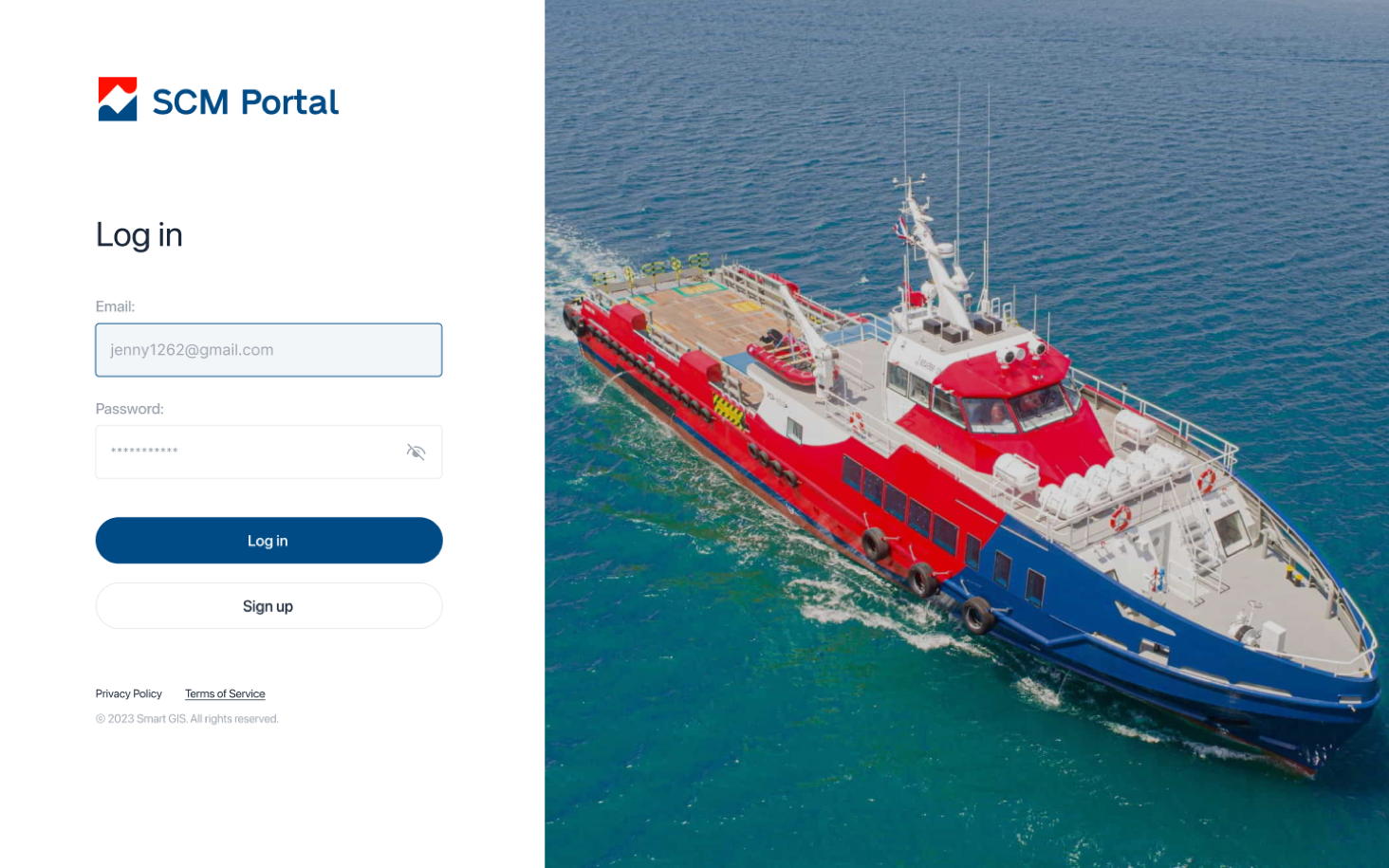
SCM Portal - Web Application Development

SCM Portal: Streamlining PR/PO/RFQ Workflows for Vessel Requisitions

Challenge. The client needed to manage complex vessel requisitions involving PR, PO and RFQ workflows, with close coordination between vessel teams, vendors and SAP.

Solution. We built a centralized supply chain portal covering the full requisition cycle: PR and RFQ management, quotation comparison, PO processing, goods receipt and delivery tracking.

Key capabilities

  • End-to-end PR/PO/RFQ workflow automation
  • Vendor quotation and re-quote management
  • PO generation and ERP status synchronization
  • Goods receipt and delivery verification
  • Role-based access and activity history
  • SAP and SharePoint integration

View the SCM Portal case study →

merit logistic 2

Merit Logistics: Modernizing a Legacy ERP Without Disrupting Operations

Challenge. The client's ERP had been developed by multiple vendors over six years and required modernization across key operational workflows without disrupting live business operations.

Solution. We established a dedicated offshore development team to analyze the existing system, maintain live operations, modernize core modules and build new capabilities on a modern stack.

Key capabilities

  • Legacy ERP analysis and modernization
  • Parallel maintenance and system development
  • Field and workforce management
  • Android check-in and check-out functionality
  • Agile offshore development
  • Infrastructure monitoring and performance testing

View the Merit Logistics ODC case study →

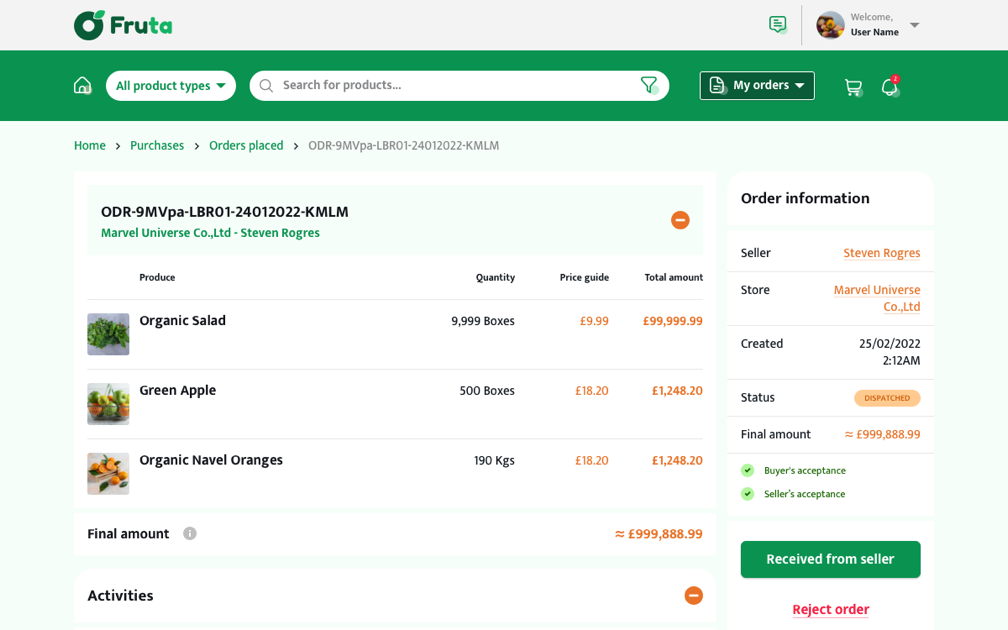
fruta-1

Fruta: Connecting Fresh Produce Supply Chain Participants

Challenge. The client needed a digital platform to improve visibility and coordination across suppliers, wholesalers, retailers and other participants in the fresh produce supply chain.

Solution. We developed a multi-tenant platform combining marketplace functionality, inventory monitoring and collaboration tools to connect participants across the fresh produce ecosystem.

Key capabilities

  • Multi-tenant marketplace
  • Perishable inventory monitoring
  • Product demand posting and order allocation
  • Supplier, wholesaler and retailer collaboration
  • Invoice generation and multi-channel notifications
  • Surplus product donation publishing

View the Fruta case study →

From Supply Chain Challenge to Technical Direction in 24 Hours

Send us your supply chain requirements and get a technical assessment within one business day, reviewed by Huy Bui, Project Manager.
  • Clickable prototype of your procurement, inventory or fulfillment flow
  • Workflow visualization mapping the full plan-source-make-deliver chain
  • Architecture direction covering ERP and EDI integrations, event throughput, and scale
  • Technical recommendation call with our engineering team
free demo

Why Choose Saigon Technology as Your Supply Chain Software Development Company

A supply chain software development company builds and integrates the platforms that run planning, procurement, inventory, warehouse, transportation and supplier operations. The ones worth hiring bring three things: senior engineers who have shipped against real ERP and EDI constraints, a security posture that survives audit, and a team still in place when the platform has to change. 

We staff supply chain projects senior-first and pair each engineer with AI-assisted workflows, so a smaller team ships more than a junior-heavy one. Our published rate is $22 to $46 per hour with senior oversight, and US teams get 10 to 12 hours of daily overlap.

The rate matters more here than it looks: at premium onshore rates, the first line items cut are exactly the ones this domain cannot lose. Integration hardening, retry and reconciliation logic, and the regression suite protecting a live ERP connection.

A supply chain platform is only as good as its reach into the systems of record. We build integrations with SAP, Oracle and Microsoft Dynamics plus WMS, TMS and OMS connectors, using REST, GraphQL, gRPC and EDI standards alongside event-driven patterns on Kafka and Azure Service Bus.

The failure mode we see most often is a platform that demos well, then cannot reconcile a purchase order against a goods receipt because the ERP was an afterthought. We design the integration contract first and build against it.

Supply chain systems carry supplier contracts, pricing, financial terms and traceability records an auditor will eventually ask to see. We operate under ISO 27001-certified security management with AES-256 encryption, role-based access, OAuth 2.1 with SSO and MFA, and full audit trails.

Building this in from the first sprint is materially cheaper than retrofitting: access control and audit logging touch the data model itself, and reworking a data model after go-live means migrating live inventory and order history.

Supply chain software is not a one-off build. Suppliers change, carriers change, your ERP goes through version upgrades, and each of those lands on an integration someone wrote two years ago.

That makes engineer retention a technical risk, not a culture nicety: churn breaks what you already shipped, because the person who knew why a reconciliation rule exists is gone. Saigon Technology ranked #10 in the Medium category of Southeast Asia Best Workplacesâ„¢ in Technology 2026, and shortlists the top 1% of applicants.

Both certifications are issued by BSI in the UK and audited annually, covering quality management and information security across the delivery lifecycle. These are third-party assessments, not self-declared policies.

We give architecture direction from the first conversation, and that sometimes means telling you not to build. Extending the ERP you own or integrating two existing systems is often the better answer than a new platform.

The same honesty applies to our proof: one of the three projects above is adjacent rather than a direct supply chain build, and we would rather label it than pad the page with a number we cannot evidence.

Interview the engineers before you commit, then start with a two-week risk-free trial. Models include staff augmentation, a dedicated development team, fixed-price delivery, Vietnam ODC and Build-Operate-Transfer. See all engagement models.

Why Choose Saigon Technology as Your Supply Chain Software Development Company

Trusted by Global Clients

Partner-logo2 Partner-logo3 Partner-logo4 Partner-logo6 Partner-logo1 Partner-logo5 Partner-logo9 Partner logo

What Our Clients Say

I have worked with Thanh (Bruce) Pham on several projects, and I admire his professionalism and his dedication to delivering high-quality work. He is responsive when answering emails and calls, as well as making sure that work always gets done on time. I am glad to be working with him and hope to continue working with him.
Mr. RJ Macasaet
Head of Partnership - DMI Global
star.svg star.svg star.svg star.svg star.svg
As the Owner and Director of ISMS Global, Australia, I understand perfectly how challenging it is to find a support team of skilled and professional developers to help grow a system. A few years ago, I found Saigon Technology Software (STS), led by Mr. Thanh Pham (CEO), and I have never looked back. STS has single-handedly taken ISMS camp management software from a concept on a napkin to an international product used by major companies around the world. If you are looking for a trusted partner to help you, then you should be talking to Thanh Pham.
Mr. Paul Upson
Director of ISMS Global, Australia
star.svg star.svg star.svg star.svg star.svg
Over the past year, collaborating with Saigon Technology Solution company, we have brought high-quality financial software solutions. STS helps us meet the strict requirements of the IT market with software engineers, software testers, and internal system control. And all of these are evidence that we have chosen a good software outsourcing partner.
Mr. Corbin van Amelsvoort
Director at Topicus Vietnam
star.svg star.svg star.svg star.svg star.svg
During our collaboration, Mr. Thanh and his company, Saigon Technology, have consistently demonstrated world-class leadership and execution in complex fintech projects. His ability to scale and lead high-performing engineering teams, while maintaining cost-efficiency and product quality, has been critical to our technology operations. His strategic insights and leadership enabled us to significantly improve system stability and deployment velocity.
Abe Jarrett
Senior Vice President of Software Engineering at Origence, USA
star.svg star.svg star.svg star.svg star.svg
Saigon Technology provided the expert advice and technical development we needed to successfully launch our platform. Thanks to their dedication and expertise, we are now fully operational. I truly appreciate their professionalism and ongoing support.
Mr. Jowen Kuah
CTO of Loan City Pte Ltd, Singapore
star.svg star.svg star.svg star.svg star.svg

Why Choose Custom Supply Chain Software Over Off-the-Shelf Solutions?

Custom supply chain software makes sense when your workflows, integrations or growth outpace what a licensed platform can handle. Off-the-shelf tools are fast to set up, but they are built for the average buyer.

Why Choose Custom Supply Chain Software Over Off-the-Shelf Solutions?

 Off-the-shelf platforms impose a standard process and your team adapts to the software. Custom software follows your procurement, warehouse and fulfillment steps from day one.

Vendors only build connectors they consider worth building, which usually excludes legacy systems and regional carrier platforms. Custom software connects to your ERP, WMS and TMS directly.

Licence tiers cap users, modules and data volume before a costly upgrade. Custom software scales with the business, and you pay for what you use.

Off-the-shelf AI features are trained across every customer on the platform. Custom models learn from your own demand, supplier and inventory history, so forecasts and risk alerts reflect your operation.

Every company on the same platform runs the same workflows and hits the same limits. Custom software gives you processes and data models nobody replicates by purchasing a licence.

Licence fees recur, and anything outside the standard setup is billed on top. Custom costs more upfront but removes the licence line entirely, and over several years often costs less.

With a vendor, your requests compete with every other customer's. With custom software you own the code and decide what gets built next.

AI Capabilities We Build Into Supply Chain Software

We apply AI where it measurably improves forecasting, removes repetitive work, or surfaces risk earlier.
AI-Powered Demand Forecasting

AI-Powered Demand Forecasting

Models analyzing historical sales, seasonal patterns, inventory movements and market signals to predict demand across SKUs, locations and time periods.
Intelligent Inventory Optimization

Intelligent Inventory Optimization

Models recommending replenishment quantities, reorder points and safety stock levels based on demand patterns, lead times and supplier performance.
Risk and Anomaly Detection

Risk and Anomaly Detection

Machine learning that identifies unusual patterns in supplier, inventory and shipment data, helping teams detect delays and shortages earlier.
Intelligent Routing and Fulfillment

Intelligent Routing and Fulfillment

Optimization evaluating delivery routes, carrier availability, order locations and capacity constraints to support faster shipping decisions.
Intelligent Document Processing

Intelligent Document Processing

OCR and AI models that extract, classify and validate data from invoices, purchase orders, bills of lading and shipping documents.
Supply Chain Assistants

Supply Chain Assistants

Generative AI assistants letting operations teams query inventory, orders, shipments and suppliers in natural language instead of searching across systems.

Supply Chain Software Development Cost and Engagement Models 

Typical Project Investment

  • Simple / MVP. Core workflows, limited integrations. $15,000 to $30,000 over 1.5 to 3 months.
  • Medium-scope platform. Custom backend, third-party APIs, more advanced workflows. $35,000 to $120,000 over 3 to 6 months.
  • Complex platform. Real-time analytics, AI/ML, multi-system synchronization. $120,000 to $250,000 over 6 to 10 months.
  • Enterprise or regulated platform. Full ERP/EDI integration, compliance and audit requirements. $250,000 to $400,000+ over 10 to 15 months.

These ranges are indicative. Actual timelines and costs depend on requirements.

chevron-up.svg

What Affects the Cost

  • Scope and complexity. More modules, workflows, users and processes mean more engineering effort.
  • Integration requirements. ERP, WMS, TMS, EDI and carrier platforms drive implementation complexity.
  • Team composition. Larger projects need architects, QA, DevOps, data or AI specialists.
  • Security and compliance. GDPR, PDPA, PCI-DSS or FDA/DSCSA/FSMA requirements add testing and documentation work.
  • AI and automation. Forecasting, optimization and document processing require data engineering.
  • Third-party costs. Cloud infrastructure, licences, APIs and EDI providers sit outside development.
chevron-up.svg

Engagement Models

chevron-up.svg

Technology Stack

How We Deliver Supply Chain Software Development Services

Our process follows a five-step framework aligned with our ISO 9001-certified quality management system.
app ideation and planning

Discovery and Requirements (1–2 Weeks)

We interview stakeholders, map current workflows, define functional and non-functional requirements and identify key integrations. Deliverable: a scoped technical brief and development roadmap.

ui ux app design

Solution Architecture and UI/UX Design (2–4 Weeks)

Architects define the architecture, data model, integration approach and security requirements while designers produce key workflows and dashboards for review.

Software Development Process

Agile Engineering Sprints (3–12+ Months)

A senior-first team develops in two-week sprints with regular demos, iterative feedback and AI-assisted workflows. Typically 3 to 12+ months depending on scope.

qa and app testing

Integration, QA and System Testing - Throughout

We integrate with ERP, WMS, TMS and EDI systems while running continuous QA, integration and security testing against agreed acceptance criteria.

mobile app launch and optimization

Deployment and Post-Launch Support (1–2 Weeks + Ongoing)

We deploy to your cloud environment, complete documentation and knowledge transfer, and support end-user onboarding. Explore our full methodologies of software development.

Our Insights

FAQs

Supply chain software development is the custom engineering of software that runs supply chain operations, including planning, procurement, inventory, warehouse, transportation, order management and supplier collaboration. It covers the full lifecycle from discovery and design through deployment, integration and ongoing support. Custom software fits workflows that off-the-shelf platforms cannot standardize. 

Build custom when your workflows, data model or integration requirements exceed what packaged platforms can configure. Common triggers include disconnected systems, limited visibility, workflow bottlenecks and unique regulatory constraints. Custom is also right when SAP or Oracle sits at the core but you need a purpose-built layer on top, such as a supplier portal or control tower.

Supply chain software development typically costs $15,000 to $400,000+, depending on complexity, integrations, AI capabilities and compliance requirements. Simple MVPs run $15,000 to $30,000, medium-scope platforms $35,000 to $120,000, complex solutions $120,000 to $250,000, and enterprise or regulated platforms $250,000 to $400,000+. Our published rates range from $22 to $46 per hour.

Yes. We build native integrations with SAP, Oracle, Microsoft Dynamics and other major ERP platforms, along with WMS, TMS and OMS connectors. Our integration practice supports REST, GraphQL, gRPC and EDI standards, plus event-driven architectures using Kafka and Azure Service Bus. The SCM Portal project above integrated PR, PO and RFQ workflows directly into a client SAP environment.

We operate under ISO 27001-certified security management, AES-256 encryption, Zero Trust Architecture and OAuth 2.1 with SSO and MFA. For regulated verticals we align to GDPR (EU), PDPA (Singapore), PCI-DSS (payments), and HIPAA and HL7 for healthcare distribution, plus DSCSA and FSMA traceability where applicable. Every engagement is NDA-protected, with full IP transfer on completion.

We build supply chain software across the industries we serve: manufacturing, retail and eCommerce, healthcare, logistics, and utility and energy.

Each carries different compliance and integration needs. Manufacturing requires MES and MRP integration. Healthcare requires traceability aligned to HIPAA and HL7, as delivered in our HealthTech EHR platform. Logistics providers need multi-client billing and visibility.

We build supply chain software using .NET, Node.js, Java Spring Boot, Python, React, Angular, React Native and Flutter, based on your existing technology stack. For data and real-time operations, we support PostgreSQL, MongoDB, Redis and Apache Kafka.

We also integrate with AWS, Azure, Google Cloud, SAP, Oracle and Microsoft Dynamics. Our integration capabilities include REST, GraphQL, gRPC, EDI X12, EDIFACT and GS1 standards such as GTIN, SSCC and EPCIS. Depending on your industry and market, we can build solutions aligned with ISO 9001, ISO 27001, GDPR, PDPA, PCI DSS, HIPAA/HL7, DSCSA and FSMA 204 requirements.

Ready to Build Your Supply Chain Platform?

Building for fleet, transportation or last-mile operations? Explore our logistics software development capabilities for engineering focused on movement, routing and delivery visibility.

    Contact Message Box

    Schedule a Demo with Our Industry Experts

    Book a free 30-minute call

    • See case studies aligned with your requirements
    • Validate our industry experience
    • Confirm technical fit for your project
    Schedule a Demo

      Your RFP, reviewed by experts in 24 hours

      AI-accelerated path from brief to working prototype. Engineers, not sales.
      • Clickable prototype of your core user flow
      • Workflow visualization mapping the full system
      • Architecture direction covering stack, integrations, and scale
      • Technical recommendation call with our engineering team
      Free Demo Campaign