




Fintech Development Outsourcing: The Complete Guide for 2026

 Updated on Aug 04, 2026
Fintech development outsourcing lets a finance company hand the building of its financial software to an external engineering team instead of carrying the entire roadmap in-house. It has become one of the fastest ways for finance companies to ship products without drowning in hiring cycles and overhead. The pressure is real: a global talent shortage, rising salaries, and customers who expect bank-grade reliability on a startup timeline. Bringing in an external engineering partner lets you close skill gaps, control costs, and protect your speed to market, all while meeting the strict security requirements the financial industry demands.
This guide explains what fintech development outsourcing actually involves, what you can hand off, how much it costs, where to find talent, and how to choose a partner you can trust. It’s written to help you make a decision, not to sell you one.
What Is Fintech Development Outsourcing?
Fintech development outsourcing is the practice of hiring an external software team to build, integrate, or maintain financial applications, instead of relying solely on in-house staff.
In practice, it covers everything from payment platforms and digital wallets to lending tools, onboarding flows, and financial system integration. You bring in engineers, designers, and specialists who own a defined part of your roadmap, or the whole build, end to end.
Fintech software outsourcing is not the same as general software outsourcing. Financial products carry higher stakes around regulatory compliance, data protection, and uptime. You’re not just shipping features – you’re handling money and trust. That raises the bar for domain-specific knowledge and skills.
A quick note on terminology, since these get mixed up:
- Fintech development outsourcing – handing off the building of financial software to an external partner (the focus of this guide).
- Staff augmentation – adding individual engineers to your team, under your management.
- Dedicated team – a stable, long-term squad that works only on your product.
If you’re researching the underlying service itself rather than the outsourcing model, Saigon Technology’s fintech software development and financial software development pages go deeper on capabilities.
Why Fintech Companies Outsource Development
Most decisions to outsource come down to three forces: cost, expertise, and time. Here’s how they play out.
- Cost efficiency. You skip recruitment, onboarding, payroll taxes, equipment, and office costs. You pay for output, not overhead.
- Access to specialized talent. Outsourcing partners bring domain-specific knowledge and skills in payments, blockchain, AI for finance, and cybersecurity solutions that are hard to hire locally.
- Faster delivery. Established teams with agile methodologies and ready DevOps practices launch sooner. There’s no team to assemble from scratch.
- Scalability and flexibility. You scale a team up for a launch and down afterward, without long hiring or layoff cycles. This scalability and flexibility are a major reason fintech companies outsourcing development keep doing it.
- Focus on the core. Your internal team stays on strategy, customers, and product vision while the partner handles software development and engineering.
The backdrop matters too. The IT talent shortage in the US and Western Europe is severe, and finance roles are among the hardest to fill. Outsourcing opens a global pool of fintech talent hubs that simply isn’t available within commuting distance of one office.
What Fintech Services You Can Outsource
Almost any technical function can be delegated. The most commonly outsourced fintech solutions include:
- Custom fintech application development – neobank platforms, digital wallets, payment gateways, and lending systems.
- Financial system integration and API integration services – connecting core banking, payment rails, and third-party tools.
- Mobile app development for fintech – strong mobile-first development capabilities are non-negotiable for consumer finance.
- UX/UI design for fintech platforms – a clean user interface and trustworthy user experience drive adoption.
- Open banking APIs and embedded services – wiring finance into other products via open banking standards.
- Data analytics and AI for finance – predictive modeling, fraud detection, and data analytics and business intelligence.
- QA, penetration testing, and ongoing maintenance – including 24/7 technical support & maintenance.
- Legacy modernization – legacy system modernization and migration to cloud-native development.
A few capabilities are worth keeping in-house, though: product vision, compliance ownership, and key customer relationships. Outsourcing is most successful when you delegate execution and retain direction.
Fintech Outsourcing Engagement & Pricing Models
Choosing the right engagement model matters as much as choosing the right partner. These are the pricing models you’ll encounter most often.
|
Model
|
How it works
|
Best for
|
|
Fixed-price model
|
Set scope, set price
|
Short, well-defined projects and MVPs
|
|
Time & materials
|
Pay for actual hours worked
|
Evolving scope, longer builds
|
|
Dedicated team
|
A monthly squad focused on your product
|
Long-term partnerships and ongoing support
|
Beyond these core engagement strategies, you’ll also see delivery setups worth knowing:
- Staff augmentation – plug specialists into your existing team.
- Project-based outsourcing – full delivery of a defined build.
- Managed service models – the partner owns an outcome (e.g., cloud infrastructure management).
- Build-operate-transfer (BOT) and captive setup assistance – the partner builds an offshore unit, runs it, then transfers it to you.
How to choose: use a fixed-price model for tight MVPs, time & materials when requirements will shift, and a dedicated outsourcing team when you need a stable, scalable team structure for the long haul.
How Much Does Fintech Development Outsourcing Cost?
Cost is the most-asked question, and the one competitors answer least clearly. Rates vary widely by region. Based on commonly cited industry rate benchmarks, typical hourly ranges look roughly like this:
- North America: ~$100-$200+ / hour
- Western Europe: ~$80-$150 / hour
- Eastern Europe / LATAM: ~$40-$80 / hour
- South & Southeast Asia (incl. Vietnam): ~$25-$55 / hour
Three factors move the number most:
- Seniority and technical expertise – senior payments or security engineers cost more and are worth it.
- Compliance scope – regulatory compliance work (audits, certifications) adds effort.
- Project complexity – real-time systems and integrations cost more than simple apps.
Watch for hidden costs: knowledge transfer, rework from poor quality control, and third-party risk management. The headline rate isn’t the total cost of ownership, a cheap team that ships fragile code is expensive in the end.
Where to Outsource Fintech Development: Top Regions Compared
Location shapes cost, talent depth, and how easily you’ll collaborate. Here’s a high-level comparison of the main fintech talent hubs.
|
Region
|
Rates
|
Talent pool
|
English
|
US time overlap
|
Fintech track record
|
|
Eastern Europe
|
Mid
|
Deep
|
High
|
Low–Mid
|
Strong
|
|
LATAM (nearshore)
|
Mid
|
Growing
|
High
|
High
|
Growing
|
|
India
|
Low
|
Very deep
|
High
|
Low
|
Strong
|
|
Philippines
|
Low
|
Deep
|
Very high
|
Low
|
BPO-strong
|
|
Vietnam
|
Low
|
Strong & growing
|
Good
|
Low
|
Rising fast
|
- Nearshore teams (e.g., LATAM for US companies) win on time-zone overlap and easier real-time communication channels.
- Offshore teams (Asia, Eastern Europe) win on cost and talent pool depth, with a “follow-the-sun” workday as a bonus.
Why Vietnam stands out: it pairs competitive rates with a large, fast-growing engineering base and a maturing fintech sector. Teams there increasingly take on fintech software outsourcing engagements with solid technical expertise and agile methodologies, which is exactly the niche Saigon Technology works in.
Learn more: Top 10 Outsourcing Countries in 2026
Risks & Challenges of Fintech Outsourcing (and How to Avoid Them)
Outsourcing isn’t risk-free. The good news: most problems are predictable and preventable.
- Security and data-privacy risk → demand encryption practices, access controls, and data protection standards from day one.
- Compliance complexity → confirm the partner knows your regulatory frameworks before signing.
- Communication hurdles → set clear communication practices, overlapping hours, and a single point of contact.
- Inconsistent code quality → requires DevSecOps pipelines, code reviews, and CI/CD as standard.
- Unclear scope and ownership → define deliverables, KPIs, and a reporting structure up front.
- Vendor lock-in → insist on documentation and clean handover terms.
The pattern is clear: most failures trace back to weak setup, not weak engineers. Treat outsourcing as a partnership with real quality control, and the risks shrink.
Fintech Compliance & Security in Outsourcing
Compliance is where fintech outsourcing genuinely differs from ordinary software work. Your partner has to operate inside the same rulebook you do.
Key compliance requirements and regulatory frameworks to verify:
- PCI DSS – for handling cardholder data.
- PSD2 – payment services and strong customer authentication in Europe.
- GDPR / CCPA – data privacy in the EU and California.
- GLBA – US financial data protection.
- AML – anti-money-laundering (AML) protocols and KYC readiness.
- SOC 2 — operational security certifications.
What to check in a partner’s security posture:
- RegTech compliance support and a track record of audited projects.
- Encryption practices, multi-factor authentication, and secure environments.
- A documented data-handling and IP protection process.
- Penetration testing and ongoing maintenance baked into delivery.
- Mature third-party risk management so their vendors don’t become your liability.
Strong cybersecurity solutions aren’t a feature you bolt on later – they’re the foundation of any credible fintech software outsourcing engagement.
How to Choose a Fintech Development Outsourcing Partner
Outsourcing partner selection is the single biggest predictor of success. Work through it in order.
- Define your objectives – goals, must-have features, budget, and how you’ll measure success.
- Research candidates – use Clutch, G2, and GoodFirms; review each portfolio and relevant case studies.
- Evaluate technical expertise and compliance – confirm hands-on experience with your stack and regulatory frameworks.
- Check references – talk to past clients about reliability and problem-solving.
- Request a rough estimate or PoC – a small pilot reveals real working style.
- Agree on a project management framework and communication channels before kickoff.
Key questions to ask:
- Do you have proven fintech experience and consultative insights, not just general coding?
- Can you show scalable team structures and adjust capacity as we grow?
- How do you handle security, qa, and quality control?
- What does your engagement model and reporting look like week to week?
Green flags: domain depth, transparent communication practices, strong cultural fit, and references that pick up the phone. Red flags: vague estimates, no compliance answers, and reluctance to share a portfolio.
FAQs
1. What is fintech development outsourcing?
It’s hiring an external team to build, integrate, or maintain financial software, covering everything from payment apps to financial system integration, instead of relying only on in-house staff.
2. Why do fintech companies outsource development?
For cost efficiency, access to scarce domain-specific knowledge and skills, faster speed to market, and scalability and flexibility during the talent shortage.
3. How much does it cost to outsource fintech development?
Roughly $25-$55/hour in Southeast Asia and up to $100-$200+/hour in North America, depending on seniority, compliance requirements, and complexity. Factor in hidden costs like knowledge transfer.
4. Which country is best for fintech software outsourcing?
There’s no single winner. Choose nearshore teams for time-zone overlap or offshore teams like Vietnam and Eastern Europe for cost and deep talent pools.
5. How do I choose a fintech outsourcing company?
Prioritize proven fintech experience, security certifications, a clear engagement model, strong communication practices, and verifiable references.
6. Is outsourcing fintech development secure and compliant?
Yes – when the partner enforces encryption practices, multi-factor authentication, PCI DSS / PSD2 readiness, and AML protocols, and you keep compliance ownership in-house.
Final Thoughts
Outsourcing fintech development works best when you treat it as a partnership, not a transaction. The right partner brings technical expertise, real fintech compliance requirements know-how, and the communication channels to keep everyone aligned, and that combination matters far more than the lowest hourly rate.
If you’re moving from research toward building, explore Saigon Technology’s fintech software development capabilities and broader financial software development services to see what a fintech-focused engineering team can deliver.


Related articles
Outsource App Development in 2026: Risks & Vendor Checks
 Thanh (Bruce) Pham - CEO of Saigon Technology
  03 Oct 2024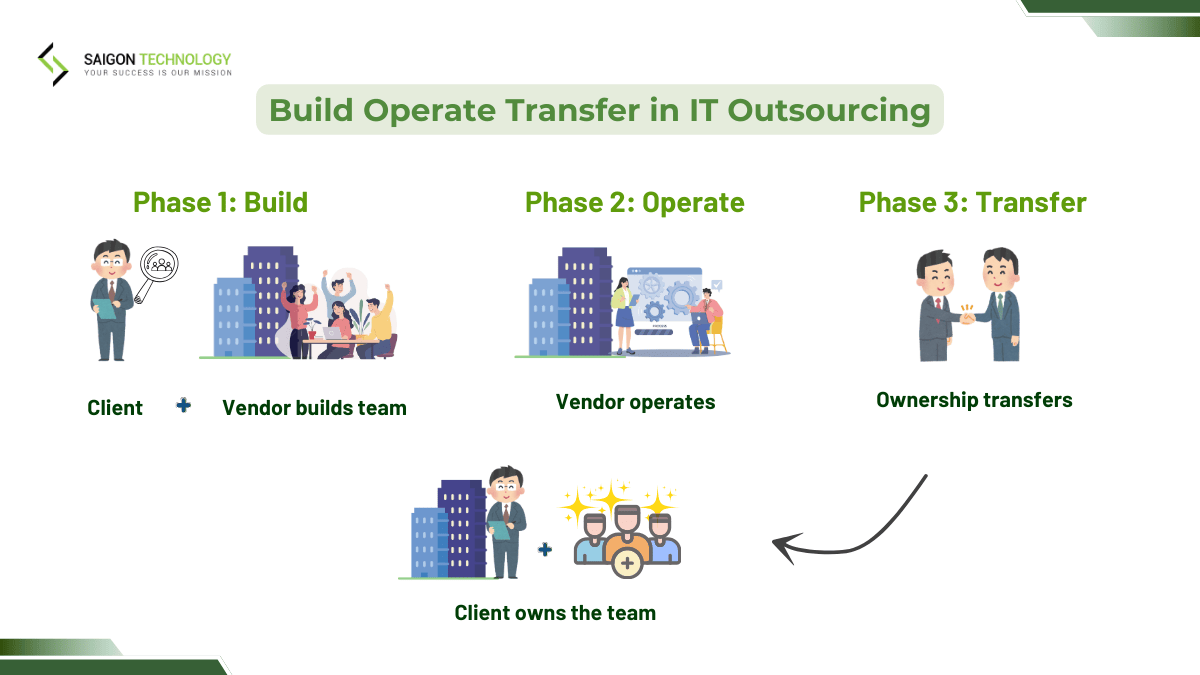
Build Operate Transfer (BOT) IT Outsourcing: Complete Guide for Global Tech Companies
03 Oct 2024 
12 Key IT Outsourcing Trends 2026 for Business Growth
16 Sep 2024 
Decoding Software Outsourcing Costs and Strategies
11 Sep 2024 
Choosing the Right Outsourcing Partner: Strategic Guide
26 Sep 2024