Our Services
Software Development
Offshore & Outsourcing
Infrastructure
Custom Software Development

menu-services-icon

End-to-end software development tailored to meet all your requirements.

menu-services-icon

AI systems analyze data to help businesses make informed decisions.

menu-services-icon

Crafted custom web solutions to align with our client's business goals.

menu-services-icon

A good mobile app increases brand visibility and ease of customer interaction.

menu-services-icon

Empowers confident decision-making and unlocks real AI value with precision.

menu-services-icon

Transforming outdated systems into modern, scalable solutions.

menu-services-icon

Integrates various business processes into a unified system.

menu-services-icon

Provides real-world insights into how users interact with the product.

menu-services-icon

Accessible from anywhere with an internet connection.

menu-services-icon

Connect systems, automate workflows, and centralize data for faster growth.

menu-services-icon

Upgrade legacy systems with minimal downtime

menu-services-icon

Ensures that core application logic and business processes run smoothly.

menu-services-icon

Creates visually appealing and intuitive interfaces for seamless interactions.

menu-services-icon

Ensures the software meets standards and regulations, avoiding compliance issues.

menu-services-icon

Maintenance protects against vulnerabilities with patches and updates.

Software Development Outsourcing

menu-services-icon

Significant cost savings and access to global talent.

menu-services-icon

Get expert help with technology and industry knowledge for your project.

menu-services-icon

Stay current with industry trends to keep your project competitive.

menu-services-icon

Outsource tasks to focus on marketing, sales, and growth.

IT Services

menu-services-icon

End-to-end IT services that help businesses operate securely, efficiently, and at scale.

menu-services-icon

Speeds up updates and fixes, helping you respond faster to market demands.

menu-services-icon

Offer improved performance and reliability with faster processing and less downtime.

  • OVERVIEW
  • SERVICES
  • WHY CHOOSE US?
  • MODELS
  • TECHNOLOGIES
  • OUR PROCESS
  • FAQS

Who We Build RPM Software

Who We Build Remote Patient Monitoring Software For

1. Health Systems and Hospital Networks

Health systems launching or scaling remote patient monitoring programs need software that reduces readmissions and manages chronic conditions. They also need to capture reimbursement under CPT codes 99453-99458 and 98975.

We build RPM platforms that integrate with your existing EHR systems and clinical workflows. Care teams can monitor patients without changing how they already work.

2. Digital Health Startups

Startups need to move from idea to MVP without costly rework. We bake compliance rules (HIPAA, GDPR, SaMD) into the architecture from day one. You get a market-ready remote patient monitoring platform that meets regulatory needs before your first user signs up.

3. Medical Device and Medtech Companies

Device companies need software that turns hardware into a full product ecosystem. We develop companion mobile apps, cloud platforms, and clinical portals for your devices. You focus on building and getting devices approved. We handle the software side.

4. Payers and Health Plans

Health plans need better population health insights and stronger member engagement. We build platforms that use remote monitoring data to stratify risk levels, identify care gaps, and track outcomes across patient populations.


over 350 software developers
400+
Software Developers
Over 12 years of experience
14+
Years in Business
Over 800 Projects Successfully Delivered
850+
Projects Successfully Delivered
rating on Clutch
4.8
Star Rating on Clutch

Key Features of Remote Patient Monitoring Software

Remote patient monitoring software includes several core components that work together. These components collect patient data, deliver it to care teams, and support clinical decisions. Here is what a typical RPM platform includes
healthcare - icon 7

Patient-Facing Mobile Apps

An RPM mobile app allows patients to log vital signs (blood pressure, glucose, SpO2, weight), track symptoms, receive medication reminders, and communicate with their care team through secure messaging. Most RPM apps are built for iOS and Android using cross-platform frameworks. They include offline data sync for areas with weak connectivity.

We build these apps with accessibility in mind and test them with real patients and clinicians. The goal is sustained patient engagement, not just downloads

chevron-up.svg
healthcare - icon 4

Clinical Dashboards and Provider Portals

A clinical dashboard aggregates patient data from many devices into a single view. Care teams can check patients in real time. Key features include configurable alert thresholds, trend visualization, population-level risk scores, and task-based workflows. These help providers decide which patients need attention first.

We design these dashboards for clinical efficiency: fewer clicks, clear data hierarchy, and role-based views for nurses, physicians, and care coordinators.

chevron-up.svg
healthcare - icon 3

Wearable and IoT Medical Device Integration

RPM platforms connect to a range of medical devices:

  • Blood pressure monitors
  • Glucometers
  • Pulse oximeters
  • Weight scales
  • Wearable sensors

Common integration methods include Bluetooth Low Energy (BLE), cloud-to-cloud APIs, Apple HealthKit, and Google Health Connect. The goal is continuous, accurate data collection without requiring patients to enter data manually.

We handle the real-world challenges of device integration: connectivity drops, data format issues, device firmware variability, and multi-vendor support.

chevron-up.svg
healthcare - icon 1

Data Pipeline and Analytics Engine

An RPM data pipeline ingests, cleans, normalizes, and processes health data from multiple sources in real time. These pipelines are built to FHIR standards and power downstream analytics.

This ranges from individual patient risk alerts to population-level health trends. A well-built data pipeline is what separates an RPM tool from a clinically useful RPM platform.

chevron-up.svg
healthcare - icon 8

EHR and EMR Interoperability

RPM platforms must exchange data with electronic health record systems to be clinically useful. We integrate with major EHR systems, including Epic, Cerner, and athenahealth, using HL7 FHIR and HL7 v2 standards.

Patient data flows into existing clinical workflows. Providers see RPM data inside the systems they already use, not in a separate portal.

chevron-up.svg
healthcare - icon 2

Telehealth and Communication Modules

RPM platforms often include video consultations, secure messaging, and asynchronous communication tools. We build these modules to be fully compliant (HIPAA-encrypted, audit-logged) and integrated with the rest of the platform. A provider can review a patient's vitals and start a video call from the same screen.

chevron-up.svg

Case Studies 

welio - healthcare app project

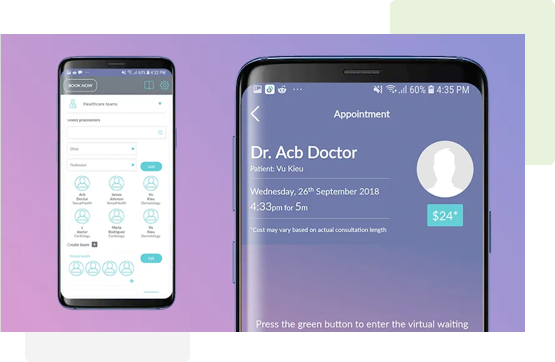
Welio - Telemedicine Platform

  • Client Type: Healthcare Provider / Telemedicine Company (Australia) 
  • Project Summary: We developed a telemedicine platform that enables virtual consultations through video calls, messaging, appointment scheduling, and medical record management. The system supports seamless communication between doctors and patients across web and mobile platforms.
  • Challenges: The system handled a high volume of multimedia data from patients. The legacy video solution (Skype for Business) needed to be replaced. The authentication flow was overly complex due to reliance on multiple Azure services. Additionally, the mobile experience required significant customization for different user roles.
  • Solutions: We replaced the legacy video system with Twilio Voice and Video. We implemented real-time and asynchronous messaging using Firebase. Authentication was streamlined with OTP-based registration via SMS. The platform also includes clinic management features such as scheduling, patient data handling, and payment integration.
  • Compliance: The system follows HIPAA guidelines, ensuring secure data handling and access control.
  • Impact: The platform enables efficient virtual consultations and improves communication between healthcare providers and patients.
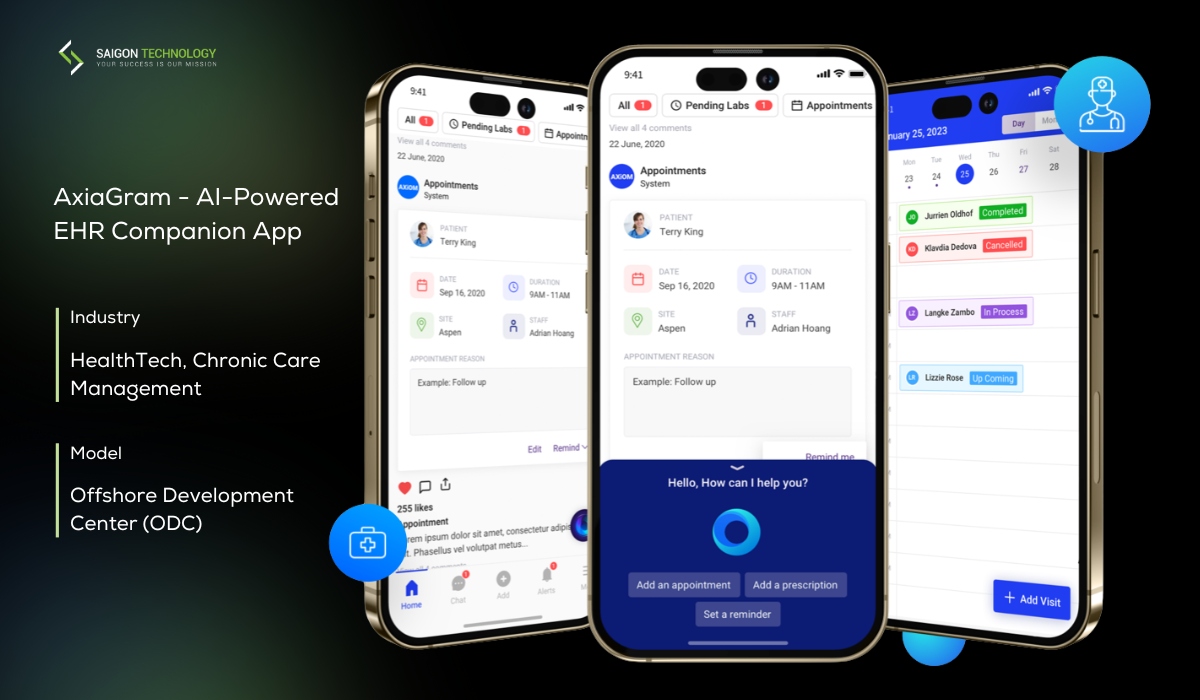
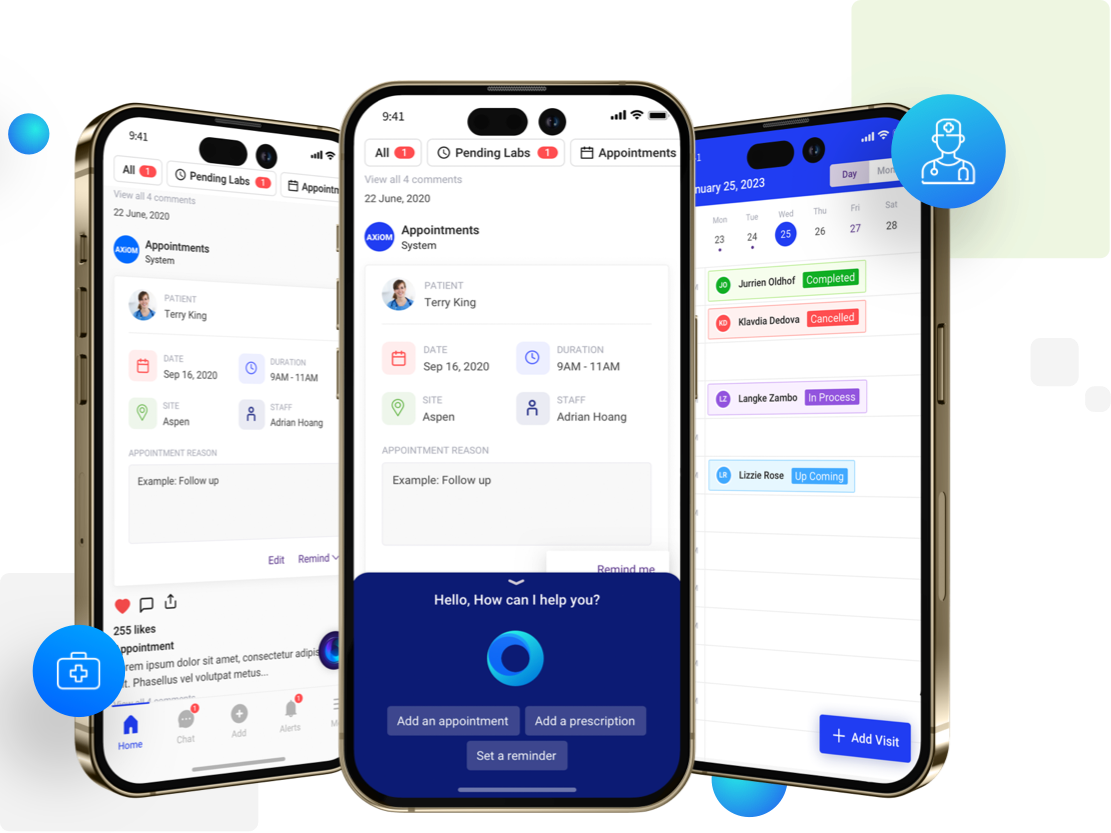
AxiaGram - AI-Powered EHR Companion Appy

HealthTech - Multi-Tenant SaaS EHR Platform

  • Client Type: HealthTech SaaS Company
  • Project Summary: 
  • Challenges: The project required complex multi-tenant architecture and real-time communication. The interface needed to work for non-technical users. Scheduling and AI-driven workflows added further complexity.
  • Solutions: We implemented multi-tenancy across database, server, and client layers. We designed a user-friendly interface based on feedback from non-technical users. Real-time communication was enabled using SignalR, while video and audio calls were powered by Agora. We also integrated NLP capabilities using LUIS AI.
  • Compliance: The system was designed with secure data handling practices and tenant isolation to support healthcare data requirements.
  • Impact: The platform improves communication between stakeholders and supports scalable healthcare service delivery.
Skin Analyzing System – demo

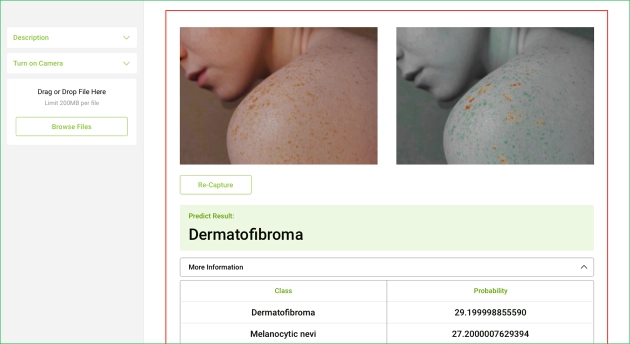
AI-Powered Skin Analysis System

  • Client Type: Healthcare AI / MedTech
  • Project Summary: We developed a skin analysis system using computer vision and deep learning to evaluate skin conditions from images and generate detailed reports.
  • Challenges: The system required accurate image processing and support for multiple input methods while maintaining a user-friendly interface.
  • Solutions: We built deep learning models with image processing pipelines and deployed the system via a Streamlit-based web interface supporting image upload and real-time analysis.
  • Impact: Enables users and skincare professionals to assess skin conditions and receive data-driven insights for personalized skincare.

Other Client Stories

Healthcare
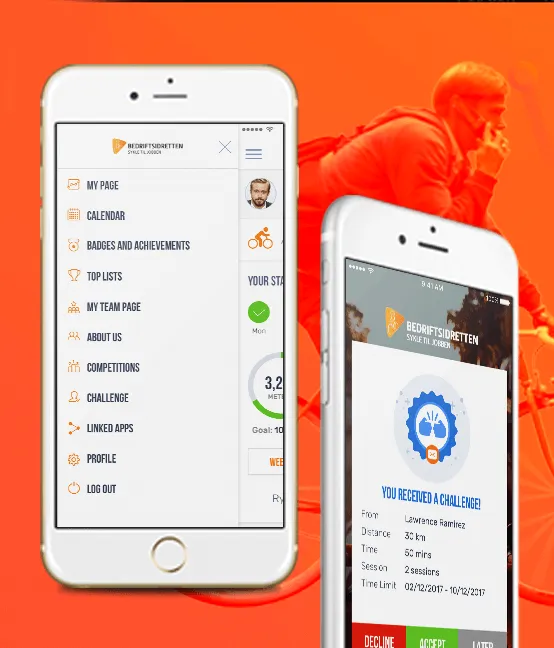
BIKE TO WORK

BIKE TO WORK

Bike To Work is a GPS fitness-tracking app for iOS and Android ...
Detail arrow-narrow-right.png
SaaS
HealthTech

HealthTech

HealthTech is a SaaS EHR platform. It is known for its user-friendly design and cutting-edge features. Users praise its great customer service and its full mobile communication solution.
Detail arrow-narrow-right.png
Healthcare
WELIO

WELIO

Welio is a telemedicine platform that facilitates virtual consultations between doctors and patients through video calls, chat, and messaging.
Detail arrow-narrow-right.png
Offshore Dedicated Team
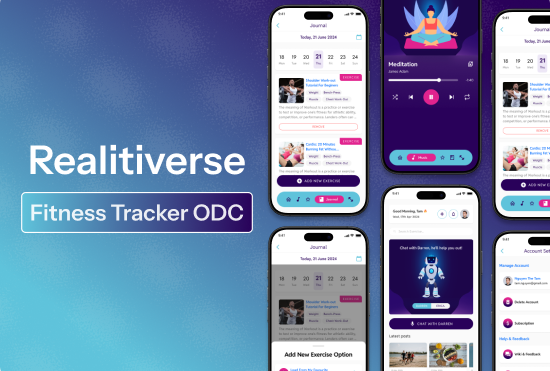
Realitiverse Fitness Tracker ODC

Realitiverse Fitness Tracker ODC

The Realitiverse Fitness Tracker ODC project focuses on developing a user-friendly and intuitive UI for its fitness tracker app.
Detail arrow-narrow-right.png
AI and ML
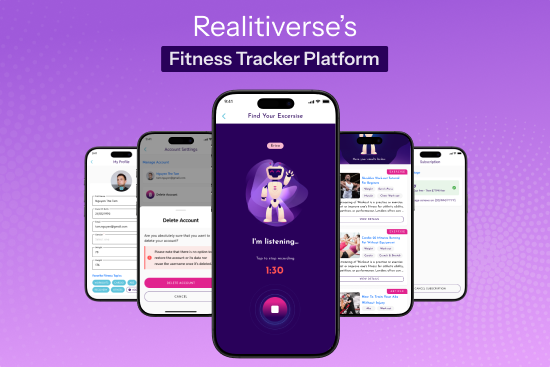
Realitiverse’s Fitness Tracker Platform

Realitiverse’s Fitness Tracker Platform

Realitiverse's Fitness Tracker Platform is designed for Singapore's software market. The platform focuses on fitness lessons and mental health.
Detail arrow-narrow-right.png

Ready to Build Your Healthcare Remote Patient Monitoring Solution?

Book a free consultation to discuss your use case, device integrations, compliance, and roadmap - no pressure, just expert guidance.
Discuss Your Healthcare RPM Project
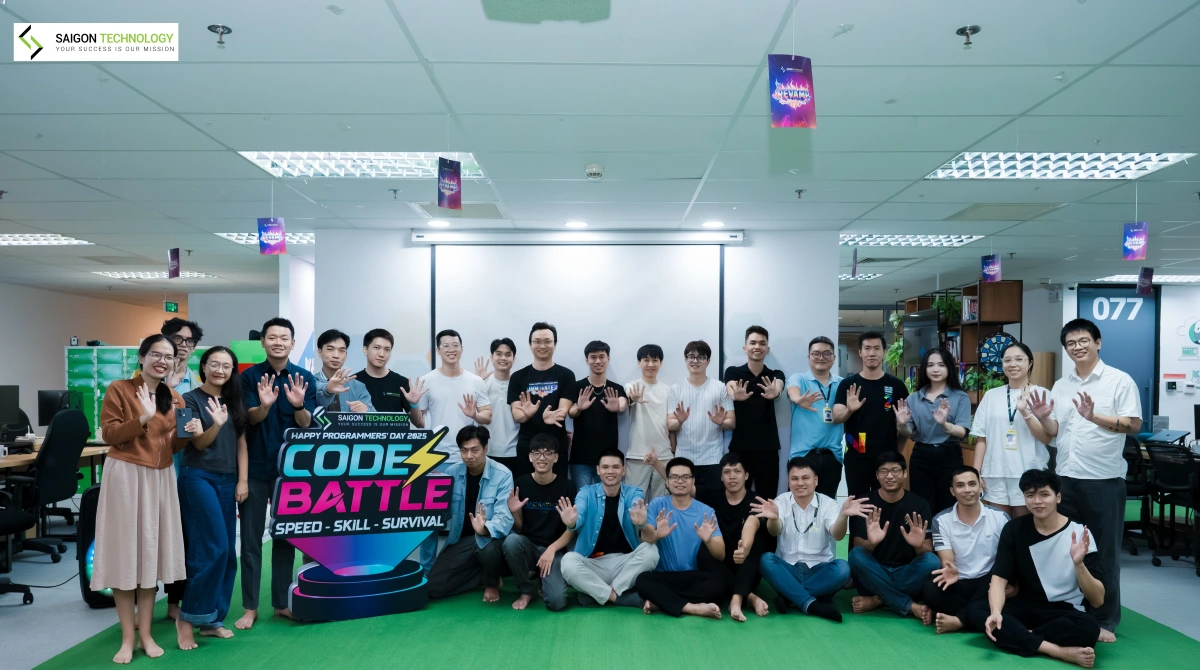
Employee at Saigon Technology 2026

Why Choose Saigon Technology for RPM Development?

Saigon Technology has spent 14+ years working in healthcare IT. We deliver remote patient monitoring solutions built for real-world clinical settings. Our team handles real-time data, medical device integration, and EHR connectivity. We work across regulated programs in the US, EU, Australia, and Singapore.

We design RPM systems with compliance built in from day one, not added as an afterthought. Our solutions meet HIPAA and HITECH in the US, GDPR in the EU, PDPA in Singapore, and Australian Privacy standards. Every system is built for audit readiness, data security, and patient privacy. We cover encryption, access control, and full traceability while keeping the system easy to use.

We implement HL7 v2.x and FHIR standards to integrate RPM platforms with EHR systems, medical devices, and healthcare ecosystems. Our experience includes DICOM workflows, LOINC/CPT mapping, and secure APIs. This ensures reliable and scalable data exchange.

We integrate BLE-enabled medical devices and wearables for accurate, real-time patient data collection. Our teams handle real-world challenges like connectivity issues, data gaps, and device variability. We deliver stable and reliable data flow for RPM platforms.

Saigon Technology is based in Vietnam with offices in Ho Chi Minh City and Da Nang City. We give you access to Vietnam's top-tier engineers who work at U.S.-grade standards. Our Agile process means steady progress through short sprints, frequent demos, and clear reporting. You see everything that happens while keeping costs manageable.

We hold ISO 27001 and ISO 9001 certifications from BSI (UK). These certify strong data security and quality control across every project. We follow secure SDLC practices and enforce strict access control and IP protection. Your patient data, custom systems, and key workflows stay safe throughout the build process.

Why us video preview

Our Esteemed Clientele

Partner-logo2 Partner-logo3 Partner-logo4 Partner-logo6 Partner-logo1 Partner-logo5 Partner-logo9 Partner logo

Voices of Satisfaction: Client Testimonials

Over the past year, collaborating with Saigon Technology Solution company, we have brought high-quality financial software solutions. STS helps us meet the strict requirements of the IT market with software engineers, software testers, and internal system control. And all of these are evidence that we have chosen a good software outsourcing partner.
Mr. Corbin van Amelsvoort
star.svg star.svg star.svg star.svg star.svg
I have worked with Thanh (Bruce) Pham on several projects, and I admire his professionalism and his dedication to delivering high-quality work. He is responsive when answering emails and calls, as well as making sure that work always gets done on time. I am glad to be working with him and hope to continue working with him.
Mr. RJ Macasaet
Head of Partnership – DMI Global
star.svg star.svg star.svg star.svg star.svg
During our collaboration, Mr. Thanh and his company, Saigon Technology, have consistently demonstrated world-class leadership and execution in complex fintech projects. His ability to scale and lead high-performing engineering teams—while maintaining cost-efficiency and product quality—has been critical to our technology operations. His strategic insights and leadership enabled us to significantly improve system stability and deployment velocity. What sets Mr. Thanh apart is not only his technical vision but also his business leadership. He has built Saigon Technology into one of the leading offshore development companies in Vietnam, serving global clients across the U.S., Europe, and Australia.
Abe Jarrett
Senior Vice President of Software Engineering at Origence, USA
star.svg star.svg star.svg star.svg star.svg

AI and Machine Learning in Remote Patient Monitoring 

AI and Machine Learning in Remote Patient Monitoring

Machine learning models trained on historical patient data can predict adverse events: hospital readmissions, acute exacerbations, or medication non-adherence. These models can flag risks days before they happen. This gives care teams time to intervene proactively.

AI algorithms can identify unusual patterns in patient vitals that rule-based systems miss. For example, a gradual decline in SpO2 combined with reduced activity levels and increased heart rate might not trigger any single-threshold alert. But an ML model can flag the combination as clinically significant.

Natural language processing can extract structured data from clinician notes, patient messages, and telehealth transcripts. This reduces manual data entry and improves the completeness of patient records.

For health plans and large health systems, ML models can stratify entire patient populations by risk level. Care teams can then allocate resources where they have the greatest impact.

Global Healthcare Compliance and Data Security

HIPAA Compliance (US Market)

HIPAA Compliance (US Market)

Systems are designed in alignment with HIPAA Security Rule safeguards, including encryption, role-based access control, audit logging, and secure cloud infrastructure.
GDPR and EU MDR (European Market)

GDPR and EU MDR (European Market)

Support for data minimization, consent management, right-to-erasure, and EU-based hosting. We also assist with documentation for MDR classification where applicable.
Australian Privacy Act and TGA

Australian Privacy Act and TGA

Alignment with Australian Privacy Principles (APPs), local hosting options, and guidance on TGA classification for RPM-related software.
Singapore PDPA and HSA

Singapore PDPA and HSA

Support for PDPA requirements, data protection practices, and regulatory pathways for SaMD (Software as a Medical Device) solutions.
ISO 27001 Certification

ISO 27001 Certification

Our organization holds ISO 27001 certification, providing an independently audited information security management system as the foundation for all project delivery.

RPM Development Engagement Models

Your engagement model should match the complexity, compliance needs, and stage of your RPM solution. Here is how our models compare: 

Fixed-Price

Best for: Well-defined RPM modules (patient apps, dashboards, device integration) with clear scope

Team control: Saigon Technology manages delivery

Typical timeline: 3–6 months

Cost structure: Fixed budget, milestone-based payments

chevron-up.svg

Dedicated Team

Best for: Evolving RPM platforms, chronic care software, or multi-phase builds

Team control: Shared; you direct priorities, we manage execution

Typical timeline: 6–18 months

Cost structure: Monthly retainer based on team size

chevron-up.svg

Staff Augmentation

Best for: Adding healthcare IT engineers to your in-house team

Team control: You manage directly

Typical timeline: Flexible

Cost structure: Hourly or monthly per engineer

chevron-up.svg

Offshore Model

Best for: Long-term RPM development, maintenance, and growth

Team control: Full control of your dedicated team in Vietnam

Typical timeline: 12+ months

Cost structure: Monthly operational cost

chevron-up.svg

BOT (Build-Operate-Transfer)

Best for: Building an RPM team you eventually own

Team control: We manage initially, then transfer full ownership

Typical timeline: 12–24 months

Cost structure: Project-based, then transfer

chevron-up.svg

Key Technologies We Use

How Remote Patient Monitoring Software Is Built: Step-by-Step Process

Building an RPM platform follows a structured development process that accounts for clinical workflows, device ecosystems, regulatory requirements, and security. Here is how we approach it.
Software Development Process - Step 1

Step 1: Discovery and Requirements (2–4 Weeks)

The Discovery phase defines the clinical workflows your RPM platform will support. It also covers the device integration strategy, the regulatory scope (HIPAA, GDPR, SaMD), system architecture, and a delivery roadmap with milestones.

Output: Technical specifications, architecture design, and milestone-based plan with cost estimate.

Software Development Process - Step 2

Step 2: UX/UI Design (3-5 Weeks)

We design patient apps and clinical dashboards focused on usability and accessibility (WCAG 2.1 AA). Designs are validated through real user testing with clinicians and patients, not just internal review.

Software Development Process - Step 5

Step 3: Agile Development (3-9 Months, Depending on Scope)

Development runs in 2-week sprints covering patient apps, provider portals, device integrations, and backend systems. We use CI/CD pipelines, automated testing, and secure coding practices. This maintains delivery speed and code quality.

Software Development Process - Step 4

Step 4: Device Integration and Interoperability Testing

We validate end-to-end device connectivity using BLE and test data accuracy across device types. We also verify HL7/FHIR integration with target EHR systems. Testing includes real-world device scenarios and performance validation under high-volume data streams.

Software Development Process - Step 3

Step 5: Compliance Validation and Security Audit

Security testing covers OWASP Top 10 vulnerabilities and penetration testing. We run encryption audits and access control reviews. For SaMD projects, we support IEC 62304 software lifecycle processes and ISO 14971 risk management documentation.

Software Development Process - Step 6

Step 6: Deployment, Training, and Support

We deploy to secure, compliant cloud environments (AWS or Azure with regional data residency). We train clinical teams and provide ongoing monitoring, maintenance, and SLA-based support.

Our Insights

FAQs

Remote patient monitoring (RPM) software is a digital health platform that collects vital signs and health data from medical devices or mobile apps outside a clinical setting. The software transmits that data securely to healthcare providers and supports real-time monitoring, automated alerts, and clinical decision support.

Most RPM platforms include patient apps, provider dashboards, device integrations, and data analytics. In the US, RPM services can be billed under CPT codes 99453–99458. 

Timelines depend on scope. An MVP with a basic app and 1–2 device integrations takes approximately 4–6 months. A full platform with multi-device support, EHR integration, and multi-market compliance typically takes 9–18 months. The Discovery phase (2–4 weeks) defines a detailed roadmap and delivery milestones.

The cost ranges from $50,000 for a basic MVP (patient app + 1–2 devices) to $500,000+ for a full enterprise platform with AI analytics, multi-tenant architecture, and multi-country compliance. Key cost drivers include the number of device integrations, EHR integration depth, compliance scope, and whether AI/ML capabilities are required. We provide a detailed cost estimate during a 2–4 week Discovery phase.

RPM platforms commonly integrate with blood pressure monitors, glucometers, pulse oximeters, weight scales, thermometers, ECG/EKG monitors, and wearable activity trackers. Integration methods include Bluetooth Low Energy (BLE) for direct device pairing, cloud-to-cloud APIs for manufacturer platforms, and health data aggregators like Apple HealthKit and Google Health Connect.

Yes. Medicare reimburses RPM services under several CPT codes: 99453 (initial device setup and patient education), 99454 (device supply and daily data transmission), 99457 (first 20 minutes of clinical staff time per month), and 99458 (additional 20 minutes). There are also codes for remote therapeutic monitoring (98975–98981). Reimbursement rates vary and are updated annually by CMS. Your billing team should verify current rates and eligibility criteria.

Remote patient monitoring (RPM) focuses on the continuous or periodic collection of patient health data from devices outside a clinical setting. This includes blood pressure, glucose, SpO2, weight, and other vitals. Telehealth is broader. It refers to any healthcare service delivered remotely, including video consultations, secure messaging, and remote clinical evaluations. RPM is often a component within a larger telehealth platform. Many RPM platforms include telehealth features like video calls and messaging.

AI enhances RPM in several ways:

  • Machine learning models can predict adverse events (hospital readmissions, acute exacerbations) by analyzing patterns across multiple vital signs
  • Anomaly detection algorithms flag unusual data combinations that rule-based alerts miss
  • Natural language processing automates clinical documentation from patient messages and telehealth transcripts
  • Risk stratification models help large health systems prioritize patients who need immediate attention

Yes. We support development of Software as a Medical Device aligned with FDA, EU MDR, and TGA requirements. We follow IEC 62304 for software lifecycle management, ISO 14971 for risk management, and IEC 62366 for usability engineering. We handle technical documentation and validation. Your regulatory team typically manages the submission process.

Yes, EHR integration is one of our core strengths. We support FHIR-based integration for modern systems and HL7 v2 for legacy systems. During Discovery, we review your EHR setup, APIs, and data mapping to determine the best integration path. We have experience integrating with Epic, Cerner, and athenahealth.

  • Number and type of medical devices to integrate
  • Depth of EHR/EMR integration
  • Compliance scope (single-market vs. multi-market)
  • AI/ML capabilities (predictive analytics, anomaly detection)
  • Number of user roles (patients, clinicians, administrators)
  • System architecture (multi-tenant vs. single-tenant)
  • Telehealth and communication features
  • Cloud infrastructure and data residency requirements

Talk to Our Remote Patient Monitoring Experts!

Get expert guidance to define scope, ensure compliance, and reduce risks in your RPM software development journey.
Contact Message Box
Back2Top

Schedule a Demo with Our Industry Experts

Book a free 30-minute call

  • See case studies aligned with your requirements
  • Validate our industry experience
  • Confirm technical fit for your project
Schedule a Demo