












































































Our Services
Software Development
Offshore & Outsourcing
Infrastructure
Custom Software Development

menu-services-icon

End-to-end software development tailored to meet all your requirements.

menu-services-icon

AI systems analyze data to help businesses make informed decisions.

menu-services-icon

Crafted custom web solutions to align with our client's business goals.

menu-services-icon

A good mobile app increases brand visibility and ease of customer interaction.

menu-services-icon

Empowers confident decision-making and unlocks real AI value with precision.

menu-services-icon

Transforming outdated systems into modern, scalable solutions.

menu-services-icon

Integrates various business processes into a unified system.

menu-services-icon

Provides real-world insights into how users interact with the product.

menu-services-icon

Accessible from anywhere with an internet connection.

menu-services-icon

Connect systems, automate workflows, and centralize data for faster growth.

menu-services-icon

Upgrade legacy systems with minimal downtime

menu-services-icon

Ensures that core application logic and business processes run smoothly.

menu-services-icon

Creates visually appealing and intuitive interfaces for seamless interactions.

menu-services-icon

Ensures the software meets standards and regulations, avoiding compliance issues.

menu-services-icon

Maintenance protects against vulnerabilities with patches and updates.

Software Development Outsourcing

menu-services-icon

Significant cost savings and access to global talent.

menu-services-icon

Get expert help with technology and industry knowledge for your project.

menu-services-icon

Stay current with industry trends to keep your project competitive.

menu-services-icon

Outsource tasks to focus on marketing, sales, and growth.

IT Services

menu-services-icon

End-to-end IT services that help businesses operate securely, efficiently, and at scale.

menu-services-icon

Speeds up updates and fixes, helping you respond faster to market demands.

menu-services-icon

Offer improved performance and reliability with faster processing and less downtime.

Quick answer. Offshore software development means hiring an engineering team in a distant country (typically 5 to 12 time zones away) to build software at a lower cost or with access to specialized talent. In 2026, net savings versus a US in-house team run 40 – 60%; hourly rates are $22 – $70 in Asia, $45 – $110 in Eastern Europe, and $40 – $95 nearshore in Latin America. See Saigon Technology’s offshore development services for engagement options.

Key takeaways

  • Pick the model for the work, not the country. Onshore for tight collaboration, nearshore for live overlap, offshore for scale and cost control, hybrid for balance. Vendor discipline matters more than geography in offshore software development.
  • Total cost of ownership (TCO) is the right unit. Rework, attrition, and coordination cost more than rate-card differences.
  • The two biggest risks are quality variance and communication drift. A 2-week paid pilot, named-engineer clauses, and a contractual overlap window address both.
  • The bar is higher in 2026. Strong offshore teams now need cloud-native delivery, platform engineering, security-by-default, and disciplined AI-assisted SDLC.
  • Measure delivery health from sprint one. Cycle time, defect escape rate, rework rate, and time to restore.

What is offshore software development?

Offshore software development means contracting engineers in another country, typically 5 – 12 time zones away, to design, build, test, deploy, and maintain software. In 2026, it is how most mid-market and enterprise software (US, EU, AU, and Singapore companies with 50 – 500 engineers) gets built, whether the business advertises it or not. The practice is also called offshore software outsourcing, offshore programming, or offshore IT development, depending on how the contract is framed.
Companies use offshore development for four reasons:
  • Access to international talent pools that are hard to hire domestically
  • Lower total cost per engineer without compromising quality
  • Operational flexibility without permanent headcount lock-in
  • Freeing in-house teams to focus on roadmap, customer discovery, and architecture
These four drivers are why offshore development sits at the centre of most mid-market engineering org charts in 2026, even when the contract calls it something else. Typical engagements cover custom software development, MVP and PoC builds, AI integration, cloud and DevOps, mobile and web product engineering, and QA automation.
The market is large and still growing. One estimate puts offshore software development at roughly $178.6B in 2025, projected to reach ~$198B in 2026 and ~$509B by 2035. The broader software-development-outsourcing category is estimated at ~$564B in 2025, projected to reach ~$897B by 2030. Methodologies vary, so treat these as directional.
“In 14 years of building offshore teams for clients in the US, EU, Australia, and Singapore, the difference between bimodal outcomes is rarely the country. It is the model, the vendor-selection process, and the operating rhythm.” – Thanh Pham, CEO, Saigon Technology
Offshore is not a synonym for “cheap.” Low-rate vendors lose long contracts because rework and churn make their total cost higher than mid-market alternatives. The value lies in a specific combination of rate, quality bar, and operating discipline. This guide helps you evaluate that combination.

Custom offshore software development versus generic offshore work

Not all offshore engagements are equal. Offshore custom software development means the offshore team builds a product or platform specific to the client’s business – proprietary logic, owned code, custom integrations. Generic offshore work covers commodity tasks: data entry, basic web maintenance, and ticketed bug fixes against off-the-shelf software.
The distinction matters because the vendor profile, talent expectations, and engagement model differ:
  • Custom development requires a vendor with named senior engineers, architecture capability, code-review discipline, and IP-assignment clarity. Hourly rates sit in the $28 – $70 range for mid-to-senior talent.
  • Generic offshore work can run on staff-augmentation models with lower-cost engineers and lighter governance. Rates fall in the $15 – $25 range.
Most B2B and SaaS engagements covered in this guide are custom development. If your scope is genuinely commodity, your vendor selection criteria should weight reliability and turnover over engineering depth.

Onshore vs nearshore vs offshore vs hybrid

These four terms get used interchangeably and cause real contracting mistakes.
Model
Location
Time-zone overlap (US EST)
Typical US-facing rate (mid-level)
Best fit
Onshore
Same country
0 – 3h
$120 – 220/h
Regulated, sensitive systems, ambiguous work
Nearshore
Neighbouring region
0 – 3h
$55 – 90/h
Fast feedback loops, workshop-heavy work, daily live overlap
Offshore
Distant country (5+ tz)
7 – 12h
$22 – 70/h
Structured delivery, larger teams, durable cost control
Hybrid
Local leadership + distributed execution
mixed
mixed
Mature teams running multiple workstreams
“Outsourcing” describes the contracting relationship; “offshoring” describes the geography. A project can be onshore outsourced (US vendor for a US client), nearshore outsourced (Mexican vendor for a US client), or offshore outsourced (Vietnamese vendor for an Australian client). The terms offshore software outsourcing and offshore software development describe substantially the same relationship.
Hybrid is increasingly common: local product leadership and architecture, nearshore for real-time iteration, offshore for QA, infrastructure, and at-scale build. The trade-off is more coordination overhead.

Engagement models

Five operating models cover most engagements. The right one depends on how stable your scope is and how much delivery accountability you want the vendor to carry.
Model
What it is
Best for
Pricing
Commitment
Engineers assigned exclusively to one client as a dedicated development team; you direct sprints
Product companies with an evolving roadmap
Monthly T&M per engineer
6 – 36 months, rolling
Offshore Development Centre (ODC)
Branded, dedicated space + infrastructure at vendor scale. See Saigon Technology’s ODC services.
20+ engineer programs, long-term strategic platforms
T&M + infrastructure
12+ months, often 2 – 5 years
Individuals embedded into your team, managed by you
Filling specific skill gaps (e.g., senior mobile, DevOps lead)
Per-engineer hourly/monthly
3 – 12 months
Vendor commits to scope, timeline, price
Bounded deliverables (MVP, integration, migration)
Lump sum, milestone-based
Project length
Vendor builds, runs, then transfers the team to client. See Key Phases in the BOT Engagement Model
Companies that eventually want their own captive centre, for example, a Netherlands IT services partnership that scaled 2→50 engineers over six years before transferring ownership
T&M + transfer fee
3+ years with a defined transfer milestone
Most engagements use the dedicated team or ODC model because they balance T&M flexibility with team continuity in offshore software development. Fixed-price invites scope disputes unless the deliverable is unusually well-defined. BOT is powerful but right for roughly 5% of companies: those that want a captive centre but lack the local HR, legal, and real-estate infrastructure to build one. The rest are better served by ODC or a extended development team.
Offshore software development - Meet Thanh Pham

Offshore application development services

A common variant of the dedicated-team model is offshore application development services – engagements scoped specifically around a mobile or web application rather than ongoing platform engineering. Application engagements typically run 6 – 12 months, use a 5 – 8 person team (front-end, back-end, mobile, QA, part-time DevOps), and deliver against a feature-complete release rather than an open-ended roadmap.
Offshore app development is the right model when the scope is well-defined (a known product spec), the team will hand off ownership at completion, or the application is a discrete product within a larger portfolio. Common scope includes mobile and web product builds, UI/UX design services, and integration work into existing client backends. It is the wrong model for early-stage products still finding product-market fit, where a longer extended development team engagement provides better continuity.

Benefits of offshore software development

Three benefits get most of the airtime: cost savings, talent access, and scalability. All three are real. What is less often discussed is how they interact, and how the benefits compound when offshore software development is treated as a long-term capability investment rather than a project transaction.
Benefits of offshore software development

1. Predictable total cost, not just cheaper salaries

Cost savings are the headline reason most companies start the offshore conversation, but the cost story is more nuanced. Count the full picture, not the rate card.
  • A fully-loaded US senior engineer (salary, benefits, payroll taxes, equipment, office share) typically costs $180K – $230K per year.
  • A fully-loaded offshore senior engineer in Vietnam, India, or Poland ranges from $95K – $145K.
The honest net saving is 40 – 60%, not the 80% sometimes claimed in marketing copy. If a vendor quotes lower, ask what is excluded.

2. Access to international talent pools

Software hiring in North America and Western Europe is supply-constrained, not budget-constrained. The U.S. Bureau of Labor Statistics projects roughly 129,200 annual openings for software developers, QA analysts, and testers through the decade. Major offshore destinations in Asia, Eastern Europe, and Latin America produce 100K+ IT graduates annually in Vietnam and India alone, and the offshore software programmers there specialize in areas hard to hire domestically: AI/ML, cloud platform engineering, data engineering, cybersecurity, and embedded systems.

3. Faster time-to-market

Faster time-to-market in offshore development comes from hiring speed, not from coding speed.
  • Offshore vendor: can typically stand up a 6 – 12 person team in 2 to 4 weeks.
  • US in-house hiring cycle: the same team takes 3 to 6 months before onboarding.
Across Saigon Technology’s 85+ offshore teams since 2012, the first production-quality pull request typically lands inside the first two weeks.

4. Operational flexibility

Vendor owns HR, payroll, equipment, benefits, and office. Scaling up or down requires a contract change, not a layoff. This matters most around launches, migrations, and seasonal peaks, when permanent headcount is the wrong commitment.
This is operational efficiency in practice; the company gets engineering capacity without the administrative burden of hiring, payroll, and HR.

5. Risk reduction through engineering discipline

Discipline transfers in both directions. Offshore outsourcing reduces risk when it forces you to formalize practices you should have anyway: automated tests, CI, code review standards, release checklists, and observability. The discipline lifts the in-house team, too.

How fast can you stand up an offshore team?

A focused engagement reaches first PR in two weeks, 60% productivity by month two, and 80-100% productivity by month three. Compare that to 3 – 6 months for in-house hiring before any onboarding.
AI-assisted development is now standard. The productivity uplift is real but uneven; senior engineers benefit more than juniors, and code review becomes more important, not less. Vendor evidence beats vendor claims here. Ask for examples.

Best offshore destinations in 2026

There is no single “best” country. Country selection in offshore software development is a four-variable decision: time-zone overlap, compliance environment, specialization required, and total cost envelope. Country-level benchmarks like the Kearney Global Services Location Index compare destinations across cost, talent, business environment, and digital readiness.
Destination
US overlap
EU overlap
AU overlap
English (EF EPI)
Compliance
Cost band (mid-level)
Best-fit work
Vietnam
Low
Low
High
Moderate (#64)
Medium – High
$28 – $45/h
Product engineering, QA automation, cloud, cost-efficient delivery pods
India
Low
Medium
High
Moderate (#74)
Medium
$25 – $45/h
Large-scale enterprise, 24/7 coverage, integration-heavy programs
Philippines
Low
Low
High
High (#28)
Medium
$22 – $40/h
QA, support-heavy teams, customer-facing technical roles
Poland
Medium
High
Low
Very high (#15)
High
$45 – $70/h
EU-aligned delivery, fintech, regulated systems, architecture-heavy work
Romania
Medium
High
Low
Very high (#11)
High
$45 – $65/h
Full-stack + QA with EU overlap, embedded/niche stacks
Ukraine
Medium
High
Low
High
High (geopolitical premium)
$45 – $80/h
Deep engineering pool, R&D, niche specializations
Mexico / Colombia
High
Medium
Low
Moderate – Low
Medium
$40 – $75/h
US-overlap delivery, daily standups, rapid iteration
Brazil / Argentina
High
Medium
Low
Mixed
Medium
$35 – $65/h
End-to-end product squads with US overlap
Singapore
Low
Low
High
High
High
$70 – $180/h
Regional hub: governance, regulated environments, architecture leadership
A practical decision sequence:
  1. Decide the time zone reality you need.
  2. Require evidence of delivery maturity from the vendor, not country reputation.
  3. Treat compliance posture as a gating filter (GDPR, HIPAA, PCI-DSS, PDPA, etc.).
  4. Model total cost, not just hourly rate.
Country-first sequencing over-indexes on rate and under-indexes on overlap and compliance. Match the destination to the workload – global talent is broader and cheaper than the domestic market, but talent depth is uneven across regions.
For a deeper country-level comparison with talent pool depth, common stacks, and cultural notes, see our companion article on top outsourcing countries.

Asia as an offshore delivery region: a closer look

Asia – specifically Vietnam, India, and the Philippines – accounts for most offshore engineering capacity available to North American, European, and Australian buyers in 2026. Country-by-country variance inside the region is real (rates, English profile, and specialization depth all differ), so treat the section below as the regional baseline. The proprietary numbers cited come from Saigon Technology’s own delivery practice across 85+ teams since 2012.

1. Talent pool and pipeline

The three main Asian offshore destinations together produce 500,000+ IT graduates annually. English proficiency varies across the region (EF EPI: Philippines #28, Vietnam #64, India #74), but senior engineering pools – engineers with 8+ years of experience and exposure to Western client work, typically operate at functional B2-level English regardless of country.
Specialization depth is strongest in product engineering (mobile and web), cloud and DevOps, QA automation, and increasingly AI/ML. For very specialized niches (embedded systems, low-latency trading, security research), the Asian talent pool is thinner than Eastern Europe.

2. Cost band and what’s typically included

Mid-level Asian offshore engineer rates fall in the $22 – $45/hour range for blended T&M contracts; senior engineers run $40 – $70; tech leads $55 – $95. These rates typically include salary, benefits, equipment, office space, baseline project management capacity, and ISO/security certification overhead. They typically exclude dedicated PM capacity above 10 engineers, specialist security audits (SOC 2 Type II, HIPAA Type 1), and onsite travel.
Tier-one Asian vendors are increasingly competitive on compliance: ISO 27001 certification (the international information-security standard) is now common. For reference: Saigon Technology holds ISO 9001 and ISO 27001 from BSI UK, with three development centres in the region.

3. Attrition and continuity

Tier-one Asian offshore vendor attrition typically runs 10 – 15% annually, with some segments of India and the Philippines running 20%+. The structural drivers are tighter labor markets in specific tech hubs and lower competitive pressure from non-tech industries on engineering salaries. Saigon Technology’s own 85+ offshore teams have averaged 10 – 15% annual attrition since 2012.
Lower attrition matters in two ways: institutional knowledge accumulates within the team, and the hidden cost of re-onboarding replacement engineers (typically 4 – 8 weeks of reduced productivity per swap) is materially smaller.

4. Time-zone reality

Asian offshore destinations sit between UTC+5 and UTC+8. For US East Coast clients, the natural overlap is the 8 – 10 PM Asia evening / 8 – 10 AM US East Coast morning window. For US West Coast clients, the natural overlap shifts to the 6 – 8 AM Asia morning / 3 – 5 PM West Coast afternoon window. For Australia and Singapore clients, the overlap covers most of the working day. For EU clients, the region shares a 5 – 6 hour gap with Central European Time, workable for daily standups and live code review with a small early-morning or late-afternoon adjustment.

When this region is the wrong answer

Asia is not the right offshore region for:
  • Engagements that require daily real-time pairing with US East Coast or West Coast teams across the entire working day – LATAM nearshore is a better fit
  • Programs that require deep talent pools in very specialized niches not yet developed in-region (specialized cybersecurity research, low-latency trading systems) – Eastern Europe or onshore is a better fit
  • Programs that require native or near-native English fluency at the IC level – within Asia, the Philippines has the strongest English profile; otherwise, consider onshore
For everything else, product engineering, mobile and web, cloud, DevOps, QA automation, AI/ML integration, and long-term project teams, Asian offshore software development is competitive with any global market on cost-to-quality. 

Cost, pricing, and TCO

Three pricing models cover offshore software development: hourly under T&M (most common), monthly per-engineer (ODC/dedicated team), or project-based (fixed price). What looks like a 30% rate gap on paper rarely translates to a 30% saving in practice.

What really drives your effective hourly cost

A headline “$30/hr” almost never equals your total cost per engineer per hour. The drivers are:
  • Overhead multiplier (1.2 – 1.5×) – project management (10 – 15% of dev hours), QA (15 – 25%), DevOps, and vendor margin.
  • Rework and onboarding loss – budget 4 – 8 weeks of reduced productivity per new hire; expect 5 – 15% rework on first-quarter deliverables.
  • Communication overhead – 1 – 2 hours/day per engineer when time-zone overlap is under three hours.
  • Compliance and security  – ISO 27001, SOC 2, and GDPR-ready vendors carry a 10 – 20% premium; skipping this is a false economy for regulated data.
  • Retention – regions with attrition above 20% (parts of India, Philippines) force re-hiring. Saigon Technology’s own 85+ offshore teams have averaged 10 – 15% annual attrition since 2012, consistent with Asian and CEE regional norms.

Total cost of ownership: 12-month worked example

Offshore software development total cost of ownership is best modeled over a full year. A 5-person mid-level team (3 devs + 1 QA + 0.5 PM + 0.5 DevOps), 40 hrs/week, 48 working weeks:
Region
Blended rate
Annual cost (5 FTE)
Relative to US
US onshore
$135/h
~$1,296,000
1.00×
Western Europe
$120/h
~$1,152,000
0.89×
Eastern Europe
$65/h
~$624,000
0.48×
Latin America
$60/h
~$576,000
0.44×
Vietnam
$42/h
~$403,000
0.31×
India
$38/h
~$365,000
0.28×
Philippines
$36/h
~$346,000
0.27×
Rates as of 2026. Sources: Accelerance 2026 Global Software Outsourcing Rates Guide, Clutch aggregate vendor pricing, and Saigon Technology internal benchmarks for long-term engagements. Spot staff-augmentation quotes typically run 15 – 30% higher.
Vietnam and India deliver roughly 65 – 72% savings versus US onshore at comparable mid-level quality. CEE and LATAM trade higher cost for closer time-zone overlap. The right region depends on how much real-time collaboration your SDLC genuinely requires.

How to calculate ROI on an offshore team

A defensible three-step model:
  1. Baseline cost (B): current delivery cost = fully-loaded onshore salary (salary × ~1.4 benefits/overhead) × team size. Example: 5 US mid-level engineers at $180K loaded = $900K/year.
  2. Offshore cost (O): blended offshore team cost from the TCO table plus one-time switching costs (onboarding, dual-running during transition, vendor fees, legal/IP setup, typically 10 – 20% of O in Year 1).
  3. Year-1 ROI = (B − O − switching costs) / O.
Worked example (Asia, $42/h blended): B = $900K, O = $403K, switching costs ≈ $60K. Year-1 ROI = ($900K − $403K − $60K) / $403K ≈ 108%. Year 2+ settles around 120 – 135% once ramp-up is amortized. If your modeled Year-1 ROI falls below ~40%, you are running the engagement as staff augmentation, not delivery. Revisit governance, scope definition, and the PM/QA ratio before blaming the offshore model.

How much does offshore software development cost in 2026?

Short answer: expect $22 – $70/h in Southeast and South Asia, $45 – $110/h in Eastern Europe, $40 – $95/h nearshore in Latin America, and $100 – $250/h in North America and Western Europe, depending on seniority and specialty. For a 5-person mid-level team running 40 hrs/week across a full year, plan on roughly $346K – $403K/year in Vietnam, India, or the Philippines, $576K – $624K in LATAM or CEE, and $1.15M – $1.3M onshore in the US. Specialty roles (AI/ML, cybersecurity, senior cloud architects) add a 20 – 40% premium across every region.
A useful rule of thumb: if the quoted rate is more than 25% below the low end of the country range above, something is not included. Ask what.
Hire Offshore Developers: A 2026 Vetting Playbook for CTOs - banner

What are the biggest risks in offshore software development?

Every experienced engineering leader has heard about an offshore engagement that went badly. Risk is the most common reason offshore development engagements get cancelled in year one. The patterns are consistent, and so are the mitigations.
Risk
Why it happens
Mitigation
Quality variance
Vendor substitutes juniors for the “senior” CVs shown in the pitch
Named-engineer clauses; live technical interviews; 2-week paid pilot
Communication drift
No guaranteed overlap; uneven English fluency
Contractual 3-hour overlap window; daily async standup; bilingual project manager
Time-zone friction
Blockers sit for 24h, async assumptions break under pressure
Overlap hours in the contract; async-first documentation (ADRs, RFCs); weekly live demo
Cultural drift
Cultural differences about raising concerns, saying “no”, or pushing back
Written decisions; explicit feedback protocols; team-level cultural onboarding
Security / IP exposure
Weak NDAs, shared source control, no data segregation
ISO 27001 vendor; per-client repos and secrets; MFA and Zero Trust; signed DPA
Integration gaps
Offshore team outside your CI/CD, auth, secrets management
Single source of truth for infra; shared version control and collaboration tools
Scope creep / delays
Unmanaged change, hidden dependencies
T&M with monthly burn cap; written change control; fortnightly re-planning
Technical debt accumulation
Throughput beats code quality in incentive design
Code review requirement (2 reviewers); refactoring budget each sprint
Compliance gaps
Vendor outside your regulatory scope
Audit-right clause; ISO 27001 / SOC 2 evidence; signed DPAs/BAAs
Hidden cost creep
PM, QA, infrastructure, rework billed separately and unexpected
Transparent SOW; pricing-transparency clause; monthly cost review
Staff churn
Vendor rotates engineers across its portfolio
Named-engineer clauses; 30-day notice; monthly retention reports
Two mitigation patterns deserve special attention.

The 2-week paid pilot

Before signing a long contract, run a fixed-scope two-week trial with the named engineers that the vendor proposes. You pay for their time. If the trial passes, the hours are credited against month one. If it fails, you walk. This is the single most effective protection against “bait and switch” staffing.

Explicit overlap hours

Put the overlap window in the contract, not the onboarding doc. Three hours a day is the minimum that supports real-time quality control, daily standups, and live pairing. Below three hours, the team becomes fully async, and code-review cycle time typically doubles.
“The engagements that fail almost always skipped the 2-week pilot or signed fixed-price contracts with loose scope. The mitigations in this table are not theoretical. They are what 85+ offshore teams over 14 years have taught us.” – Thanh Pham, CEO, Saigon Technology
Reddit’s r/ExperiencedDevs carries long threads about failed offshore engagements. The patterns are real and worth reading. They also describe engagements that skipped a pilot, signed fixed-price contracts with loose scope, or used uncertified vendors. They describe what happens when the mitigations above are not applied.

How do you choose an offshore software development partner?

Most bad engagements trace back to the vetting process. The checklist below applies whether you call the supplier a partner, a vendor, or an offshore software development company. Apply it to every candidate.
  1. Security certifications. Current ISO 27001 and, for US-regulated work, SOC 2 Type II. Ask for the audit letter, not the badge. (For reference: Saigon Technology holds ISO 9001 and ISO 27001 from BSI UK; request equivalent evidence from any vendor.)
  2. Named engineers, not “resources.” Real names, LinkedIn profiles, and availability for live technical interviews.
  3. Paid 2-week pilot. Vendors that refuse a pilot are selecting themselves out.
  4. Verifiable industry references. Two reference calls in your sector beat ten generic ones.
  5. Senior-level English fluency. Test a senior engineer with live coding assessments, not just a PM conversation. Communication quality at the IC level is what breaks under pressure.
  6. Contractual overlap window. Three hours minimum, written into the SOW.
  7. Per-client repo and secrets isolation. Request a written description of how source control, secrets, and client data are segregated across tenants.
  8. Vertical-specific compliance evidence. PCI-DSS and KYC/AML for fintech, HIPAA BAAs for healthcare, GDPR DPAs for EU personal data.
  9. IP transfer clauses. Client owns work product on creation, not on payment. Source-code escrow where relevant.
  10. Staff continuity clauses. Named-engineer retention, 30-day replacement notice, and monthly turnover reports.

Offshore development team - CTA banner

Red flags to walk away from: rates significantly below the low end of the public country range (someone isn’t being paid, or the team is unqualified); “ghost” CVs with no public trace; refusal to sign NDAs before discovery; no documented development methodology; pressure to skip the pilot; vague answers on data protection or IP.
“The strongest signal of a good vendor is the willingness to answer hard questions in writing. The strongest signal of a bad one is urgency to sign.” – Thanh Pham, CEO, Saigon Technology

How do you manage an offshore team across time zones?

Managing an offshore development team day-to-day resembles managing in-house, with a handful of specifics that make or break the engagement.

1. Protect a fixed overlap window

Schedule it, defend it, do not let it erode. This is when decisions get made.

2. Run two live rituals each week: planning and demo

Everything else is asynchronous. Async-first documentation closes the time-zone gap.

3. Hold sprint ceremonies on a fixed cadence

Two-week sprints. Planning at sprint start, demo at sprint end, and retro every second sprint. Use Agile as a delivery rhythm, not a ceremony checklist.

4. Write decisions down

Every non-trivial architectural decision becomes an Architecture Decision Record (ADR). Every cross-team change gets a short RFC. Decisions made in chat that never get captured cause repeat debates and inconsistent builds.

5. Standardize on minimal shared tooling

One project management tool (Jira, Linear), one collaboration tool (Slack, Teams), one version control system (GitHub, GitLab), one observability stack. Consistency beats preference.

6. Name a project manager

For teams of 10+, plan for a dedicated PM on the offshore side. For smaller teams, a senior engineer can wear the hat.

7. Engineer onboarding deliberately

Two weeks: environment setup and codebase walkthrough, then paired tickets, then independent small tickets under review, then feature ownership. Plan for 20 – 30% productivity in month one, ramping to 80 – 100% by month three.
Build the onboarding around knowledge transfer milestones, not calendar dates – a senior engineer who has shipped one production feature has transferred meaningful context; one who has only attended walkthroughs has not.

8. Require two reviewers per PR

No exceptions for non-trivial changes.

9. Track the four metrics that matter

Cycle time, defect escape rate, rework rate, and time to restore. These are the DORA delivery outcomes: speed plus stability. Make them visible on one dashboard.

How offshore software engineering teams stay aligned

The hard part of managing an offshore software engineering team is not the time-zone gap – it is the asymmetric information problem. The in-house team accumulates context daily through hallway conversations and informal review. The offshore team accumulates context only through what is written down.
Three practices close the gap:
  • Decision logs are not optional. Every architectural decision, every interface contract change, every product trade-off lives in a searchable doc. The offshore tech lead reads them as part of the daily flow, not as a once-a-week catch-up.
  • Pair on the seam, not the surface. When in-house and offshore teams share a feature, pair across the integration points (API contracts, shared schemas, event payloads) – not on each side independently. Most cross-team defects originate at integration boundaries.
  • One offshore senior engineer attends in-house architecture reviews. Even async (recorded + written summary), this person becomes the offshore team’s authority on architectural intent. Without this role, the offshore team builds correct code against incomplete assumptions.
The goal is an offshore development team that behaves like an extension of your in-house team, not a separate entity managed at arm’s length. Tooling alignment, protected overlap, and clear ownership are the three levers that pull this off.

What does year one of an offshore engagement actually look like?

The first twelve months determine whether the offshore development engagement becomes a long-term capability or a churn-and-burn pilot. Most failures happen in months 1 – 3. The pattern below is what consistently works, drawn from 85+ Saigon Technology offshore team engagements since 2012.

Months 1 – 2: Setup and ramp

Weeks 1 – 2 cover environment provisioning, codebase walkthrough, repository access, CI/CD onboarding, and the first paired tickets under review. Expect 20 – 30% productivity in this period. The signal to watch is time to first reviewed PR, under 10 business days indicates good vendor onboarding hygiene; over 15 indicates a setup problem.
Weeks 3 – 8 cover independent small tickets under review, gradual feature ownership, and the first end-to-end demo of a thin-slice feature (UI + API + tests). Productivity rises to 60% by week 6 and 80% by week 8. The signal to watch is defect escape rate – escaped defects in this period correlate strongly with defect rates 12 months later, so fix the pipeline now if it is leaky.

Months 3 – 4: Stabilization

The team should now own a clear workstream end-to-end. Sprint velocity stabilizes. Two-week sprints become the durable cadence. Architecture Decision Records start accumulating. The first quarterly business review happens at the end of month three; if the offshore engineering director and the client sponsor cannot list the same top three risks, the engagement is not aligned yet.
By month four, the in-house team should feel friction-free working with the offshore team on cross-team changes. If cross-team PRs still require extensive review-rework cycles, the cause is usually an unresolved style/standards gap – fix it with explicit coding standards and shared linting rules.

Months 5 – 8: Throughput and depth

The throughput question shifts from “are they shipping?” to “are they shipping the right things?” Sprint planning becomes the highest-leverage meeting. Dependency management between in-house and offshore workstreams becomes the recurring failure mode. The fix is explicit RACI per epic, one product decision-maker, one engineering quality owner, one delivery accountability.
By month six, the team should have at least one senior engineer producing Architecture Decision Records independently. If all ADRs come from the in-house side, the offshore team is operating as talent augmentation rather than as a delivery team – revisit the engagement model.

Months 9 – 12: Optimization and renewal

Year-one ROI becomes measurable. The TCO model run at month zero (see the worked example above) gets validated against actual cost and delivered output. Most engagements that survive month four see Year-1 ROI of 80 – 120%; engagements that struggle in months 1 – 3 rarely exceed 50%.
The renewal conversation should happen in month 10, not month 12. At month 10 you have enough delivery data to either expand the team, hold steady, or restructure. The vendor side should be asked for a written summary of: team retention rate across the year, completed sprint velocity trend, defect escape trend, and any staffing changes proposed for year 2.

What goes wrong in year one – and why

Three failure patterns account for ~80% of year-one engagement collapses:
  1. Skipped or shortened pilot. The 2-week paid pilot exists precisely to surface the staffing and quality issues that otherwise emerge in month two. Engagements that skip it have month-2 productivity at ~30% instead of 60%.
  2. Fixed-price contract with loose scope. Fixed-price requires explicit scope and explicit change control. Without both, scope disputes consume 30 – 40% of project-management time by month three.
  3. No protected overlap window. When the overlap is “best effort” rather than contractually scheduled, it erodes within six weeks. Once the team becomes fully async, code review cycle time doubles and defect escape rises.
The structural pattern: the engagements that work in year one are run as long-term capability investments, not as project transactions.

Compliance and security for regulated industries

For healthcare, fintech, and any software that touches EU personal data, offshore engagement surfaces compliance questions earlier than onshore. Compliance posture is what separates institutional-grade offshore software development from staff-augmentation arrangements.
The principles are not offshore-specific (a US vendor must answer them too), but the documentation discipline tightens.

Healthcare (HIPAA, HL7, FHIR)

Signed Business Associate Agreement, evidence of prior HIPAA engagements, documented data-flow map, PHI segregation pattern. HL7 v2. x and FHIR integration experience are common requirements. WCAG 2.1 accessibility is usually in scope for patient-facing apps. As an example, a US telehealth client’s offshore team manages 6M+ medical records under HIPAA controls, with development cycles 40% faster than the in-house baseline that preceded the engagement.

Fintech (PCI-DSS, KYC/AML, SOX)

Ask how the vendor reduces PCI-DSS scope on your behalf: tokenization, vaulted card data, isolated environments. Confirm KYC/AML data handling patterns and audit-trail retention. For publicly-traded clients, confirm SOX control testing support.

GDPR and cross-border transfers

Data Processing Agreement is the baseline for EU personal data. Cross-border transfers require Standard Contractual Clauses (SCCs) and, sometimes, a Transfer Impact Assessment. Some clients require data residency (data never physically leaves a defined geography), which narrows the shortlist but is negotiable with most tier-one offshore vendors.

Security baseline regardless of vertical

Least-privilege access with audit logs, secrets management (no credentials in code), dependency and vulnerability scanning, masked or synthetic data in non-production environments, and documented incident response. ISO/IEC 27001 is the widely recognized standard for information security management and a useful screening lens even when formal certification is not required.
If you are in a regulated vertical, narrow your shortlist to vendors who can produce the certifications and DPAs above before you start the technical interview rounds. It saves a month of rework.
General disclaimer: the information above is educational. Compliance requirements change, and specific deployments warrant review by qualified legal and security counsel familiar with your jurisdiction.

Offshore software development by industry

The offshore model adapts differently across verticals. Compliance demands, integration patterns, and the talent profile you need all shift by industry. The four verticals below represent the most common offshore engagements among mid-market and enterprise buyers.

Healthcare

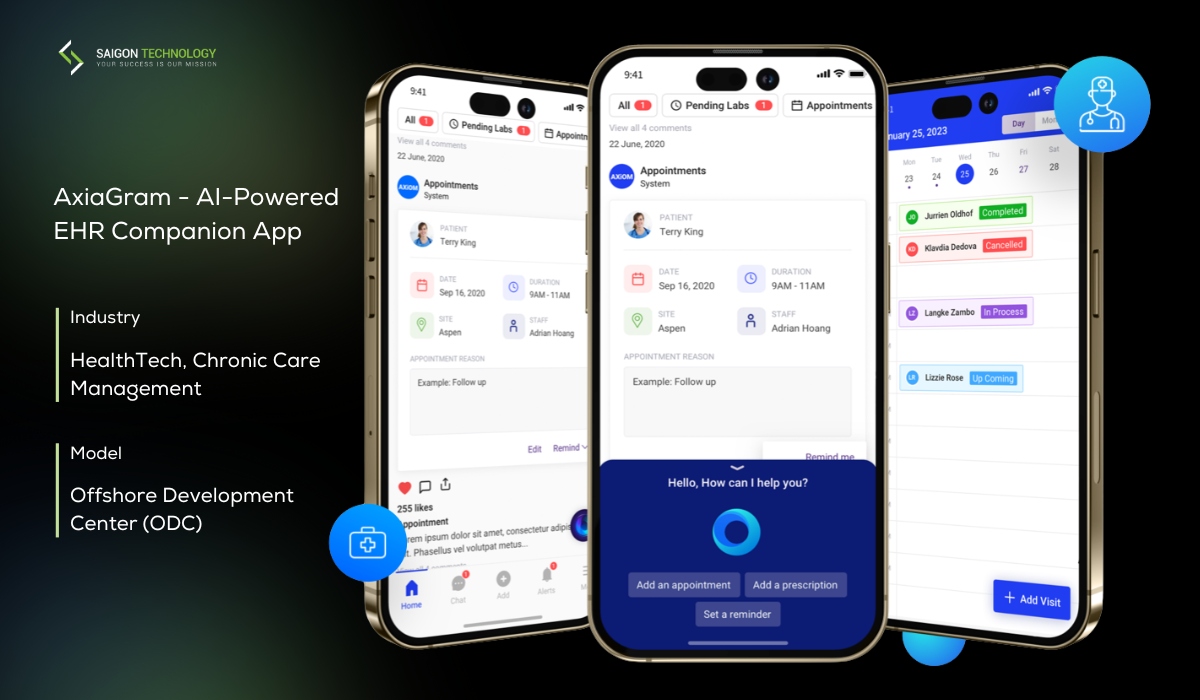
Healthcare engagements are documentation-first. The vendor must produce signed Business Associate Agreements, evidence of prior HIPAA work, and a documented PHI segregation model before any code is written. Common integrations are HL7 v2.x and FHIR for EHR connectivity, and DICOM where imaging is involved. WCAG 2.1 accessibility is usually in scope for patient-facing apps.
A representative engagement: a US telehealth client’s offshore team manages 6M+ medical records under HIPAA controls, with development cycles 40% faster than the in-house baseline that preceded the engagement. The same team supports 50,000+ patient interactions per month through the platform. The key enablers were a documented data-flow map, masked datasets in non-production environments, and a 3-hour overlap window for incident response. Read the full case study (PDF)

Fintech

Fintech offshore work splits into two patterns: regulated platforms (banking, lending, payments) and adjacent products (wealth management, insurtech, crypto). For regulated platforms, ask the vendor how they reduce PCI-DSS scope on your behalf – tokenization, vaulted card data, and isolated environments are the standard answers. KYC/AML data handling patterns and audit-trail retention should be explicit in the SOW.
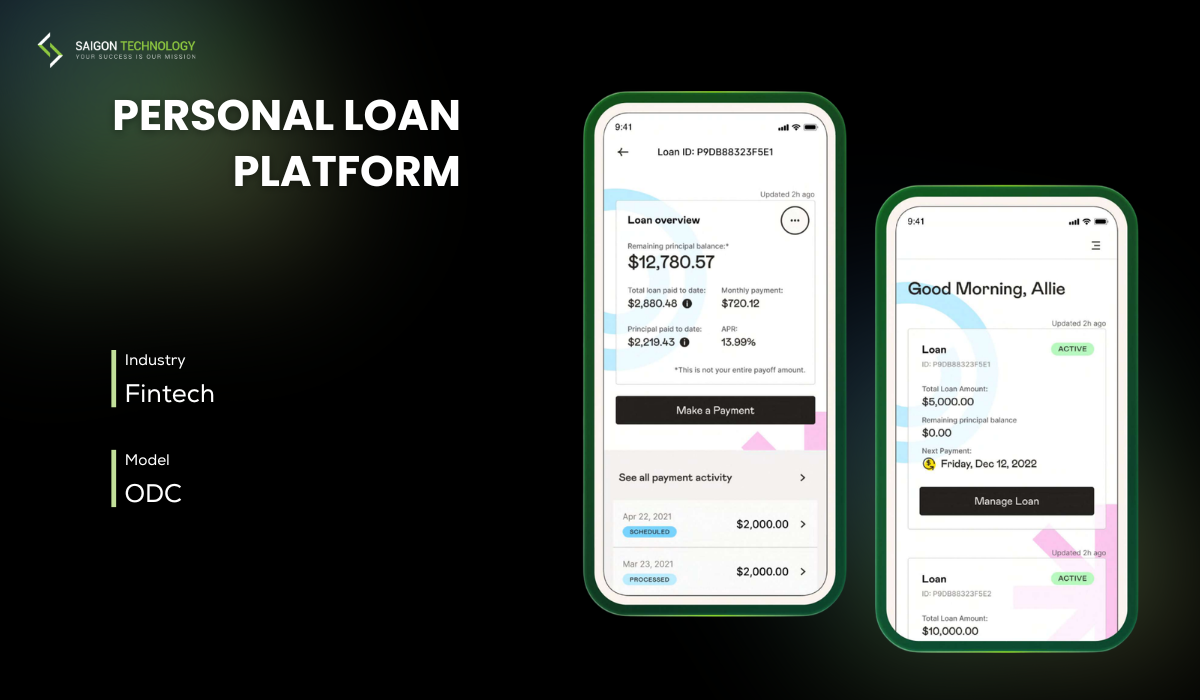
Two representative engagements illustrate the range: a US wealth management platform built and maintained by an offshore team for 2+ years, covering portfolio management, trading, and fund operations end-to-end; and a US personal loans platform that scaled to 20 senior engineers in 3 months and has run a full loan lifecycle for 3+ years. Both required SOX-aligned change control, separation of duties, and quarterly security audits. Read the full case study (PDF)

E-commerce and SaaS

E-commerce and SaaS engagements prioritize velocity over compliance documentation. The bottleneck is usually the feature backlog and the integration surface – payment gateways, fulfillment, recommendation engines, analytics, and marketing automation. Offshore teams that own QA automation alongside development typically ship faster than teams that split QA off as a separate phase.
Typical structure: a 5 – 8 person product squad (devs + QA + DevOps), running two-week sprints, with deployment frequency in the daily-to-multiple-times-per-day range. DORA metrics matter more in this vertical than in regulated work because change failure rate has an immediate revenue impact.

Real estate, logistics, and education

These industries share a profile: domain expertise matters more than regulatory paperwork, but data volumes can be large (property records, fleet telemetry, learner data), and integrations are long-tail. The right vendor profile is mid-size full-time remote teams (8 – 15 engineers) with at least one team member with prior vertical experience. The selection lever is portfolio depth in the specific vertical, not generic dev capability.
For PropTech, look for prior experience with MLS feeds and CRM integrations. For logistics, look for telematics, route optimization, and ELD integrations. For EdTech, look for SCORM/LTI compliance and accessibility standards.

By 2026, offshore software development is no longer a cost-arbitrage play – CTOs budget against it as a capacity, AI-leverage, and compliance lever. Six trends now reshape how every offshore software development services contract is scoped, sourced, and signed, each one rewriting your stack, your SOW, and your vendor shortlist.

1. AI-augmented offshore engineering is rewriting the ROI math

Claude Code, Cursor, and similar coding agents compress junior tickets and amplify senior leverage. The unit cost that an offshore software development company should defend in 2026 is the cost per shipped outcome, not the blended hourly rate. JetBrains’ April 2026 developer survey put specialized AI dev-tool adoption at 74% worldwide, with Claude Code use at work jumping from roughly 3% in mid-2025 to 18%. Re-score every offshore software engineering vendor on agent-tooling maturity, IP-safe model usage, and how the savings are priced back, not on how offshore software development is billed by seat.

2. Outcome-based and POD models replace pure staff augmentation

Buyers tired of paying for seats are pushing offshore software outsourcing vendors into POD or outcome SLAs tied to deployment frequency, defect rate, or feature acceptance. ISG and Everest both flagged the engagement-model shift in 2025 RFPs. Define the outcome metric before sourcing your offshore development team – otherwise the vendor’s definition of “done” wins by default.

3. Compliance pressure becomes a vendor-selection filter, not a checkbox

The EU AI Act, DORA, HIPAA, PCI-DSS, and data-residency regimes collapse the offshore software development shortlist to vendors who prove controls, not claim them. Audit letters, ISO 27001 reports, and DPIA support belong in shortlisting, not post-MSA. Offshore custom software development buyers should demand evidence artifacts before vendor demos in 2026.

4. Specialist talent hubs pull ahead of commoditized markets

CTOs now segment offshore destinations by skill density, AI/ML, fintech, healthtech, and platform engineering, not by headline rate. Vietnam, Poland, and parts of Latin America publish vertical case-study density that mass-market hubs no longer match. Pick the hub for the skill your 2026 roadmap needs, then negotiate the rate; reversing that order is how offshore application development engagements end up cheap but generic. Discover: Our Developers’ AI Capabilities

5. Supply-chain and IP scrutiny moves left

SBOMs, code provenance, and AI-generated-code attribution are now standard procurement asks, driven by security teams, not legal. CISA’s SBOM guidance and the EU Cyber Resilience Act push these clauses upstream. Add SBOM delivery, signed commits, and AI-code disclosure to every offshore software development SOW today. Retrofitting them mid-engagement burns sprint capacity and stalls offshore programming throughput for weeks.

6. Remote-first vendor ops replace the “delivery center” model

Distributed-by-default vendors out-execute campus-based ones on senior retention, time-zone overlap, and onboarding speed. Probe how an offshore development partner actually runs teams, async rituals, a written-first culture, a tooling stack, instead of touring a glossy delivery center. A modern offshore software development engagement in 2026 looks more like a remote-first product org than a captive offshore.

FAQs

1. What is offshore software development?

Offshore software development means contracting an engineering team in a distant country (typically 5 – 12 time zones away) to design, build, test, and maintain software. The two reasons companies do it are access to specialized talent and lower cost. It is distinct from nearshoring (adjacent region, small time-zone gap) and onshore outsourcing (same country).

2. How much does offshore software development cost in 2026?

Typical US-facing hourly rates for a mid-level engineer run $28 – $55 in Asia, $45 – $85 in Eastern Europe, and $40 – $85 in Latin America. The honest net savings versus a US in-house team, once benefits and overhead are included, is 40% to 60% on a stable engagement. Quotes significantly below those ranges usually exclude something material. Ask what.

3. What is the difference between offshoring and outsourcing?

Outsourcing describes the contracting relationship: work done by an external vendor. Offshoring describes the geography: the vendor or team is in a distant country. A project can be outsourced without being offshored, or both at once. Offshore software outsourcing means both at once.

4. Is offshore software development suitable for small and mid-sized businesses?

Yes, and often more so than for large enterprises. Small teams benefit disproportionately from adding specialized engineers without the overhead of full-time hires. The typical minimum viable engagement is an extended development team of 3 to 5 engineers, which smaller companies can support. Resource augmentation works well for teams that already have engineering leadership in-house.

5. How do I protect intellectual property when working with an offshore team?

Use a vendor with ISO 27001 certification, sign a clear IP assignment clause (work product vests on creation), require per-client repo and secrets isolation, and include an audit-right clause. For sensitive IP, consider source-code escrow. Vietnam, India, Poland, Romania, and the Philippines all have functional IP enforcement regimes for contract work. Most reputable offshore software development companies will accept these clauses without negotiation; resistance is itself a signal.

6. What is an offshore development centre (ODC)?

An ODC is a dedicated team with dedicated infrastructure set up by a vendor on behalf of a single client. It behaves like a branch office (same team, same office, same infrastructure), but the client does not own the legal entity. ODCs suit long-term programs of 20+ engineers where continuity matters more than flexibility.

7. What is the BOT (Build-Operate-Transfer) model?

BOT runs in three phases: the vendor builds the team (6 – 12 months), operates it on the client’s behalf (1 – 4 years), and then transfers the team and infrastructure to the client. For a detailed comparison of BOT structures and contract patterns, see our guide to the Build-Operate-Transfer model in software outsourcing.

8. How do you manage an offshore team across time zones?

Put a three-hour overlap window in the contract. Run a short daily standup during the overlap. Use written decisions (ADRs, RFCs) for async work. Align on a single project management tool, collaboration tool, and version control system. Run sprint planning, demo, and retro on fixed cadences.

9. What is the difference between staff augmentation and a dedicated offshore team?

Resource augmentation embeds individual engineers into your existing team, managed directly by you. A dedicated offshore development team is a self-organized unit with its own PM, tech lead, QA, and DevOps, reporting into your leadership but organized by the vendor. Augmentation is lighter-weight; an offshore development team scales better and carries delivery accountability.

10 Do offshore teams work for regulated industries?

Yes, with the right vendor. Offshore teams routinely deliver healthcare (HIPAA), fintech (PCI-DSS, KYC/AML), and GDPR-scope work. The selection filter narrows: require ISO 27001 or SOC 2 certification, prior engagements in the same regulatory regime, signed DPAs/BAAs, and a documented approach to data-protection regulations.

11. What is the difference between offshore software development services and offshore software outsourcing?

The two terms overlap but are not interchangeable. Offshore software development services describe what the vendor sells – engineering capacity for design, build, test, and maintenance. Offshore software outsourcing describes the contractual structure – the buyer engages an external vendor rather than hiring internally. Most engagements are both at once: you are buying offshore software development services through an outsourcing contract.

12. How does offshore software maintenance differ from offshore software development?

Offshore software development covers building new functionality – new features, integrations, and products. Offshore software maintenance covers keeping existing systems running – bug fixes, security patches, dependency updates, performance tuning, and incident response. Most long-term engagements include both. The ratio varies by product maturity: a new product is 80 – 90% development and 10 – 20% maintenance in year one, shifting toward 40 – 50% maintenance by year three.

13. What does offshore application development cost in 2026?

Offshore application development pricing follows the same regional pattern as broader offshore software development. For a mobile or web application built by a 5 – 7 person offshore team over 6 – 9 months, expect $120K – $280K in Vietnam, India, or the Philippines, $180K – $340K in Latin America, and $240K – $420K in Eastern Europe. Specialty applications (AI-driven, AR/VR, complex backend) add a 20 – 40% premium across every region.

Closing thoughts

Offshore software development in 2026 is less about cost arbitrage and more about engineering capacity that the domestic market cannot supply. The companies that get the best outcomes treat it as a core operating capability. They invest in vendor selection, enforce the operating rhythm, and measure quality the same way they measure their in-house team.
If you take one thing from this guide, make it this: the vendor matters more than the country. A disciplined offshore software development company in India, Vietnam, Poland, or Mexico will outperform a sloppy one anywhere. Apply the checklist, insist on the 2-week pilot, protect the overlap window, and the engagement will work.
Saigon Technology’s Clutch 4.9 rating across 14 years of delivery reflects what consistently produces good outcomes: disciplined vendor selection, protected overlap windows, and named-engineer staffing. If you want to discuss your specific engagement, see our offshore software development services.
Further reading: for a deeper country comparison, including talent pool sizes, common tech stacks, and cultural notes, see top outsourcing countries. For Vietnam-specific information (talent pool, common engagement patterns, compliance posture), see the Saigon Technology homepage or get in touch with our team.

About the author

Thanh (Bruce) Pham is CEO and Founder of Saigon Technology, an ISO 9001 and ISO 27001-certified software development company with 400+ engineers across three development centres in Vietnam. Since 2012, Saigon Technology has delivered 800+ projects and 85+ dedicated offshore teams for clients in the US, EU, AU, and Singapore, with a Clutch rating of 4.9. Reviewed by the Saigon Technology engineering leadership team.

Related articles

Build Operate Transfer (BOT) IT Outsourcing: Complete Guide for Global Tech Companies
Methodology

Build Operate Transfer (BOT) IT Outsourcing: Complete Guide for Global Tech Companies

The BOT model is a contract. A provider handles an IT or business process for an organization, with plans to hand it over to them in the future.
12 Key IT Outsourcing Trends 2026 for Business Growth
Methodology

12 Key IT Outsourcing Trends 2026 for Business Growth

Outsourcing IT accelerates business expansion by optimizing processes. Discover the 2025 IT outsourcing trends and how to use them to succeed.
Choosing the Right Outsourcing Partner: Strategic Guide
Enterprise

Choosing the Right Outsourcing Partner: Strategic Guide

Not all outsourcing partners are equal. Read this guide on evaluating technical expertise. Learn about cultural fit. This is how to pick the right partner.
Top 10 Software Outsourcing Challenges and How to Navigate
Software Outsourcing Development

Top 10 Software Outsourcing Challenges and How to Navigate

Outsourcing challenges include communication barriers, data risks, legal compliance, and many more. Check this complete guide to learn the details!
IT Outsourcing Vendor Selection Criteria You Need
Software Outsourcing Development

IT Outsourcing Vendor Selection Criteria You Need

What IT outsourcing vendor selection criteria should you consider? Technical expertise, cost, and communication are essential. Read on to explore more!
IT Support Outsourcing: The Ultimate Guide for Businesses
Methodology

IT Support Outsourcing: The Ultimate Guide for Businesses

IT support outsourcing gives you 24x7 support from top talent. Discover how tailored third-party IT services can boost efficiency and speed!
10 Types of Outsourcing: Which One Is Right for You?
Industry

10 Types of Outsourcing: Which One Is Right for You?

There are several types of outsourcing by function and location. Each option has its pros and cons. Check this article to explore more!
The Decision-Maker’s Guide to Outsourcing AI and Machine Learning Projects
Artificial Intelligence

The Decision-Maker’s Guide to Outsourcing AI and Machine Learning Projects

Learn when to outsource AI development, how to evaluate vendors, how to structure contracts, and how to avoid common pitfalls. A practical guide for decision-makers shipping ML features.
How to Run a 2-Week Paid Developer Trial (and What to Watch For)
Offshoring

How to Run a 2-Week Paid Developer Trial (and What to Watch For)

A step-by-step playbook for running a 2-week paid trial with an offshore vendor - scoping, success criteria, common pitfalls, and how to read the results.

Want to stay updated on industry trends for your project?

We're here to support you. Reach out to us now.

    Contact Message Box
    Back2Top

    Schedule a Demo with Our Industry Experts

    Book a free 30-minute call

    • See case studies aligned with your requirements
    • Validate our industry experience
    • Confirm technical fit for your project
    Schedule a Demo