- OVERVIEW
- SERVICES
- WHY CHOOSE US?
- MODELS
- TECHNOLOGIES
- OUR PROCESS
- FAQS
Our Target Clients
1. Hospitals & Healthcare Providers
Hospitals and clinics choose our HIPAA-aligned, custom healthcare software development to streamline operations and unify patient data. We build and integrate EHR/EMR systems, telehealth, and hospital management platforms, designed for secure workflows, clear audit trails, and reliable releases that reduce clinical and delivery risk.2. Digital Health Startups
Startups work with us to ship compliant, investor-ready products faster. We deliver MVPs through full builds with healthcare software development solutions that prioritize security, scalability, and predictable delivery. Expect transparent estimates, frequent demos, and regulatory-aware engineering that reduces technical debt as you scale.3. Payers & Insurance Companies
Payers partner with us to modernize claims, fraud detection, and member experiences. Our teams deliver healthcare automation that integrates with your core systems to cut cycle times and manual work, improving operational efficiency and consistent web/mobile journeys while maintaining strong security and governance.Our High-Value Healthcare Software Development Solutions
Teleconsultation & Virtual Clinics
Health Screening & Lab Integration
Electronic Health Record (EHR) Integration
Remote Patient Monitoring
Elderly Care Platforms
Mobile Health Super Apps
Case studies
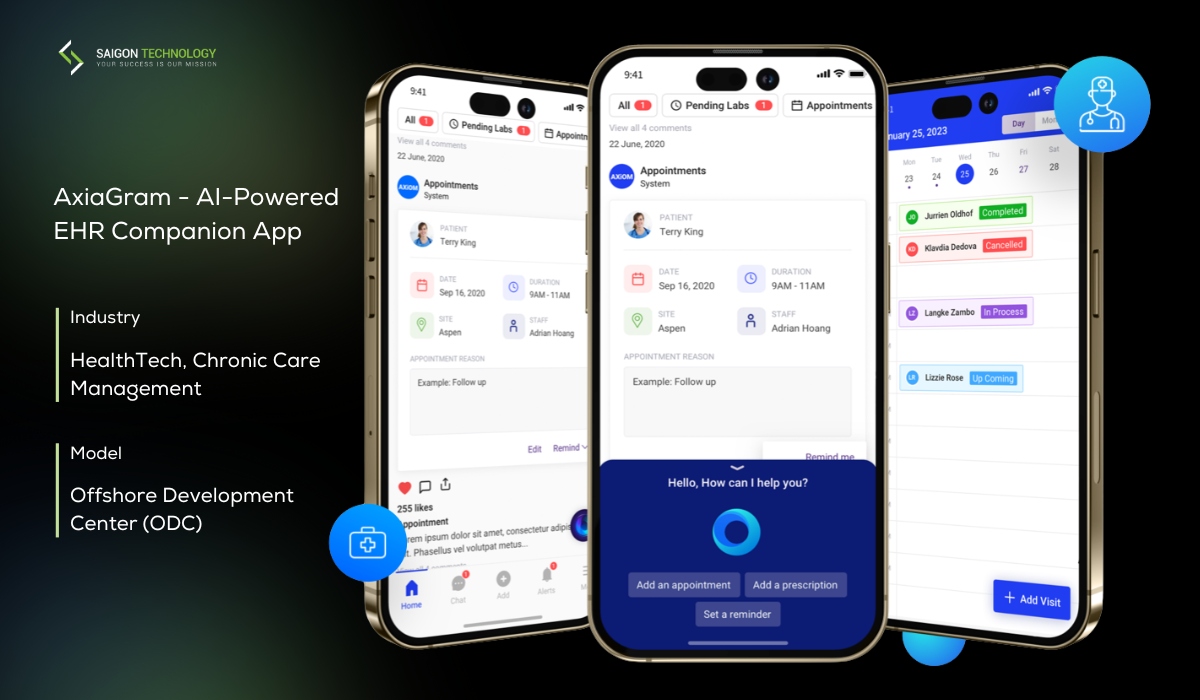
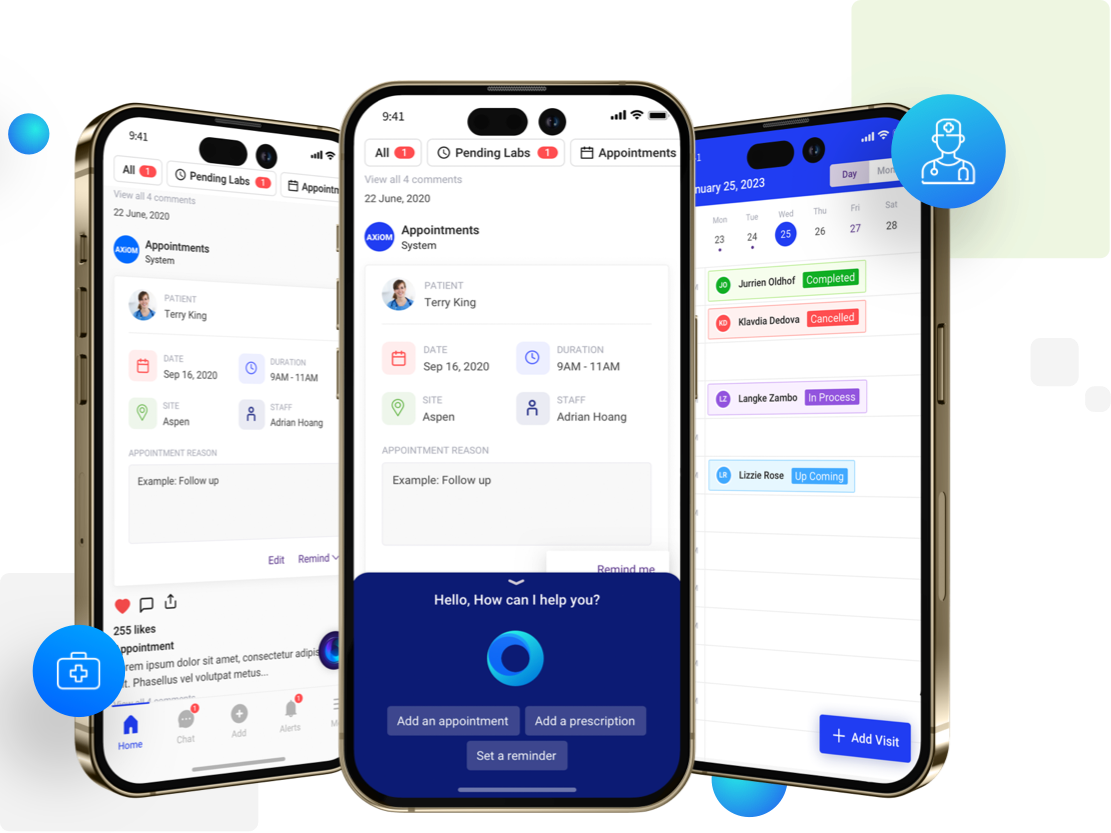
AxiaGram - AI-Powered EHR Companion App
- Client Type: Clinics and hospitals
- Project Summary: AxiaGram is a HIPAA-compliant telemedicine platform that simplifies remote consultations for US physicians and care teams. The integrated EHR companion experience reduces documentation friction, improves coordination, and supports better patient outcomes, delivered through full-cycle healthcare software development.
- Challenges: The platform needed to securely manage 6M+ medical records while maintaining performance, auditability, and role-based access. The client also required stable real-time video streaming and casting without compromising privacy or creating user friction for clinicians and patients.
- Solutions: Saigon Technology implemented secure login and session controls to protect patient–provider connections. We added AI-assisted, voice-controlled note-taking to speed documentation and improve consistency. For care verification and traceability, we built EVV with geo-tagging and digital signatures—supporting more reliable tracking across visits and teams.
- Compliance: The healthcare management software aligned with HIPAA expectations and US privacy requirements. Sensitive data was protected with AES encryption in MySQL and controlled access to ensure only authorized users could view PHI.
- Impact: Development time was reduced by ~40% while meeting security and quality requirements. The engagement grew into an ongoing partnership with $70K/month invoicing, and the platform improved care delivery through clearer communication and more efficient documentation workflows.
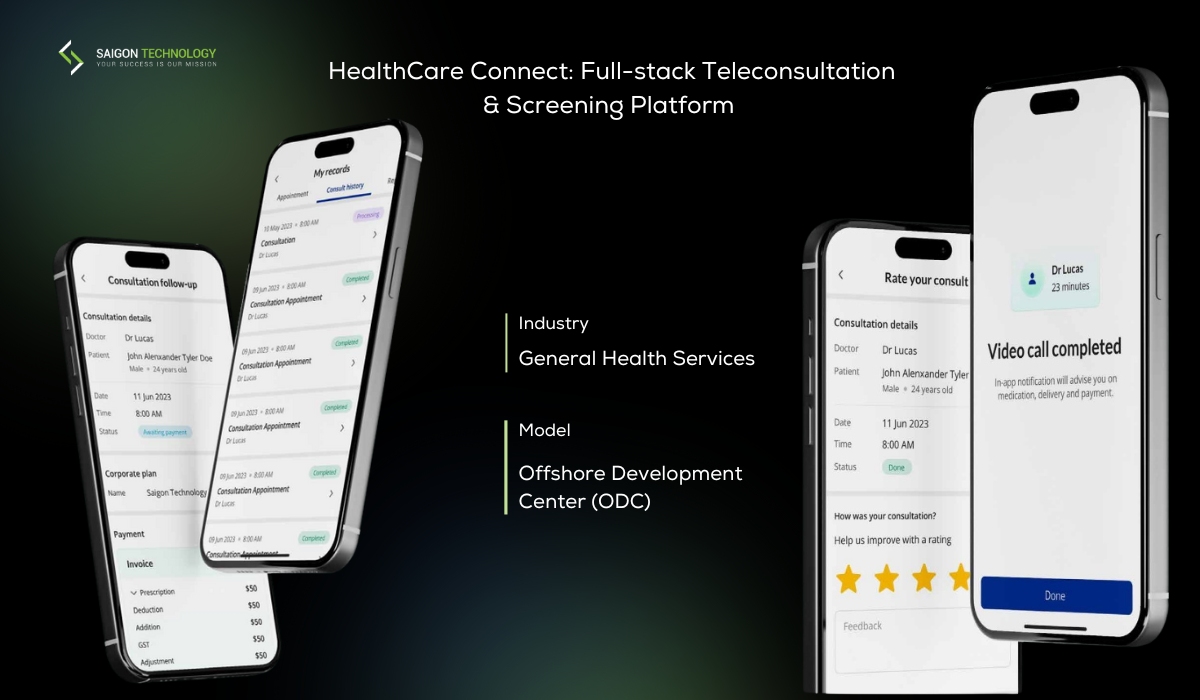
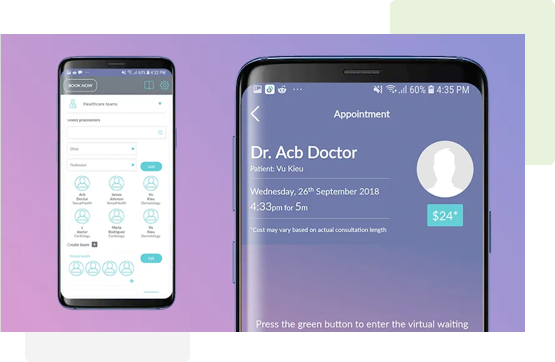
HealthCare Connect: Full-stack Teleconsultation & Screening Platform
- Client Type: Clinics
- Project Summary: This healthcare management software enables patients to book screenings, complete intake steps, attend teleconsultations, review lab reports, and manage follow-ups. It connects patients, clinicians, labs, and delivery services in one workflow to improve continuity of care and operational efficiency.
- Challenges: The client required real-time data exchange with lab systems, complex HL7 integration, and dependable multi-channel alerting to flag abnormal results immediately. Delivery also needed predictable releases and minimal disruption to clinic operations.
- Solutions: We built screening booking with surveys and digital consent to streamline intake. QR code check-in and payment reconciliation reduced front-desk workload and improved throughput. Teleconsultation supported real-time video and chat. HL7 integration automated lab connectivity and simplified reporting, including PDF output. We delivered continuous releases under an Agile model with clear milestones, frequent demos, and transparent communication to reduce delivery risk.
- Compliance: Patient privacy followed HIPAA and PDPA requirements. Consultations and health records were secured with end-to-end encryption. Stripe integration improved payment security and reduced exposure to sensitive payment data.
- Impact: The platform supported 50,000+ patient interactions per month. Automated reminders reduced missed follow-ups and improved engagement. Clinics reduced administrative overhead and delivered more consistent patient experiences across screening and virtual care.
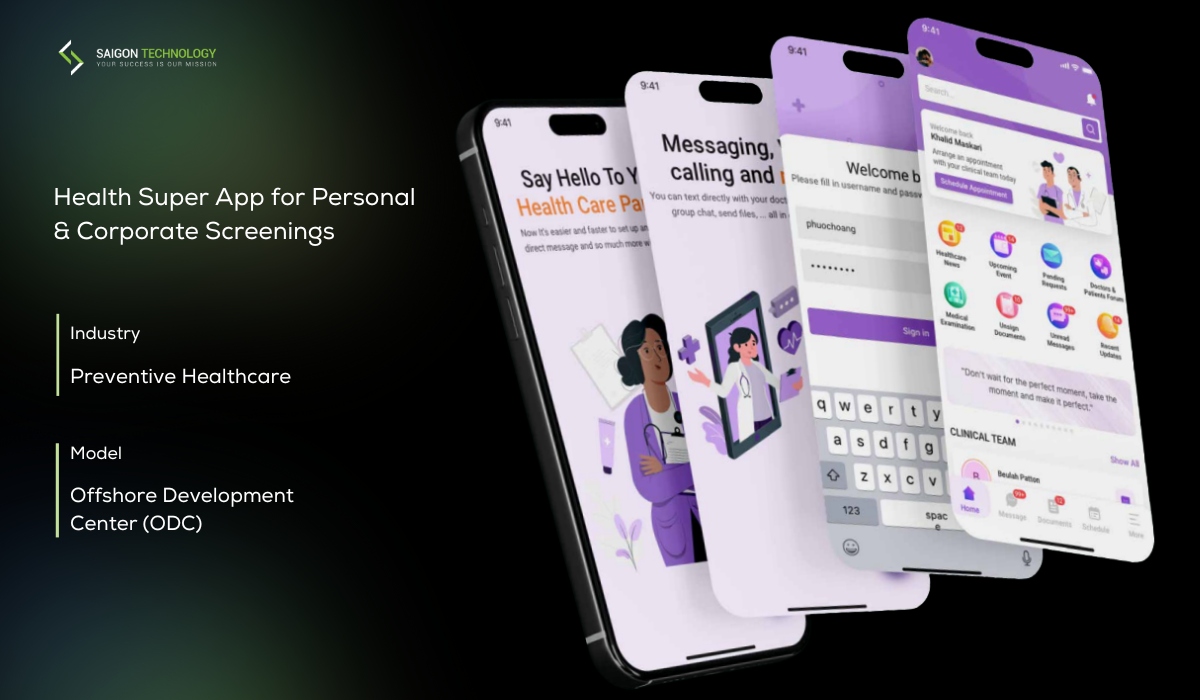
Health Super App for Personal & Corporate Screenings
- Client Type: Clinics and businesses
- Project Summary: Health Super App is an all-in-one mobile platform that helps users book screenings, manage results, and track follow-ups—supporting home-based, executive, and in-clinic programs. Built as custom healthcare software development, it serves both B2C and corporate screening workflows.
- Challenges: The product required separate corporate and personal journeys, plus robust appointment management (edit/cancel/reschedule). Pricing and refund processes had to remain accurate when screenings changed, while keeping the experience simple for users and manageable for clinics.
- Solutions: For corporate programs, employees booked screenings using a company code and eligibility rules. For personal users, the app supported multiple screening options with add-on tests. QR-code check-in and quick lifestyle surveys improved on-site efficiency. The booking flow handled complex states such as pending radiology tests, procedures, and vaccinations, with clear status tracking to reduce confusion and support tickets.
- Compliance: The healthcare software solutions aligned with PDPA. Health records were protected using AES-256 encryption, and Stripe integration enabled secure payments and reconciliation.
- Impact: The app supports thousands of users each month, speeding check-in for patients and providers. Consolidated records improved care coordination, and clinics reduced manual work through clearer workflows and more reliable scheduling, billing, and follow-up management.
Other Client Stories
Get the 2026 AI Integration Pitch Deck for Healthcare
Why Choose Saigon Technology for Your Next Healthcare Software Development Project?
14+ Years of Experience in Healthcare IT
Saigon Technology brings 14+ years in healthcare IT and custom healthcare software development, helping teams ship secure, interoperable products with fewer delivery surprises. We support regulated programs across the US, EU, Australia, and Singapore, with an Agile approach that manages risk through short iterations, frequent demos, and clear documentation.
You get predictable progress, faster feedback loops, and the flexibility to adapt scope as clinical workflows or business priorities change.
HIPAA & HITECH-Compliant Healthcare Standards
We build healthcare software development projects with compliance expectations built in, privacy, audit readiness, and security controls from day one. Our teams align solutions with HIPAA and HITECH, and support GDPR (EU) and PDPA (Singapore) requirements where applicable.
We also plan for interoperability and reporting expectations shaped by the 21st Century Cures Act and common CMS/ONC patterns. Every system is designed with encryption, least-privilege access, and traceability to reduce compliance risk without sacrificing usability.
HL7 & FHIR-Driven System Integration Solutions
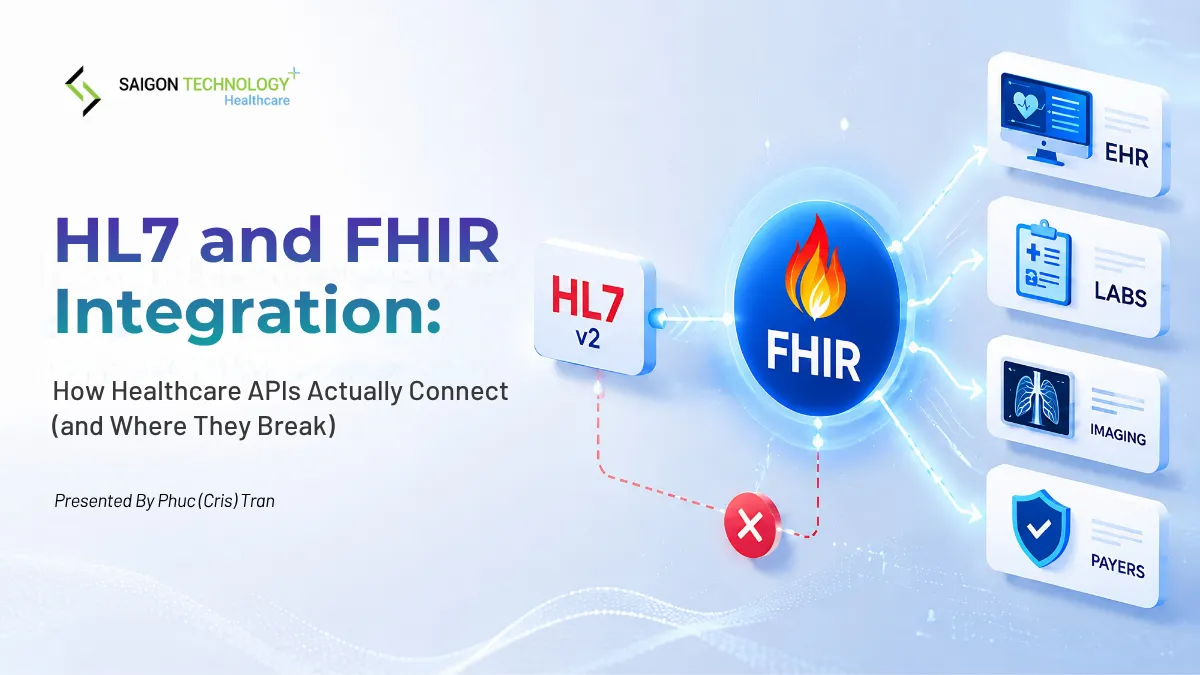
Interoperability is often the hardest part of healthcare delivery, so we treat it as a core deliverable. We use HL7 v2.x and FHIR for integrations across clinical systems and partner services, and can support national ecosystems such as Singapore’s NHIC/SHINe+ and US CMS/ONC-aligned environments. Our expertise includes DICOM for imaging workflows and LOINC/CPT mapping for lab data consistency. We also deploy secure API gateways with throttling and rate limiting (Kong, Apigee) to protect performance and data integrity across complex networks.
Top-Tier Security with AES-256 Encryption
Security is engineered into architecture and operations. We apply strong encryption such as AES-256 where appropriate, along with Zero Trust principles to reduce unauthorized access and lateral movement risk. Secrets and keys are protected through proven tooling like HashiCorp Vault and AWS KMS. The result is medical software with practical, auditable controls that protect PHI while supporting performance and uptime.
Secure Access with OAuth 2.1 and SSO
We implement OAuth 2.1, SSO, and MFA to secure access while keeping logins manageable for clinicians and patients. Role-based access rules reflect real healthcare workflows; doctors, nurses, admins, and staff only see what they need. This reduces accidental exposure and supports HIPAA/HITECH-aligned governance. We document the access model clearly so your security and compliance teams can review and maintain it over time.
Transparent Accountability
Regulated healthcare teams need visibility into data activity. Our custom healthcare software development services can include audit trails, role-based access controls, and event logging so MOH-licensed clinics and insurers can track key actions across users and systems. This accountability supports operational oversight, incident response, and compliance reporting, helping you demonstrate control without slowing day-to-day work.
IoT, RPM & Connected Health Solutions
We build IoT-enabled Remote Patient Monitoring (RPM) and connected health platforms that integrate device data into clinical workflows. Our systems work with FDA-approved and IMDA-registered BLE devices and can connect with devices such as Omron, Withings, Apple Watch, and Fitbit. We also support integrations with Apple HealthKit, Google Fit, and Samsung Health to consolidate patient data for care teams. Where relevant, we align with emerging interoperability approaches such as FHIR-over-BLE to support scalable remote monitoring for home care, telehealth, and nursing facilities.
AI & Predictive Health
We deliver AI-powered features that reduce workload and support better decisions, without compromising governance. Voice AI capabilities (e.g., Whisper, Google Healthcare Speech) can assist clinical note-taking, while TensorFlow/PyTorch models support predictive use cases such as chronic disease risk. We also build NLP chatbots using platforms like Rasa, Azure Bot, or Dialogflow for triage and support workflows. For safer testing, we can use synthetic data approaches where appropriate to validate models while protecting PHI and supporting regulatory compliance.
Billing, Payments, and Notifications
Reliable payments and communications are essential to patient experience and operational efficiency. We support secure billing and payments via Stripe for US and global programs, and can integrate local methods such as PayNow, NETS, or MoMo where applicable. We enable real-time alerts and care updates through Twilio, WhatsApp, and Gov.sg APIs to keep patients informed about appointments and billing. For telehealth communication, we implement video and chat using WebRTC or platforms like Agora and Vonage to maintain clarity and reliability across devices.
Vietnam's Top 10% Talent, U.S.-Grade Quality, Better Cost Control
Partnering with Saigon Technology gives you access to Vietnam-based engineering talent with delivery practices aligned to US-grade expectations. We operate three development centers to support scalable teams, consistent processes, and reliable quality. You gain cost control without compromising security or compliance, supported by predictable sprint execution, transparent reporting, and structured communication that procurement and engineering leaders can trust.
ISO 27001 & ISO 9001 Certified Security and Quality
We support secure and consistent delivery through ISO 27001 and ISO 9001 certifications from BSI (UK). We protect client IP and sensitive data using NDAs, controlled access, and secure engineering practices across the SDLC. These governance measures help reduce vendor risk and ensure your custom healthcare software development project protects patient data, proprietary algorithms, and business-critical workflows.
Trusted by Global Companies
Client Feedback and Testimonials
Why Choose Custom Healthcare Software Over Platform-Based Tools?
Better Fit for Clinical Workflows
Custom healthcare software development matches how your clinicians, billing, and ops teams actually work, so they don’t fight a rigid platform. Fewer workarounds means faster adoption, less staff frustration, and cleaner handoffs across care and revenue cycle workflows.

Stronger Control Over Data, Security & Compliance
With a healthcare software development company building custom solutions, you control PHI end-to-end: data model, access rules, audit trails, and retention. We design for HIPAA and HITECH alignment, with role-based access, encryption, and security-by-design, so compliance and governance aren’t “add-ons.”
Deeper Integration Across Your Ecosystem
Custom healthcare software solutions integrate with your EHR/EMR, RIS/PACS, labs, billing, and patient engagement tools using purpose-built APIs and connectors. You reduce duplicate entry and data silos, improving data accuracy and clinician workflow speed.
Differentiated Patient & Provider Experience
Platforms limit differentiation. Custom patient portals, patient care management software, and provider dashboards can match your brand, specialty, and patient needs, creating a better digital front door and stronger engagement than generic templates.
Future-Ready Scalability & ROI
Upfront healthcare software development costs can be higher than subscription tools, but you avoid paying for unused features and costly workarounds. Custom systems scale with new locations, services, and regulations, improving total cost of ownership over time and protecting your roadmap.
End-to-End Healthcare Software Development Services
Custom Software Development
System Integration & Interoperability
Healthcare Data Platforms & Analytics
mHealth and Connected Device Software
Regulatory, Security, and Quality Engineering
Modernization, Cloud Migration & Ongoing Support
Next-Generation Technologies for Healthcare Software Development
AI & Computer Vision
AI is reshaping healthcare software development, when it’s applied responsibly. We build AI and computer vision features for medical imaging support, clinical risk flagging, and workflow automation to reduce manual review time. Models are validated with your clinical and compliance teams, with clear audit trails and human-in-the-loop safeguards, so decisions stay explainable, safe, and practical across sites.
Internet of Medical Things (IoMT)
We connect devices, wearables, and sensors into secure IoMT ecosystems that enable real-time remote patient monitoring and smarter asset tracking. Our teams focus on reliable data ingestion, device management, and PHI protection, so you get continuous signals clinicians can trust, not noisy streams. The outcome: better follow-up care, fewer avoidable readmissions, and improved operational visibility.
Cloud-Native & HIPAA-Aligned Architectures
As a healthcare software development company, we design cloud-native systems that scale with demand while meeting HIPAA-aligned security requirements. Expect resilient architecture, performance monitoring, and cost-efficient infrastructure, plus a clear path to add AI, analytics, and virtual care. We also plan migrations to reduce downtime and keep stakeholders informed at every stage.
Blockchain for Secure Health Data Exchange
When traceability is essential, blockchain can strengthen data integrity for consent tracking, EHR exchange, claims workflows, and research collaboration. We evaluate fit first, then implement only where it reduces risk, prioritizing privacy, access control, and regulatory compliance over hype.
Our Healthcare Software Development Process
Project Kick-Off
We start by aligning on what success looks like, business goals, clinical outcomes, timelines, and measurable KPIs. We confirm decision-makers, communication cadence, and delivery governance, so IT, clinical leaders, and product stakeholders stay aligned. You get a clear plan for scope, risks, and how changes will be handled before engineering begins.
Business & Requirements Analysis
Our team maps workflows, data flows, and integration touchpoints (EHR/EMR, RIS/PACS, labs, billing, devices). We document functional and non-functional requirements, security, performance, availability, and auditability aligned with HIPAA, HITECH, and your internal policies. Outputs include user stories, acceptance criteria, and a high-level architecture that guides delivery.
Terms of a Contract Discussion
As a healthcare software development company, we make commercial terms explicit to reduce surprises. We define the engagement model, team structure, SLAs, pricing, IP ownership, and compliance responsibilities. We also agree on milestones, change control, and acceptance criteria, so procurement and engineering have the same source of truth.
PoC / MVP Launch (Upon Request)
For new ideas or high-risk workflows, we offer a PoC or MVP to validate feasibility early. This phase tests usability and clinical fit with a limited user group, confirms integrations, and de-risks performance and security assumptions. You get evidence to support go/no-go decisions and a roadmap for scaling.
Software Development
We deliver healthcare software development services in short Agile sprints with regular demos and transparent progress reporting. Engineers follow secure coding practices, peer review, and healthcare-ready standards. We prioritize interoperability and maintainability, so your custom healthcare software solutions remain stable as regulations and workflows evolve.
Testing and Quality Control
QA is built into every sprint. We run functional, integration, performance, security, and usability testing, plus data accuracy checks and PHI protection validation. We test under real-world clinical loads and edge cases to prevent failures that impact care delivery.
Software Deployment
Our DevOps team deploys with minimal disruption using staged rollouts, monitoring, and rollback plans. We coordinate data migration, user setup, and integrations, so your system works seamlessly with EHR/EMR, billing, and connected devices from day one.
Launch and Maintenance
Post-launch, we monitor stability, adoption, and key metrics. We fix issues fast, release improvements predictably, and keep security patches current. Ongoing support helps your healthcare software stay compliant, reliable, and aligned with evolving clinical and business needs.
Our Insights
FAQs
What is healthcare software development, and why is it essential for medical institutions?
Healthcare software development is the design, build, and ongoing support of digital products that improve patient care and operations across clinical workflows, billing, scheduling, reporting, and care coordination.
For hospitals, clinics, and digital health teams, custom healthcare software development is essential because it reduces administrative load, improves data accuracy, enables telehealth and remote monitoring, and supports compliance obligations. Done well, it helps teams deliver care faster, with fewer manual steps and less operational risk.
What types of custom healthcare software development solutions are available?
Common healthcare software development services include:
- Patient and provider portals
- EHR/EMR extensions and workflow modules
- Telehealth and virtual care platforms
- Remote patient monitoring systems
- Scheduling, billing, and claims tools
- Population health, dashboards, and healthcare data analytics platforms
- Automation for front-office and back-office operations
What kinds of features can be integrated into custom healthcare software?
Depending on your goals, custom healthcare software solutions can include:
- Secure onboarding, consent, and identity verification
- Scheduling, intake forms, and reminders
- Video visits, messaging, and care plans
- Clinical documentation and task management
- E-prescribing (where applicable)
- Billing, claims support, reporting, and audit trails
- Role-based access control and detailed logging
- AI/ML decision support, imaging analysis, and analytics
- HL7/FHIR interoperability and IoMT device connectivity
What is the average cost of custom healthcare app development?
Costs vary based on scope, integrations, security requirements, and data complexity. Many teams budget roughly $80,000–$150,000 for an MVP and up to $300,000+ for an enterprise-grade platform. A healthcare software development company should provide a transparent estimate tied to requirements, milestones, and assumptions, so you can evaluate total cost of ownership before committing.


How long does it take to develop and implement healthcare software?
An MVP typically takes 3–6 months. Platforms with multiple integrations and complex workflows often take 9–12 months. Timelines depend on regulatory needs, data migration, vendor dependencies, and stakeholder availability. We deliver in Agile releases with frequent demos so you can validate progress early and reduce delivery risk.
How do you ensure the security and compliance of the medical software you develop?
We build privacy and security into every phase: encryption in transit/at rest, role-based access, audit logging, secure coding, and automated testing. We align with HIPAA and HITECH, and support security reviews, documentation, and penetration testing to help you pass audits and internal governance.
Can your healthcare software solutions integrate with existing systems or third-party applications?
Yes. We integrate with EHR/EMR, LIS/labs, RIS/PACS, billing platforms, and third-party APIs using HL7, FHIR, and RESTful services. The goal is to reduce data silos and give clinicians a more complete, reliable view of patient information.