-
OVERVIEW
-
SERVICES
-
MODELS
-
WHY CHOOSE US ?
-
OUR PROCESS
-
TECHNOLOGIES
-
FAQS
Offshore Software Development Services at Saigon Technology
AI-native delivery at USD $22-$46/hr: Solution Architects and senior engineers review every pull request, so AI speeds the build while rework stays off your bill. Proven on 85+ offshore delivery projects since 2012.
Fluent English in your working day: English is tested at hiring. GMT+7 overlaps US working days by 10 to 12 hours and sits 3 to 4 hours behind Sydney, 1 hour behind Singapore.
Security and code ownership you can verify: ISO 9001 and ISO 27001 certified by BSI (UK), NDAs before requirements are shared, code and IP assigned to you on delivery, HIPAA and PCI-DSS where the workload needs them.
Full visibility into the work: a named Project Manager reports to you, and you get access to Jira, the repository and your developers.
A team that scales with your roadmap: Saigon Technology stands up an offshore team in about 5 days, scales it as your scope changes, and replaces anyone who leaves at no extra cost.
Who we build for
- Funded startups: ship the roadmap with offshore engineers while you recruit, from a scoped MVP build onward.
- Software companies, SaaS vendors & agencies: take on more client work without new payroll through a dedicated development team, white-label where you need it.
- Enterprise teams: move legacy and regulated systems into production through your own ODC without stopping what runs today.
- Mid-market companies: close a skills gap with an offshore specialist through IT staff augmentation instead of local hires.
Our Offshore Software Development Services
Custom Software Development
Web Application Development
AI Development and Generative AI Integration
Mobile App Development
SaaS Application Development
MVP and Proof-of-Concept Development
Legacy Application Modernization
Software QA and Testing
Software Integration and Enterprise Integration Services
DevOps, Cloud Computing and Cloud Migration
Software Maintenance and Support
Case Studies: Four Offshore and ODC Engagements
Loan City: a fixed-price build that became an ODC
- Challenge: a Singapore startup arrived with AI-generated requirements and no roadmap.Â
- What we built: two weeks of discovery to set the MVP scope, then Singpass identity verification, three role-based portals and a rule-based loan matching engine.Â
- Engagement / timeline: fixed-price for the three-month build with a nine-member senior team, then an ODC after go-live.Â
- Outcome: 50+ lenders and 2,000+ borrowers onboarded within three months of launch, matches in under three seconds, 90% match accuracy in UAT, 60% faster loan approval and a 40% reduction in manual processing time.Â
- Read the full case study →
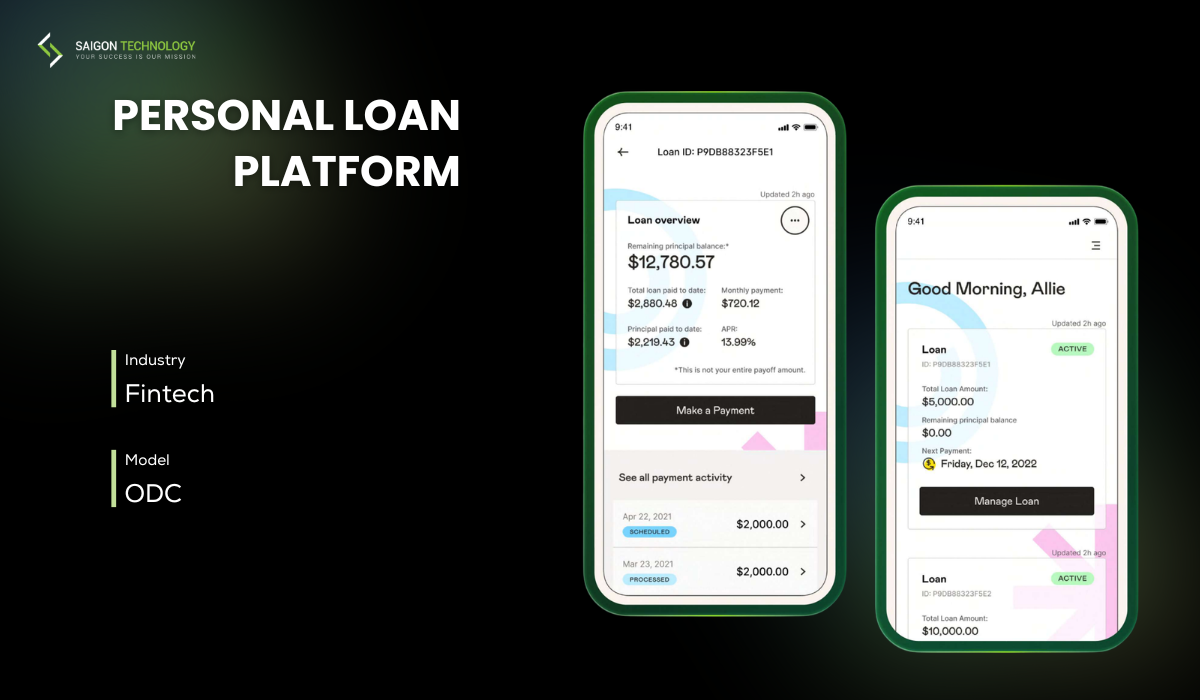
Personal Loans Application: a three-year fintech ODC
- Challenge: automate a full US lending lifecycle, from onboarding and verification to underwriting, repayment, fraud detection and collections.Â
- What we built: verification through Plaid, GIACT and TALX, risk scoring through Oscilar and Equifax, and loan servicing on LoanPro, with a fallback source when a provider is down.Â
- Engagement / timeline: Offshore Development Center, running 3+ years for the US market.Â
- Outcome: 20 senior engineers onboarded in 3 months.Â
- Stack: Java 18 with Spring Boot, React and Next.js, Python with Airflow, AWS, Terraform and Kafka.Â
- Detail | Read the full case study (PDF) →
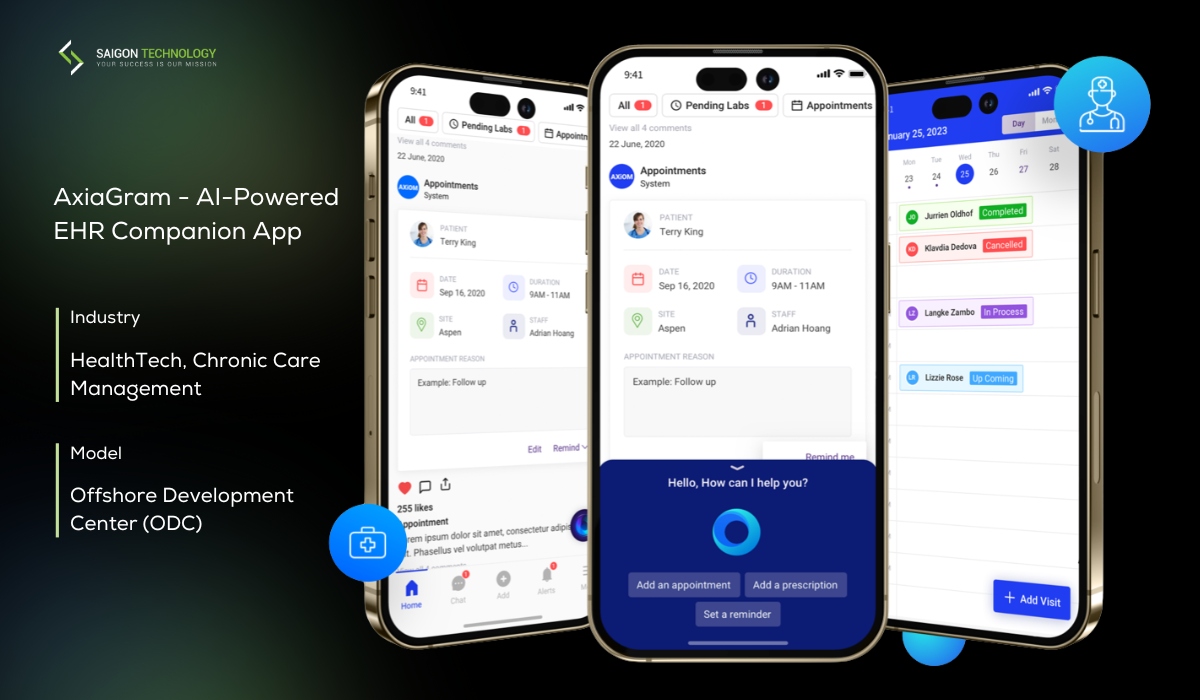
AxiaGram: a telemedicine platform for US clinics, ODC since 2021
- Challenge: scale a chronic care platform for US clinics and hospitals while keeping development costs predictable.Â
- What we built: AI voice-controlled clinical notes, secure video consultations, Electronic Visit Verification with geo-tagging, and HL7 integration with hospital Electronic Health Record systems.Â
- Engagement / timeline: Offshore Development Center since 2021, published as the HealthTech case study.Â
- Outcome: development time cut by 40%, with 6M+ medical records handled.Â
- Stack: .NET Core, Angular, Azure, HL7, Voice AI, Agora and Wowza, AES-encrypted data at rest.Â
- Detail | Read the full case study (PDF) →
Idealpos Cloud: an Australian point-of-sale platform moved to the cloud
- Challenge: Idealpos, a Brisbane point-of-sale company with 10,000+ customers in 7 countries, needed terminal and customer data moved from local systems to Azure.Â
- What we built: cloud sync for every POS terminal, cloud licensing, invoicing and reporting, plus payment gateway and eCommerce integrations such as Shopify and Uber Eats.Â
- Engagement / timeline: an offshore team of two web developers, two mobile developers and a project manager, grown to eight after year one.Â
- Stack: .NET, Angular and Azure DevOps across development, staging and production.Â
- Read the full case study →
Get a Shortlist of Offshore Engineers in 1-2 Working Days
Why Choose Saigon Technology as Your Offshore Software Development Company
A good offshore software development company publishes its rates, names the standards it works under, and keeps the same engineers on your product for years. At Saigon Technology, each offshore team works under a named Project Manager, with a Solution Architect involved from the first conversation.Â
Senior engineers with applied AI, at a published $22 to $46 per hour
Saigon Technology publishes one senior-led band of $22 to $46 per hour for offshore work, so you can price a full release, testing included, before the project starts. At premium onshore rates, hardening and versioning are the first items a budget review cuts.Â
"A junior-heavy team looks cheaper per hour and costs more per release, because you pay twice: once to build it and again to fix it. We staff seniors and let AI absorb the repetitive work instead." - Thanh Pham, Chief Executive Officer, Saigon Technology
Team continuity that protects what you shipped
Churn on an offshore team breaks what you shipped: when the people who designed your schema leave, the next change costs more. Saigon Technology ranks #10 in the Medium category of Southeast Asia Best Workplacesâ„¢ in Technology 2026 (Great Place To Work), and two engagements above have run 3+ years.
ISO 9001 and ISO 27001 controls for regulated offshore delivery
Saigon Technology treats compliance as engineering work for lending and patient-record systems: a secure SDLC with peer review before merge, role-based access to repositories and environments, and audit trails built into the workflow. Both ISO certificates are audited by BSI (UK) and can be checked in the BSI client directory.Â
Working hours that fit US, Australian and European teams
Saigon Technology's offshore engineers work your US business hours on request, and our team in Reston, Virginia works 9 to 5 Eastern. For Australian teams, stand-ups and release calls fall inside your business day. For European teams, our afternoon falls in your morning.Â
14+ years · 400+ developers · 850+ projects · 350+ clients · 3 development centers
Saigon Technology has transferred 40+ developers through the BOT model, holds 4.8 stars on Clutch and is a Microsoft Solutions Partner. One honest limit: the case studies above concentrate in fintech, healthcare and point-of-sale software, and we would rather show verifiable work there than claim breadth we cannot evidence.Â
Architecture advice from day one, including when not to build
Interview the engineers, then run a two-week risk-free trial
Trusted by Global Clients
What Our Clients Say
Industries We Serve
What Offshore Software Outsourcing Actually Gets You
The US Bureau of Labor Statistics projects about 129,200 developer and tester openings a year through 2034, demand offshore software outsourcing meets in four ways.
In-House Versus an Offshore ODC
| Cost driver | Building in-house | Offshore ODC |
|---|---|---|
| Recruitment | Agency fees and months of search per role | Included in the engagement |
| Salary and benefits | Local market rate plus employer costs and equity | Published hourly band, no employer overhead |
| Infrastructure | Office, equipment, licences, IT support | Included in the rate |
| Time to first commit | Notice periods plus onboarding | Shortlist, then onboarding |
| Scaling down | Redundancy process and cost | Contractual change |
| Knowledge retention | Lost when an individual resigns | Held by a team that stays |
| Exit | Rehire or absorb the work | Handover, or transfer the team under BOT |
Cost per delivered outcome
A smaller senior team needs fewer rebuilds, so ranking an offshore outsourcing software development company on hourly price misleads.Â
Capacity without permanent headcount
Scaling a team up for a release and down afterwards takes a contract change instead of a redundancy process.Â
Skills the local market lacks
HL7 integration, fraud-scoring pipelines or Kubernetes operators without a twelve-month search.
Fewer manual release steps
CI/CD and automated testing remove the manual steps that consume senior time and cause avoidable production incidents.
Our Agile Offshore Delivery Process
Discovery and consulting
Requirements, business rules and an honest view on scope, then a team shortlist you approve.
Planning and design
Architecture, UX and a work breakdown structure with effort estimates per module, so you can inspect the delivery plan.
Agile development
Two-week sprints with a demo at the end of each, and CI/CD from the first sprint.
Testing and quality assurance
QA runs inside every sprint, with peer code review before merge and scope set out under software QA and testing services.

Launch
Staged rollout, with performance monitoring in place before traffic arrives.

Maintenance and knowledge transfer
Maintenance under a written agreement, plus documentation written so another team can make the next change.
Our Insights
FAQs
What standards and compliance certifications do you use in offshore software development?
Saigon Technology works under ISO 9001 and ISO 27001, both certified by BSI in the UK. GDPR applies as standard to EU personal data and PDPA to Singapore data. HIPAA and PCI-DSS requirements are met where the workload needs them, and HL7 is supported for hospital EHR integration.Â
How much does an offshore software development company cost?
Saigon Technology publishes a senior-led rate of $22 to $46 per hour, and projects start from $10,000. The seniority mix, regulatory scope and whether you extend a live system move a project within the published band, with AI and regulated work at the top. Â
How do you evaluate an offshore software development company before signing?
An offshore vendor is worth signing when it offers three things you can check: a published rate, so the commercial basis is visible; interviews with the specific engineers assigned to your project; and a risk-free trial period, so you judge delivered work before you commit. Then check its certifications independently.Â
What should a contract with an offshore outsourcing software development company include?
A contract with an offshore vendor needs five clauses: IP assigned to you as work is delivered, an NDA signed before requirements are shared, named engineers with the right to approve replacements, a written rule for pricing scope changes, and an exit path covering code, credentials and documentation handover.Â
Should we build in-house or work with an offshore partner?
In-house teams suit the capability that defines your company and the knowledge you want to keep permanently. A custom offshore software development company suits capacity, specialist skills you need now and bounded work with a clear end. Many teams run both through staff augmentation.Â
Which engagement models are available, and can we switch mid-engagement?
Saigon Technology offers five engagement models: ODC, dedicated team, staff augmentation, fixed-price, and Build-Operate-Transfer, and you can switch between them. Loan City started fixed-price for the initial build and moved to an ODC once the platform went live, which kept the original engineers on a product they already understood. Compare them with the wider software development outsourcing models.Â
What is an offshore software development company?
An offshore software development company builds and maintains software for clients in other countries, using engineering teams based in its own. It differs from staff augmentation, which places individual contractors inside your team: it supplies delivery capability, including architecture, project management and quality assurance.Â
What technologies do your offshore teams work with?
- Backend: .NET, Java, Node.js, Python and Ruby on Rails.

- Frontend: React, Angular, Vue.js and TypeScript.

- Mobile: native iOS and Android, React Native, Flutter and Xamarin.
- AI and machine learning: Python with TensorFlow, PyTorch, scikit-learn and OpenCV, plus LLM integration.
- Cloud and DevOps: AWS, Azure and Google Cloud with Docker, Kubernetes, Terraform and Jenkins.
- APIs: REST, GraphQL and gRPC, documented in Swagger and Postman, with Kafka where events need to be durable.