




Legacy Application Modernization Services



-
OVERVIEW
-
SERVICES
-
MODELS
-
WHY CHOOSE US ?
-
OUR PROCESS
-
TECHNOLOGIES
-
FAQS
What Is Legacy Application Modernization?
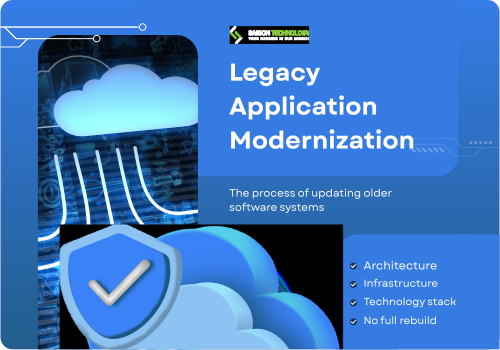
- Legacy application modernization is the process of updating older software systems, their architecture, infrastructure, technology stack, or all three, so they meet current business and technical requirements without a full rebuild from scratch.
- An application becomes legacy not because of age, but because its framework no longer receives security patches, its tightly coupled architecture blocks independent feature delivery, it cannot scale to current workloads, or maintenance costs exceed the cost of modernizing. Many organizations still run critical business logic on .NET Framework 4.x, monolithic Java EE systems, or on-premise infrastructure designed for a different era.
- Modernization approaches range from rehosting (cloud migration with minimal code changes) to full re-architecture (decomposing monoliths into microservices). The 7 R's framework categorizes these options: Retain, Retire, Rehost, Relocate, Repurchase, Replatform, and Refactor. The right path depends on technical debt, strategic importance, and your risk tolerance during transition.
- At Saigon Technology, our architects have modernized legacy .NET, Java EE, and monolithic systems across 300+ projects and the first thing they will tell you is that not every system needs a full rewrite.


Signs Your Legacy Application Is Holding You Back

Feature releases that should take days take weeks

Security vulnerabilities from unsupported frameworks

Inability to integrate with modern systems

Escalating infrastructure and maintenance costs

Difficulty hiring developers
Legacy Application Modernization Services We Offer
There is no single right way to modernize a legacy system. The right approach depends on your architecture needs, business continuity requirements, timeline, and budget. Here is how we help.
Application Replatforming

We migrate your application to modern platforms, cloud infrastructure, containers, and managed services, without rewriting your business logic. Replatforming gives you the operational benefits of cloud computing without the risk and timeline of a full rewrite.
- When it fits: Your application works well enough, but the infrastructure underneath is costing too much to maintain, or you need elastic scaling, reduced hardware overhead, and pay-as-you-go pricing.
- Outcome: Lower infrastructure costs, improved availability, and a foundation for further modernization.
Application Re-Architecting
Decompose monolithic applications into microservices or modular components that can be developed, deployed, and scaled independently. This is the deepest modernization approach, restructuring how your application is built, not just where it runs.
- When it fits: Your monolith has grown to the point where changes in one area routinely break another, and your teams cannot ship without coordinating across the entire codebase.
- Outcome: Independent deployability, faster release cycles, and team autonomy over their own services.
Cloud Migration (AWS, Azure, GCP)
We move on-premises workloads to the cloud with proper architecture mapping, not a lift-and-shift that recreates data center problems in someone else's infrastructure. As an AWS Partner, we design migration strategies that account for data gravity, latency, and compliance constraints.
- When it fits: You need elastic scalability, managed disaster recovery, and cost structures aligned with actual usage, not fixed capacity you are paying for regardless of demand.
- Outcome: Scalable infrastructure, reduced operational overhead, and built-in disaster recovery.
Microservices Decomposition
Break down tightly coupled systems into independently deployable services with clear boundaries and well-defined APIs. Each service owns its domain, its data, and its release cycle.
- When it fits: Changes in one part of your system cascade unpredictably into others, or different components need to scale at different rates.
- Outcome: Isolated failure domains, technology flexibility per service, and the ability to modernize incrementally rather than all at once.
API Layer and Integration Modernization
We wrap legacy systems with modern REST or GraphQL APIs so they can communicate with new applications, mobile platforms, and partner systems. This extends the productive life of core systems while enabling modern user experiences.
- When it fits: A full rewrite is not justified, but the system needs to participate in a modern ecosystem, connecting to new frontends, third-party integrations, or mobile apps during a phased transition.
- Outcome: Extended system lifespan, modern integration capability, and a practical bridge between legacy and new architecture.
Legacy Stack Migration (.NET Framework to .NET 8+, Java EE to Spring Boot)
Upgrade core frameworks while preserving the business logic your organization depends on. This is a targeted migration — updating the platform layer without rethinking your entire architecture.
- When it fits: Your stack is approaching end-of-life or already out of support, and you need security patches, performance improvements, and access to modern tooling now, not after a multi-year rewrite.
- Outcome: Immediate security coverage, better performance, modern developer tooling, and reduced recruitment friction.
Ready to Modernize Your Legacy Applications?

Engagement Models and Pricing
Fixed-Price

Dedicated Development Team

Staff Augmentation
Why Choose Saigon Technology for Legacy Modernization?
Choosing a legacy modernization company is a decision about risk management as much as technical capability. Here is what that means in practice when you work with us.

14+ years of software delivery experience

Saigon Technology has delivered software across financial services, healthcare, logistics, and enterprise platforms since 2012. That track record means we have encountered and solved, the kinds of migration complications that derail less experienced teams.
Vietnam's top 1% of engineering talent
Your modernization project is handled by senior developers and architects who understand both legacy and modern architectures, not junior engineers rotating through training projects. Learn more about our talent model.
Certified partner ecosystem
AWS Partner, Microsoft Gold Partner, and ISO 27001 certified, your data handling meets international security standards throughout the engagement, verified by BSI Group.
Cost-effective without cutting corners
Vietnam's competitive labor market means senior-level engineers at rates significantly below US, EU, or Australian equivalents, without the offshore quality compromises that make "cost savings" feel like a false economy.
Modern product engineering with applied AI
We deliver across back-end, front-end, mobile, and DevOps, with capabilities in AI/ML and computer vision. Our Research Labs validates emerging technology through working prototypes before applying it to client engagements, so you explore feasibility before committing to a full build.
Transparent delivery with Agile and DevOps
Our development acceleration process gives you visible progress through rapid feedback cycles and continuous updates. Changing requirements do not derail timelines because our methodology is built around adaptation.
Trusted by Our Clients








Client Testimonials

Legacy Modernization Projects We Have Delivered
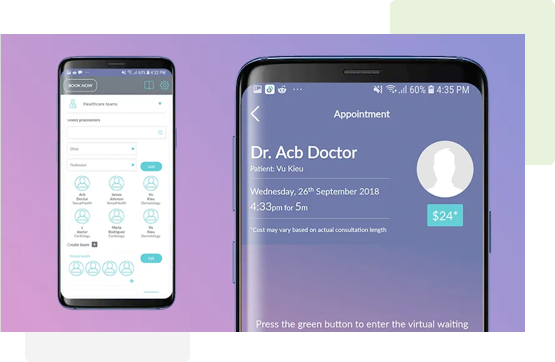
Welio - Healthcare Telemedicine Platform
- Industry: Healthcare (Telemedicine)
- Challenge: Welio's telemedicine platform relied on Skype for Business for video consultations, a legacy service being deprecated. Authentication was unnecessarily complex, and HIPAA compliance had to be maintained throughout the transition.
- Approach: We replaced the legacy video call service with Twilio Voice and Video, streamlined authentication, built real-time chat and asynchronous messaging, and ensured full HIPAA regulatory compliance.
- Result: Welio now runs on a modern tech stack (.NET backend, Twilio, Firebase) with a streamlined customer experience for doctors and patients, full HIPAA compliance, and a foundation for future expansion without legacy constraints.

GTW Prop Trade - FX Trading Platform Modernization
- Industry: Financial Services (Foreign Exchange Trading)
- Challenge: GTW operated a legacy Windows-based FX trading platform that could not scale or integrate with modern trading protocols (FIX, MT4, MT5) while processing large volumes of real-time pricing data.
- Approach: We established an Offshore Development Center and executed a three-phase modernization: building cloud infrastructure on AWS (Lambda, DynamoDB, Redshift, Kinesis); converting the Windows application to a web platform using .NET Core and Angular; then extending capabilities for additional trading scenarios.
- Result: The modernized platform runs entirely on AWS with cloud-native architecture, handles high-volume real-time data processing, and gave GTW the agility to rapidly extend trading capabilities with cost reduction through the dedicated team model.
How We Modernize Your Legacy Applications

Discovery and Assessment
We audit your current architecture, map dependencies (including undocumented ones), quantify technical debt, and identify business-critical workflows. The output is a modernization roadmap with risk assessment, effort estimate, and architecture recommendation, a standalone deliverable whether or not you engage us for implementation. This legacy application assessment typically takes two to four weeks.

Strategy and Architecture Design
We choose the right modernization approach for each component. Not every module needs a full rewrite. We design the target architecture collaboratively with your team, define migration phases, and build in decision points where the scope can be adjusted based on what we learn. This strategy development phase aligns your requirements scope with a realistic project timeline.

Incremental Migration and Development
We execute in iterative sprints, migrating components progressively so your business never goes dark. Old and new systems run in parallel during transition. Each sprint delivers working software, not documentation. Automated deployment pipelines ensure consistent, repeatable releases, and if priorities shift, we adjust without starting over.

Testing and Quality Assurance
Automated regression testing, performance benchmarks, and security scanning validate that business logic is preserved at every stage. We test integration points between legacy and modernized components continuously; these boundaries are where most migration defects occur.

Go-Live and Ongoing Support
Phased rollout with rollback plans ensures unexpected issues can be reversed quickly. Post-migration support and maintenance includes performance tuning, monitoring, user training modules, and knowledge transfer to your internal team.
Technologies and Platforms


































Addressing Common Modernization Concerns

Modernization projects always go over budget

We cannot afford downtime during migration
Our system is too complex, nobody fully understands it

We have been burned by offshore vendors before
We do not have the internal resources to manage this
Industries We Serve


Our Insights
 Mar 12, 2026
FAQs
How long does a legacy modernization project typically take?


Timelines range from three months for targeted stack migrations to 18+ months for complex re-architecture projects. The discovery assessment gives you a realistic project timeline based on your system's complexity and the modernization approach selected.
What are the main risks of legacy application modernization?
The most common risks are scope creep from undocumented complexity, data migration errors, business disruption during cutover, and loss of undocumented business logic. Our phased approach and thorough discovery process provide risk mitigation against each.
Should we rewrite from scratch or modernize incrementally?
In most cases, incremental modernization delivers better outcomes with lower risk. Full rewrites are notorious for running over budget because the new system must replicate years of accumulated business logic. Incremental approaches let you validate each phase before committing to the next.
What is the difference between replatforming and re-architecting?
Replatforming moves your application to a new infrastructure (cloud, containers) with minimal code changes, and you get operational benefits quickly. Re-architecting restructures the application itself, typically decomposing a monolith into microservices. Replatforming is faster and lower-risk; re-architecting delivers deeper long-term benefits but requires more investment.
Can we modernize without business disruption?
Yes. Our parallel-running approach means the legacy system continues operating while the modernized components are built and validated. Cutover happens progressively, with rollback capability, so there is no single point of failure.
What legacy technology stacks do you work with?
We most commonly modernize .NET Framework applications (to .NET 8+), monolithic Java EE systems (to Spring Boot), and on-premise deployments (to AWS, Azure, or GCP). We also handle API modernization, database migration, and UI/UX modernization for applications with outdated front-ends.
How much does legacy application modernization cost?
Cost depends on system complexity, integrations, target architecture, data volume, and compliance requirements. A discovery assessment provides a detailed estimate. Our Vietnam-based delivery model typically delivers 40-60% cost savings compared to equivalent US, EU, or Australian teams.
What engagement model is right for our modernization project?
Fixed-price for defined scopes, dedicated team for evolving programs, staff augmentation for capacity needs. We help you determine the right fit during your initial consultation.