




Managing travel and transport services across multiple stakeholders is complex.
During early talks, our client, a top vehicle leasing and transport company in Australia and New Zealand, explained that their prototype still depended on manual work and disconnected systems. They were looking for a trusted tech partner to turn it into a scalable B2B platform with full digitization, automation, and smooth system integration.
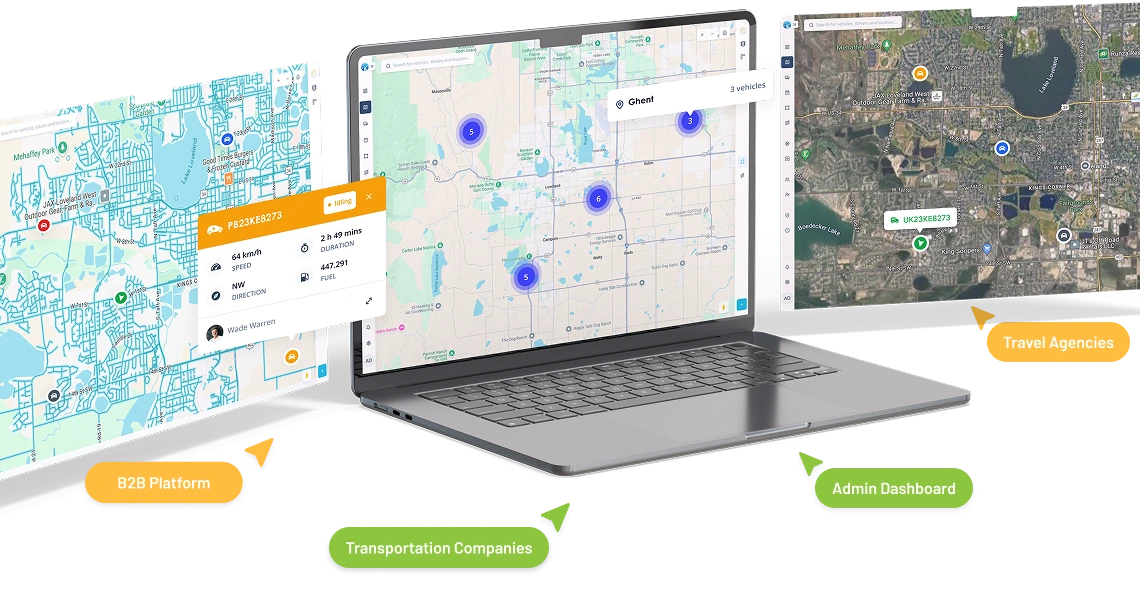
To solve this, Saigon Technology developed a centralized B2B fleet management platform serving three distinct user types:
 About the project
 Transforming B2B Travel and Transport with a Fleet Management Platform
-
 Travel Agencies (search/book/manage hotel and car bookings)
 -
Transportation Companies (manage fleet, drivers, bookings)
-
Admins (manage platform, users, bookings, reports, and commissions)
The platform supports user authentication, role-based access, profile and booking management, integrated payments, and customer support.

Location
Australia and New Zealand

Industry
Logistics

Engagement Model
Hybrid Models

Deployment
AWS

Timeline
3 Months
 What they need
 What The Client Required
The client was struggling with fragmented systems and manual work. They wanted a platform that could:
-
 Help travel agencies search, book, and manage hotel and car reservations.
-
Allow transportation companies to list their bookings, manage fleets, drivers, and clients.
-
The administrative interface gives full visibility and control to manage users, hotel and property listings, bookings, and commission tracking, while also monitoring payments and analyzing key performance metrics such as revenue.
-
Standardize the booking, payment, and communication process across different service providers and agencies.
 Help travel agencies search, book, and manage hotel and car reservations.
 What we have done
 Functions
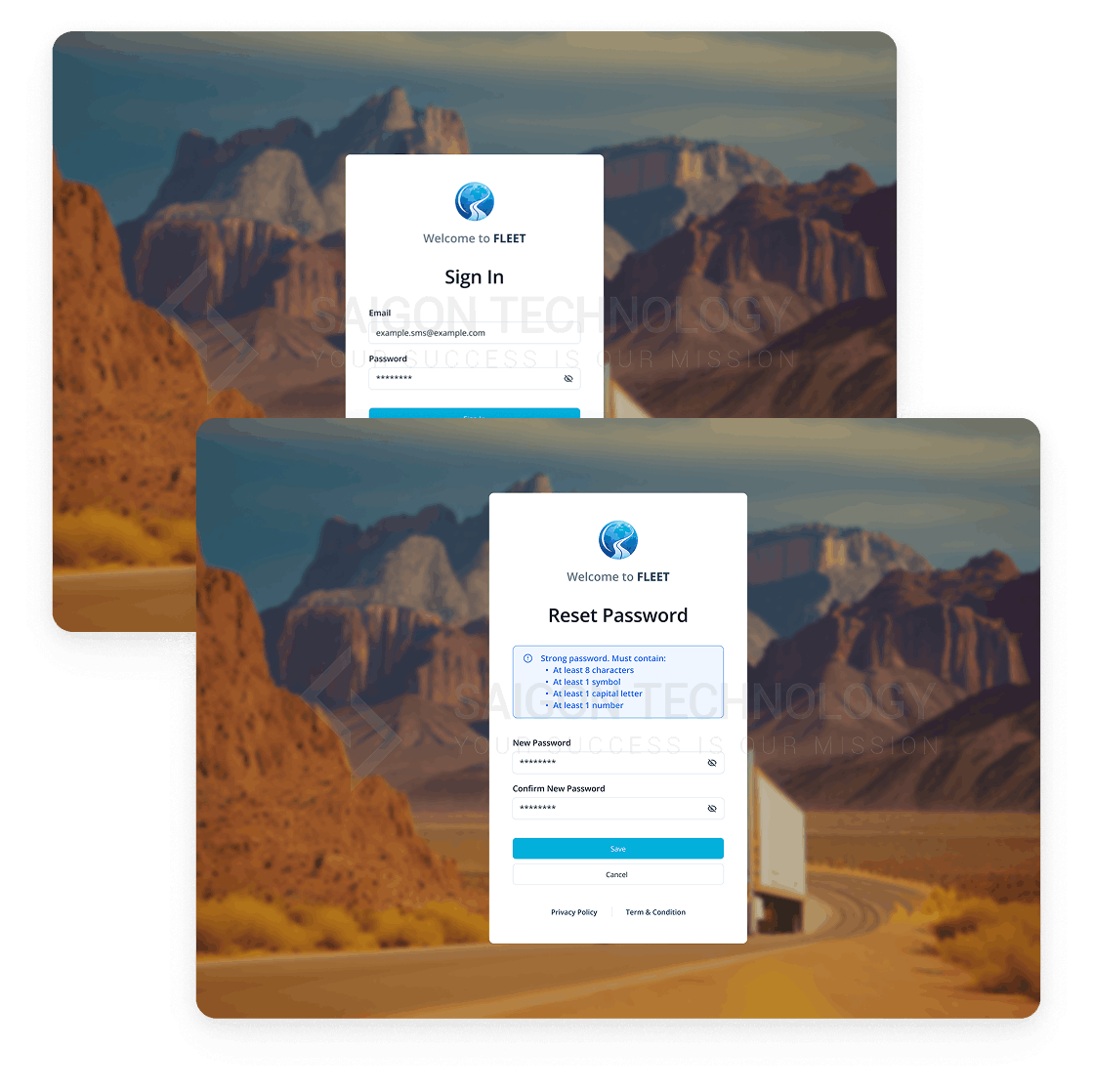
1. Authentication & User Management
Challenge
Users had inconsistent permissions, leading to confusion and poor account control.Solution
We built a secure login system with admin-driven RBAC to make sure everyone had the right access, while admins can monitor activity through authentication checks, audit trails, access control, and issue logging.Key Functions
- Role-Based Access Control (RBAC): Admin, Manager, Booking Agent, Finance, Super Admin.
- Authentication: Secure login, password recovery, account lock/unlock, no two-factor authentication.
- User & Stakeholder Management: CRUD for users and stakeholders; sign-up approval workflow.
- Personal account settings (password, language).
- Audit Trail: Track user actions with IP/timestamp.
2. Agency, Company & Fleet Management
Challenge
Drivers and vehicles were often assigned inefficiently, leading to delays.Solution
We created tools for scheduling and availability checks, so managers could assign the right driver and vehicle instantly.Key Functions
- Agency/Transport Company Management:
- Create/edit profiles, approve/reject, manage markup, payment terms, activation
- Fleet/Vehicle Management:
- CRUD for vehicles (cars, vessels, etc.)
- Sync registration, import via API
- Add/edit car details, pricing, features/notes
- Soft-delete and maintenance history (vessels)
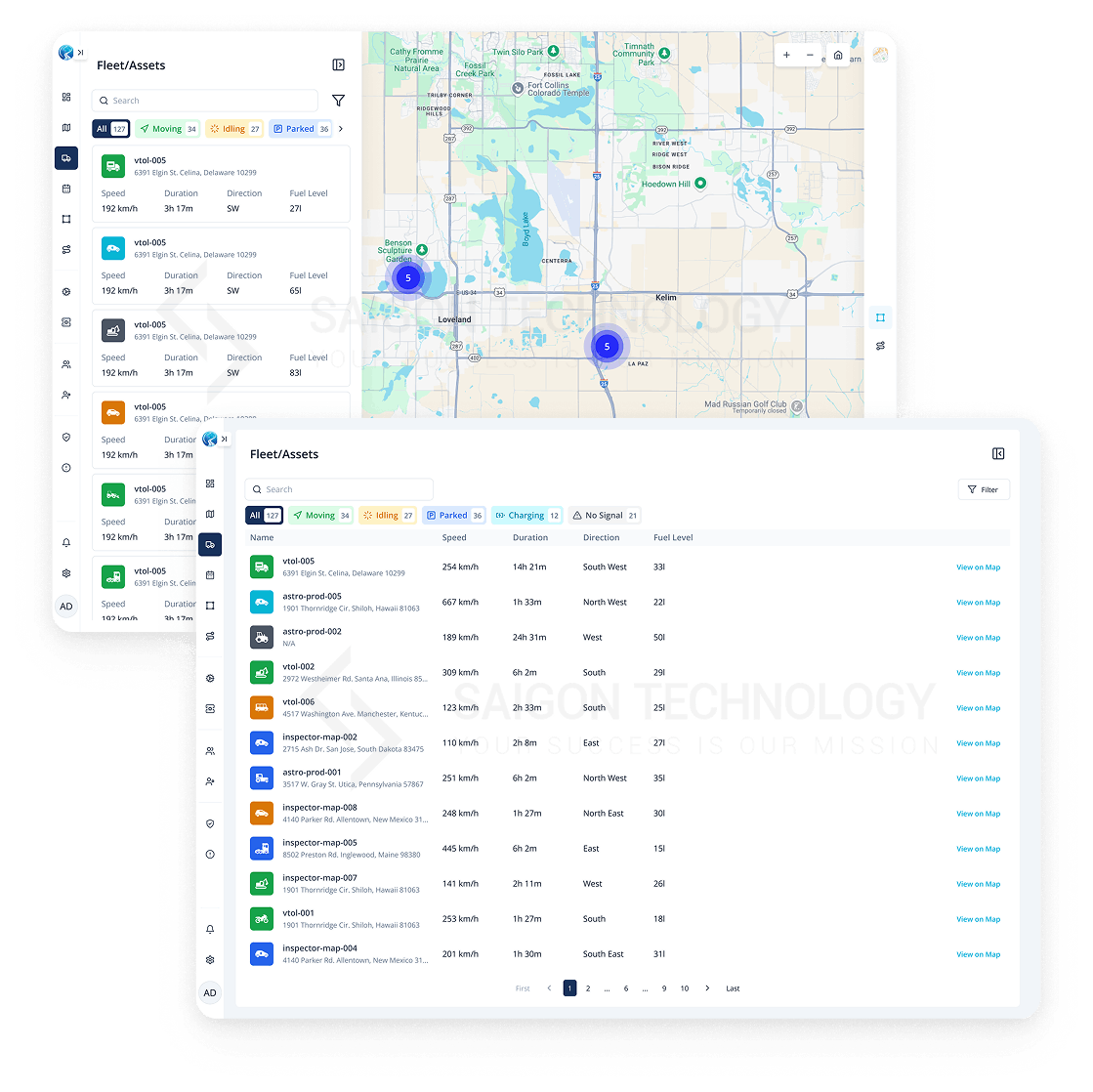
3. Personnel & Crew Management
Challenge
Users faced delays and errors because tracking systems were disconnected.Solution
We integrated IoT hub with real-time GPS tracking for accurate monitoring.Key Functions
- Crew Directory: searchable, paginated database that supports full CRUD functions to add, edit, remove, or inactivate crew members.
- Crew Movement Tracking: record join, leave, and transfer history.
- Certification Management: upload and track documents, set expiry alerts, and auto-reminders.
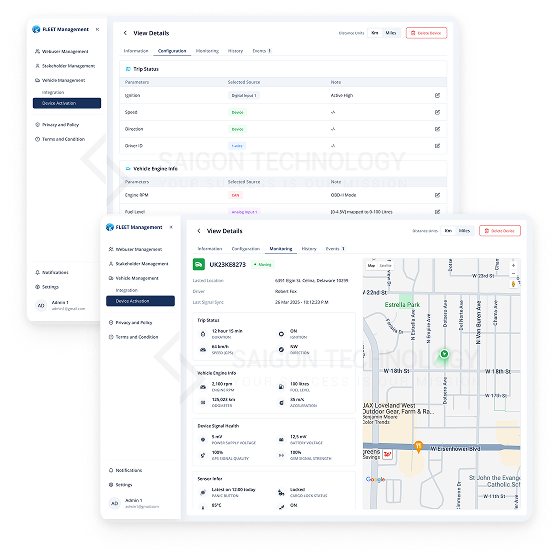
4. Event & Notification System
Challenge
Critical events like speeding or expired certifications are often missed because there were no timely alerts.Solution
We built a rule-based event engine that sends instant alerts. Managers can also configure notification schedules and acknowledgment rules to ensure timely action.Key Functions
- Event Management: define conditions (geofence, speed, ignition, etc.), CRUD and trigger notifications.
- Alerts & Scheduling: customizable email/SMS/in-app alerts with snooze and acknowledgment options.
- Document Tracking: monitor expiry dates and send auto-reminders for certifications.

5. Reporting & Analytics
Challenge
Teams spent too much time preparing reports manually and struggled with limited options to filter or export data.Solution
We introduced prebuilt report templates with export options. The system also supports faster exports and can easily handle large data sets.Key Functions
- Admin Reporting: metrics on bookings, revenue, and commissions.
- Crew & Payroll Reporting: ready-made templates with export to PDF/Excel.
- Event & Geozone Reporting: parameter-based filters with export support.

6. Booking Modules (Hotel & Car Booking)
Challenge
Relying on spreadsheets, emails, and manual data entry caused delays, errors, and inefficiencies.Solution
We digitized the entire workflow, covering onboarding, approvals, booking, and reporting.Key Functions
- Hotel Booking: search and filter rooms, choose options, complete the booking flow (payment → confirmation → invoice), with in-app support.
- Car Booking: search by trip type or guest, add pickup details, track status in real time, and assign drivers.
7. Driver & Transportation Management
Challenge
Managing a large number of drivers and trips was difficult. Keeping records accurate and tracking every change took too much manual effort.Solution
We created smart tables with search and filter options for quick navigation. Easy-to-use forms with validation reduce mistakes. Audit logs help track updates and keep records reliable.Key Functions
- Driver Management: Add, edit, or activate drivers easily.
- Trip History & Tracking: View live trip status and filter past trip records.

8. Geolocation & Mapping
Challenge
Geofencing rules could not be enforced, which made it hard to control vehicle routes.Solution
We implemented a map-based geozone and route management system. Real-time alerts notify managers immediately if a vehicle goes outside its assigned zone.Key Functions
- Mapping Interface: Street/satellite map layers, vehicle icons, and points of interest (POIs).
- Geozone & Route Management: Create, edit, or delete zones and routes, with import/export options via CSV.

9. Payroll & Invoice Management
Challenge
Handling multiple payment methods slowed things down and made reconciliation complicated. It was also hard to manually meet GDPR rules, financial controls, and audit requirements.Solution
- Integrated payment gateways to handle reconciliation automatically and keep detailed transaction logs
- Role-based access control, data encryption, and audit logs to strengthen compliance
- Automated invoice and report generation, with GDPR-compliant consent and data workflows.
Key Functions
- Payroll Module: Set up pay structures, encrypt bank details, auto-generate PDF payslips, and distribute securely.
- Invoice & Expense Tracking (optional): Categorize expenses, monitor payment status, and integrate seamlessly with payroll.
10. System Configuration & API Management
Challenge
Legacy systems could not keep up with growing operational demands. And external system integration was difficult and unreliable.Solution
- Adopt microservices architecture, CI/CD pipelines, and ESB for seamless API integrations.
- Support Docker, Kubernetes, and OpenAPI for scalable deployment.
Key Functions
- Feature Configuration: Super-Admin can enable or disable modules per stakeholder.
- API Access: Manage keys, apply rate limits, and secure endpoints (vehicles, events, geozones, routes).
 What they used
 Technologies Used
Frontend
Backend
Messaging & Event Streaming
Databases
Authentication & Identity
External APIs & Integrations
DevOps & Infrastructure
Frontend

React.js
Core framework for building web UIs

React Router
Page navigation

Redux
Application state management

Material UI
Component libraries for fast, responsive design

Ant Design
Component libraries for fast, responsive design
Backend

Spring Boot
Backend development with RESTful APIs

Spring Security
Authentication and authorization

Spring Data JPA / Hibernate
Database ORM and query management

Spring Batch
For scheduled batch processing (e.g., reports)

Spring WebSocket / MQTT
Real-time communication (vehicle tracking)

Visual Basic (Vessel Case)
For Windows-based application logic
Messaging & Event Streaming

Apache Kafka
Event handling (e.g., vehicle location updates)

Apache Camel
ESB framework for integrating external services
Databases

PostgreSQL
Relational data storage (vehicles, users, bookings)

MongoDB
NoSQL for GPS logs, trip events & unstructured data

MSSQL
Used in Vessel Management case for structured data
Authentication & Identity

Keycloak
Centralized identity management and RBAC
Custom RBAC systems
Implemented using Spring Security or platform logic
External APIs & Integrations

OpenStreetMap / Google Maps
Map display and route calculation

Twilio / SendGrid
SMS and email notifications

RESTful APIs
External system integration and internal communication

ESB (Enterprise Service Bus)
Seamless data exchange across platforms
DevOps & Infrastructure

Docker
Containerization of applications

Kubernetes
Container orchestration and deployment

CI/CD Pipelines
For scalable, automated deployments

Redis
In-memory caching for faster performance

MinIO
File and image storage
How we work Design Process
This project aimed to create a centralized B2B platform for travel agencies, transport providers, and administrators. The goal was to simplify complex booking and management workflows while ensuring secure access, intuitive user roles, and smooth coordination among all stakeholders.
The main design challenge was finding the right balance between usability and functionality for three very different user groups within a single unified system.
Tools


Design Framework

01 Research
02 Ideation
03 Design
Personas
 Our team conducted thematic analysis and affinity mapping to uncover patterns in user needs and behaviors. Based on these insights, we built two detailed user personas and journey maps. Each persona directly reflects the gathered data, representing real user types with their goals, frustrations, motivations, behaviors, and personalities.
 Our team conducted thematic analysis and affinity mapping to uncover patterns in user needs and behaviors. Based on these insights, we built two detailed user personas and journey maps. Each persona directly reflects the gathered data, representing real user types with their goals, frustrations, motivations, behaviors, and personalities.
Akif Mohammed
Fleet Operations Manager
Logistics
Efficiency
Analytical
 About
About
He manages 50+ trucks daily, handling dispatch, shipment tracking, and client updates.
I need everything in one place - delays, breakdowns, driver status - so I can make fast decisions without picking up the phone.

 Needs & Goals
- Real-time visibility for truck locations and status
- A centralized dashboard to monitor all active deliveries
- Tools to assign or reassign delivery routes
- Access to data for weekly performance reports
Frustrations
- Constantly switching between spreadsheets, phone calls, and tracking tools
- Location updates are delayed or inaccurate
- Hard to know which deliveries might be at risk
- Limited visibility into driver performance over time

Alton Harden
Truck Driver
Practical
Independent
Stoic
About
A long-haul truck driver with 15+ years of experience, practical, and relies on mobile apps mainly for work.
If the app doesn’t run smoothly while I’m on the road, it slows me down, causes delays, and makes everything much harder.
Needs & Goals
- A simple app to see routes and delivery tasks clearly
- Quick check-in/check-out at each stop
- Real-time updates on ETA and route changes
- Fewer calls or messages from dispatch while on the road
Frustrations
- Apps that feel cluttered or hard to use on mobile
- Weak signal or poor connectivity during trips
- Unclear instructions on the next delivery step
- Having to send the same updates across different channels
User Flows
To design a smooth experience, we started by mapping out user flows that show how people move through the app, the choices they make, and what their journey feels like overall.
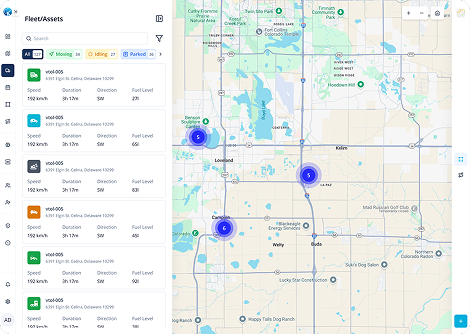
In the Fleet Management flow, users can view vehicles on a map, check real-time location, and check detailed information. When clicking on a vehicle, it shows the status, speed, fuel, driver info, trip history, and any events or alerts.
Wireframe
Next, we created low-fidelity wireframes. These quick sketches helped us visualize layouts and functions early, test ideas, and refine the experience before moving to detailed designs.
Visual Language
Our team chose Open Sans for its modern, clean look to ensure readability across all screens. With flexible weights and a neutral tone, it works well for both text and interface elements, keeping the design consistent and user-friendly.
Hi-fi Mockups

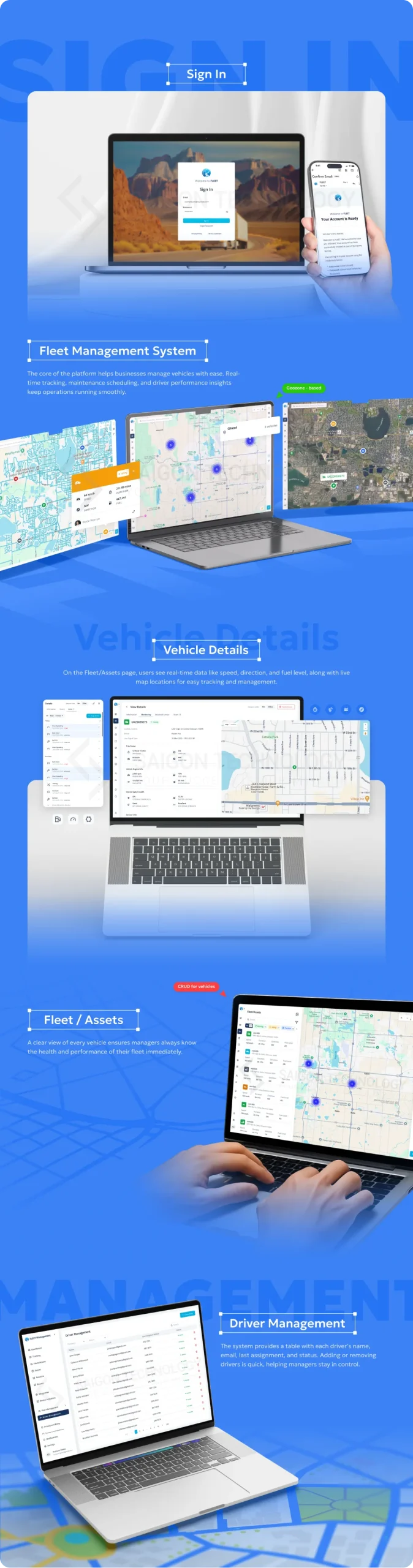 The Outcome
 Key Outcome
One platform, three user types
Travel agencies, transportation companies, and administrators now work together seamlessly.
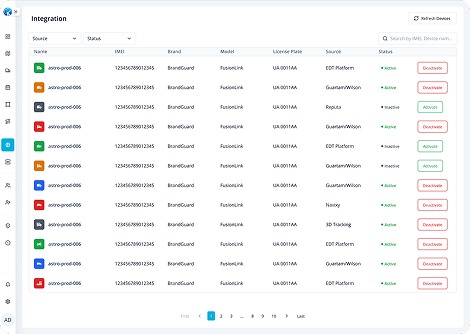
Improved efficiency
Managers make faster decisions, with full visibility into fleets and bookings.
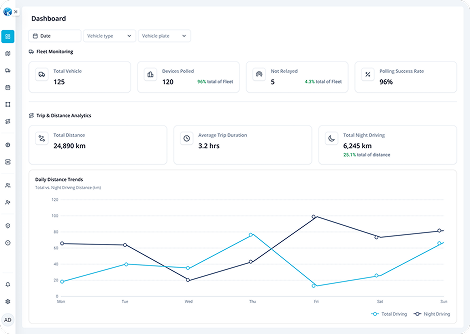
Better driver experience
Simple mobile access reduces delays and frustration.

Stronger oversight
Standardized processes ensure reliability, transparency, and scalability.
Related Projects
Business
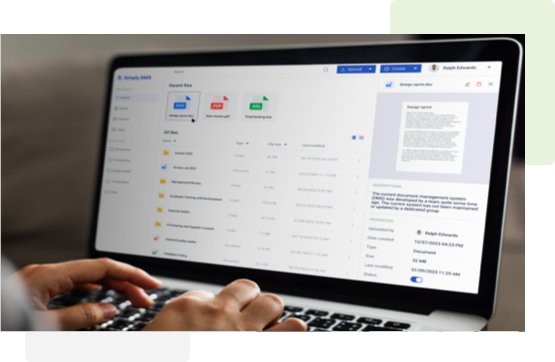
Simply DMS
The current document management system (DMS) was developed by a team quite some time ago. The current system has not been maintained or updated by a dedicated group.
Detail

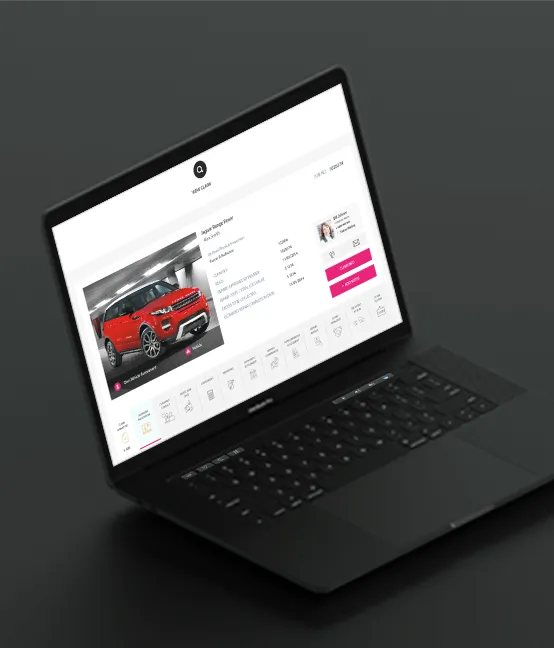
QA Testing
SCM Portal
SCM Portal is our internal system, designed to seamlessly integrate with SAP and ERP systems. It is for PR/PO/RFQ related to vessel assembly and service demand.
Detail
Transportation and Logistics
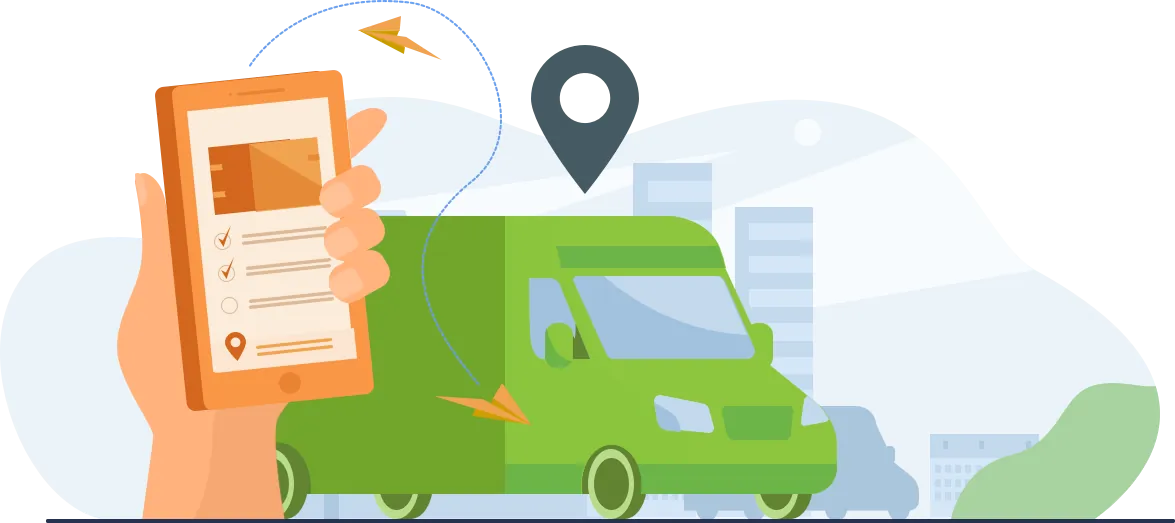
Triptomatic
The client wants to build a cross-platform system to make a booking system. Connect from institution and transporter in the simple and fastest way.
Detail
QA Testing
Merit Logistics ODC
Merit Logistics has been leading in the development of supply chain solutions based on planning strategies to increase productivity for partner companies.
Detail
Do you need specific Case studies for Your industry?
We are always ready to assist you. Reach out to us today.