




































































-
OVERVIEW
-
SERVICES
-
MODELS
-
WHY CHOOSE US ?
-
OUR PROCESS
-
TECHNOLOGIES
-
FAQS
What Separates an Offshore Partner From a Body Shop
A real engineering partner takes responsibility for architecture, quality and continuity, not just for filling seats. It publishes its rates, lets you interview the people who will write your code, names the standards it works under, and keeps the same engineers on your product long enough to remember why they built it that way.
The difference shows up in what a vendor is willing to put in writing before you sign. A staffing shop sells you availability and bills the hours. A partner tells you when your requirements do not add up, proposes an architecture you can defend to your own board, and accepts that the team it assembles will be judged on releases rather than on timesheets. That is the standard this offshore software development company is built to meet, and the table below is the version of it you can check.
Saigon Technology at a Glance
| Published rate, senior-led |
$22 to $46 per hour
|
| Engineers |
400+ developers
|
| Years in operation |
Founded 2012, 14+ years
|
|
Delivery record
|
850+ projects, 350+ clients, 4.8 stars on Clutch
|
|
Certifications
|
ISO 9001 and ISO 27001, issued by BSI (UK); Microsoft Gold Partner
|
|
Delivery locations
|
Three development centers, Ho Chi Minh City and Da Nang
|
|
US working hours overlap
|
10 to 12 hours with East and West Coast teams
|
|
Engagement models
|
ODC, dedicated team, staff augmentation, fixed-price, BOT
|
|
Core verticals
|
Fintech, healthcare, logistics, eCommerce, business software
|
|
Before you commit
|
Candidate interviews, then a two-week risk-free trial
|
Publishing that table is a deliberate choice. Most providers on this search results page publish no rate at all, which leaves the buyer estimating. An offshore software development services company that will not quote a range in public is asking you to take the most important variable on trust.
Our Offshore Software Development Services
Custom Software Development
Web Application Development
AI Development and Generative AI Integration
Mobile App Development
SaaS Application Development
MVP and Proof-of-Concept Development
Legacy Application Modernization
Software QA and Testing
Software Integration and Enterprise Integration Services
DevOps, Cloud Computing and Cloud Migration
Software Maintenance and Support
Case Studies: Four Offshore and ODC Engagements
Loan City: a fixed-price build that became an ODC
- Challenge: a Singapore startup arrived with AI-generated requirements, no roadmap, and no view on which technologies fit. The concept was a three-portal loan comparison platform for admins, lenders and borrowers.Â
- What we built: a two-week consulting and discovery engagement first, restructuring the requirements into functional modules and defining a realistic MVP scope. Then the platform itself, including Singpass identity verification with MyInfo auto-fill, role-based access across three independent portals, document upload and preview, real-time application tracking, and a rule-based loan matching engine with a scoring algorithm and asynchronous processing.Â
- Engagement and timeline: fixed-price for the initial three-month build, moving to an ODC after go-live. A nine-member team, senior across every role: one project manager, one business analyst, six developers, one designer, one QC engineer.Â
- Outcome: 50+ lenders and 2,000+ borrowers onboarded within three months of launch. Match generation under three seconds per application. 90% match accuracy validated in UAT. 60% faster loan approval than the manual process it replaced, and a 40% reduction in manual processing time. The matching trail is fully auditable for compliance review.Â
- Stack: hybrid waterfall for requirement finalization, agile for sprint execution, weekly client demos throughout.Â
- Read the full case study →
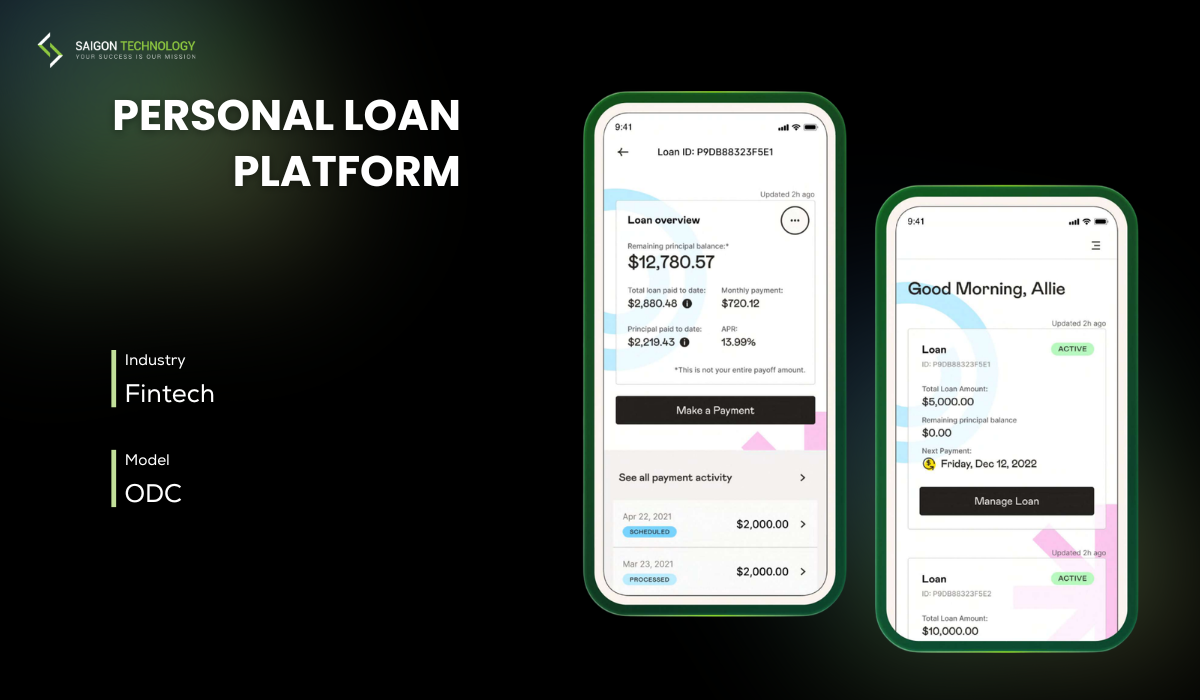
Personal Loans Application: a three-year fintech ODC
- Challenge: automate a complete lending lifecycle, from onboarding and identity verification through underwriting, disbursement, repayment tracking, fraud detection and collections, while meeting US financial data protection expectations.
- What we built: identity, employment, income and bank account verification through Plaid, GIACT and TALX; real-time fraud detection and AI-assisted credit risk scoring through Oscilar and Equifax; KYC document recognition; and full loan lifecycle management through LoanPro. Each third-party source returns a different data shape, so the pipeline normalizes and cleans records before scoring, retries failed verifications in the background, and falls back to an alternate source when one provider is down.
- Engagement and timeline: Offshore Development Center, running 3+ years, US market deployment.
- Stack: Java 18 with Spring Boot, Security and JPA; React and Next.js; Python with Airflow; AWS with ECS, ECR, CodeBuild, CodePipeline, Cognito, DynamoDB, S3, SNS and Parameter Store; Terraform; Kafka; REST, GraphQL and gRPC; OAuth 2.1 with OpenID Connect; API documentation in Swagger and Postman. Full audit trails across verification, underwriting and servicing, aligned with GDPR.
- Read the full case study (PDF) →
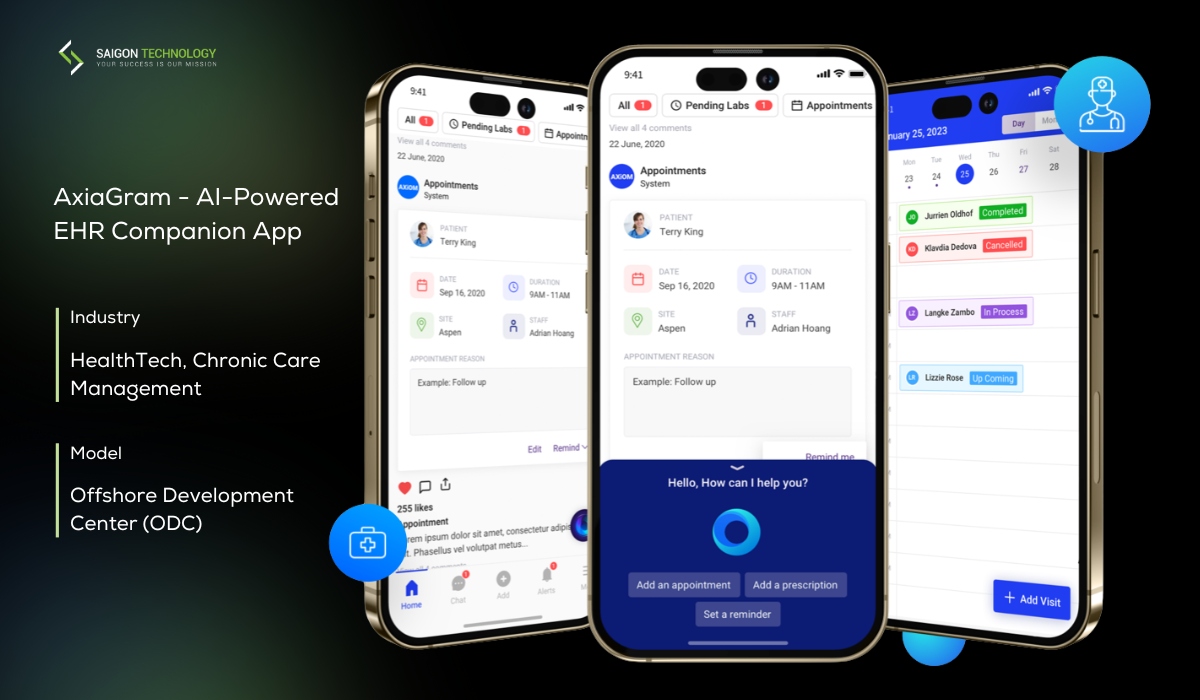
AxiaGram: a HIPAA-compliant telemedicine platform, ODC since 2021
- Challenge: scale a chronic care platform for US clinics and hospitals while keeping development costs predictable, and make remote consultations usable for physicians who will not tolerate extra clicks.
- What we built: voice-controlled clinical note-taking powered by AI, video consultations with secure login, Electronic Visit Verification with geo-tagging and digital signature, and encrypted internal messaging for care teams. The platform integrates with hospital Electronic Health Record systems over HL7, which is where most of the engineering effort sits.
- Engagement and timeline: Offshore Development Center, ongoing since 2021. Published as the HealthTech case study, a SaaS EHR platform.
- Stack: .NET Core, Angular, Azure, HL7 integration, Voice AI, Agora and Wowza for real-time streaming and casting, AES-encrypted data at rest, HIPAA-compliant infrastructure.
- Read the full case study (PDF) →
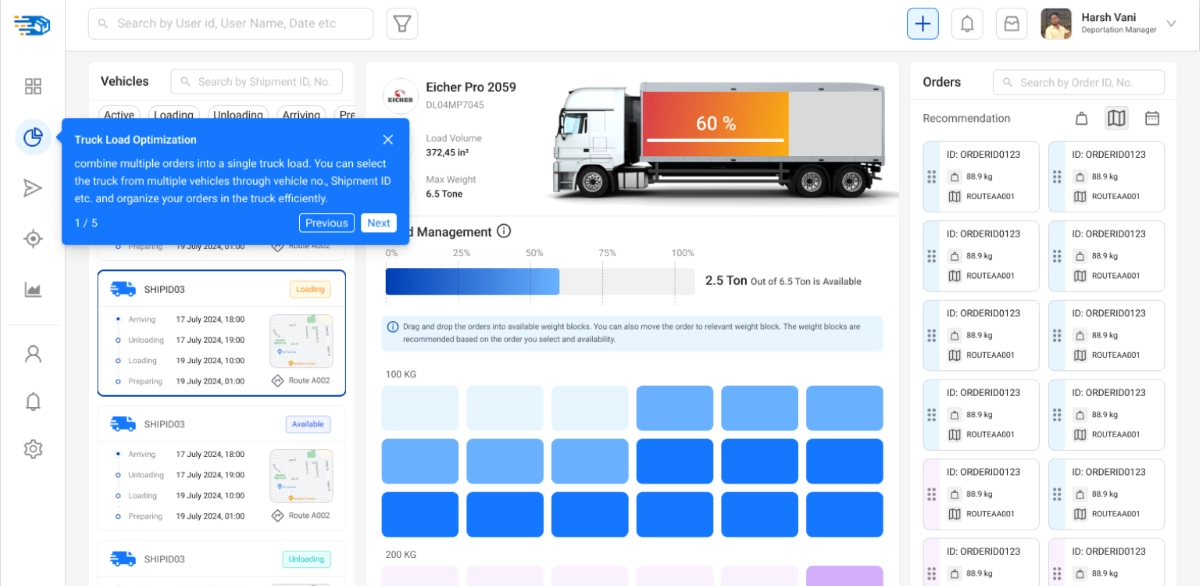
Merit Logistics: a legacy ERP rebuilt under an ODC
- Challenge: maintain, extend and eventually replace an ERP whose source code had passed through several vendors across six years, with business rules that existed only in the behaviour of the running system. Field management, work allocation and timesheets all depended on it.
- What we built: three phases. First, study the live system and document as many business rules as could be recovered. Second, maintain and extend it while building a replacement on a current stack, running comparison testing between old and new to prove equivalence before cutover. Third, an Android check-in application supporting both systems, using PIN or facial recognition, built to work across different light levels and for every employee regardless of age or skin colour.
- Engagement and timeline: Offshore Development Center, Agile Scrum, with a daily standup scheduled late in our evening to meet the client's 9am.
- Stack: .NET Core and .NET Full, React, Angular, Java and Kotlin for Android, Grafana for monitoring, Consul and Fabio for service discovery and load balancing, and an API gateway that started on Ocelot before being rebuilt in house.
- Read the full case study →
Send Us the Brief. See the Team and the Prototype in 24 Hours.
- Clickable prototype of your core user flow, integration surface, or admin workflow
- Team and ramp plan mapping roles, seniority mix, and the first 30 days of handoff
- Architecture direction covering IP ownership, data residency, time-zone overlap, and scale
- Technical recommendation call with our engineering team
Why Choose Saigon Technology as Your Offshore Software Development Company
A good offshore software development company publishes its rates, lets you interview the engineers before you sign, names the standards it works under, and keeps the same people on your product for years. Judge one on what it will commit to in public and on how much of its delivery risk it is willing to carry.Â
Senior engineers with applied AI, at a published $22 to $46 per hour
One senior engineer working with AI tooling replaces roughly three juniors on delivered output, because most of what a junior consumes is rework rather than build. Our published band sits at $22 to $46 per hour, with architecture and code review owned by a tech lead, against a market that runs $25 to $70+.
The argument is cost per delivered outcome: a smaller team shipping the same scope with fewer rebuilds costs less in total, even when its hourly rate is not the lowest on your shortlist. At premium rates, hardening and versioning are the first items a budget review cuts.Â
"A junior-heavy team looks cheaper per hour and costs more per release, because you pay twice: once to build it and again to fix it. We staff seniors and let AI absorb the repetitive work instead." - Thanh Pham, Chief Executive Officer, Saigon Technology
Security and compliance built for regulated delivery
Three of the four engagements above handle lending decisions or patient records, so compliance is engineering work rather than a policy document.
That means a secure SDLC with peer reviews before merge, role-based access to repositories and environments, NDAs signed before requirements are shared, and encryption at rest and in transit. GDPR and PDPA as standard, HIPAA and HL7 where the engagement demands it. Audit trails are built into the workflow rather than reconstructed for a review, which is what matters when a regulator asks how a decision was reached.
Team continuity, which is a delivery argument rather than a culture one
Churn breaks what you have already shipped. When the engineers who designed a schema or an integration contract leave, the next change costs more and carries more risk, and nobody outside the team can see why.
Our retention is a technical asset for that reason: Southeast Asia Best Workplacesâ„¢ in Technology 2026, ranked #10 in the Medium category by Great Place To Work, and Fortune 100 Best Companies to Work Forâ„¢ Southeast Asia 2025. Two engagements above have run three years or more with the original engineers still on them.
ISO 9001 and ISO 27001, certified by BSI in the UK, plus Microsoft Gold Partner
Third-party certified, not self-declared, and held for over a decade rather than acquired for a tender. Verify both in the BSI client directory before you talk to us, which is more than most offshore development company shortlists allow.
14+ years · 400+ developers · 850+ projects · 350+ clients · 3 development centers
Also 85+ offshore dedicated teams delivered and 40+ developers transferred to clients through the BOT model. One honest limit: the case studies above concentrate in fintech, healthcare and logistics. We would rather show verifiable work in the verticals we know than claim breadth we cannot evidence.
Architecture advice from day one, including when not to build
You get a solution architect's view in the first conversation, not after the statement of work is signed. Sometimes that view is that it should not be built yet. Our research lab shows working AI demos before you fund one.
Interview the engineers, then run a two-week risk-free trial
Review CVs, interview the candidates assigned to you, then run a two-week trial before committing. Five engagement models, no lock-in, switch as the work changes. Risk reversal this specific is rare among providers ranking for offshore software development work.
Trusted by Global Clients
What Our Clients Say
Industries We Serve
Who We Build For
Funded startups past their first hires
You have product-market fit and a hiring plan that cannot move fast enough. Offshore capacity lets you ship the roadmap while you recruit, without committing to permanent headcount you may not need in a year.Â
Product companies adding capacity
Your team is good and it is full. Project outsourcing for a bounded module, or a dedicated development team for a parallel workstream, adds throughput without disrupting the team you already have. An offshore outsourcing software development company earns its place here by absorbing a workstream whole, rather than adding people you then have to manage.
Enterprises modernizing a legacy estate
The system works and nobody wants to touch it. Modernizing it needs people who will read six years of undocumented code before proposing anything, which is exactly the work in-house teams never get uninterrupted time for.
Regulated buyers in fintech and healthcare
You cannot hand patient records or lending decisions to a vendor who treats compliance as paperwork. Choosing a partner here is mostly a due diligence exercise, and it should be.
Teams that need named skills, not a team
IT staff augmentation puts an offshore specialist inside your existing structure, reporting to your leads, for as long as the gap exists.
What You Actually Get From an Offshore Engagement
Cost efficiency measured per outcome
The saving is not the hourly rate. It is a smaller senior team needing fewer rebuilds to reach the same release, which is why we argue cost per delivered outcome rather than cost per seat. Ranking one offshore outsourcing software development company against another on hourly price alone reliably selects the wrong vendor.
Capacity that ramps without permanent headcount
Scaling teams up for a release and down afterwards is a contractual change for us and a redundancy process for you. Three development centers mean we can add roles without renegotiating the relationship.
Accelerated development cycles from real working-hours overlap
Ten to twelve hours of overlap with US East and West Coast teams means a question asked at the end of your day has an answer by the start of the next, rather than a 24-hour round trip per clarification. That overlap is what makes an agile offshore software development company possible at all, because a sprint cannot run on a one-question-per-day cadence.
Technical expertise the local market may not supply
A global talent pool gives you HL7 integration experience, fraud-scoring pipelines or Kubernetes operators without a twelve-month search. The talent base we recruit from is deep in exactly the stacks most product companies already run.
Risk mitigation written into the engagement
Candidate interviews, a two-week trial, ISO-certified processes, and IP assignment agreed before code is written. Risk management here is contractual and procedural, not a promise.
Operational efficiency from automation rather than headcount
Automated workflows, CI/CD and automated testing remove the manual release steps that consume senior time and cause most production incidents.
The demand context, and one number to distrust
The talent shortage driving offshore adoption is documented in primary sources. The US Bureau of Labor Statistics Occupational Outlook Handbook projects employment of software developers, quality assurance analysts and testers to grow 15% from 2024 to 2034, with about 129,200 openings each year over the decade. On the supply side, Grand View Research puts IT services outsourcing on a path to $1,219.31 billion by 2030, an 8.6% compound annual growth rate from 2025.
Treat any current-year market-size figure for IT outsourcing with suspicion, including the ones vendors quote at you. Three well-known research firms publish $878.2 billion, $638.65 billion and $462.10 billion for the same year, because each draws the boundary of "IT outsourcing" differently. The growth direction is reliable. The absolute number is not.
In-House Versus an Offshore ODC
| Cost driver | Building in-house | Offshore ODC |
| Recruitment | Your time, agency fees, months of search per senior role |
Included; you interview a shortlist
|
| Salary and benefits |
Local market rate plus employer costs and equity
|
Published hourly band, no employer overheadÂ
|
| Infrastructure | Office, equipment, licences, IT support |
Included in the rate
|
|
Time to first commit
|
Notice periods plus onboarding
|
Shortlist, interview, trial
|
|
 Scaling down
|
Redundancy process and costÂ
|
Contractual changeÂ
|
|
Knowledge retentionÂ
|
Lost when an individual resignsÂ
|
Held by the team, which is why retention mattersÂ
|
|
 Exit
|
Rehire or absorb the workÂ
|
Handover, or transfer the team under BOTÂ
|
Our Agile Offshore Delivery Process
Discovery and consulting
Requirement analysis, business rule capture, and an honest view on scope. For Loan City this was a two-week engagement on its own before anything was built.Â
Team assembly and client interviews
We shortlist, you interview, you approve. The two-week trial starts here if you want one.
Planning and design
Architecture, UX, and a work breakdown structure with effort estimates per module, so the delivery plan is inspectable rather than indicative.
Agile development
Two-week sprints, a demo at the end of each, and CI/CD from the first sprint rather than retrofitted before launch. Agile methods only build trust when the increment is real.
Testing and quality assurance
QA engineers inside the sprint, automated regression plus exploratory testing, and code quality enforced through peer reviews under our internal quality management and control process. Scope and tooling are set out under software QA and testing services.
Launch
Staged rollout with real-time performance analysis and monitoring in place before traffic arrives, not after.
Maintenance and knowledge transfer
Software maintenance under a written agreement, plus documentation designed for the case where we are not the ones making the next change.
Our Insights
FAQs
What standards and compliance certifications do you use in offshore software development?
Standards are the part worth checking line by line.
|
Standard or regulation
|
When it applies
|
What we do
|
|
ISO 9001
|
Every engagement
|
Certified quality management system, audited by BSI (UK)
|
|
ISO 27001
|
Every engagement
|
Certified information security management, audited by BSI (UK)
|
|
GDPR
|
EU personal data in scope
|
Data minimization, documented lawful basis, encryption at rest and in transit, deletion on request
|
|
PDPA
|
Singapore and regional personal data
|
Consent handling, access control, breach response procedure
|
|
HIPAA
|
US protected health information
|
AES encryption at rest, role-based access, full audit trails, business associate terms
|
|
HL7
|
Integration with hospital EHR systems
|
Message mapping and interface engines, validated against the receiving system
|
|
SOC 2 and PCI-DSS
|
Client-mandated, common in fintech
|
We work inside your control framework and evidence our part of it
|
|
NDA and IP assignment
|
Before requirements are shared
|
Signed at the outset; IP assigned to you as work is delivered
|
How much does an offshore software development company cost?
We publish a senior-led range of $22 to $46 per hour, against a market band of $25 to $70+ for comparable offshore work. What moves a project inside that range is the seniority mix, the regulatory scope, and whether you are starting fresh or extending a system that already has users. AI and regulated work sit at the top.
How do you evaluate an offshore software development company before signing?
Ask for three things a vendor cannot fake. A published rate, so the commercial basis is visible. Interviews with the specific engineers who would be assigned, not a sample team. And a paid pilot project or trial period, so you are judging delivered work rather than a proposal. Then check certifications independently.
How long before an offshore team is productive?
Expect meaningful output inside the first two sprints and full velocity by roughly the third, assuming your requirements and access are ready. The variable is rarely the engineers. It is how quickly they get environment access, domain context and a decision-maker who can answer questions the same day. Ask any offshore software product development company for its onboarding checklist before you sign.
Should we build in-house or work with an offshore partner?
Build in-house for the capability that defines your company, and where you want the knowledge permanently. Use a custom offshore software development company for capacity, for specialist skills you need now rather than in a year, and for bounded work with a clear end. Many teams run both, which is what staff augmentation is for.
How is our IP protected, and which regulations do you work under?
NDAs are signed before requirements are shared, and IP is assigned to you as work is delivered rather than at project end. We hold ISO 27001 certification from BSI, apply role-based access to code and environments, and work to GDPR and PDPA as standard, adding HIPAA and HL7 for healthcare engagements.
Which engagement models are available, and can we switch mid-engagement?
Five: ODC, dedicated team, staff augmentation, fixed-price, and Build-Operate-Transfer. Switching is normal rather than exceptional. Loan City started fixed-price for the initial build and moved to an ODC once the platform went live, which kept the original engineers on a product they already understood.
What is an offshore software development company?
An offshore software development company builds and maintains software for clients in other countries, using engineering teams based in its own. It differs from staff augmentation in that it supplies delivery capability, including architecture, project management and quality assurance, rather than individual contractors placed inside your team.